Nevada Spark Arrester Requirement
Alright, fellow desert riders! There's nothing quite like the thrill of exploring Nevada's incredible landscapes on your ATV or UTV. But as much as we love kicking up dust, we also know how incredibly dry our state can be, especially after a long, hot summer. One little-talked-about, but absolutely crucial, piece of equipment that keeps our adventures safe and legal is the spark arrester. It might seem like a small detail, but ignoring it can lead to hefty fines, environmental damage, and even devastating wildfires. This guide is all about demystifying the Nevada spark arrester requirement, why it's so important, and how to make sure your machine is always compliant.
What Exactly Is a Spark Arrester, Anyway?
Before we dive into the nitty-gritty of Nevada law, let's get clear on what a spark arrester actually is. Many riders hear the term but aren't entirely sure of its purpose or how it works. Trust me, it's simpler than you might think, and once you understand it, you'll appreciate its critical role.
The Core Function and Design
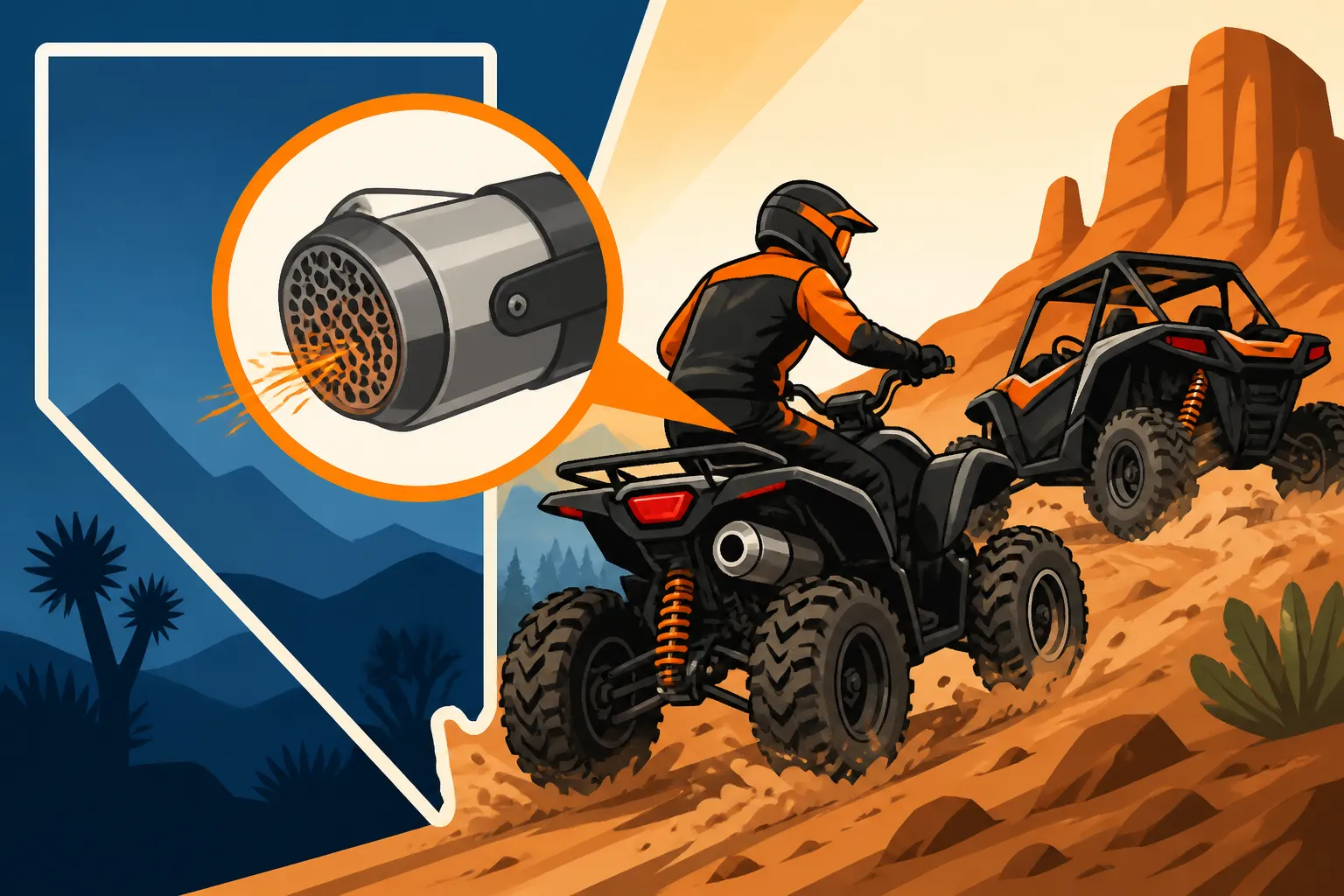
At its heart, a spark arrester is a safety device designed to prevent hot carbon particles from escaping your vehicle's exhaust system. Think of your engine's combustion process: it's not always a perfectly clean burn. Sometimes, tiny, superheated bits of carbon can break off and travel out with the exhaust gases. In a lush, wet environment, these might not be an issue. But here in Nevada, where dry grass, brush, and leaves are everywhere, even a tiny spark can ignite a catastrophic fire.
Most spark arresters are cleverly integrated into your muffler or exhaust pipe. They typically work by using a series of baffles or a fine-mesh screen. As exhaust gases pass through, these baffles or screens essentially "trap" or "cool" those hot carbon particles. The particles either burn up completely within the arrester, or they're cooled down enough that they won't ignite anything once they exit the exhaust. The goal is to let the exhaust gases flow freely while holding back any potential fire starters. It’s a simple piece of technology that offers huge protection for our precious desert environment. When you're thinking about the [Nevada Equipment List for Road-Legal UTVs], a spark arrester is one of those non-negotiable items for safety, even if it's not always explicitly called out as "road-legal equipment" in the same way headlights might be. It's an across-the-board OHV requirement.
Why They're So Crucial in Nevada's Landscape
Now, why is this so critical in Nevada, specifically? If you've spent any time riding our trails, you know the answer. Nevada is largely an arid, desert state, prone to extreme heat and prolonged droughts. Our native vegetation, from sagebrush to pinyon pine, can become incredibly dry and flammable, especially during our long summer and fall seasons.
A single spark, no bigger than a grain of rice, hitting dry cheatgrass could start a wildfire that quickly spirals out of control. We've all seen the devastating news reports of wildfires tearing through vast tracts of land, destroying homes, wildlife habitats, and cherished riding areas. These fires cost millions of dollars to fight, disrupt communities, and can take decades for the land to recover. A working spark arrester is your absolute first line of defense against being the unintentional cause of such a disaster. It’s not just about following a rule; it’s about being a responsible steward of the land we love to ride. The sheer scale of potential damage makes this a non-negotiable safety feature for every ride.
Nevada's Specific Spark Arrester Laws for OHVs
It's one thing to understand why spark arresters are important; it's another to know the legal framework surrounding them in Nevada. This isn't just a recommendation; it's a solid, enforceable law designed to protect our natural resources and public safety.
The Legal Mandate: What the NRS Says
Nevada Revised Statutes (NRS) are very clear when it comes to off-highway vehicle operation, and spark arresters are explicitly mentioned. Essentially, any off-highway vehicle (OHV) operated on public lands in Nevada is required to be equipped with a spark arrester. This isn't limited to specific types of OHVs; it applies to all ATVs, UTVs, dirt bikes, and other machines that fall under the OHV definition.
What does "public lands" mean in this context? It encompasses everything from Bureau of Land Management (BLM) land to state parks, national forests, and even many county-maintained roads that access these areas. The law makes it a mandate because the risk of wildfire is so prevalent across our state. While you're enjoying your ride, always remember that having a properly functioning spark arrester is as important as having your [Nevada OHV Rules for Riding Federal Land] knowledge. It ensures that your fun doesn't inadvertently lead to tragedy for the environment or other users.
Federal Land and State Regulations: A Dual Requirement
Here’s where it gets interesting: many of the incredible places we love to ride in Nevada are federal lands, managed by agencies like the Bureau of Land Management (BLM) or the U.S. Forest Service (USFS). These federal agencies have their own regulations, which often mirror or even exceed state requirements. The good news is that Nevada’s state law requiring a spark arrester aligns perfectly with federal regulations.
This means that if your OHV has a USFS-approved spark arrester, you're generally compliant with both state and federal requirements. There isn't a separate "federal spark arrester" you need; a single, approved device covers all bases. However, it's crucial to understand that federal rangers and local deputies can both enforce these rules. So, whether you're riding a vast expanse of [Riding BLM Land in Nevada] or hitting trails closer to home, your spark arrester needs to be in tip-top shape. This dual enforcement really underscores the seriousness of preventing wildfires, especially during critical times like [Nevada Rules for Riding During Fire Season]. Always assume that any public land requires this crucial safety device.
What Happens If You're Caught Without One?
Let's not sugarcoat it: getting caught without a compliant spark arrester can sting. Depending on the specific circumstances and the officer's discretion, you could face a citation and a fine. These aren't just minor parking tickets; they can be substantial, costing you far more than the price of a new spark arrester or exhaust system.
Beyond the immediate financial hit, there’s the potential for your ride to be cut short. An officer might require you to cease operation until the issue is resolved, which could mean trailering your machine home or finding a solution on the spot. In some extreme cases, especially if conditions are particularly dry and hazardous, there could be more severe repercussions, though these are less common for a simple missing arrester. The enforcement agents, whether they're local sheriff's deputies, BLM rangers, or state park officers, are well aware of the fire danger, and they take these regulations seriously. It's simply not worth the risk to yourself, your wallet, or our beautiful Nevada environment to ride without one.
Checking for and Maintaining Your Spark Arrester
Now that we understand the legal and environmental importance, let's talk practicalities. How do you know if your machine has one, and how do you keep it in good working order? This is where a little proactive maintenance goes a long way.
How to Verify Your Machine Has One
Most modern ATVs and UTVs come from the factory equipped with a USFS-approved spark arrester. However, if you've bought your machine used, or if you've installed an aftermarket exhaust system, it's absolutely vital to double-check.
To find it, look at your exhaust system, usually where the muffler exits. Many spark arresters are identifiable by a small metal stamp or tag, often with "USFS Approved" or a specific code. Sometimes, you'll see a small screen at the very end of the exhaust pipe, though some are internal. If you can't find a stamp, consult your owner's manual; it should clearly state whether your stock exhaust includes an integrated spark arrester.
If you have an aftermarket exhaust, do not assume it has a spark arrester just because it's a reputable brand. While many aftermarket companies, like SuperATV, offer exhaust systems that do include spark arresters, or offer spark arrester inserts for their systems, it’s not always a given. You must verify it. Some performance-oriented exhausts might omit them, which would make your machine illegal for public land use in Nevada. Always look for that USFS approval stamp, even on a shiny new pipe!
Keeping It Clean and Functional
A spark arrester is only effective if it's clean and unobstructed. Over time, carbon and exhaust buildup can clog the screen or baffles. This not only renders the arrester less effective at catching sparks but can also restrict exhaust flow, negatively impacting your engine's performance. It’s a lose-lose situation!
Regular maintenance is simple. Periodically remove the spark arrester screen (if it's an external, removable type) and clean it thoroughly with a wire brush. If it's an internal design, you might need to consult your owner's manual for specific cleaning instructions, which often involve removing the muffler end cap. The frequency of cleaning depends on how often you ride and the type of fuel you use, but a good rule of thumb is to check it every few rides or at least once a season. Neglecting this can lead to a dirty, ineffective arrester, and potentially a citation. Don't let your [Sound Limits and Aftermarket Exhaust] considerations overshadow the critical function of your spark arrester.
Replacing a Damaged or Missing Spark Arrester
What if your spark arrester is damaged, corroded, or simply missing? Don't just ignore it! You need to replace it before your next ride on public land. For factory exhausts, check with your local dealership for OEM replacement parts. If you have an aftermarket exhaust, contact the manufacturer (e.g., SuperATV) to see if they offer replacement inserts or a compliant exhaust system.
When replacing, always ensure the new part is USFS-approved. You can often find universal spark arrester inserts at powersports shops, but make sure they are designed to fit your specific exhaust diameter and carry the necessary approval. Installing a spark arrester is usually a straightforward task, often just involving a few bolts or screws. If you're not comfortable doing it yourself, any reputable ATV/UTV service shop can handle it quickly and correctly.
Common Misconceptions and FAQs
Even with all this information, there are still some common questions and misunderstandings that pop up about spark arresters. Let's clear those up!
"My Machine Is New, So It Must Have One, Right?"
This is a common assumption, and while it's often true for machines sold in the U.S., it's not a guarantee you should blindly trust. Most new ATVs and UTVs from major manufacturers will come with a USFS-approved spark arrester installed. However, if a dealer has swapped out the exhaust for a performance upgrade before sale, or if you've purchased a machine that was imported or configured for a different market, it's possible it might not.
The best practice, even with a brand-new machine, is to always visually inspect the exhaust system for the USFS stamp. A quick check gives you peace of mind and ensures you're ready for any trail Nevada throws your way without worrying about compliance.
"I Only Ride Private Land, Do I Still Need It?"
This is a nuanced question. Legally, the Nevada requirement for a spark arrester primarily applies to OHVs operated on public lands. If you truly only ever ride on your own private property, completely isolated from public access and without any risk of sparks leaving your land, then technically, the state law might not apply in the same way.
However, consider the spirit of the law and the inherent dangers. Even on private land, a spark can start a fire that spreads to neighboring properties or wildlands, especially in our dry climate. You could still be held liable for damages. Furthermore, many people think they only ride private land but occasionally cross or access public easements, dirt roads, or neighboring properties that are public. Why risk it? Installing and maintaining a spark arrester is a small effort for a huge safety benefit, regardless of where you ride. It’s always better to err on the side of safety and compliance, especially when you consider [A Nevada Machine That Only Rides Private Land] can still pose a fire risk.
"What About Two-Stroke Engines?"
Two-stroke engines, commonly found in dirt bikes and some older ATVs, have a different combustion process and exhaust note than four-strokes. Some riders might mistakenly think that because two-strokes often produce visible smoke and a distinct sound, they don't require spark arresters or that the issue of carbon sparks is different.
This is incorrect. Two-stroke engines also produce superheated carbon particles that can escape the exhaust and ignite dry vegetation. Therefore, they are just as required to have a USFS-approved spark arrester as any four-stroke machine when operated on public lands in Nevada. The design of a two-stroke spark arrester might be slightly different to accommodate the oil-rich exhaust, but the core function and legal requirement remain the same.
Here's a quick comparison to help visualize the difference between compliant and non-compliant exhausts:
| Feature/Aspect | Compliant Exhaust (with Spark Arrester) | Non-Compliant Exhaust (no Spark Arrester) |
|---|---|---|
| Fire Prevention | Significantly reduces risk of wildfires from exhaust sparks. | High risk of igniting dry vegetation with hot carbon particles. |
| Legality | Legal for operation on all public lands in Nevada and federal lands. | Illegal for operation on public lands in Nevada and federal lands. |
| USFS Approval Stamp | Typically present (e.g., "USFS Approved" or specific code). | Absent. |
| Maintenance | Requires periodic cleaning to remain effective and prevent clogs. | Less maintenance in terms of spark arrestion, but illegal. |
| Sound Levels | Often designed to meet sound regulations as well. | May be louder, though sound isn't the primary compliance issue here. |
| Consequences | Peace of mind, safe riding, no citations for this issue. | Risk of significant fines, forced removal from trails, environmental damage. |
| Common Scenario | Stock exhausts on new machines, or compliant aftermarket systems. | Cheap aftermarket "slip-on" exhausts, older machines, modified systems. |
So, there you have it, riders. A spark arrester isn't just another piece of equipment; it's a vital component that protects our natural environment, keeps you on the right side of the law, and ensures our incredible Nevada trails remain open for generations to come. Make sure yours is always in place and well-maintained – it’s a small effort for a huge impact.
Disclaimer
This article is for general informational purposes only and does not constitute professional advice. Laws, prices and regulations vary by location and change over time. Consult a qualified professional for guidance on your specific situation.