Nellis Dunes on a Saturday
A Saturday ride at Nellis Dunes can mean more people, more dust, and less room to make a last-minute plan. If you’re bringing an ATV or UTV from Las Vegas, a little preparation helps you find the riding area, avoid avoidable conflicts, and spend more time riding. This guide covers what to expect, how to prepare, and how to make the day safer.
What Nellis Dunes is like on a Saturday
Expect a busy, shared riding area
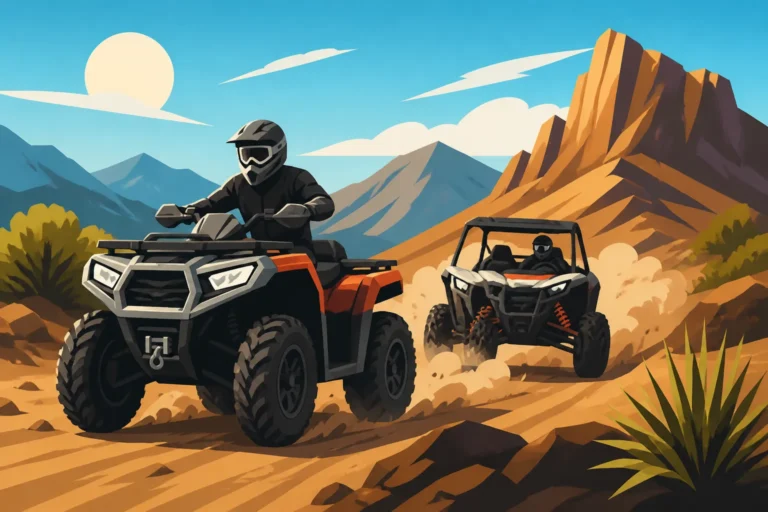
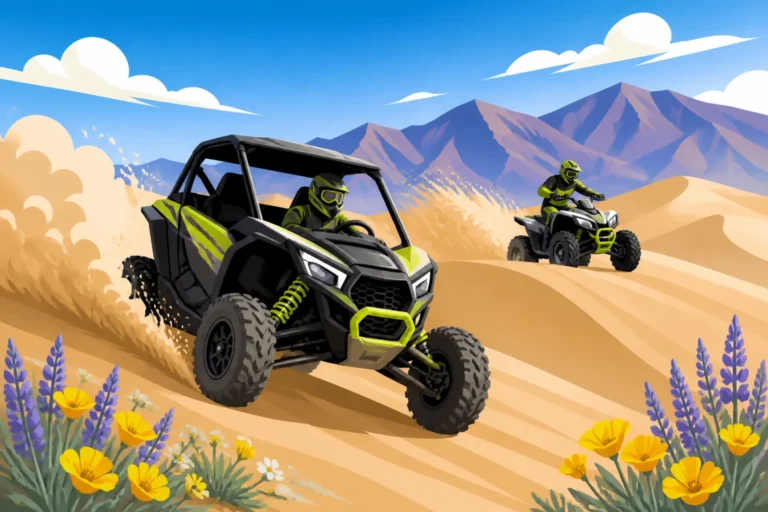
Nellis Dunes sits on the outskirts of the Las Vegas area and is a popular place for a quick desert ride. On a Saturday, you may encounter ATVs, side-by-sides, dirt bikes, and other off-highway vehicles using the same broad area. Riders may be moving at different speeds and in different directions, so don’t assume a dune or open patch of sand is clear just because you can’t immediately see another vehicle.
The terrain is not a neatly separated set of lanes. Sand, slopes, and open riding space can make it difficult to predict where someone will appear next. Give other riders room, look carefully before crossing a rise, and slow down in crowded areas. The overview in [Nellis Dunes and the Las Vegas Skyline](Nellis Dunes and the Las Vegas Skyline) can help you understand the area’s setting before you go.
Saturday conditions can also change over the course of the day. More vehicles may mean more dust, particularly when the ground is dry and riders are moving through the same corridors. Build in patience: if a group is kicking up a heavy cloud, wait for visibility to improve rather than following closely and hoping for the best. For more on those conditions, see [Dust and Traffic at Nellis Dunes](Dust and Traffic at Nellis Dunes).
Plan for a desert outing, not a developed recreation site
Treat Nellis Dunes as a place where you need to arrive self-sufficient. Bring drinking water, food or snacks, sun protection, and anything you need to make a basic repair or get help if your machine stops. Don’t count on finding water, fuel, shade, or a staffed service point at the riding area. Plan to top off fuel and handle errands before you leave town.
It’s also wise to set expectations with your group before unloading. Agree on a meeting point, what to do if you get separated, and how long everyone will ride before checking in. Cell service can be inconsistent once you leave busier developed areas, so don’t make a phone call your only backup plan. A downloaded map or offline navigation option can be useful; tools such as onX Offroad can help you review an area before you set out, but they should not replace posted signs or land-manager instructions.
Nellis Dunes is a riding destination, not a reason to assume nearby land is open to vehicles. The area is close to sensitive and restricted places, including military property. Pay attention to signs and boundaries, and turn around if you’re unsure whether a route is open. Do not cross a fence or continue onto land marked as restricted.
How to plan your Saturday ride
Check the route, access, and conditions before leaving
Start by deciding how you’ll reach the riding area and where you’ll park and unload. Road approaches and informal access points can be confusing, especially if you’re visiting for the first time. Review directions in advance, then compare what you see on the ground with posted signs. For trailer-specific considerations, read [Where to Park a Trailer at Nellis Dunes](Where to Park a Trailer at Nellis Dunes).
Before the trip, look for land-manager notices about closures, fire restrictions, or access changes. A route that appeared usable on an old map may no longer be open, and a line shown by a mapping app does not necessarily mean motorized travel is allowed. The guide [Nevada Trail Closures to Check Before You Go](Nevada Trail Closures to Check Before You Go) is a useful reminder to confirm conditions rather than relying on saved information alone.
Use onX Offroad or another mapping tool to review your intended approach and save useful map information before you lose service. Treat the map as a planning aid—not permission to ride anywhere it shows. On the ground, posted notices, barriers, and applicable land rules take priority. If your group has mixed experience levels, agree on a conservative riding area and a time to return before anyone heads off to explore.
| Saturday planning item | What to do before you ride | Why it helps |
|---|---|---|
| Access and parking | Confirm the approach and a suitable place to unload | Reduces confusion and congestion when you arrive |
| Closures and restrictions | Check land-manager notices and obey signs on site | Conditions and access can change |
| Navigation | Save maps and agree on a meeting point | Helps if you lose service or become separated |
| Fuel and supplies | Refuel and pack water, food, and basic tools | Avoids depending on nearby services |
| Group plan | Set a turnaround time and check-in routine | Keeps the ride manageable for everyone |
Choose a pace that matches your group
If anyone in your group is new to dunes, start slowly and keep the first outing simple. Sand can feel unfamiliar even to riders who are comfortable on hard-packed dirt. A machine may respond differently when the surface gives way beneath its tires, and a slope can conceal traffic on the other side. Begin in a less demanding area, practice smooth throttle and braking, and leave steep climbs for a day when the rider and machine are ready.
The tips in [Nellis Dunes for Beginners](Nellis Dunes for Beginners) can help new visitors think through basic preparation. Before setting off, make sure every rider knows how to stop, how to signal, and what to do if a machine becomes stuck. In a group, the least experienced rider should help set the pace. There’s no prize for keeping up with someone who is more comfortable or riding a more capable machine.
Keep your riding group together without following so closely that you can’t react to dust, sudden stops, or a vehicle changing direction. If visibility drops, slow down and create space. Avoid cresting a dune at speed when you can’t see the far side. A familiar-looking route can still present a surprise when another rider comes over the same rise.
Safety and etiquette at Nellis Dunes
Share the terrain with care
On a busy Saturday, courtesy is a safety measure. Keep a lookout in every direction, especially around rises and areas where vehicles converge. Leave room for other riders to pass, and avoid stopping in a place where someone approaching from behind may not see you in time. If you need to regroup, move to a spot with good visibility and enough space for the whole group.
Stay on routes and areas open to motorized riding. Cutting across unfamiliar ground can take you into a closed area or create conflicts with other users. Don’t assume a broad, empty-looking stretch is fair game. The principles in [Nevada Trail Etiquette on Shared Dunes](Nevada Trail Etiquette on Shared Dunes) apply especially well when several types of vehicles share the space.
Ride in control and leave room for mistakes—yours and other people’s. A rider who is stopped, stuck, or turned around may be difficult to see through dust. Give them time and space rather than squeezing past. If a group is larger than a few machines, use a lead rider and a sweep rider, and agree on a safe place to stop so the group doesn’t spread across a busy route.
Prepare riders and machines before unloading
Before you ride, check the machine’s tires, brakes, throttle, steering, lights, and fuel. Secure loose gear and make sure each rider has a properly fitting helmet and suitable eye protection. Bring clothing for sun and dust, and consider gloves and layers that protect against abrasion. If you’re carrying tools, keep them secured so they don’t shift during the ride.
Review the applicable equipment and safety rules for the type of machine you’re using. If your ride involves a whip or flag, read [Nevada Sand Dune Flag and Whip Rules](Nevada Sand Dune Flag and Whip Rules) and check for any rules specific to the area. A visible flag can help others spot a vehicle approaching over a rise, but it doesn’t make it safe to crest blindly or ride beyond your visibility.
New riders should know how to operate the machine before entering a busy area. Explain hand signals, stopping distance, and what to do if the vehicle tips, stalls, or gets stuck. If a rider is tired, overheated, or uncomfortable, take a break or end the ride. Desert conditions can wear people down faster than they expect, and a shorter, controlled outing is better than pushing on after judgment and coordination begin to slip.
Making the most of the day
Keep the outing simple and flexible
A good Saturday ride doesn’t need an ambitious route. Choose a manageable plan, leave room for breaks, and be willing to change course if the area is crowded or visibility is poor. If your group arrives to heavy traffic or uncomfortable dust, waiting, relocating to an appropriate open area, or calling it a day can be the sensible choice.
Don’t plan to camp at the riding area unless the land manager explicitly allows it. Nellis Dunes is generally approached as a day-riding destination, and rules about overnight stays matter. Check [Why You Cannot Camp at Nellis Dunes](Why You Cannot Camp at Nellis Dunes) before making an overnight plan. If you want to camp, identify a permitted campground or other legal place to stay separately from your ride plan.
When you leave, pack out your trash and check the parking area for straps, tools, bottles, or anything else that fell out during unloading. Keep your vehicle and trailer clear of access routes so other visitors can get through. A little care at the end of the day helps keep the area usable for everyone.
Use mapping tools as one part of your preparation
An app can help you visualize your route, orient yourself, and save information for offline use. onX Offroad is one option riders use to review off-road maps before a trip. It can be particularly handy when you’re planning from home and want to discuss a route with your group before the drive.
Still, map lines and recorded tracks are not a substitute for checking current access rules. A route on a screen may be outdated, may cross land with different restrictions, or may not reflect a closure posted at the entrance. Use onX Offroad alongside official notices and what you see on the ground, not instead of them. If directions or boundaries seem uncertain, stop and verify rather than riding farther in.
For a Saturday at Nellis Dunes, the basics are straightforward: plan your access, bring the supplies you need, ride within your group’s comfort level, and give other visitors plenty of space. Those habits won’t make the area quiet, but they can make a busy day easier to manage.
Disclaimer
This article is for general informational purposes only and does not constitute professional advice. Laws, prices and regulations vary by location and change over time. Consult a qualified professional for guidance on your specific situation.