Dry Lake Beds and When They Are Not Dry
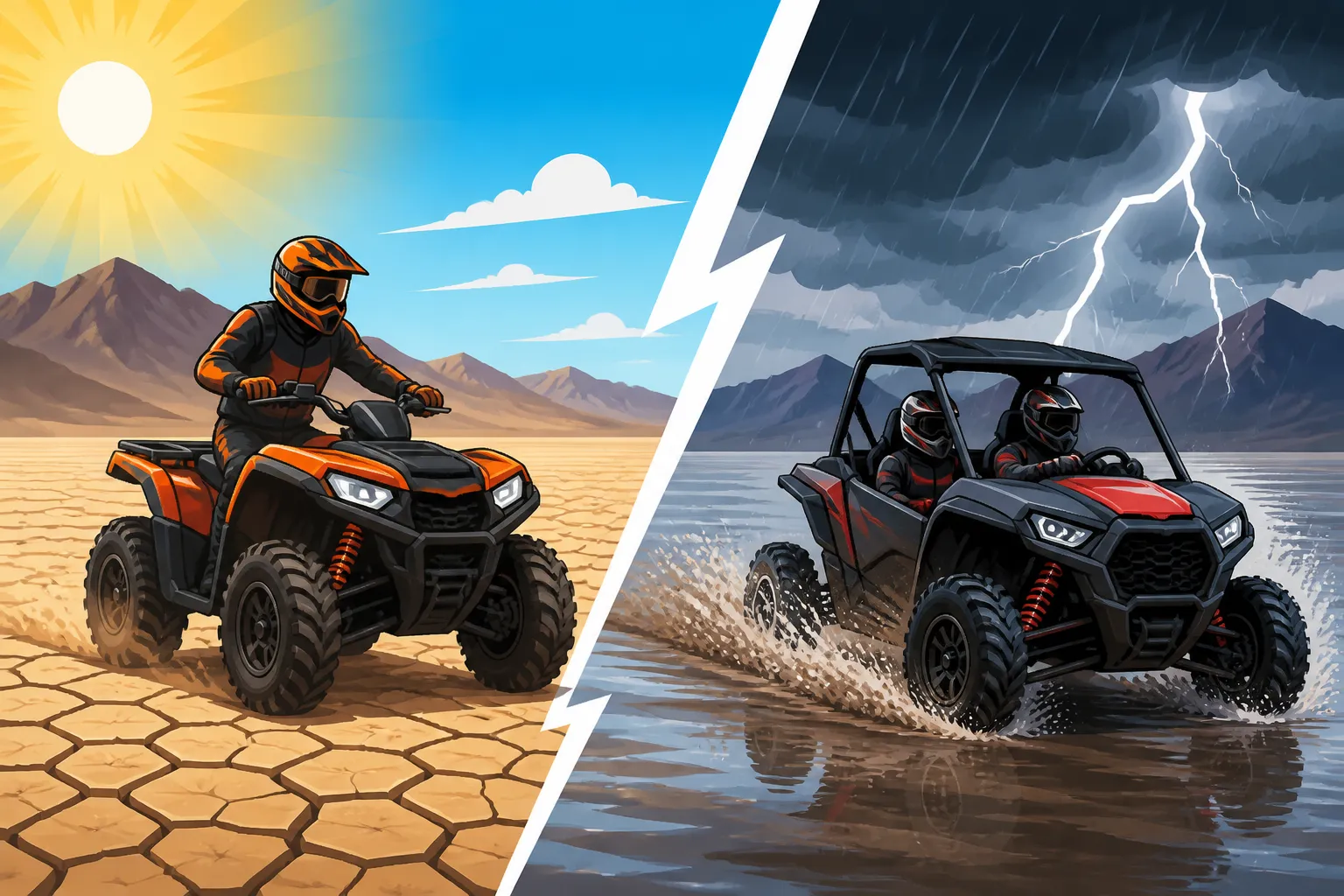
A Nevada playa can look firm and bone-dry from the highway, then turn into slick, axle-deep mud after a storm or a night of dew. That surprise can strand an ATV or UTV far from help and damage fragile desert ground. This guide explains how to judge conditions, plan a safer route, and know when turning around is the smartest choice.
Why a Nevada dry lake bed can be dangerous
A dry-looking surface does not guarantee firm ground
A dry lake bed, often called a playa, is a flat basin where water can collect and evaporate. Fine sediment settles across the surface, leaving a broad, open area that may look ideal for riding. But the pale crust on top can conceal softer material underneath. A machine may travel across one section without trouble, then suddenly break through the crust and sink.
That change can happen over a short distance. The surface near the edge may feel solid while a low spot closer to the basin center remains damp. Tire tracks from another vehicle are not proof that the ground is safe now; conditions can change after rain, overnight moisture, or even a brief shower in nearby hills.
The risk is not limited to getting stuck. Spinning tires can dig deep ruts, tear up the crust, and leave damage that lasts long after the surface dries. A UTV with a passenger or cargo may be harder to recover than a lightly loaded ATV. If the ground feels soft, the crust looks uneven, or water is visible, do not ride onto it just to see whether it holds.
Rain far away can still affect the basin
A dry lake bed can collect runoff from a much larger drainage area than the flat surface suggests. Storms in nearby mountains or washes may send water toward the basin even when the sky above you looks clear. In Nevada’s desert, a dry wash can change quickly, and a low-lying playa can receive water after rainfall that occurred miles away.
This is one reason a sunny forecast alone is not enough to make a go-or-no-go decision. Check the weather across the surrounding area, not only at the trailhead, and pay attention to recent rain. If storms are possible, postpone the ride or choose a route on higher, well-established ground. For more on changing desert conditions, see Flash Flood Season in the Desert and Riding a Desert Wash Safely.
Damp playa soil may also be deceptively slippery. A thin layer of water over fine sediment can behave more like grease than firm ground. Turning sharply, braking hard, or accelerating can cause a machine to slide before the rider realizes traction is gone. Keep clear of wet-looking areas rather than testing them with a quick pass.
Check access and surface conditions before you ride
Confirm that the route is open and appropriate
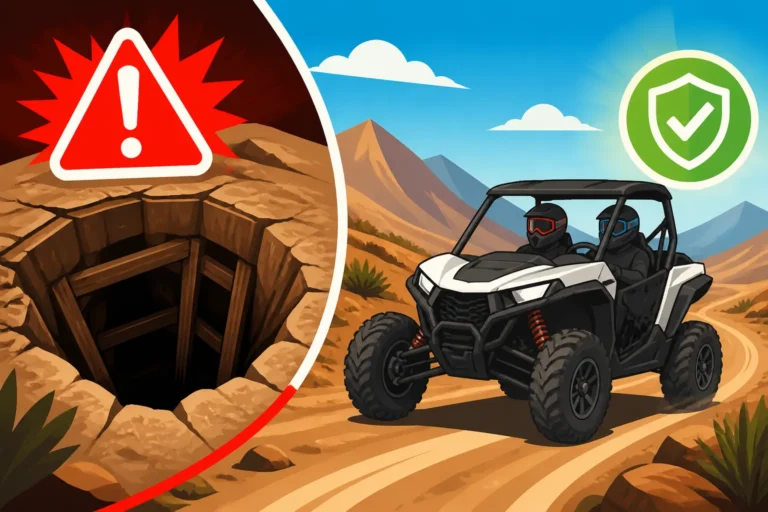
Not every dry lake bed is open for unrestricted off-highway vehicle travel. Land ownership, closures, habitat protections, event restrictions, and local management rules can differ from one basin to another. A visible track across a playa does not necessarily mean riding there is permitted. Before setting out, determine who manages the land and check the applicable route information and current notices.
A route-planning app such as onX Offroad can help you review mapped roads and terrain before leaving home, but an app should be one part of your planning rather than the final word on access. Compare the route with agency maps and posted signs, and contact the relevant land manager when access is unclear. For more background, read Riding BLM Land in Nevada and Reading a BLM Travel Management Map.
Nevada has numerous desert riding areas, but they are not interchangeable. The landscape around Black Rock Desert, for example, is different from the sandy and rocky terrain near Las Vegas. A route that is suitable on firm, established ground may become unsafe where it crosses a low playa or drainage. Check Nevada Trail Closures to Check Before You Go and Calling a BLM Field Office Before a Ride before committing to an unfamiliar area.
Use maps to plan an exit, not just a destination
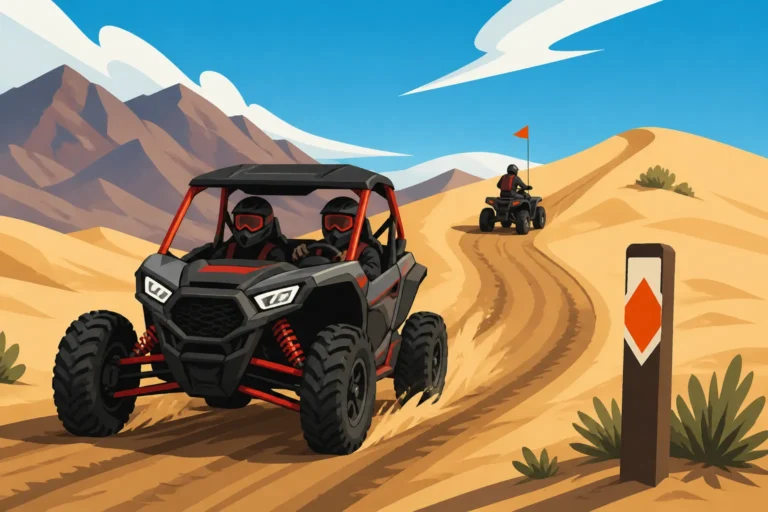
Before riding, identify the lowest sections of your route, nearby higher ground, and more than one way back to the trailer or staging area. A wide, flat basin can make it easy to lose a sense of distance and direction, especially when dust, glare, or fading daylight reduces visibility. Download maps for offline use because cell coverage may be unreliable in remote Nevada riding areas.
onX Offroad can be useful for looking at mapped routes and terrain ahead of time, particularly when you want to avoid improvising a line across an unfamiliar basin. Still, map coverage cannot show whether the ground is wet today, whether a gate is locked, or whether a route has been temporarily closed. Pair digital planning with local conditions, posted information, and a conservative plan.
Tell someone where you are going, when you expect to return, and what you will do if the route becomes impassable. If the only way forward crosses a wet or uncertain surface, turn around while you still have solid ground beneath you. A short detour or an early return is far easier to manage than a recovery operation in deep mud.
| What you notice | What it may indicate | Safer response |
|---|---|---|
| Standing water or a glossy surface | Wet sediment beneath or around the crust | Stay off the playa and use firm, established ground |
| Deep or fresh-looking ruts | Soft soil or recent vehicle struggle | Do not follow the tracks as a test route |
| Crust that cracks or flexes underfoot | Weak support over softer material | Turn back before bringing a machine onto it |
| Storms nearby or recent rain | Runoff may reach the basin later | Delay the ride and recheck conditions |
| Route status is unclear | Access may be restricted or changed | Check with the land manager before proceeding |
Ride in a way that reduces the chance of getting stuck
Keep a safe margin from questionable ground
If you reach a playa and cannot confidently judge the surface, stay on firm terrain around its edge or choose another route. Avoid riding directly across the lowest portion of the basin, where water and fine sediment may collect. Do not assume that a hard-looking strip is safe just because it is lighter in color or has existing tire marks.
If you must travel near a basin, keep speed controlled and avoid sudden steering or braking. Leave enough room to stop on solid ground rather than entering a questionable section with no easy exit. On a UTV, account for passengers, cargo, and the machine’s weight; a loaded vehicle can sink more readily and may be more difficult to extract.
Avoid creating a new route to get around a wet patch. Cutting across undisturbed ground can damage the surface and may put you into an even softer area. If the marked or established route is blocked by mud or water, treat that as a reason to turn around. The same cautious approach applies to other desert hazards discussed in Dry Lake Beds and When They Are Not Dry and Nevada Rules for Riding a Dry Lake Bed.
Prepare for a recovery without counting on it
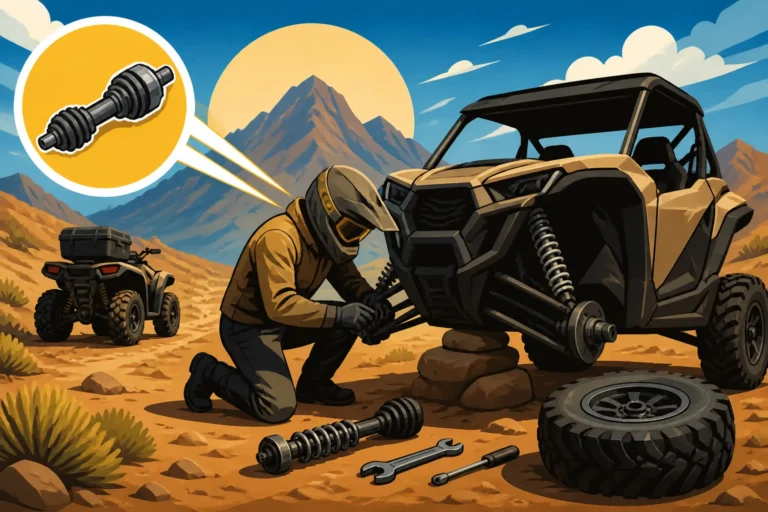
Carry basic recovery and communication equipment appropriate to the distance and terrain, and know how to use it before leaving. A winch, recovery strap, shovel, traction boards, and suitable attachment points can help in some situations, but none makes an unsafe route safe. Recovery gear can also create risks if used incorrectly, especially when people stand near tensioned straps or winch lines.
Travel with another capable vehicle when the route is remote, and agree on a plan for what to do if one machine becomes stuck. Keep people clear of the recovery path, avoid attaching equipment to parts not designed for recovery, and stop if the machine is sinking deeper or the ground is shifting. Digging or spinning tires aggressively often makes the situation worse.
Water, food, first-aid supplies, warm or sun-protective clothing, and a reliable way to call for help matter as much as vehicle equipment. Desert conditions can become uncomfortable quickly, and a stuck machine may leave you exposed while you wait. Review Carrying Water for a Desert Ride and Breaking Down Far From the Trailhead when planning remote trips.
Decide when to turn around
Use clear stop signs rather than wishful thinking
Turn around if you see standing water, soft mud, deep ruts, cracking crust, or fresh tire tracks that end in a bogged-down machine. Also turn back if rain is approaching, runoff is moving toward the basin, or you cannot identify a firm route out. Do not let a schedule, a group’s enthusiasm, or the fact that you have already driven a long way pressure you into crossing uncertain ground.
A common mistake is to continue because the next section looks only a little softer than the last one. On a playa, the transition from firm crust to deep mud may be abrupt. Once a heavy machine is stuck, the safest exit may no longer be the direction you came from. If you have doubts, pause on stable ground and reassess the whole route rather than inching forward to “see what happens.”
It can help to agree before the ride that any rider can call a stop without debate. That makes it easier for a newer rider or passenger to speak up when the terrain looks wrong. A good desert ride is not measured by how far you cross a basin; it is measured by whether everyone and every machine return safely.
Recheck conditions after rain and before returning
A route that was firm on the way in may be hazardous on the way out. Rain can arrive while you are riding, and runoff from higher ground may reach a low area later. If conditions change, do not assume the tire tracks you made earlier are still a safe path. Reassess from higher ground and avoid entering water or mud whose depth and firmness you cannot judge.
After a storm, give the area time to dry and check with local land managers or reliable local sources before returning. Keep in mind that a surface can appear dry while the soil below remains soft. For broader trip planning, including seasonal conditions and route selection, see Riding Seasons in the Nevada Desert and Nevada Trail Maps Worth Downloading.
A flexible plan is your best tool: choose a backup route, carry offline maps, check access, and be willing to postpone the ride. onX Offroad may help you prepare a route and understand the surrounding terrain, but current ground conditions still need to guide the decision. When a Nevada dry lake bed is wet or uncertain, the safest line is the one that stays on firm ground.
Disclaimer
This article is for general informational purposes only and does not constitute professional advice. Laws, prices and regulations vary by location and change over time. Consult a qualified professional for guidance on your specific situation.