Getting to Sand Mountain on Nevada’s US 50
Getting to Sand Mountain is straightforward on paper: head east from Fallon on US 50, then turn south at the signed recreation-area entrance. The real trip takes a little more planning than that, especially if you need fuel, are towing a trailer, or expect phone service to disappear. This guide covers the drive, the turnoff, and what to prepare before you leave town.
The US 50 Drive From Fallon
Start in Fallon and head east
Fallon is the most practical place to organize the drive to Sand Mountain. It’s the last nearby community where you can take care of essentials such as fuel, food, water, and a quick check of your trailer or machine. From town, follow US 50 east toward Austin. Sand Mountain Recreation Area is roughly 25 miles from Fallon, and the access road is signed from the highway.
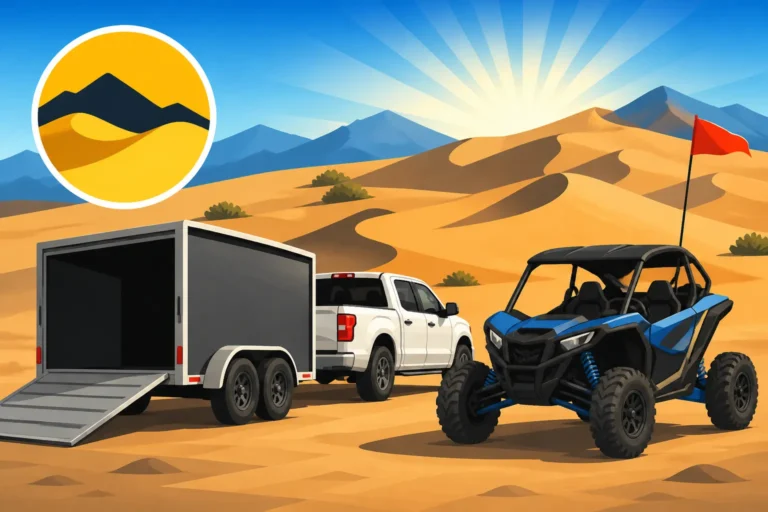
The distance can feel short enough to invite a casual approach, but this is still a remote desert drive. You’ll leave the more built-up part of Fallon behind, and roadside services become limited. If you’re towing, take a moment before you set out to check your hitch, lights, tire pressures, and load. A small problem that’s easy to fix in town can become a much bigger hassle beside a remote stretch of highway.
It helps to treat the drive as part of the ride plan, not just the bit between town and the dunes. Pick up supplies in Fallon, make sure everyone knows the destination and meeting point, and confirm your route before you head east. For broader preparation, [Driving From Fallon to Sand Mountain Recreation Area] and [Where to Fuel Before Sand Mountain] cover useful parts of that plan.
Look for the signed entrance
As you travel east on US 50, watch for signs directing visitors to Sand Mountain Recreation Area. The entrance is south of the highway. Don’t rely on spotting the dune from far away as your only cue: visibility, light, and the surrounding terrain can affect when it stands out. A mapped route and the posted entrance signs are more dependable than trying to navigate by appearance alone.
If you’re travelling with other vehicles, agree ahead of time on what to do if someone misses the turn. The safest plan is usually to continue to a suitable place where it’s safe and legal to stop, then regroup without making a sudden turn or reversing on the highway. Keep a comfortable following distance, particularly if dust or glare makes it harder to see the vehicle ahead.
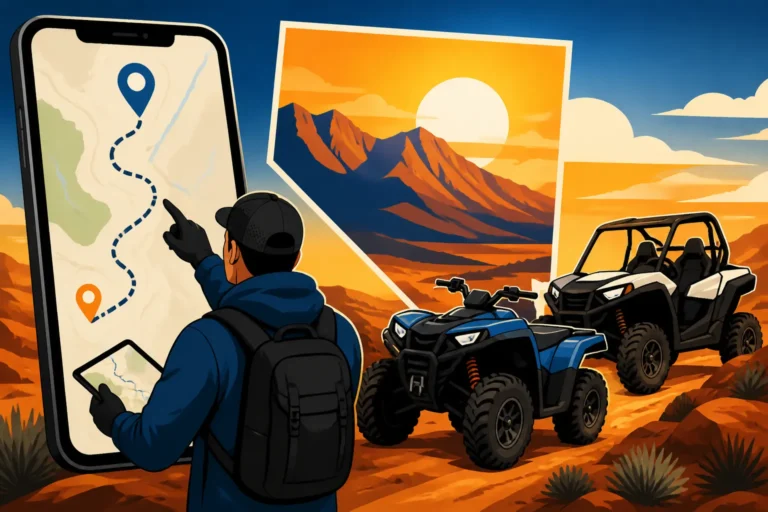
A navigation app can help you understand where the turnoff sits in relation to Fallon, but don’t let a phone screen replace roadside signs. onX Offroad can be useful for reviewing the route and nearby mapped roads before you leave. Download the information you plan to use while you still have a reliable connection, and keep your phone charged or bring a separate navigation option.
Use the drive as a final check
The stretch of US 50 is a good opportunity to notice anything your group still needs to address before arriving. Check that drinking water is accessible, not buried at the back of a packed vehicle. If someone is feeling unwell or carsick, deal with it before unloading and riding. If your plan depends on meeting another group, confirm that everyone has the same destination and knows where to wait.
Also think about the return drive. Riders can be tired, dusty, and ready to get home after a day on the sand, which is exactly when it’s easy to overlook a loose trailer strap or low tire. Leave enough daylight and patience for loading, securing the machines, and making the drive back to Fallon without rushing.
Navigation and the Access Road
Plan for limited cell service
Cell service can be unreliable around remote recreation areas, and a phone that works in town may not be useful for turn-by-turn directions once you’re farther out. Before leaving Fallon, open your map, check that the destination is correct, and download offline map data if your navigation app supports it. Keep your phone protected from dust and heat, and don’t count on being able to search for directions or call someone from the dunes.
A paper map or a second navigation device can be a welcome backup, particularly when the group includes several vehicles or visitors unfamiliar with the area. Tell someone who isn’t riding where you’re going and when you expect to be back. That’s a simple precaution, but it matters when you’re heading somewhere with long stretches between towns and limited connectivity.
onX Offroad may help you preview mapped roads and orient yourself before the trip, but map coverage and road details should be treated as planning aids rather than a substitute for signs or sound judgment. Compare the route you see on screen with the signed access, and avoid improvising onto an unfamiliar track just because it appears to connect. You can also read [Nevada Trail Maps Worth Downloading] for ideas on preparing maps before you lose service.
Expect a change from highway driving
The US 50 portion of the trip is highway travel; the final approach is where you should slow down and pay closer attention. Follow the posted route and any signs or instructions at the entrance. Don’t assume that every visible track is an authorized shortcut, a suitable route for a trailer, or a place where you can safely turn around. Stay on established roads and designated riding areas.
If you’re towing a wide or long trailer, think through where you’ll stop before you reach a narrow or crowded area. Avoid blocking access roads or pulling into soft sand just to make room for another vehicle. If you need to regroup, choose a firm, safe spot where the entire vehicle and trailer can be out of the way.
Road surfaces and traffic conditions can change. Drive at a speed that lets you respond to dust, other vehicles, and people entering or leaving the recreation area. A vehicle that handles comfortably on pavement may behave differently on loose or uneven ground, especially when loaded. Keep the tow vehicle on a surface it can handle, and don’t follow a smaller vehicle into sand unless you know it’s safe for your setup.
Keep highway riding separate from OHV riding
Getting to the recreation area by driving on US 50 is not the same as riding an ATV or UTV on the highway. Plan to transport your machine to the riding area unless you have confirmed that a particular road use is legal for your machine and route. A Nevada OHV registration decal is not, by itself, permission to ride on every public road.
Once you arrive, follow signs and site rules about where machines can be operated. Check the conditions that apply to the area before unloading, and don’t ride along US 50 or use the highway shoulder as a shortcut to reach sand. For a broader overview of where riding is allowed, see [Riding BLM Land in Nevada] and [Nevada Rules for Riding Federal Land].
Before You Leave Fallon
Fuel for the whole outing
Starting with a full tank in Fallon is a sensible habit for both the tow vehicle and the machines you’re bringing. The ride itself can use more fuel than a new rider expects, particularly if the group spends a long time climbing, accelerating through soft sand, or following a more demanding route. Don’t base your fuel plan only on the distance from Fallon to the entrance.
Think through the entire day: the highway drive, time riding, possible route changes, and the return drive. If you’re travelling with several machines, ask each rider to check their own fuel rather than assuming one person’s estimate covers the group. Fuel needs vary with the vehicle, riding style, terrain, and load, so a little extra margin is more reassuring than arriving with a plan that works only if everything goes perfectly.
Avoid carrying or storing fuel casually. Use appropriate containers, secure them properly, and follow site rules and applicable fire restrictions. A fuel plan should reduce the chance of running short without creating a preventable hazard in the tow vehicle or camp area. For other desert-trip preparations, [Water and Fuel Planning in Nevada] is a helpful companion.
Pack water, sun protection, and basic supplies
Sand and sun can make a day feel more demanding than the short drive from Fallon suggests. Bring enough drinking water for everyone, including a reserve in case the ride takes longer than planned. Keep some water easy to reach rather than packed under gear, and make sure children and passengers know where it is.
Bring eye protection, suitable clothing, sunscreen, and any personal medications your group may need. Dust can make goggles and face coverings feel essential, while a hat and a change of clothes can make the drive home more comfortable. A small first-aid kit, a charged phone, and a basic recovery plan are useful even for a short visit. The aim isn’t to overpack; it’s to avoid discovering that one missing item matters once you’re away from town.
Check the forecast and local notices before setting out. Wind can make the ride less pleasant and reduce visibility, while heat can wear down riders and machines. If conditions look beyond your group’s comfort or experience, changing the timing or postponing the ride is a reasonable decision. [Sand Mountain When the Wind Picks Up] and [Nevada Desert Riding in Summer Heat] offer more on conditions that can affect a day out.
Understand what facilities are available
Don’t assume the recreation area has the services you’re used to at a developed campground. Facilities can be limited, and drinking water may not be available where you need it. Bring what you need for the full visit and pack out your rubbish. If you’re planning to stay overnight, check the rules and prepare for a self-sufficient stay rather than relying on a nearby shop or a water tap.
Restrooms may be available, but that doesn’t remove the need to plan for basic comfort. Bring hand sanitizer, toilet paper if appropriate, and a way to keep supplies contained and clean. Leave facilities in good condition for the next visitors. [Sand Mountain's Six Vault Toilets] and [Camping at Sand Mountain Without Water] can help you plan around the area’s practical limits.
| Trip detail | What to plan for | Why it matters |
|---|---|---|
| Starting point | Organize supplies in Fallon | Services are limited once you leave town |
| Highway route | Take US 50 east and follow signs to Sand Mountain | The signed entrance is south of the highway |
| Navigation | Download maps before leaving reliable service | Phone data may not be available at the recreation area |
| Fuel | Start with a suitable reserve for the drive and ride | Riding in sand can use more fuel than expected |
| Water | Carry enough for everyone, with extra available | Don’t depend on finding drinking water at the site |
| Trailer | Check tires, lights, hitch, and tie-downs | Loading and towing problems are harder to manage remotely |
| Riding plan | Follow posted directions and stay on authorized routes | Not every visible track is an appropriate shortcut |
Arriving at Sand Mountain
Unload thoughtfully and check the area
When you reach the recreation area, take a moment to look around before unloading. Check posted signs, identify where vehicles and trailers should be parked, and make sure your group is not blocking other visitors or access. If several vehicles arrive together, designate one person to help coordinate parking rather than having everyone stop wherever they happen to find space.
Before starting the machines, review the plan with your group. Decide where to meet if riders become separated, how long you expect to be out, and what to do if someone needs help. This is especially useful when new riders, children, or people unfamiliar with sand are joining. A brief conversation at the start can prevent confusion later, when dust, engine noise, and distance make communication harder.
Give machines a quick check before riding. Confirm that tie-downs and ramps are put away safely, helmets and protective gear are fitted, and everyone knows how to stop and regroup. If the area is busy, take extra care when moving around parked vehicles and loading zones. The first few minutes on site are not a race to get onto the dune.
Choose a ride that fits your group
Sand Mountain is known for its large dune, but not everyone needs to head straight for the steepest or most challenging terrain. A first-time sand rider may be better off starting on a modest route, learning how the machine responds, and getting comfortable with visibility and spacing. Riders should keep enough room between machines to react safely, especially when following another vehicle over changing contours.
Agree on the group’s limits before you begin. A confident rider on a powerful machine may be comfortable with terrain that is a poor match for a beginner, a young rider, or a heavily loaded UTV. If people have different experience levels, choose a conservative route or split into groups with clear meeting arrangements. No one should feel pushed into a climb or maneuver just to keep up.
Keep in mind that the dune’s shape and riding conditions can change with wind and use. A line that looked manageable earlier may feel different later, and the crest can hide what lies beyond it. Don’t climb blindly into an area where you can’t see whether another rider is approaching from the other side. More planning on the ground makes the fun feel less stressful once you’re moving.
Respect marked routes and protected areas
Use posted signs and route markers to guide where you ride. The presence of open-looking ground doesn’t mean it’s available for vehicle use. Sand Mountain includes sensitive natural areas, and route choices can affect habitat as well as other riders. Stay out of closed or marked-off sections and avoid creating new tracks around obstacles.
The area has marked trails in addition to dune riding opportunities. If you’re looking for a route that is easier to follow, learn about [Sand Mountain's 23 Miles of Marked Trail] before you go. Keep the group together where practical, and use established routes rather than crossing into restricted terrain to save a few minutes.
Making the Return Drive Easier
Leave time to load and secure everything
The return trip starts before you reach US 50. Give yourself time to cool down, check the machines, and load without rushing. Brush away loose sand where it could interfere with straps or equipment, and inspect tie-down points before driving. Make sure ramps and loose gear are secured, then walk around the vehicle and trailer for one final check.
If someone in the group is especially tired or overheated, take that seriously before starting the drive. A short pause in a shaded or sheltered spot, a drink of water, and a slower pace can help everyone reset. Don’t let the pressure to get home turn loading into a hurried job or encourage a driver who needs rest to push through.
Plan your return to Fallon with the same attention you gave the outbound drive. Maintain a safe speed, leave room between vehicles, and avoid stopping in unsafe places to regroup. If the group separates, use the meeting plan you agreed on earlier rather than trying to coordinate through unreliable cell service.
Check conditions and closures again
Before a future trip, check for notices that could affect access, riding areas, or your preferred route. Conditions, fire restrictions, and temporary closures can change what’s practical or permitted. Don’t assume that a route used on a previous visit is open on the next one. [Nevada Trail Closures to Check Before You Go] is a useful reminder to confirm access before travelling.
The same goes for event days, busy weekends, and changing weather. A popular recreation area can feel very different when there are more trailers, more riders, or blowing sand. If the entrance or parking area is congested, slow down and follow posted instructions instead of trying to squeeze through or inventing a new place to park.
A little preparation makes the US 50 drive feel simple: get organized in Fallon, follow the signed entrance, and arrive ready to ride without depending on services or cell coverage. Once you’re there, take your time, respect closures, and choose a route that matches the people and machines in your group.
Disclaimer
This article is for general informational purposes only and does not constitute professional advice. Laws, prices and regulations vary by location and change over time. Consult a qualified professional for guidance on your specific situation.