Nevada’s Only Pay-to-Ride Dune
Nevada’s dunes are often described as free places to ride, so Sand Mountain can catch visitors off guard: it has a separate recreation fee. That charge is easy to confuse with the state OHV decal, but they serve different purposes. This guide explains what you may need to pay, how out-of-state registration fits in, and what to check before hauling your machine to the dunes.
What makes Sand Mountain different
Sand Mountain Recreation Area, near Fallon, is widely known as Nevada’s pay-to-ride dune area. The recreation fee is tied to using this particular recreation site. It is not a statewide trail permit, and it does not replace any registration or decal requirement that applies to your machine.
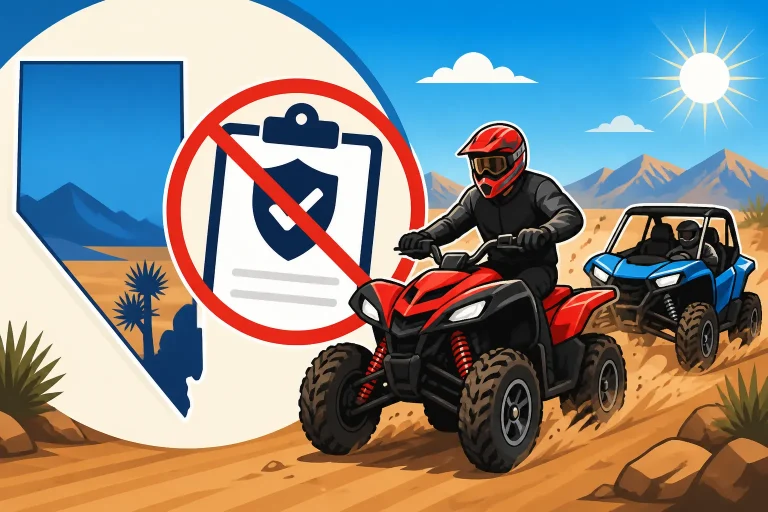
That distinction matters because a rider can have the required Nevada OHV decal—or valid out-of-state registration that Nevada recognizes—and still need to pay Sand Mountain’s recreation fee. The reverse is also true: paying the site fee does not make an unregistered machine legal to ride.
Sand Mountain is managed as a recreation area, with riding terrain that includes a large dune and surrounding trails. It draws riders for day trips, camping and longer outings. Its fee system is one reason it differs from many other popular Nevada riding areas, including places where you can ride without paying a site-use charge.
If you are comparing destinations, Why Sand Mountain Charges and Logandale Does Not explains why riding costs can differ from one area to another. For a broader look at places to ride, see Nevada’s Dune Riding Areas Compared.
The simplest way to plan is to treat your trip as having two separate paperwork questions:
- Is the machine properly registered or covered by a valid exemption?
- Have you met the current fee and access requirements for Sand Mountain?
Answer both before you unload. A site pass handles the second question only. Registration rules, reciprocity and exemptions handle the first.
What the fee is for
The Sand Mountain fee is a recreation-site charge. It is not a purchase of public land, a general Nevada OHV permit or permission to ride anywhere in the state. It applies to access or recreation at the designated area under the site’s current rules.
The fee arrangement may include different pass options, such as short-term and longer-term choices. The availability, coverage, purchase process and current cost can change, so check the official Sand Mountain or land-manager information before leaving. Don’t rely on an old receipt, a forum post or a pass description from a previous season.
Pay attention to what the pass covers. A site pass may be associated with a particular vehicle, visit period or use category. If you are bringing multiple vehicles, towing a group, or planning to stay several days, confirm whether the option you intend to buy covers your situation. Don’t assume one payment automatically covers every machine, vehicle or person in your party.
What the fee is not
The recreation fee does not:
- Register an ATV, UTV or other off-highway vehicle.
- Replace a Nevada OHV decal when one is required.
- Replace valid registration or a recognized decal from another state.
- Give permission to ride in closed habitat or restricted areas.
- Make a route open if it is closed by the land manager.
- Cover unrelated fees at another recreation site.
Think of the site charge as an entry in your trip budget and the decal or registration as a separate compliance item. Keeping those jobs separate makes the rules much easier to understand.
The Sand Mountain pass and how to plan for it
Before you travel, check the current pass choices and the instructions for paying. The official information should tell you whether you can buy ahead, pay at the site, or use a particular payment method. Availability and procedures can change, and a mobile connection at a remote recreation area may not be dependable.
A good planning step is to decide how long you expect to stay, then compare the available pass options. A short visit may make one option sensible; multiple trips or a longer stay may make another worth considering. The choice depends on the current terms, not just the headline cost. For help weighing the options, see Does an Annual Pass Beat Weekly Ones? and Buying a Sand Mountain Pass Before You Arrive.
| Trip plan | What to check before leaving | Common planning mistake |
|---|---|---|
| One-day ride | Current day-use hours, payment method and pass coverage | Assuming the state decal includes site access |
| Weekend or multi-day visit | Which pass period covers your dates and how camping is handled | Treating a camping detail as proof that the riding fee is waived |
| Several trips in a season | Whether a longer-term pass is offered and what it covers | Buying a pass without checking its vehicle or user conditions |
| Group outing | Whether each vehicle needs separate coverage and whether any organized-ride rules apply | Assuming one payment covers every machine in the group |
| Visitor with an out-of-state machine | State registration reciprocity plus Sand Mountain’s site fee | Confusing registration recognition with recreation access |
Don’t assume a free camping day means free riding
Some Sand Mountain information has described free camping on particular days. That does not automatically mean every site charge is waived for every activity on those days. Camping access, day use, vehicle access and OHV riding can have different terms.
Confirm what the current free-day provision covers, which dates apply, and whether you still need to pay a separate fee to ride. The useful detail is not merely whether a day is advertised as free, but what the word “free” refers to. Free Camp Nights at Sand Mountain provides more context on that distinction.
If the current site rules say a free day applies to camping only, treat riding access as a separate question. If the official notice says a charge is waived for broader use, follow the scope and conditions in that notice. Avoid planning around a general statement copied from a past season.
Check hours and access conditions
A pass does not guarantee that every part of the recreation area is open at every hour. Check current day-use information, closures, seasonal restrictions and any posted instructions. If you plan to arrive late, verify whether you can still complete the payment process and whether your intended activity is allowed at that time. Sand Mountain Day Use Hours is a useful companion when setting your arrival time.
Save the official information before you leave. A screenshot or downloaded page can help if you lose cell service, but it is not a substitute for following updated signs or closures at the site. If posted instructions differ from what you saved, follow the current on-site direction and resolve the question with the managing office.
The site fee and Nevada OHV registration are separate
Nevada’s OHV registration system addresses the machine, not the entrance fee for a specific riding area. For machines that must be registered in Nevada, the state decal is the relevant proof. Nevada generally issues an OHV decal rather than a license plate for off-highway registration; Why Nevada Issues a Decal and Not a Plate explains that distinction.
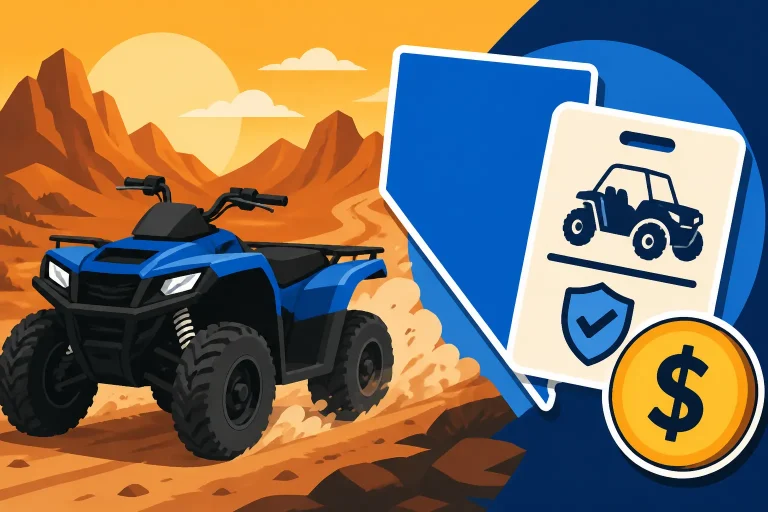
The decal is also connected to Nevada’s OHV permit system. It is not a Sand Mountain admission pass. The state decal can meet an OHV registration requirement without paying a separate recreation-area charge, and a Sand Mountain receipt cannot stand in for the decal. For more on the statewide system, see Nevada’s $20 Decal Is the Permit and Nevada OHV Permits Explained.
This is a practical distinction to remember at the trailhead:
- The state decal or recognized out-of-state registration deals with whether the machine may be operated under applicable OHV rules.
- The Sand Mountain pass or fee deals with recreation access at that specific location.
- Route closures, habitat restrictions and other land-use rules still apply regardless of either payment.
Nevada machines
If your machine is registered in Nevada, make sure its decal is valid and properly displayed under the current rules. Check that the registration information belongs to the machine you are bringing. If you have recently bought the machine, moved to Nevada, or allowed the decal to expire, resolve the paperwork before your trip rather than relying on a site pass to cover the gap.
The state and the recreation area may have different staff, records and payment systems. A fee attendant or site receipt is not a substitute for confirming your OHV status with the appropriate state information. The article Nevada’s Annual OHV Registration covers the state registration side in more detail.
Out-of-state machines
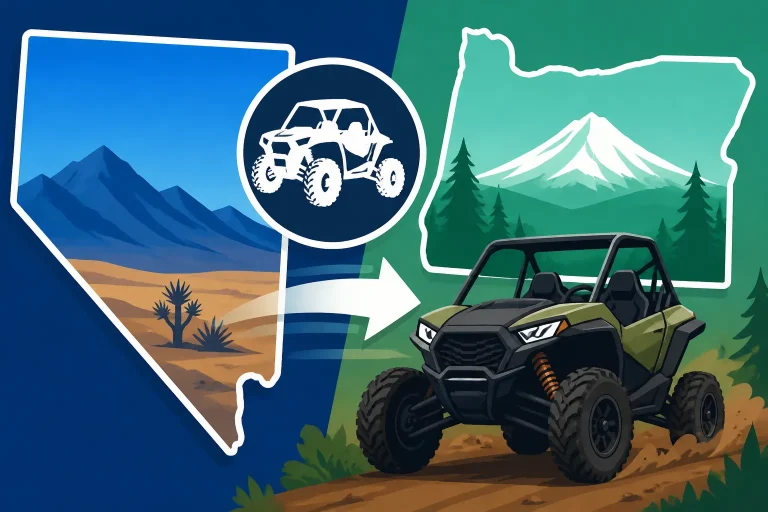
Visitors often ask whether they need to buy a Nevada decal in addition to the registration or OHV decal from their home state. Nevada has rules that can recognize an out-of-state machine for a limited period, subject to conditions. The details depend on the machine, its home-state status and how long it is operated in Nevada.
Do not assume that every sticker from another state automatically qualifies. Check Nevada’s current reciprocity requirements and confirm that your registration is valid, belongs to the machine and is displayed as required. Nevada OHV Reciprocity With Other States gives the overview, while Nevada’s 15-Day Window for Out-of-State Machines addresses the limited visitor period.
Even if your machine qualifies under reciprocity, the Sand Mountain recreation fee remains a separate matter. Reciprocity concerns whether Nevada recognizes the machine’s registration status; it does not make a site fee disappear.
Exempt machines
Some machines may fall within a state exemption, depending on their type, use or other conditions. An exemption from OHV registration does not automatically exempt the rider from a recreation-area fee. Those are separate rules administered for different purposes.
If you believe your machine is exempt, confirm the exact exemption and carry a way to explain its basis. Do not rely on its age, engine size, intended use or appearance alone. The state exemption rules can be specific, and a site fee may still apply even when registration does not. You can review possible registration exceptions in Machines Nevada Exempts From Registration.
Reciprocity for visitors from other states
Reciprocity is easy to overgeneralize. A visitor may hear that Nevada accepts another state’s OHV registration and conclude that no other paperwork or fees apply. In reality, reciprocity addresses a defined registration issue. It does not turn another state’s sticker into a universal Nevada riding permit or a Sand Mountain pass.
Before leaving home, verify three separate things:
- Your machine is currently registered or permitted in its home jurisdiction.
- Nevada recognizes that status for your planned visit and use.
- You have met Sand Mountain’s separate recreation-fee requirements.
This check is especially important if you travel with more than one machine. A registration decal can be current on one ATV and expired on another. A household may also mix machines with different home-state paperwork, ownership records or exemptions. Verify each one separately.
A visitor’s checklist
For each machine, take a moment to confirm:
- The registration or permit is current in the home state.
- The identifying information matches the machine.
- The decal or proof is displayed as required.
- The machine falls within Nevada’s reciprocity rules for the length and purpose of the visit.
- You know when the visitor period starts and what action is required if the machine remains in Nevada longer.
- Your Sand Mountain pass covers the trip under its current terms.
If you are staying in Nevada beyond the visitor window, don’t wait until the last day to investigate registration. The next steps may involve Nevada paperwork, proof of ownership, an inspection or a state application. The requirements depend on the machine and circumstances, so start with current official guidance. What a Visitor Does After 15 Days in Nevada and Registering Here After a Long Stay explain the issue from the visitor’s point of view.
Traveling through Nevada versus riding in Nevada
Passing through the state with a machine on a trailer is not the same as operating it on public riding land. A visitor planning to unload and ride should check the rules that apply to operation, registration recognition and the recreation area. Do not assume that merely carrying a machine through Nevada settles the question for a later ride.
The same caution applies if you are coming from a nearby state for a short weekend. A brief visit may fit within Nevada’s visitor rules, but that does not eliminate the need to meet Sand Mountain’s fee requirements. The short duration of a trip is not a substitute for checking either system.
Keep proof accessible
Carry the documents or other proof that show the machine’s registration status, and keep your site-payment confirmation available. A practical option is a waterproof document pouch stored where you can reach it without unloading gear. If you buy one through Amazon, check that it seals properly and fits the documents you need; a pouch that leaks or is too small is no help in dust or rain.
A clear phone photo can serve as a backup reference, but do not count on it as the only proof. Battery trouble, screen damage, poor reception or an official’s need to see original information can make a photo inconvenient. Protect paper documents from dust and water, and keep a second copy or image in a separate place.
Riding responsibly at the dunes
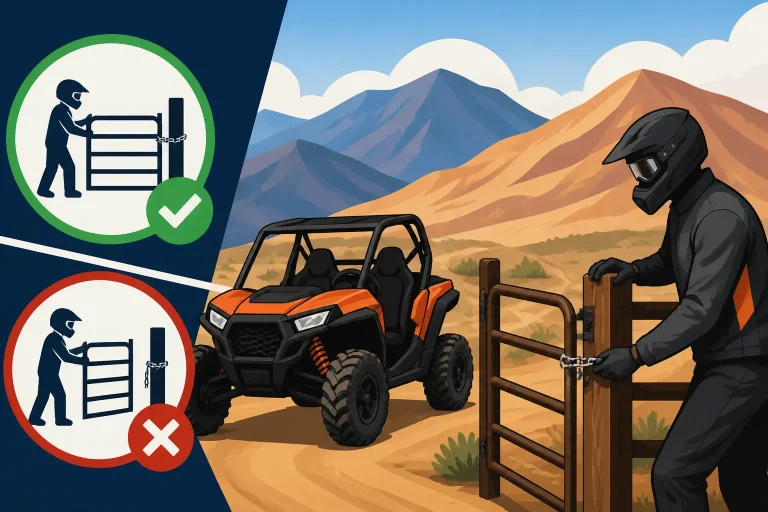
Paying the right fee is only one part of a good Sand Mountain trip. The area has sensitive habitat, changing terrain and busy riding zones. Read current signs, follow designated routes and keep clear of closed areas. A pass is not permission to cross a closure or ride wherever the sand looks open.
Sand Mountain has dune habitat associated with protected species and plants. Areas may be restricted or temporarily closed to protect them. The boundaries can be easy to miss in open desert, so review the current map and obey signs even when a route appears rideable. Don’t use tire tracks as evidence that an area is open; tracks may be old, unauthorized or left before a closure.
Stay within open riding areas
Use the current travel information and on-site markers to understand where riding is allowed. Avoid cutting across fragile vegetation or entering a marked closure to reach a shorter route. If you are uncertain whether a line is open, stop and check before proceeding.
The terrain changes with wind, weather and use. A path that was easy on a previous trip may be rutted or obscured now. Ride at a speed that lets you see and react, especially around dune crests where people or machines may be hidden from view. Keep enough distance from other riders to avoid sudden stops and collisions.
Prepare for dune conditions
Soft sand places different demands on a machine than a hard-packed road. Before you ride, inspect tires, steering, brakes, cooling and recovery equipment. Follow your machine manufacturer’s guidance for tire pressure and operating conditions; there is no single pressure setting that works for every vehicle, tire and load.
Bring water, basic tools and a way to handle a minor breakdown. A compact tire gauge and repair kit can be useful additions; if you source gear through Amazon, compare the kit contents with your machine’s tire type and carry only tools you know how to use. A plug kit, for example, will not solve every kind of tire damage.
Keep a tow strap or recovery plan suitable for your machine and group. Don’t attach recovery equipment to an unknown point or put yourself in the line of a loaded strap. If a machine becomes stuck, assess the slope and surrounding traffic before attempting recovery. In hot weather, set conservative ride times and build in rest and water breaks rather than waiting until someone is overheated.
Use flags and visibility equipment where required
Dune areas can have blind crests and cross-traffic. Check the current local requirements for flags or other visibility equipment before riding, and make sure the equipment is attached securely and visible. If you buy a flag or whip through Amazon, confirm that it is appropriate for the machine and the area’s current rules, not simply that it fits a generic mount.
Use extra caution when approaching a crest. Don’t stop just over the top, where an approaching rider may not see you. Cross at a controlled speed and avoid climbing a line that puts you into oncoming traffic. Stay alert for faster machines, children, pedestrians and vehicles being towed or recovered.
Leave the area in good condition
Pack out your trash, secure loose items and avoid leaving broken parts or abandoned equipment. If you camp, follow the current rules for where and how long you may stay. Keep your camp separate from active riding lines, and don’t block access routes or emergency approaches.
Respect quiet hours and other visitors. A machine with a modified exhaust may be louder than expected in a campground, so check applicable sound rules and avoid unnecessary revving. Take care with fuel containers and never leave spills behind. Small choices make the area safer and help preserve access for future visitors.
A practical pre-trip checklist
Use this checklist before you load the trailer. It will not replace current official directions, but it catches the common mix-ups.
Registration and reciprocity
- Identify every ATV, UTV or other machine you plan to ride.
- Confirm that each machine has valid Nevada registration, recognized out-of-state registration or a documented exemption.
- Check that the decal or required proof is displayed correctly.
- If you are visiting from another state, confirm Nevada’s current reciprocity conditions and visitor time limit.
- If you recently bought the machine or have been in Nevada for an extended stay, resolve any ownership or registration questions before riding.
Sand Mountain access
- Check the current recreation fee and pass options.
- Confirm how and where payment can be made.
- Make sure the pass matches your dates and the number or type of vehicles covered.
- Check day-use hours, camping conditions and any free-day terms.
- Save the official instructions and look for notices about closures before leaving.
Machine and rider preparation
- Inspect tires, brakes, steering, lights and cooling.
- Bring enough water, food and fuel for the route and conditions.
- Carry tools and recovery gear suited to your machine.
- Confirm required visibility equipment and current local rules.
- Protect registration and payment records from dust and moisture.
- Agree on a meeting point and plan for a rider who gets separated.
The most important part of this list is the first distinction: Nevada registration and Sand Mountain access are not the same requirement. Once those are handled separately, planning the rest of the visit is much more straightforward.
If you are unsure at the site
Pause before unloading or riding if you cannot tell whether your paperwork or pass is valid. Check the posted information, contact the managing office if possible, and keep a record of the answer. Do not assume a previous visit’s process still applies; fee procedures and access details can change.
If your group has different machines or registrations, resolve the questions one at a time. A Nevada-registered quad, a visitor’s UTV and a machine that may qualify for an exemption do not necessarily have identical paperwork requirements. The group’s site payment and each machine’s registration status are separate checks.
The short answer
Sand Mountain is Nevada’s best-known pay-to-ride dune area, and its recreation fee is separate from OHV registration. A Nevada decal or recognized out-of-state registration addresses the machine’s status under state rules; the Sand Mountain pass addresses access to that specific recreation area.
Before you go, confirm the current pass terms, hours and closures with the official site information. Then check the registration or reciprocity status of every machine you plan to ride. Paying both obligations where they apply—and staying within open riding areas—helps avoid an unpleasant surprise at the dunes.
Disclaimer
This article is for general informational purposes only and does not constitute professional advice. Laws, prices and regulations vary by location and change over time. Consult a qualified professional for guidance on your specific situation.