Why Nevada Issues a Decal and Not a Plate
It can be incredibly confusing when you're a new off-road enthusiast in Nevada, or even a seasoned rider moving here, to understand why your beloved ATV or UTV gets a simple sticker on its fender instead of a proper metal license plate like a car. This guide is here to untangle that mystery, explaining the real reasons behind Nevada's OHV decal system and what it means for you as a rider.
The Core Difference: Decals Versus Traditional Plates
For many years, folks have become accustomed to the idea that any vehicle meant to be used on public roads needs a license plate. It’s a standard, visible identifier that links a vehicle to its owner and state registration, primarily for on-road law enforcement and taxation. But when you get your shiny new (or new-to-you) off-highway vehicle (OHV) in Nevada, you'll quickly realize that the rules play by a different book. Instead of a plate, you're handed a brightly colored decal. This isn't just a quirky Nevada thing; there's a fundamental difference in how the state views and regulates off-highway machines versus traditional street-legal vehicles.
What a Standard Vehicle Plate Signifies
Think about your car or truck. That license plate affixed to the front and rear isn't just a decoration; it's a vital piece of identification. It signifies that your vehicle is registered with the Department of Motor Vehicles (DMV) for use on public highways and streets. This registration process typically involves verifying ownership, ensuring the vehicle meets safety and emissions standards (though emissions aren't universal across all vehicle types or counties in Nevada, they are a common part of the overall street-legal framework), and confirming that appropriate insurance is in place. The fees collected through this process help fund road maintenance, traffic enforcement, and various other programs that support the state's vast network of paved roads. A plate is universally recognized by law enforcement across the country as a primary identifier for on-road vehicles, making it easy to track ownership, verify compliance, and enforce traffic laws. It's designed for a specific infrastructure: the paved road system.
The Distinct Purpose of an OHV Decal
In stark contrast, an OHV decal in Nevada serves a very different, yet equally crucial, purpose. Its primary function isn't to identify a vehicle for highway use, but rather to confirm that an off-highway vehicle is legally registered for use on designated public lands and trails. These decals are generally placed in a prominent, visible location on the machine – often on the left-rear fender for quads, or a visible spot on a UTV. The fees associated with this decal don't primarily go to paved road maintenance. Instead, they are specifically earmarked to support the very trails and riding areas that OHV enthusiasts enjoy. We're talking about funding for trail development, maintenance, signage, educational programs, and enforcement efforts by agencies like the Bureau of Land Management (BLM) and local sheriffs' departments in off-road areas. The decal is a symbol of your contribution to the OHV riding community and an acknowledgment of the unique infrastructure and management needs of off-highway recreation. It's a system designed by and for the off-road community, distinctly separate from the highway vehicle framework. [What Nevada OHV Registration Fees Pay For] can give you a clearer picture of where those dollars actually go.
Why OHVs Don't Fit the "Street Legal" Mold
The fundamental reason OHVs get decals instead of plates boils down to their design and intended use: they are purpose-built for off-road environments, not public roads. Most ATVs and UTVs lack many of the safety features, emissions controls, and structural requirements mandated for on-highway vehicles. Think about it: a quad doesn't typically have turn signals, rearview mirrors, a windshield, or DOT-approved tires right off the factory floor, all of which are standard for street vehicles. While some UTVs can be modified with "street legal kits," and Nevada does have a "Large ATV" designation that allows limited road use, these machines are still not considered "street legal" in the same vein as a car or motorcycle. Nevada's laws, specifically NRS 490, clearly differentiate between these types of vehicles. The state understands that forcing OHVs into the traditional street-legal mold would be impractical, costly, and ultimately defeat the purpose of their design. The decal system acknowledges and embraces the specialized nature of off-road riding, ensuring that registration and its associated benefits are tailored to the unique needs of the OHV community. [Are ATVs Street Legal in Nevada?] explores this distinction in much greater detail.
Understanding Nevada's Off-Highway Vehicle Laws
Nevada's approach to OHV regulation is quite specific, born from a desire to manage recreational access, fund trail maintenance, and ensure rider safety without burdening off-road enthusiasts with requirements meant for highway driving. It's a carefully constructed legal framework that acknowledges the state's vast open spaces and the popularity of OHV recreation.
The Legislative Intent Behind OHV Registration
When the laws governing OHV registration in Nevada were crafted, the core intent wasn't to restrict riding, but to create a sustainable system for managing and enjoying public lands. Legislators recognized the immense popularity of off-road recreation across the state, from the sand dunes of Sand Mountain to the vast desert trails of the Silver State Trail. With this popularity came challenges: trail degradation, conflicts with other land users, and the need for clear enforcement. The registration system, with its decal and associated fees, was designed as a self-funding mechanism. It allows the state to generate revenue directly from OHV users to reinvest in the very infrastructure they utilize. This means funding for designated riding areas, educational programs, safety initiatives, and enforcement efforts that protect both riders and the environment. It's about preserving access and ensuring that future generations can continue to enjoy Nevada's incredible off-road opportunities responsibly. [What Nevada's OHV Registration Fees Pay For] further elaborates on this legislative intent and how funds are allocated.
How NRS 490 Defines Off-Highway Vehicles
Nevada Revised Statute (NRS) Chapter 490 is the legal backbone of OHV regulation in the state. It explicitly defines what constitutes an "off-highway vehicle" and sets out the framework for their operation. Under NRS 490.060, an OHV is generally described as a motor vehicle that is designed primarily for off-highway use and that is not legally equipped for operation on a highway. This broad definition encompasses everything from ATVs (all-terrain vehicles) and UTVs (utility task vehicles or side-by-sides) to dirt bikes and even snowmobiles. The key phrase here is "not legally equipped for operation on a highway." This is the core differentiator. Because these machines are inherently designed for different terrain and lack many of the safety features required for street use, they are treated differently under the law. The statute also addresses exemptions, such as those for machines used strictly for husbandry on private ranches or certain government vehicles, showing a nuanced understanding of various use cases. This clear legal distinction is precisely why you'll find a decal on your OHV instead of a plate – it's a direct reflection of its legal classification and intended environment. [Registering a UTV Versus a Quad in Nevada] delves into how these definitions apply to different machine types.
The Role of the Nevada Commission on Off-Highway Vehicles
Overseeing the implementation and evolution of these laws is the Nevada Commission on Off-Highway Vehicles (NCOHV). This commission plays a critical role in representing the interests of the OHV community and ensuring that registration funds are used effectively. Comprised of volunteers from various regions and backgrounds within the state, including riders, law enforcement, and land managers, the NCOHV acts as an advisory body. They evaluate grant applications for OHV projects, make recommendations on policy changes, and work to promote safe and responsible riding practices. [The Nevada Commission on Off-Highway Vehicles] is where you can learn more about their important work. For instance, if a local riding club needs funding to build new restrooms at a trailhead, or a county sheriff's department wants to invest in new patrols for popular riding areas, they would apply for grants through a process overseen by the NCOHV. This structure ensures that the money generated from OHV decals is directly channeled back into programs that benefit the OHV community, rather than being siphoned off for unrelated purposes. The NCOHV's involvement is a testament to Nevada's commitment to self-sustaining OHV recreation, ensuring that the decal system isn't just a bureaucratic hurdle but a vital component of a thriving off-road culture.
Practicalities of the Decal System for Riders
Moving from the legislative "why" to the rider's "how," the OHV decal system is designed to be relatively straightforward once you understand its operational nuances. It's all about ensuring your machine is properly identified for off-road use and that you're contributing to the maintenance of the trails you love.
Where Your Decal Actually Goes
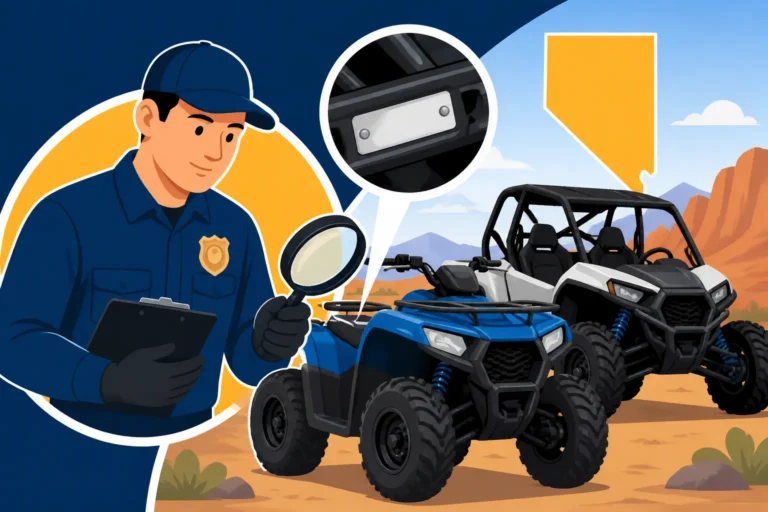
Proper placement of your Nevada OHV decal is crucial for compliance and ease of identification by law enforcement or land managers. While the general rule is "visible," there are specific guidelines to follow depending on your machine type. For ATVs (quads), the decal is typically required to be affixed to the left-rear fender, clearly visible from the rear. This spot is chosen because it's usually flat, prominent, and less likely to be obscured by mud, gear, or the rider themselves. For UTVs (side-by-sides), placement can be a little more flexible, but the goal remains the same: highly visible. This often means on the left side of the machine, near the rear, or sometimes on the rear bumper or roll cage if it offers an unobstructed view. The key is that it must be securely attached and legible. Imagine a park ranger or a BLM officer doing a compliance check at a popular staging area like Logandale Trails or Sand Mountain; they need to quickly and easily spot that decal without having to search for it. A decal that's peeling off, obscured by aftermarket accessories, or caked in dirt can lead to questions, or even a citation, so ensuring its clear visibility is part of responsible riding. [Left Side or Rear: Where the Decal Goes] provides even more specific guidance on this.
The Information Contained on Your Decal
While seemingly simple, the Nevada OHV decal carries important information that links your machine to its legal registration. Each decal features a unique registration number, typically a combination of letters and numbers, that corresponds to your vehicle's record in the DMV system. It also displays the expiration date, indicating when your registration is due for renewal. This date is critical; riding with an expired decal is just like driving a car with expired plates – it's a violation. The decal also usually includes the year it was issued, often color-coded to make it easy for enforcement officers to spot current versus expired registrations from a distance. For instance, they might be looking for a specific color this year. These details allow authorities to quickly verify that your OHV is registered, identify its current registration period, and connect it to your ownership records if needed. It's a compact, yet effective, way to manage a large fleet of off-highway vehicles operating on diverse public lands. [Reading a Nevada OHV Decal Number] can help you understand what each part of that sticker means.
Renewing and Replacing Your Decal
Just like car registrations, your Nevada OHV decal isn't a one-time deal; it needs to be renewed periodically. Nevada offers options for [One Year or Three Years in Nevada] for your registration, and you'll typically receive a renewal reminder in the mail before your current decal expires. This reminder will guide you through the process, which can often be completed online, by mail, or in person at a DMV office or a participating vendor. Staying on top of your renewal is important, as riding with an expired decal can lead to fines, like [Nevada's $10 Late Fee on an Expired OHV Decal]. Life happens, though, and sometimes decals get lost, damaged, or simply peel off after years of sun and desert dust. If your decal becomes unreadable or goes missing, don't fret! You can apply for a replacement. This usually involves filling out a form and paying a small fee to get a new decal issued. It's a straightforward process designed to keep riders compliant even when unforeseen issues occur. Remember, your decal is your proof of current registration, so keeping it visible and current is key to hassle-free riding. If you're using a service like LawDepot for other personal legal documents, it’s a good reminder that staying organized with all your vehicle paperwork, physical or digital, is a crucial part of responsible ownership.
Funding Trails and Enforcement Through Decals
One of the most compelling reasons Nevada utilizes a decal system, rather than a general plate, for OHVs is the direct link between registration fees and the funding of off-highway vehicle programs. This isn't just about collecting money; it's about creating a sustainable ecosystem for responsible off-road recreation.
How Registration Fees Support OHV Programs
Every time you pay for your Nevada OHV decal, a significant portion of that fee goes directly into a dedicated fund managed by the state. This isn't just general state coffers; it's a specific allocation designed to benefit the OHV community. These funds are then distributed through a grant program, overseen by the Nevada Commission on Off-Highway Vehicles, to various entities across the state. Think about it: county parks departments, local law enforcement agencies, OHV clubs, and federal land management agencies like the BLM can apply for these grants. The money is used for things like building and maintaining staging areas, improving trail signage, developing new trails, repairing environmental damage, providing safety education courses, and funding patrols in popular riding areas. It's a direct investment that ensures the places we love to ride remain open, safe, and well-maintained. Without this dedicated funding stream, many of the trails and facilities OHV enthusiasts enjoy simply wouldn't exist or would quickly fall into disrepair. [Where Nevada OHV Registration Money Goes] offers a detailed breakdown of how these funds are allocated.
Decals as a Tool for Trail Management
Beyond funding, the decal system serves as a crucial tool for effective trail management. By requiring registration and displaying a visible decal, the state gains a better understanding of the number of OHVs operating within its borders. This data helps land managers and the NCOHV plan for resource needs, assess environmental impacts, and make informed decisions about trail development and closures. For example, if registration numbers spike in a particular region, it might signal the need for more designated trails or increased enforcement efforts in that area. The decal also acts as a visual cue for riders, reminding them that they are part of a regulated system that requires adherence to rules and responsible behavior. It promotes a sense of shared responsibility among the riding community for the preservation of access and the integrity of the environment. When you're out riding at Sand Mountain or exploring the vast reaches of the Mojave Desert, that decal isn't just a permit; it's a visible commitment to respecting the land and contributing to the future of off-road recreation in Nevada.
The Financial Impact of Compliance
Compliance with the OHV registration system has a profound financial impact, not only on the state's ability to maintain trails but also on individual riders. For the state, high compliance rates mean more funds are available for critical OHV programs, leading to better trails, improved facilities, and more effective enforcement. This creates a positive feedback loop: better facilities encourage more riders, who then contribute more through registration, further enhancing the system. For individual riders, compliance means avoiding potential fines and penalties that can quickly add up if you're caught riding an unregistered machine or one with an expired decal. Beyond the immediate financial cost of a citation, there's the inconvenience and potential for further legal issues. On the flip side, paying the nominal [Nevada OHV Registration Fee for One Year] or [Nevada OHV Registration Fee for Three Years] is a small price to pay for legal access to thousands of miles of incredible trails and the peace of mind that comes with knowing you're contributing to the sustainability of the sport. It's a classic "pay to play" scenario that ensures the longevity of off-road opportunities in the Silver State.
The Exceptions: When a Plate Might Be Involved (Sort Of)
While the general rule in Nevada is "decals, not plates" for off-highway vehicles, there are a couple of specific scenarios that can lead to confusion, particularly concerning limited road use or machines registered in other states. It's important to understand these distinctions to avoid misunderstandings and ensure you're always riding legally.
The "Large ATV" Decal for Limited Road Use
Nevada does have a unique category for what it calls "Large All-Terrain Vehicles" (LATVs), which are defined as OHVs that meet certain criteria, typically having four wheels, a curb weight of more than 900 pounds, and a width greater than 50 inches. These are primarily your larger side-by-sides (UTVs) with features like a steering wheel and bucket seats, often designed to carry multiple passengers or cargo. For these specific machines, Nevada offers a special "Large ATV Decal" that allows for very limited operation on certain county roads and highways. [Nevada's Large All-Terrain Vehicle Decal] is different from the standard OHV decal, and it comes with a specific set of rules. For example, you might be able to ride up to two miles on a paved county road to connect to a trail, or to get gas in a small town. However, even with this decal, these machines are still fundamentally considered OHVs and not fully "street legal" vehicles. They cannot be registered with standard vehicle plates and cannot operate freely on all public roads like a car. The purpose of this special decal is to provide a practical solution for riders who need to briefly traverse a paved section to access off-road areas, without opening the floodgates for widespread OHV road use.
Why True Plates Are Still Elusive for OHVs
Despite the existence of the "Large ATV" decal, true, standard vehicle license plates remain elusive for off-highway vehicles in Nevada. This is because the fundamental classification of an OHV as a machine "not legally equipped for operation on a highway" (NRS 490.060) persists. A license plate signifies compliance with a comprehensive set of highway vehicle standards that most OHVs simply don't meet: stringent emissions, advanced safety features like airbags (rarely found on OHVs), crashworthiness standards, and often specific lighting and signaling requirements that go beyond what's needed for off-road use. Even a highly modified UTV, made to be "street legal" in some other states, would likely struggle to meet all of Nevada's street-legal requirements to earn a standard plate. The state has intentionally maintained this separation to protect the integrity of its highway system and ensure vehicle safety for on-road travel. The decal system, even for LATVs, represents a compromise for limited road use, not an equivalency with a fully street-legal vehicle. [Why Nevada Will Not Plate a Quad] dives deeper into the specific legal and practical barriers.
Out-of-State Plates and Nevada Reciprocity
Another area of confusion often arises with OHVs that are registered and plated in other states. Nevada does offer reciprocity for out-of-state OHV registrations, but it's not unlimited. If your OHV has a valid registration (often a decal or sticker) from your home state, you can typically ride in Nevada for a limited period, usually up to 15 days, without needing a Nevada OHV decal. [Nevada's 15-Day Window for Out-of-State Machines] is a critical detail for visitors. However, if your machine is from a state that issues actual license plates for OHVs that allow full street legality (which is rare, but some states have more permissive laws), that plate doesn't automatically grant you full street-legal status in Nevada. You are still subject to Nevada's OHV laws, and the machine is still considered an OHV here. This means you generally won't be able to ride it on Nevada's paved roads beyond the very limited exceptions for LATVs, and even then, your out-of-state plate might not meet the specific requirements for Nevada's LATV decal. It's always best for out-of-state riders to check Nevada's specific regulations before heading out, as reciprocity primarily covers off-highway operation, not converting an OHV into a street-legal vehicle within Nevada.
Common Misconceptions and Rider Frustrations
Even with clear laws and regulations, the distinction between OHV decals and traditional license plates can be a source of frustration and confusion for many riders. It's a common point of discussion in online forums and at trailheads, highlighting the gap between what some riders wish for and what the law currently allows.
The Desire for a Street Legal OHV Plate
One of the most frequent refrains you'll hear from OHV enthusiasts, especially those who spend a lot of time on side-by-sides, is the desire for a true "street legal" plate. Imagine the convenience: being able to hop on your UTV, drive a few miles down a paved road to the grocery store, or easily connect between different trail systems without having to trailer your machine. Many riders envision a world where their OHV could be registered and plated just like a car, offering ultimate freedom and flexibility. This desire often stems from observing other states with more lenient street-legal OHV laws, or from simply wanting to make their recreational vehicle more versatile. However, as we've discussed, Nevada's legal framework makes a clear distinction, prioritizing safety on public highways and dedicated funding for off-highway recreation. While the [Nevada Large ATV Decal Cost] allows for limited road use for specific machines, it doesn't bridge the gap to full street legality, leaving many riders wishing for more.
Confusion Over Reciprocity with Other States
Another significant source of frustration is the confusion surrounding reciprocity with other states. A rider might see a friend from Arizona or Utah with a different type of OHV registration or even a plate, and assume it grants them similar privileges in Nevada. While Nevada is generally welcoming to out-of-state OHVs, as detailed in [Nevada Reciprocity With California] or [Nevada Reciprocity With Utah], this reciprocity almost exclusively applies to off-highway riding. The presence of an out-of-state plate or unique sticker does not override Nevada's specific laws regarding what constitutes a street-legal vehicle on its paved roads. Many riders have been caught off guard, assuming their out-of-state street-legal UTV would be fine on Nevada's county roads, only to find themselves pulled over and potentially cited. The core issue is that "street legal" definitions vary wildly from state to state, and Nevada's strict adherence to NRS 490 means an OHV is an OHV, regardless of how it's classified elsewhere, unless it meets Nevada's very specific and generally quite high bar for highway vehicles.
Dealing with Law Enforcement on Decal Issues
It's an unfortunate reality that sometimes, rider frustration manifests during interactions with law enforcement. Whether it's an honest mistake about an expired decal, confusion over where a decal should be placed, or simply not understanding the limits of the "Large ATV" designation, these moments can be stressful. Rangers, sheriff's deputies, and BLM officers are out there to enforce the laws and ensure safety, and they expect riders to be compliant. Receiving a citation for an expired decal or for riding an unregistered machine can feel unfair, especially if you believed you were in compliance. This highlights the importance of not only having a current, visible decal but also understanding the nuances of Nevada's OHV laws. It's always best to be polite and cooperative, present your paperwork, and if there's confusion, try to understand the officer's explanation. Keeping your [Nevada OHV Registration Paperwork Checklist] handy, perhaps even a photograph of your documents on your phone, can help navigate these situations smoothly.
Beyond the Decal: Other Important OHV Paperwork
While the decal is your visual proof of current registration for off-highway use, it's just one piece of the puzzle. Owning an OHV in Nevada involves a few other critical documents that establish ownership, ensure proper transfer, and keep you compliant with state laws. Thinking about your OHV as an investment, much like a car, means treating all its associated paperwork with care.
The Significance of Your OHV Title
The Nevada OHV title is arguably the most important document you possess for your machine. Unlike the decal, which proves registration for a specific period, the title is proof of ownership. It's a legal document issued by the Nevada DMV that identifies the machine's vehicle identification number (VIN), its make and model, and the legal owner(s). When you buy or sell an OHV, the title is the document that gets signed over to transfer ownership. Without a proper title, proving you legally own the machine can become incredibly difficult, leading to headaches with registration, insurance, and eventual resale. Imagine trying to sell your quad only to find you've lost the title, or worse, that the person you bought it from didn't have a clear title themselves. This is why verifying a clear title during purchase, and then diligently keeping your own title in a safe place, is paramount. [Titling an Off-Highway Vehicle in Nevada] covers everything you need to know about this vital document, including costs and procedures.
The Importance of a Bill of Sale
While the title is the ultimate proof of ownership, a well-drafted bill of sale is crucial, especially during private party transactions. A bill of sale acts as a receipt and a contract, documenting the sale of the OHV from one party to another. It should clearly state the buyer and seller's information, the date of sale, the purchase price, and a detailed description of the OHV, including its VIN. This document is your first line of defense if there's ever a dispute about the sale, or if you need to prove the date of purchase to meet Nevada's 30-day registration deadline. Even if the seller has the title, a formal bill of sale protects both parties by recording the terms of the transaction. You can find templates for bills of sale online, and legal resource platforms like LawDepot often provide customizable forms that ensure all necessary legal details are included, giving you peace of mind. A comprehensive bill of sale helps streamline the process of [Buying a Used ATV Privately in Nevada] and applying for a new title and registration in your name.
Keeping Your Documents Safe
Given the importance of your title, bill of sale, and current registration card (which usually accompanies your decal), safeguarding these documents is critical. Many riders carry a copy of their registration card with them when riding, often laminated or in a waterproof bag, but the original title should be kept in a secure location at home, much like your car title or other important financial documents. Never keep your original title on your OHV, as it could be lost or stolen. In the event your machine is stolen, having the title readily available will be essential for reporting it to the authorities and for any insurance claims. If you do lose your title, you can apply for a duplicate through the DMV, but this involves extra steps and fees, so prevention is key. Similarly, a copy of your bill of sale should also be kept with your secure documents. Being diligent about organizing and protecting your OHV paperwork not only ensures legal compliance but also protects your investment and simplifies future transactions.
Table: OHV Decal vs. Standard Vehicle Plate in Nevada
Let's break down the key differences between the OHV decal and a standard vehicle license plate in Nevada, so you can clearly see why they are not interchangeable.
| Feature | Nevada OHV Decal | Nevada Standard Vehicle Plate |
|---|---|---|
| Purpose | Registers vehicle for off-highway use | Registers vehicle for on-highway use |
| Primary Location | Visible on left-rear fender (ATV) / rear (UTV) | Front and rear of vehicle |
| Governing Law | Nevada Revised Statute (NRS) Chapter 490 | Nevada Revised Statute (NRS) Chapters 482, 484 |
| Funds Allocation | Dedicated to OHV trails, education, enforcement | Road maintenance, general state funds, traffic |
| Road Use | Generally prohibited; limited for "Large ATV" | Permitted on public highways and roads |
| Safety Standards | Not designed for highway safety standards | Must meet federal and state highway safety standards |
| Identification | Unique OHV registration number, expiration date | License plate number, registration tags |
| Visibility | Designed for quick inspection in off-road areas | Designed for recognition by traffic cameras, police |
| Emissions | No emissions testing required | Emissions testing may be required (Clark/Washoe) |
| Proof of Ownership | Accompanies registration card, but not proof of ownership | Requires vehicle title for ownership |
Disclaimer
This article is for general informational purposes only and does not constitute professional advice. Laws, prices and regulations vary by location and change over time. Consult a qualified professional for guidance on your specific situation.