SR 375 and Riding the Extraterrestrial Highway
Ah, the Extraterrestrial Highway! Many of us dream of loading up our quads and side-by-sides, hitting that long, empty stretch of road, and truly experiencing the vastness of Nevada's high desert with a little alien lore thrown in. But the reality of riding your off-highway vehicle (OHV) on a state highway like SR 375 can be a bit more complicated than just hitting the ignition. This guide is here to cut through the confusion and help you understand exactly what's allowed, what's definitely not, and how to safely enjoy the incredible riding opportunities that do exist around this iconic Nevada roadway.
Understanding Nevada's Rules for Road Riding OHVs
It's easy to get excited about the idea of a long-distance road trip on your UTV, especially when you're thinking about a legendary route like the Extraterrestrial Highway. But Nevada has very specific rules about where and how off-highway vehicles can operate on paved roads, and it’s critical to understand them before you find yourself in a tough spot or, worse, with a hefty citation from a deputy or the Nevada Highway Patrol.
The "Street Legal" Myth vs. Reality
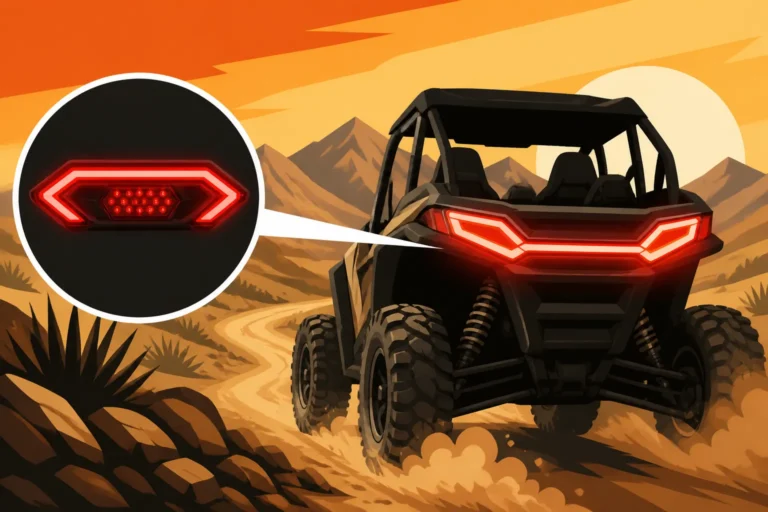
Let's address the elephant in the desert: the term "street legal" for most ATVs and UTVs in Nevada is often misunderstood. Many riders assume that if they add a horn, mirrors, and turn signals, their machine magically becomes equivalent to a car. Unfortunately, that's rarely the case for standard ATVs and smaller UTVs. Nevada law categorizes most OHVs differently from conventional vehicles, and getting a standard license plate for your average quad is simply not an option.
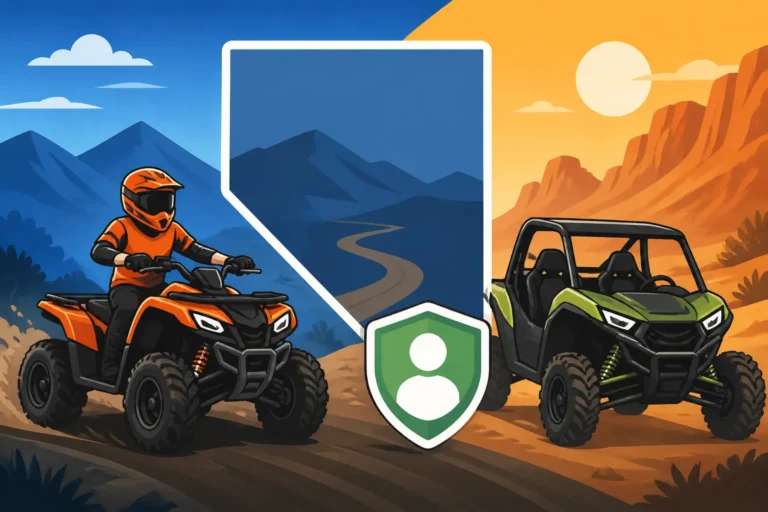
Nevada does have a specific provision for what it calls "Large ATVs" under NRS 490.043. This is where the term "street legal" gets a little murky. To qualify for a "Large ATV" decal (which is different from a regular license plate), your machine needs to meet very specific criteria. This generally means it must have a dry weight over 900 pounds, a width over 50 inches, four wheels, non-straddle seating, a steering wheel, and most critically, either a truck bed or the capacity to carry at least two passengers plus a driver. You can read more about [What Nevada's NRS 490.043 Counts as a Large ATV] to see if your machine might fit this very narrow definition. Most two-seat sport quads or smaller UTVs simply won't make the cut for this designation, regardless of how many accessories you bolt onto them.
Even with a Large ATV decal, your machine isn't treated exactly like a car. This decal allows for limited use on specific public roads, but it doesn't open up every paved road for casual cruising. It’s primarily designed to allow larger UTVs to access trails by connecting short segments of approved county roads. Thinking you can just hop on SR 375 with a typical ATV or UTV, even if it has a decal, is generally a recipe for trouble.
General and Minor County Roads: The Exceptions
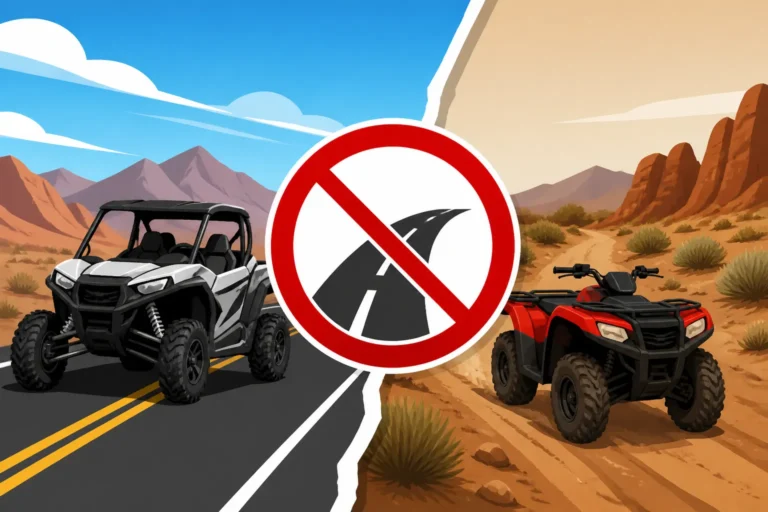
The primary distinction in Nevada for OHV road use is between major state highways (like SR 375) and minor county roads. Nevada law is quite clear: OHVs are generally restricted to designated minor county roads. These are typically unpaved, gravel, or dirt roads that the county has explicitly opened for OHV use to help riders connect to trails or access remote areas. They are not high-speed, paved state routes.
There's a well-known "2-mile rule" in Nevada that often gets misinterpreted. This rule allows a registered OHV to travel up to two miles on the shoulder of a paved state highway, or to cross a paved state highway, only to connect to a designated trail or another legal riding area. It's not a free pass to cruise down the highway for extended distances. Imagine you're at a trailhead and need to cross a highway to get to the next section of dirt; that's what the 2-mile rule is for. It is not for riding from one town to the next on a state highway. If you're wondering [How Far You Can Ride Pavement in Nevada], remember it's about access, not travel.
SR 375, the Extraterrestrial Highway, is unequivocally a state highway, not a minor county road. This means the default rules apply: OHVs are generally prohibited from riding on it, except for the very limited 2-mile access rule. While some counties have opted to open certain minor county roads to OHVs, you'll find these are usually gravel or dirt routes, not major arteries. It’s always best to check specific local ordinances for [Nevada County Roads Open to UTVs] if you're planning a trip to a new area.
| Feature | State Highway (e.g., SR 375) | Minor County Road (Designated) |
|---|---|---|
| Typical Surface | Paved, maintained | Unpaved, gravel, dirt |
| Speed Limits | Higher (55+ mph) | Lower, variable, often unsigned |
| OHV Road Use | Generally prohibited; 2-mile rule for access only | Permitted if designated by county ordinance |
| Traffic Volume | Moderate to High | Low to Very Low |
| Primary Purpose | Inter-city travel, commerce | Local access, connecting trails |
| Enforcement | Nevada Highway Patrol, local deputies | Local deputies |
SR 375, The Extraterrestrial Highway: What You Need to Know
The allure of the Extraterrestrial Highway is undeniable. Its remote mystique, vast open landscapes, and connection to Area 51 legends make it a bucket-list destination for many. But for OHV riders, it's crucial to separate the mystique from the legal realities of riding your machine on or even near this famous stretch of pavement.
Why SR 375 is Different (and Difficult for OHVs)
SR 375 is part of Nevada's state highway system, maintained by the Nevada Department of Transportation (NDOT). Unlike the sprawling network of unpaved Bureau of Land Management (BLM) roads or local county dirt roads, state highways are designed for traditional vehicle traffic, often traveling at high speeds. The experience of driving a full-size vehicle on SR 375 is already unique due to its remoteness, but attempting to ride an ATV or UTV on it presents significant safety and legal challenges.
Firstly, the speed differential between a typical OHV and other vehicles on a state highway can be immense. Even if your UTV can hit higher speeds, it's not built to safely interact with highway traffic. Visibility can also be an issue; a side-by-side or quad is smaller and lower profile than a car or truck, making it harder for fast-moving vehicles to see, especially in the vast, sometimes monotonous landscape of Lincoln County. Deputies and the Nevada Highway Patrol actively patrol these routes, and they know the rules inside and out. If you're caught riding your OHV on SR 375 beyond the very limited access rules, you can expect a citation. [What a Nevada Trooper Looks For on a County Road] is often proof of legal registration and adherence to road use laws.
The remoteness itself, while part of the appeal, also poses a risk if you break down or have an accident far from services. Cell service along SR 375 can be spotty at best, and help might be hours away. This makes adherence to all safety and legal regulations even more critical. While the desire to blend your OHV adventure with the mystique of the Extraterrestrial Highway is understandable, the paved highway itself is not the place for your off-road machine.
Legally Accessing Trails Off SR 375
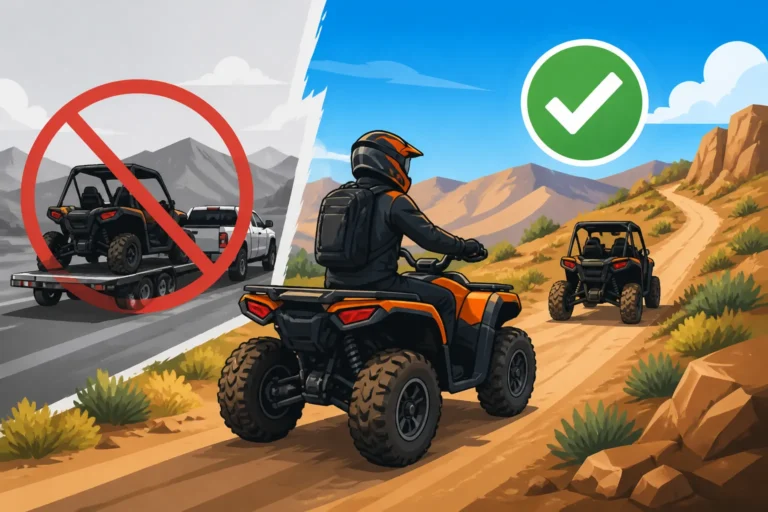
So, how do you experience the Extraterrestrial Highway region with your OHV? The answer lies in trailering your machine to the area and then riding the vast network of designated BLM and county dirt roads and trails that spiderweb off from SR 375. The true adventure in this part of Nevada isn't on the pavement; it's in the expansive desert, exploring old mining roads, remote valleys, and open landscapes that feel truly out of this world.
You can typically find numerous legal access points and trailheads along or just off SR 375. The key is to transport your OHV to these points via a truck and trailer. Once you're off the state highway and on a designated trail or approved county road, you can unleash your machine and explore the vastness. Areas around towns like Rachel or even further afield in Lincoln County offer incredible opportunities for off-road exploration. Always make sure you're riding on public land where OHVs are permitted and that you have a current [Nevada OHV Permits Explained] decal affixed to your machine.
It's absolutely essential to consult current maps. The Bureau of Land Management (BLM) provides excellent travel management maps that delineate open routes, restricted areas, and wilderness boundaries. These maps are your best friend when planning an off-highway trip in Nevada's backcountry. Ignoring them could lead to accidental trespassing or riding in environmentally sensitive or closed areas, which carries serious penalties. Get your hands on these maps and study them carefully before you head out. [Reading a BLM Travel Management Map] can save you a lot of grief and ensure you have an enjoyable, legal trip. Remember, the goal is to experience the unique terrain, not to get a ticket for riding on the paved highway. The fun happens when you leave the blacktop behind and start [Riding BLM Land in Nevada].
Equipping Your Machine for Any Nevada Adventure (Even Off SR 375)
Nevada's desert, especially in the remote areas surrounding the Extraterrestrial Highway, is not a place to take lightly. Whether you're riding miles of desolate two-track or tackling technical terrain, proper preparation and outfitting of your OHV are paramount. You'll want to ensure your machine is not just functional, but truly robust for the challenges ahead.
Essential Gear for Remote Nevada Riding
Beyond the basic legal requirements, venturing into Nevada's backcountry demands a heightened level of preparedness. Water is non-negotiable; carry far more than you think you'll need, not just for drinking but also for unexpected radiator issues or cleaning. Fuel is another critical consideration, as gas stations are few and far between on routes like SR 375. Always start with a full tank and consider carrying extra fuel in approved containers.
Mechanical preparedness is also key. A spare tire (if applicable to your machine) and a tire repair kit are essential. A good toolkit, including wrenches, sockets, zip ties, duct tape, and a tire inflator, can turn a potential disaster into a minor inconvenience. Communication is often overlooked until it's too late; cell service is nonexistent in many remote areas. A satellite messenger or satellite phone is a wise investment for emergencies. Investing in quality parts and accessories can make a huge difference in durability. Companies like SuperATV offer a wide range of heavy-duty components, from axles to skid plates, that are designed to withstand the harsh demands of desert riding. These upgrades can give you peace of mind when you're far from civilization.
Finally, don't forget the spark arrester on your exhaust. This is a legal requirement for riding on most public lands in Nevada, regardless of whether you're on a road or a trail. It prevents sparks from escaping your exhaust and potentially starting a wildfire, which is a very real concern in the dry Nevada landscape. Ensure yours is in good working order before every ride. You can learn more about why these are so important in our guide to [Spark Arresters on Nevada Roads].
Safety and Preparedness for Nevada's Backcountry
The vastness and isolation of the terrain around places like the Extraterrestrial Highway are beautiful but unforgiving. Safety should always be your top priority. Always ride with at least one other machine, and make sure someone not on the trip knows your planned route and estimated return time. This "float plan" is crucial in case you don't return as expected. A comprehensive first-aid kit is also a must, stocked for potential cuts, scrapes, and other injuries common in off-road activities.
Helmets are legally required when riding on public roads in Nevada, and frankly, they're an absolute no-brainer for off-road riding too. Even a slow-speed tip-over can result in serious head injuries. Goggles, gloves, and sturdy riding gear will protect you from dust, debris, and impacts. While you can review [Nevada Helmet Rules Off-Road Versus On-Road], the best practice is always to wear one.
Consider adding recovery equipment to your OHV. A winch, especially a reliable one from a brand like SuperATV, can be a lifesaver if you get stuck in soft sand or mud. Skid plates and A-arm guards protect vital components from rocks and impacts, preventing costly damage that could leave you stranded. Upgrading your suspension with quality components can also improve ride comfort and handling over rough terrain, reducing rider fatigue and increasing control. Preparing for the worst-case scenario will allow you to enjoy the best of what Nevada's remote landscapes have to offer.
Planning Your Alien-Themed OHV Trip
While riding your OHV directly on the paved Extraterrestrial Highway might be out, the region itself offers unparalleled opportunities for a truly unique off-road adventure. The key is in smart planning, focusing on the vast network of legal trails that crisscross the surrounding desert.
Researching Permitted Riding Areas Near SR 375
The first step to a successful alien-themed OHV trip is thorough research. Don't just show up and hope for the best. Start by identifying the BLM field offices responsible for the area around SR 375, which primarily falls under the jurisdiction of the Ely District Office. These offices are invaluable resources for maps and current information on trail statuses, closures, and specific regulations. Websites like the Nevada Trail Finder are also fantastic tools for discovering officially designated OHV routes and mapping out your adventure. [Using the Nevada Trail Finder] can help you visualize your trip and find exactly where you're allowed to go.
Many designated trails in Lincoln County, particularly those leading to or past historical sites, old mines, or scenic viewpoints, are perfectly legal for OHV use. Look for trails that parallel or intersect SR 375, allowing you to experience the vastness of the area without riding on the highway itself. Always be mindful of private property boundaries, which are often not fenced in remote areas, and steer clear of any areas marked as wilderness or environmentally sensitive. These boundaries are clearly delineated on BLM travel management maps. Understanding the difference between [Riding to the Trailhead, Not to the Store] is critical here.
Making the Most of Your Visit (Beyond the Pavement)
The true magic of the Extraterrestrial Highway region reveals itself when you leave the pavement and delve into the dirt. This is where you'll find the stunning desert landscapes, the incredible silence broken only by the hum of your engine, and perhaps even a hint of the unexplained that makes this area so famous. Your OHV is the perfect tool for exploring this rugged beauty.
Consider making Rachel, the small town often called the "UFO Capital of the World," your base or a key stop. From there, you can access numerous dirt roads that branch off into the surrounding desert. Explore the famous (or formerly famous) "Black Mailbox" area, albeit from designated trails or access roads, rather than pulling off the highway willy-nilly. The remote nature means you’ll often have trails to yourself, allowing for an immersive experience.
Remember, the goal isn't to ride the highway for a photo op, but to embrace the spirit of exploration that the region embodies. With a properly equipped machine (perhaps with some durable SuperATV gear for confidence on challenging terrain) and a solid plan, you can enjoy a truly unforgettable off-road journey through one of Nevada's most mysterious and captivating landscapes.
Disclaimer
This article is for general informational purposes only and does not constitute professional advice. Laws, prices and regulations vary by location and change over time. Consult a qualified professional for guidance on your specific situation.