Riding to a Trailhead Instead of Trailering
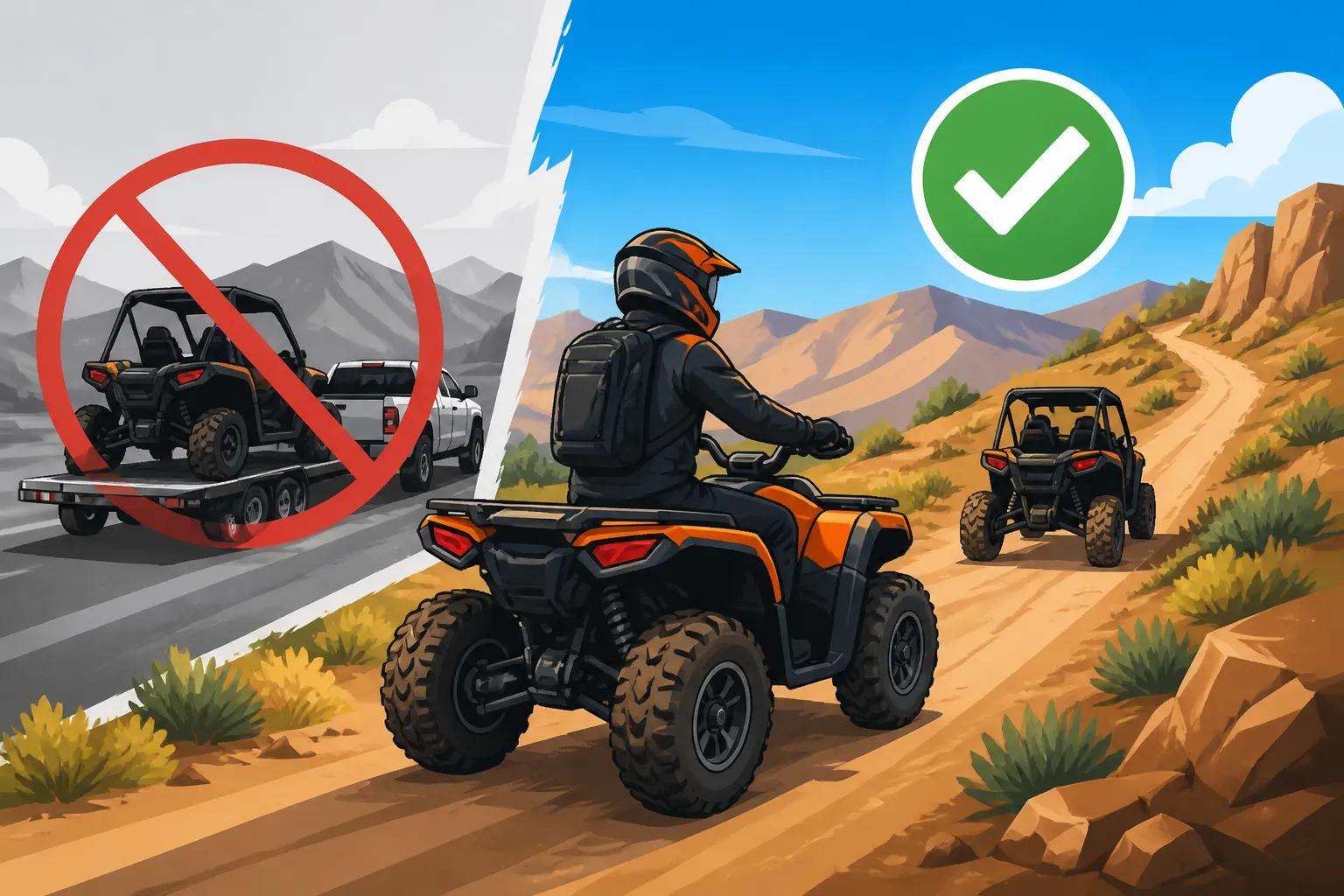
Let's be real: loading up the trailer, securing your ATV or UTV, battling highway traffic, and then finding a suitable parking spot at the trailhead can sometimes feel like a bigger adventure than the ride itself. It's a hassle many of us know all too well, costing time, fuel, and patience. This guide is all about cutting through that frustration, explaining exactly what it takes to legally ride your off-highway vehicle (OHV) directly to your favorite Nevada trailheads, rather than lugging it on a trailer.
Understanding Nevada's Rules for OHVs on Paved Roads
Nevada is a fantastic state for off-roading, with vast stretches of open desert, amazing dunes, and countless trails. But when it comes to riding your pride and joy on paved roads, things get a little more complicated. It’s not a free-for-all, and understanding the specific statutes is absolutely crucial to avoid fines, or worse, an accident. Many riders assume that because a road leads to dirt, it’s automatically fair game, but that's a dangerous assumption to make.
The "Large All-Terrain Vehicle" Distinction
First things first, Nevada draws a significant line in the sand regarding what kind of OHV can even consider hitting paved surfaces. It's not about whether your quad is loud or your UTV is fast; it's about its design. The state refers to these as "Large All-Terrain Vehicles" (LATV). What makes an OHV "large" in Nevada's eyes? It's primarily about seating capacity and whether it has a bed. Generally, this means a side-by-side or UTV that is either designed to carry four or more passengers or has a truck-like bed. This is a critical point that often trips up riders. [What Nevada's NRS 490.043 Counts as a Large ATV] delves deeper into the exact definitions.
If you're riding a traditional sport quad or even a utility ATV designed for one or two people without a bed, the chances of it qualifying for street legal status under Nevada's LATV rules are pretty much zero. This is a common source of frustration, especially for quad owners who see UTVs legally cruising down roads to reach trails. They might ask, "Why can my buddy on his four-seater RZR ride the pavement, but I can't on my two-seat quad?" [Why a Two-Seat Sport Quad Fails Nevada's Test] explains the rationale behind this distinction. It's not about horsepower; it's about the vehicle's inherent design and perceived safety profile for road use.
Permitted Roadways: County Roads and Designated Routes
Even if your machine qualifies as a Large All-Terrain Vehicle, you can't just ride it anywhere. Nevada limits where these machines can travel. The primary avenues open to street-legal OHVs are "minor county roads" and "designated routes." You won't be cruising down major state highways like US-95 or I-15 on your UTV. It’s important to understand this distinction. A county road might connect small towns or provide access to remote areas, but a state route is designed for higher-speed, higher-volume traffic, and OHVs are generally excluded.
Many cities and counties also have the authority to establish their own ordinances. This means that even if a road is technically a "minor county road," a local jurisdiction might have banned OHV use on it. For example, [Washoe County Ordinance 1507] is a local rule that restricts where OHVs can travel within that county. It's always a good idea to check with the local county or city clerk's office for any specific ordinances before you plan your route. There's nothing worse than getting a ticket when you thought you were doing everything right. Some communities, like Mesquite, are known for having more open policies regarding OHV street access, earning them a reputation as friendly to riders. [Mesquite and Its Reputation for Open Streets] is a good resource if you're planning a trip there.
Equipping Your OHV for Nevada Road Use
Getting your UTV to qualify as a Large All-Terrain Vehicle is just the first hurdle. The next, and equally important, step is to ensure it's properly equipped to be ridden safely and legally on public roads. This isn't just about avoiding a ticket; it's about your safety and the safety of others on the road. The requirements are designed to bring your OHV closer to the standards of a regular street-legal vehicle, making it more visible and controllable in traffic. Many riders turn to aftermarket solutions from companies like SuperATV to meet these requirements, as most OHVs don't come factory-equipped for road duty.
Mandatory Safety and Visibility Gear
Nevada law specifies a list of equipment that must be present and functional on your LATV before it can legally hit the pavement. These aren't suggestions; they are mandates, and deputies will be looking for them.
- Headlights and Taillights: Your machine needs headlights and taillights that are visible from 500 feet. This isn't just for night riding; it's about being seen during the day, especially in dusty conditions or areas with shade. Making sure these are clean and bright is paramount.
- Stop Lamp (Brake Light): A functional stop lamp that illuminates when you hit the brakes is essential. This tells drivers behind you that you're slowing down, just like a car.
- Reflectors: You'll need at least one red reflector on the rear of your machine. Often, the taillight assembly incorporates a reflector, but it's worth checking to ensure it meets the requirement.
- Mirrors: You must have at least one rearview mirror. Many riders opt for two, one on each side, for better visibility, and companies like SuperATV offer a wide range of robust mirrors designed for off-road machines that can handle the bumps and vibrations of trail and road use.
- Horn: A working horn is not just a courtesy; it's a legal requirement for road-going OHVs. It allows you to alert other drivers or pedestrians to your presence.
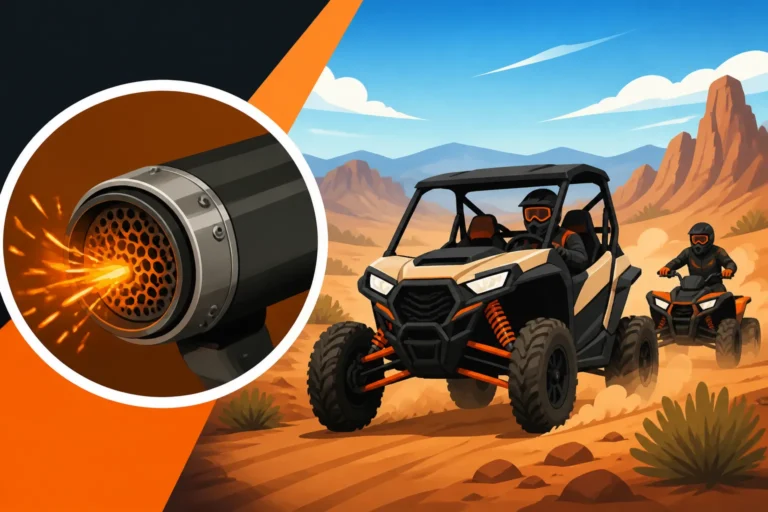
- Muffler and Spark Arrester: While you're likely to have a muffler and spark arrester for off-road use, it's worth noting they are also required for road travel. This keeps noise levels reasonable and prevents sparks from igniting roadside vegetation.
- Seat Belts: If your LATV has seat belts, they must be worn by all occupants. This is a basic safety measure.
- Tires: While not explicitly listed as "DOT approved" for LATVs, your tires must be in good condition. If you're going to be hitting pavement regularly, consider tires that are designed for mixed use, as aggressive off-road treads can wear down quickly on asphalt and affect handling.
Meeting these requirements can involve some modifications. Companies like SuperATV offer entire street legal kits that include many of these components, making the conversion process much simpler for the average rider. Remember, [Nevada Equipment List for Road-Legal UTVs] has a more exhaustive breakdown.
Licensing, Registration, and Insurance
Beyond the physical equipment, you also need the right paperwork and legal standing to operate your OHV on Nevada roads. This is where many riders get caught out.
- Driver's License: Anyone operating a street-legal LATV on a public road in Nevada must possess a valid driver's license. This isn't just for cars; it applies to these vehicles too. [Nevada Driver's License Rules for UTV Road Use] details these requirements.
- Nevada OHV Registration and Decal: Your OHV must be properly registered with the Nevada DMV and display a current OHV decal. This decal signifies that your machine is registered for off-highway use. While it's not a "street legal plate," it's the primary registration proof. [What a Nevada OHV Decal Actually Proves] explains its purpose.
- Large All-Terrain Vehicle Decal: This is separate from your standard OHV decal. If your machine qualifies as an LATV and you intend to ride it on specified county roads, you need to apply for and display this additional "Large All-Terrain Vehicle Decal." This decal essentially tells law enforcement that your UTV has met the additional requirements for limited road use. [Nevada Large ATV Decal Cost] provides details on the fees involved.
- Insurance: This is often overlooked. When you're riding your OHV on a public road, even a minor county road, Nevada law requires you to carry liability insurance. This is the same type of insurance you'd have on your car, covering damages or injuries you might cause to others. [Insurance and Nevada OHV Registration] touches on the broader insurance landscape for OHVs, but specifically for road use, it's mandatory.
Nevada OHV Road Use Checklist
| Requirement | Description |
|---|---|
| Vehicle Type | Must meet the "Large All-Terrain Vehicle" (LATV) definition (typically 4+ seats or truck bed). |
| Headlights | Visible from 500 feet. |
| Taillights | Visible from 500 feet. |
| Stop Lamp | Functional brake light. |
| Reflectors | At least one red reflector on the rear. |
| Mirrors | At least one rearview mirror. |
| Horn | Functional audible warning device. |
| Muffler | Yes, to control noise. |
| Spark Arrester | Yes, to prevent fires. |
| Seat Belts | Required if equipped; must be worn. |
| Driver's License | Valid driver's license for the operator. |
| OHV Registration | Current Nevada OHV decal. |
| LATV Decal | Additional "Large All-Terrain Vehicle" decal for road use. |
| Insurance | Liability insurance required for road use (same as a car). |
| Road Type | Limited to minor county roads and designated routes; not state highways. Check local ordinances! |
| Speed Limit | Must obey posted speed limits. |
Practicalities and Pitfalls of Road Riding to the Trailhead
So, you've got your LATV, it's fully equipped, and all your paperwork is in order. You're ready to hit the road – literally! But even with all the legalities squared away, there are still some practical considerations and potential pitfalls to keep in mind when choosing to ride to the trailhead instead of trailering. It's a different kind of ride, and treating it with the same casualness as trail riding can lead to unexpected trouble.
Safety First: Sharing the Road with Cars
This is probably the biggest difference: you're no longer just navigating trails; you're sharing paved surfaces with cars, trucks, and even semi-trucks. These vehicles are bigger, faster, and their drivers might not be expecting an OHV on the road. Your UTV, even with all the proper street-legal equipment, is still inherently different from a car.
- Visibility: While you've added lights and mirrors, your UTV is still smaller and lower to the ground than many passenger vehicles. Always assume drivers don't see you, especially at intersections or when changing lanes. Bright clothing and keeping your lights on, even during the day, can help.
- Speed Differentials: OHVs typically have lower top speeds than cars, especially on roads. This can create dangerous situations if a car comes up behind you quickly. Stay to the right, use turn signals (if equipped, which is highly recommended for road use), and be prepared to pull over if necessary to let traffic pass.
- Handling: UTVs handle differently on pavement than off-road. The tires, suspension, and steering are optimized for dirt, not asphalt. Cornering at speed can feel less stable, and emergency braking might take longer. Always drive defensively and well within your machine's and your own limits.
- Carrying Gear: If you're riding to the trailhead, where do your helmets, goggles, and any other gear go? You'll need secure storage. A cargo box or storage bag from SuperATV or similar brands can be incredibly useful here, keeping your gear safe from bouncing out or getting covered in road grime. [Keeping Paperwork Dry in a Dusty Machine] also reminds us to protect our important documents.
Local Ordinances and Designated Routes: Don't Guess
As mentioned earlier, local rules can change everything. A minor county road in one part of Nevada might be open to LATVs, while a similar road just across the county line might be explicitly forbidden. It's not enough to know the state laws; you must know the local laws for your specific riding area.
- Research Ahead: Before you embark on your journey, do your homework. Check the county's website, look for local ordinances, or even call the local sheriff's department or DMV OHV section. [Where the OHV Section Sits in Carson City] might be a good starting point for general inquiries.
- "Riding to the Trailhead, Not to the Store": This is a critical distinction that law enforcement often emphasizes. The purpose of allowing LATVs on certain roads is to access trails, not to run errands or joyride through town. While you might legally cross a street to get to a gas station for fuel, making frequent stops or prolonged stays in urban areas can draw unwanted attention and potential citations. [Nevada Rules on Riding Into Town for Fuel] outlines what's generally allowed.
- Signage: Always look for signs. Many designated routes will have specific signage indicating OHV access, or conversely, signs prohibiting OHV use. Ignorance of a sign is rarely an excuse in the eyes of the law.
Penalties for Non-Compliance
The consequences of riding illegally can range from a costly citation to having your machine impounded. Law enforcement officers, whether it's a county sheriff, a state trooper, or a BLM ranger, are trained to look for these infractions.
- Fines: Riding an unregistered machine, one without the proper LATV decal, or one that's missing required equipment can result in significant fines. [Nevada Fines for No Large ATV Decal] gives you a sense of what's at stake.
- Vehicle Impoundment: In more serious cases, or for repeat offenders, your OHV could be impounded. This means not only a fine but also impound fees, storage fees, and the hassle of retrieving your machine.
- Safety Risks: Beyond the legal penalties, the biggest risk is always your safety. An improperly equipped or illegally ridden OHV on public roads puts you and others in severe danger.
Ultimately, riding your UTV to the trailhead in Nevada can be a convenient and fun alternative to trailering, but it requires diligent preparation, adherence to specific laws, and a strong commitment to safe road practices. It's about being a responsible rider, respecting the rules, and understanding that the road demands a different mindset than the trail.
Disclaimer
This article is for general informational purposes only and does not constitute professional advice. Laws, prices and regulations vary by location and change over time. Consult a qualified professional for guidance on your specific situation.