Nevada Street Legal UTV Requirements
It’s a common scenario for many of us passionate about off-roading in the Silver State: you've got your UTV, you love hitting the trails, but you also dream of being able to legally cruise down a county road to get to the next trailhead, or even just to grab a quick bite. The good news is, Nevada does offer a path for certain utility task vehicles to become 'street legal.' The not-so-good news? It’s not as simple as slapping a license plate on it. This guide will walk you through the precise Nevada Street Legal UTV Requirements, clarifying what it takes to get your machine approved for limited road use.
Understanding Nevada's "Large ATV" Designation for UTVs
When we talk about "street legal" in Nevada for UTVs, it's really important to understand that the state doesn't treat these machines like cars or trucks that get traditional license plates. Instead, Nevada created a specific category called "Large All-Terrain Vehicles" (Large ATVs) which allows certain UTVs to operate on a very limited set of public roads. This designation is key because it sets your UTV apart from a standard quad and dictates the rules you'll follow. Many folks get confused, thinking they can just get a regular car plate, but that's simply not how it works here. The Nevada DMV is clear on this distinction, and understanding it is the first step toward legitimate road use.
What Qualifies as a "Large ATV" in Nevada?
So, what exactly makes a UTV a "Large ATV" in the eyes of Nevada law? It boils down to a few critical factors that are laid out in NRS 490.043. Your UTV must meet specific criteria regarding its dimensions and capabilities, which helps differentiate it from smaller, purely off-road machines.
First, it needs to have a width exceeding 50 inches. This immediately rules out many sport quads and older, narrower side-by-sides. Most modern UTVs, especially those designed for multiple passengers or utility work, easily meet this width requirement. Think about your average four-seat RZR or a workhorse Can-Am Defender; these generally pass the width test with flying colors.
Second, and perhaps more importantly, the UTV must have a non-straddle seat and a steering wheel. This is where your machine truly distinguishes itself from a traditional ATV. If you're sitting on a saddle-like seat and steering with handlebars, you're on a standard ATV, not a "Large ATV" in Nevada's definition. The presence of a steering wheel and bucket or bench seats, just like you'd find in a car, is a dead giveaway that your UTV is designed for a different kind of operation and potentially, for road use.
Finally, and this is a big one that surprises many, the UTV must be designed by the manufacturer with either a truck bed or a seating capacity for four or more people. This is often the trickiest hurdle for many sport-oriented side-by-sides. If your UTV is a two-seater sport model without a dedicated truck bed (like a small storage box doesn't count), it generally won't qualify. The intent here is to allow larger, more utilitarian or family-oriented machines onto the road, rather than nimble two-seaters built for pure speed and agility on the trails. It's a pragmatic approach to road safety and integration. For more details, see [What Qualifies as a Large ATV in Nevada].
Why a Standard Quad Doesn't Make the Cut
Given the strict criteria for a "Large ATV," it becomes pretty clear why your typical quad or even a two-seat sport ATV won't ever be considered "street legal" in Nevada. They simply don't fit the mold.
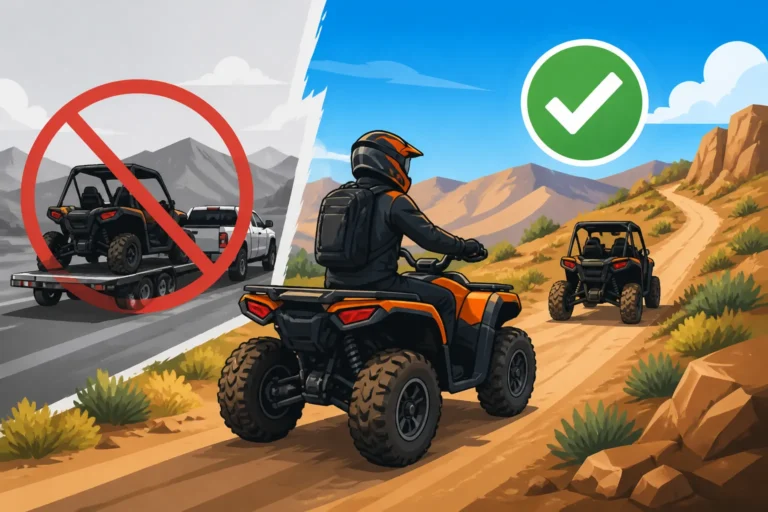
A traditional quad, by its very design, has a straddle seat and handlebars. It's built for a single rider to lean and maneuver, often at high speeds or through challenging terrain. These characteristics are antithetical to the stability and control expected on a public road, even a minor county one. Nevada's laws are specifically crafted to avoid the dangers of putting these types of machines into traffic situations, even low-speed ones. You might love your sport quad, but it's fundamentally an off-highway vehicle, and the state wants to keep it that way for everyone's safety. This is also why you'll get a distinctive decal for a Large ATV rather than a typical license plate, underscoring its difference from a highway vehicle. You can read more about this in [Why Nevada Will Not Plate a Quad].
Even a two-seat sport UTV often fails the "Large ATV" test. While it has a steering wheel and non-straddle seats, if it lacks a truck bed and doesn't seat four or more people, it's out of luck. This particular part of the law is a source of frustration for many UTV owners who have perfectly capable two-seat machines they'd love to take on the occasional paved stretch. It’s a clear example of the state prioritizing specific utility or passenger capacity over general UTV design for road-legal status. It’s not about how fast it can go or how well it handles, but rather about its fundamental configuration according to statute.
Essential Equipment for Nevada Road Legality
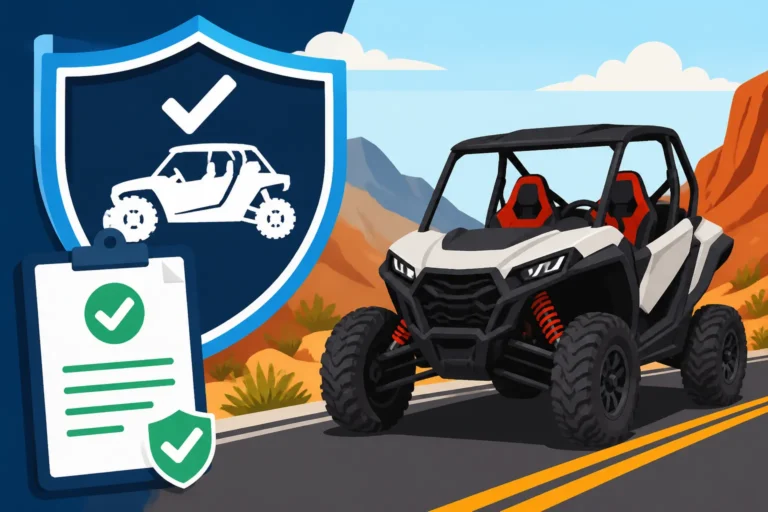
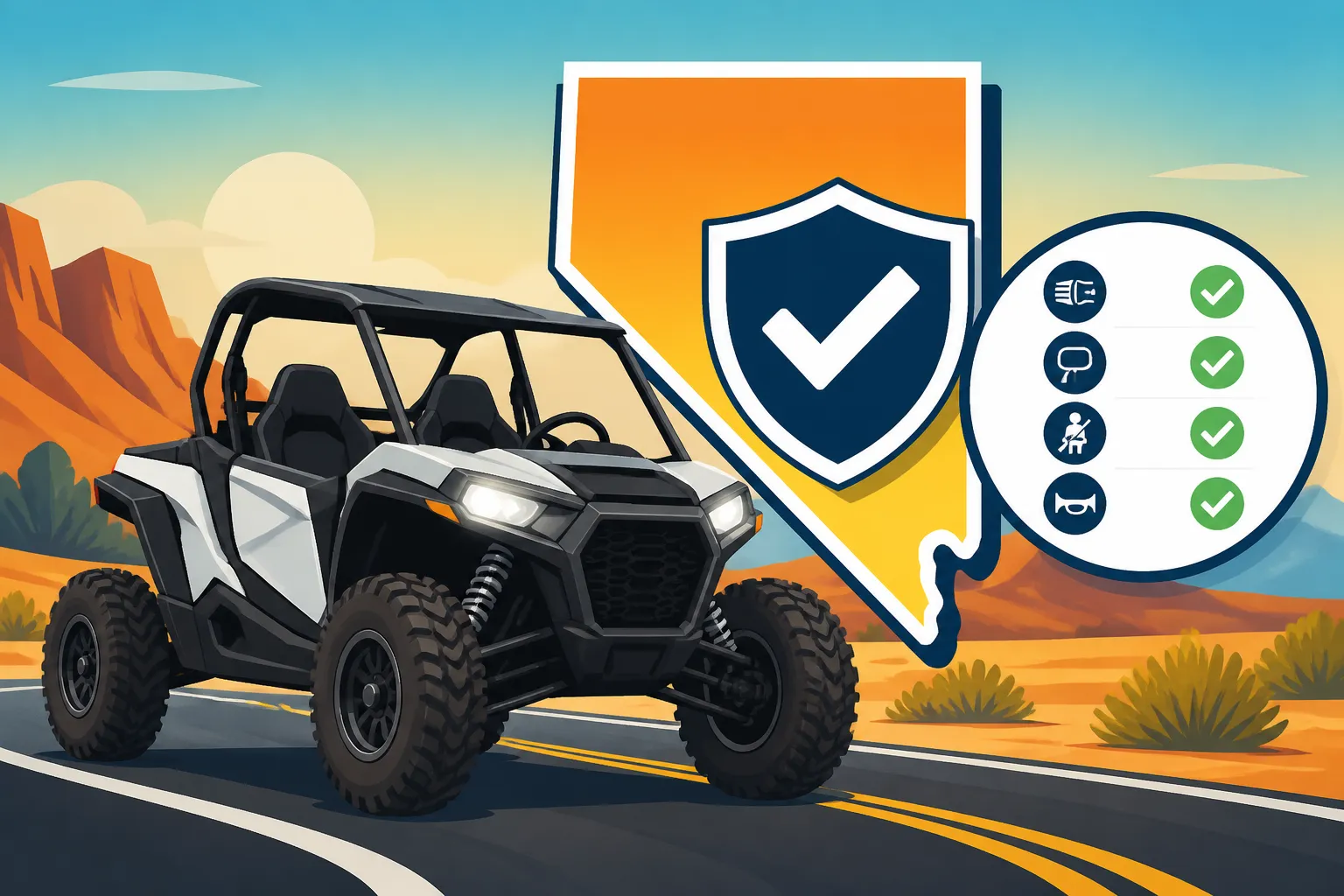
Once you've confirmed your UTV meets the "Large ATV" definition, the next hurdle is outfitting it with the necessary safety and operational equipment. This isn't just about good practice; it's about meeting a specific checklist mandated by Nevada law. Cutting corners here isn't just risky, it can get you a ticket and invalidate your road-legal status. Think of it as preparing your machine for a different kind of adventure – one that involves sharing the asphalt, even if only for a short distance. This list of required gear is pretty comprehensive, aiming to ensure your UTV is visible, controllable, and communicates your intentions to other road users.
Mandatory Lighting and Signaling Components
Visibility is paramount when you're on any public road, and your UTV needs to make itself known, day or night. This means a full suite of lighting and signaling equipment that functions reliably.
- Headlights and Taillights: Your UTV must be equipped with at least one headlight and one taillight. Crucially, these lights must be visible from a distance of 500 feet. This isn't just a "looks like it works" standard; it means they need to be bright and clear. For night riding, this is obviously non-negotiable. You'll want to ensure your existing lights meet this visibility standard, or consider upgrading to more powerful LED options if needed.
- Stop Lamp: Just like any other vehicle on the road, your UTV needs a functioning stop lamp (brake light) that illuminates when you apply the brakes. This is critical for preventing rear-end collisions and clearly signaling your deceleration to anyone behind you.
- Reflectors: Beyond active lighting, your UTV needs to have specific reflectors. There must be at least one red reflector on the rear of the machine, visible from 500 feet. Often, a combination taillight assembly will incorporate this, but it’s worth checking to make sure it’s present and not obscured.
- Turn Signals: While some states allow hand signals for off-road vehicles on roads, Nevada requires actual turn signals for Large ATVs. You'll need amber turn signals on the front and red or amber on the rear, clearly visible to signal your intentions to turn or change lanes. Many stock UTVs don't come with factory-installed turn signals, so this is often an aftermarket addition. Companies like SuperATV offer complete turn signal kits specifically designed for UTVs, making the installation process much smoother. Ensure they flash consistently and are bright enough to be seen in daylight.
Safety Features Beyond the Trail
While your UTV likely has robust safety features for off-road use, road legality often demands a few more, or at least a specific confirmation that existing ones meet standards.
- Brakes: Your UTV must have effective brakes. This might sound obvious, but the law typically specifies that the braking system must be capable of stopping the vehicle within a certain distance at a given speed. Your factory brakes should almost certainly meet this, but it's a good reminder to keep them well-maintained and in perfect working order.
- Muffler and Spark Arrester: Nevada has noise regulations, and your UTV must be equipped with a muffler that is in good working order and prevents excessive or unusual noise. Additionally, a spark arrester is required for all off-highway vehicles, regardless of road use, to prevent wildfires. This device is usually integrated into the muffler or exhaust system and helps contain any incandescent particles that could escape the exhaust. Making sure these are in compliance is not only a legal requirement but also a good neighbor policy for those living near riding areas. [Nevada Muffler Rules for Road Riding] and [Nevada Spark Arrester Requirement] are helpful resources.
- Seat Belts/Restraints: If your UTV has seats, it must be equipped with functioning seat belts for all occupants. This aligns with standard vehicle safety practices and is crucial for protecting passengers in the event of a collision or sudden stop. While many UTVs come with seatbelts, ensuring they are in good condition and properly latched is part of road readiness. [Nevada Seat Belt Rules in a Side-by-Side] is important to review.
Mufflers, Mirrors, and More
Beyond the core lighting and safety items, there are a few other pieces of equipment that often get overlooked but are critical for full compliance.
- Mirrors: You must have at least one rearview mirror, and typically two (side mirrors) are recommended for optimal visibility. This allows you to see traffic approaching from behind without twisting around. Aftermarket mirrors are a common upgrade, and again, brands like SuperATV provide durable, easy-to-install mirror kits that offer excellent visibility and can withstand the rigors of both road and trail riding.
- Horn: A working horn is absolutely essential for signaling your presence to other drivers and pedestrians. It needs to be audible from a reasonable distance, giving a clear warning sound. Many stock UTVs have a horn, but if yours doesn't, or if it's inadequate, an aftermarket horn is a simple and inexpensive addition.
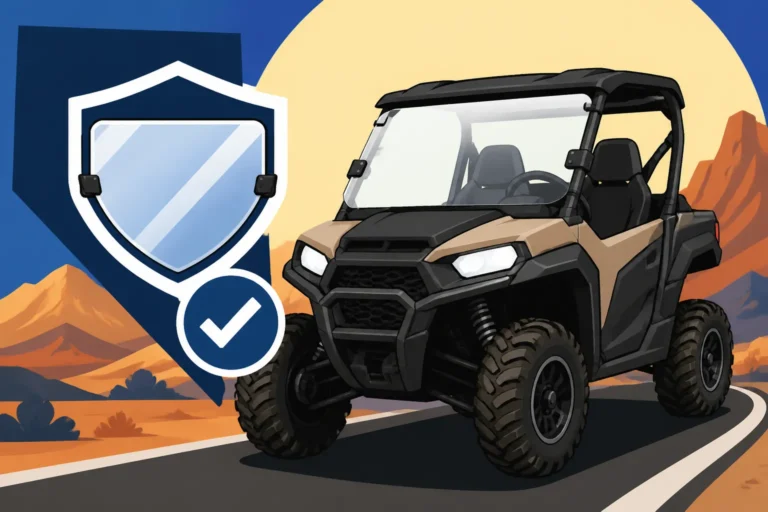
- Windshield: While not explicitly required for all vehicles, many UTV owners opt for a windshield for comfort and protection from debris. If your UTV does have a windshield, it must be made of safety glass or a similar material that won't shatter dangerously upon impact.
- Tires: Your tires need to be in good condition, without excessive wear, and generally suitable for the surfaces you'll be riding. While specialized off-road tires are fine for the dirt, if you plan on significant pavement use, considering tires with a more road-friendly tread pattern can improve handling and longevity.
Here's a quick summary of the key equipment required:
| Equipment Category | Specific Requirement | Notes |
|---|---|---|
| Visibility | Headlight(s) (visible 500 ft) | At least one, but two are typical |
| Taillight(s) (visible 500 ft) | At least one, often combined with brake light | |
| Stop Lamp | Illuminates when brakes are applied | |
| Red Rear Reflector | Visible 500 ft, often integrated with taillight | |
| Turn Signals (front amber, rear red/amber) | Mandatory for signaling turns | |
| Rearview Mirror(s) | At least one, side mirrors highly recommended | |
| Audibility/Safety | Horn | Audible warning device |
| Muffler (good working order, no excessive noise) | Prevents nuisance noise | |
| Spark Arrester | Prevents wildfires, required for all OHVs | |
| Seat Belts/Restraints | For all occupants, in good working condition | |
| Brakes (effective) | Capable of stopping the vehicle safely | |
| Optional/Conditional | Windshield (if equipped, must be safety glass) | For protection and comfort |
| Tires (adequate tread, road-worthy condition) | Ensure they are suitable for occasional pavement use |
For a complete checklist, refer to [Nevada Equipment List for Road-Legal UTVs].
The Process of Getting Your Large ATV Decal
Once you’ve confirmed your UTV is indeed a "Large ATV" by Nevada's definition and you've equipped it with all the necessary road-legal gear, it’s time to tackle the administrative side of things. This involves gathering documents, getting inspections, and submitting your application to the Nevada Department of Motor Vehicles (DMV). It's not always a quick trip, so be prepared and patient. The goal here is to secure that special "Large ATV" decal, which signifies your UTV's limited road-legal status. It’s different from a standard vehicle registration and has its own set of specific forms and procedures.
Gathering Your Paperwork and Proof
Before you even think about heading to the DMV or a dealer, you'll need to compile a specific set of documents. Having everything in order will prevent frustrating delays and multiple trips.
- Proof of Ownership: This is non-negotiable. You'll need your UTV's Certificate of Title. If you just purchased the machine, you might have a Manufacturer's Certificate of Origin (MCO/MSO) or a bill of sale, which you'll use to apply for the title simultaneously. Ensure the title is in your name and is clean. If you're [Buying a Used ATV Privately in Nevada], make sure the title transfer is properly executed.
- Nevada OHV Application: You'll need to fill out the appropriate application form. The DMV has several OHV forms, but for an initial registration of a Large ATV, you'll typically be looking at form OHV-001 or a related version. Make sure you select the correct one that covers initial registration and the Large ATV designation. These forms ask for specific details about your machine and your personal information. [Why Nevada Has Five Registration Applications] covers the different forms.
- Proof of Residency: You'll need to demonstrate that you are a Nevada resident to register a machine here. This usually involves a Nevada driver's license or ID card, and potentially utility bills or other official correspondence showing your physical address.
- Verification of Vehicle Identification Number (VIN): This is a critical step. The state requires a VIN inspection to confirm the vehicle's identity. However, you cannot just show up at the DMV and expect them to do it. The DMV generally will not perform VIN inspections for OHVs. Instead, you'll need to have a licensed Nevada OHV dealer or a sworn law enforcement officer (like a Sheriff's deputy, Highway Patrol Trooper, or local police officer) complete the verification for you. They will check the VIN on your machine against your paperwork. Many dealers are equipped to do this, often for a small fee, and it's usually the easiest route. See [Who Can Do a VIN Inspection in Nevada] and [The VIN Inspection Nevada DMV Will Not Do] for more details.
- Proof of Insurance: For your Large ATV to be legally ridden on public roads, it must be insured. Nevada law requires liability insurance coverage that meets the state’s minimum requirements, just like any other motor vehicle on the road. This is a separate requirement from general OHV registration, which does not mandate insurance for off-road-only use. Be sure to have your insurance card or policy declaration readily available as proof. More information is available at [Insurance Nevada Requires for Road Use].
The Application and Inspection Steps
With your documents in hand, you're ready to proceed with the application and inspection process.
- VIN Inspection: As mentioned, arrange for a licensed Nevada OHV dealer or a law enforcement officer to complete the VIN inspection. This person will fill out and sign a specific section on your application form, certifying that they've verified the VIN on your UTV. It's often best to call ahead and schedule an appointment, especially with law enforcement, as they may have limited availability.
- Complete the Application: Double-check that all sections of your OHV application form are filled out accurately and completely. Any missing information can lead to rejection and further delays.
- Submit to the DMV: You can usually submit your completed application packet, including your title/MSO, VIN verification, and proof of insurance, to the Nevada DMV. Some transactions can be handled by mail, but for an initial registration and title, an in-person visit might be necessary, or submission through a licensed OHV dealer. Many riders choose to [Registering Through a Nevada Dealer] as they often handle all the paperwork for a small processing fee. When you submit your application, specify that you are applying for a "Large ATV" decal for road use.
- Pay Fees: There will be fees associated with titling your UTV (if you don't already have a Nevada title) and registering it for the Large ATV decal. These fees contribute to the state's OHV program and trail maintenance. [Cost to Title an ATV in Nevada] and [Nevada Large ATV Decal Cost] provide more context on the financial aspects. Be prepared for these costs, which can vary depending on whether you choose a one-year or three-year registration.
Costs and Renewals for Road Use
The cost of getting your Large ATV decal and keeping it current is typically structured around the registration period you choose. Nevada offers options for both one-year and three-year registration periods for OHVs, including Large ATVs.
The fees are set by the state and are generally quite reasonable compared to regular vehicle registration. Expect a specific fee for the decal itself, with the three-year option usually offering a slight discount over buying three one-year decals individually. There may also be title fees if you are applying for a new Nevada title. [Nevada OHV Registration Fee for One Year] and [Nevada OHV Registration Fee for Three Years] detail these costs.
Renewing your Large ATV decal is similar to renewing a standard OHV decal. You'll typically receive a renewal notice, and you can often renew online or by mail. Just like with initial registration, make sure your insurance is current, as proof of insurance is a prerequisite for road-legal renewal. Be mindful of the expiration date to avoid any late fees. An expired decal means your UTV is no longer legally allowed on public roads, even if it has all the right equipment. [Renewing a Nevada OHV Decal] has more information on this process.
Where You Can (and Can't) Ride Your Road-Legal UTV
Getting your UTV designated as a "Large ATV" and acquiring the decal is a big step, but it doesn't mean you can just ride anywhere. Nevada has very specific limitations on where these machines can operate on public roads. This is arguably the most important section to understand, as violations can lead to fines and legal trouble. The state's intent is to allow for practical use and access to trailheads, not free-roaming on all streets.
The "Minor County Road" and "2-Mile" Rules
This is the cornerstone of Nevada's street-legal UTV regulations for Large ATVs. You are generally restricted to two main types of road use:
- Minor County Roads: Your Large ATV is permitted on "minor county roads." These are typically unpaved, low-traffic roads that are maintained by the county, often leading to trailheads, remote campsites, or rural residences. The key here is "minor" – you're not meant to be on busy paved thoroughfares. These roads serve as vital links for off-road enthusiasts to access the vast public lands Nevada has to offer. However, not all county roads are automatically open; counties have the power to restrict or close certain roads to OHV travel. It's crucial to check local ordinances for the areas you plan to ride. For example, [Washoe County Ordinance 1507] specifies restrictions in that area.
- The 2-Mile Limit on Paved Highways: This rule is a lifesaver for connecting trail segments or accessing fuel. A Large ATV can operate on paved highways (state routes or other paved roads) for a distance of up to two miles to connect two routes or to access a service. This means you can cross a paved road, or ride along it for a short distance to get from one dirt trail to another, or to pull into a gas station. This isn't a license to cruise through town for fun; it's a very specific, limited allowance. Always be aware of your odometer and surroundings to ensure you don't exceed this limit. [Nevada's 2-Mile Limit on Paved Highway] covers this in detail.
It's also important to remember that when riding on any public road, even minor county ones, you must obey all traffic laws, including speed limits, stop signs, and yielding rules. You are sharing the road with other vehicles, and your UTV's limited road status doesn't exempt you from these fundamental rules.
City Ordinances and Prohibited Highways
While Nevada provides the framework for Large ATVs on roads, local jurisdictions have a lot of say in how those rules apply within their boundaries.
- City Ordinances: Many cities and towns in Nevada have ordinances that prohibit OHV use on any city streets, regardless of your Large ATV decal. For example, while [Mesquite and Its Reputation for Open Streets] might suggest more leniency, larger cities like Las Vegas, Reno, Henderson, and Sparks generally have strict bans on OHVs on their streets, unless specifically designated for events. Never assume you can ride in a populated area; always check the local municipal code. A common scenario is riding from your campsite or hotel directly to the trailhead; in many developed areas, this is simply not allowed.
- Prohibited Highways: Beyond the 2-mile rule, your Large ATV is explicitly prohibited from operating on interstate highways and other major, high-speed state routes. These are designed for conventional vehicles moving at much higher speeds, and the risks associated with UTVs on such roads are too great. Think of interstates like I-15 or major state routes like parts of US 93; these are off-limits for your Large ATV. These restrictions are in place for everyone's safety, including your own. [Nevada's Ban on Interstate Riding] clarifies this further.
Driver Requirements and Insurance for Road Use
Just like any other vehicle driver, you have specific responsibilities when operating your Large ATV on Nevada roads.
- Driver's License: Anyone operating a Large ATV on a public road in Nevada must possess a valid driver's license. This means a standard Class C non-commercial driver's license (the kind you use for your car) is required. You cannot operate a Large ATV on the road with just a learner's permit or if your license is suspended. This requirement emphasizes that even limited road use demands the same level of driver competency and accountability as operating any other vehicle. [Nevada Driver's License Rules for UTV Road Use] provides more context.
- Age and Supervision: If the operator is under 18, the rules for riding on county roads are even stricter. A rider under 16 must be under the direct supervision of an adult who is at least 18 years old and holds a valid driver's license. The supervising adult must be within 500 feet of the minor and be able to provide immediate assistance. While the Large ATV decal expands riding opportunities, it doesn't loosen the age and supervision requirements for younger riders. [Nevada Minimum Age to Ride Off-Road] and [Nevada Supervision Rules for Young Riders] are good resources for general OHV rules concerning minors.
- Insurance: As mentioned previously, proof of liability insurance is mandatory for any Large ATV operating on a public road in Nevada. This insurance must meet the state's minimum coverage requirements for bodily injury and property damage. Always carry your proof of insurance with you, as law enforcement can (and often will) ask for it during a stop, especially on county roads or if you're crossing a state route. Without it, you could face fines and your road-legal status is immediately invalid. [Insurance Nevada Requires for Road Use] is the definitive guide here.
- Helmet Use: While helmet laws vary off-road depending on age, when operating a Large ATV on a public road, anyone under the age of 18 must wear an approved helmet. For those 18 and older, a helmet is not legally required for road use unless the vehicle does not have a roll bar or cage. However, given the inherent risks of off-road vehicles, wearing a helmet is always a wise safety precaution, regardless of age or legal requirement. [Nevada Helmet Law for Road Riding] can clarify this for you.
Riding your street-legal UTV on Nevada roads can significantly enhance your off-road experience, allowing you to seamlessly transition between trails and access necessary services. However, it requires diligence in meeting the equipment standards, following the application process, and, most importantly, respecting the specific limitations on where and how you can ride. Always prioritize safety and stay informed about the local regulations in the areas you plan to explore.
Disclaimer
This article is for general informational purposes only and does not constitute professional advice. Laws, prices and regulations vary by location and change over time. Consult a qualified professional for guidance on your specific situation.