Helmet Rules on Nevada Roads
Riding an ATV or UTV in Nevada is an incredible experience, offering access to some of the most breathtaking desert landscapes and trails. However, the minute your tires touch a paved road, the rules of the game change dramatically, and this often catches riders off guard, especially when it comes to helmet requirements. Many of us naturally assume that the free-spirited nature of off-roading extends to quick jaunts on county roads, but that's a costly mistake. This guide is designed to clarify the often-confusing helmet laws for ATVs and UTVs operating on Nevada's public roads, ensuring you stay safe and legal.
The Core Rule: When Helmets Are Required on Nevada Roads
It’s easy to get lulled into a sense of freedom when you’re out on the wide-open trails, where often, helmets aren’t legally mandated for adult riders. But that feeling can quickly turn into a headache – or worse – if you transition onto a public road without proper head protection. Nevada law makes a clear, and very important, distinction between off-highway and on-highway operation, and understanding this is critical for every OHV enthusiast.
Distinguishing Off-Road from On-Road Rules
Think of it this way: when you're roaring through the dunes of Sand Mountain or navigating the rocky trails of Logandale, you're primarily governed by off-highway vehicle regulations. These rules are designed with the unique characteristics of off-road environments in mind, where speeds might be lower, surfaces softer, and interactions with other, much larger vehicles are minimal. Many seasoned riders, myself included, have spent countless hours enjoying the desert without ever encountering a mandatory helmet checkpoint on a dirt track, though we still advocate for wearing one for safety.
However, the moment your wheels roll off the dirt and onto a paved state route, county road, or even a designated OHV access road that's shared with cars and trucks, you've entered a different legal arena. The state sees this as transitioning from a recreational off-highway activity to operating a motor vehicle on a public highway, even if it's just for a two-mile stretch to get from one dirt section to another. This is where many riders get into trouble, often unaware that the rules governing motorcycles now largely apply to their ATV or UTV. The frustration is real – you're still on your quad, still going to the same trail, but suddenly a different set of laws dictates what you must wear.
Nevada's Universal Helmet Law for Motorcycles and OHVs
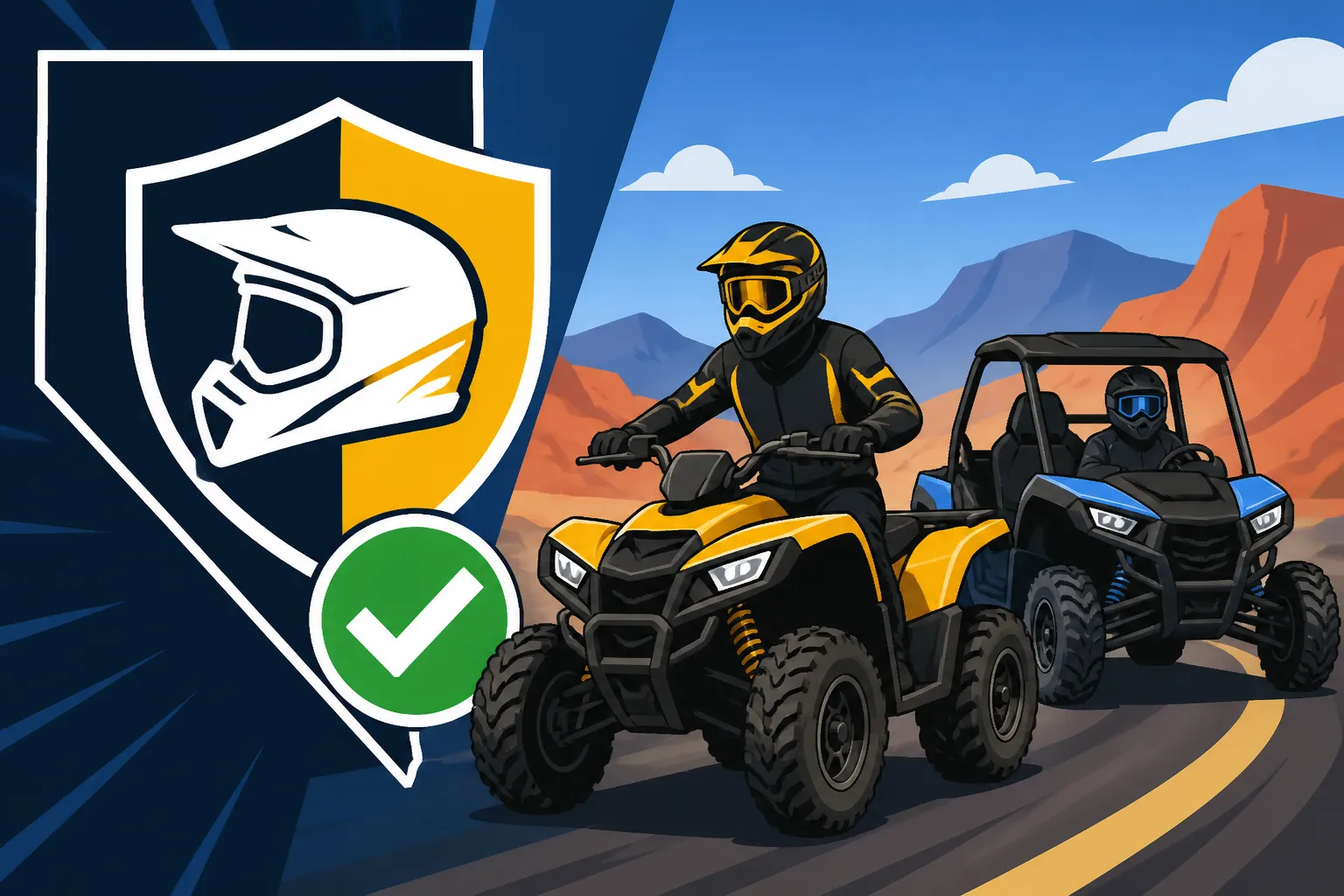
Nevada Revised Statute (NRS) 486.231 is the cornerstone of the state's helmet requirements, and it's quite unequivocal. This statute mandates that any person operating or riding as a passenger on a motorcycle, moped, or trimobile (which is the category OHVs often fall into when on public roads) must wear a protective helmet. There's no wiggle room here, no exceptions based on age, riding experience, or even the type of OHV, if it's considered a motorcycle for road use.
This means that if you’re riding your quad or side-by-side on a county road, even if it's designated as open for OHV use, you and any passengers are legally required to have a helmet on. It doesn't matter if you're just crossing a highway, heading to a gas station for a quick refill, or using a short paved connector between trails; the law is clear. It's a "universal" law because it applies to everyone on the machine, not just the driver. This can be particularly surprising for UTV owners who might feel safer with a roll cage and seatbelts, believing they offer sufficient protection. While those features certainly enhance safety, they do not exempt you from Nevada's helmet requirement on public roads. It's a critical piece of information that many a well-meaning rider has learned the hard way after a friendly chat with a Nevada Highway Patrol trooper or a local sheriff's deputy.
What Kind of Helmet Does Nevada Require?
Knowing that you need a helmet on Nevada roads is one thing, but knowing what kind of helmet is legally acceptable is another crucial piece of the puzzle. Not just any old helmet will do, and this is where riders can inadvertently run afoul of the law, even with good intentions.
The Importance of DOT Certification
When Nevada law mandates a "protective helmet," it's not talking about your old skateboarding helmet or a cool-looking novelty piece you picked up at a swap meet. The law specifically refers to helmets that meet the safety standards set by the U.S. Department of Transportation (DOT). This is absolutely non-negotiable. A helmet that is DOT certified has undergone rigorous testing to ensure it can withstand certain impacts and offers a minimum level of protection.
How do you know if your helmet is DOT certified? Look for the DOT sticker, usually located on the back of the helmet. This sticker isn't just for show; it's your proof that the helmet meets federal safety standards. If a law enforcement officer pulls you over on a county road and you're wearing a helmet without this certification, it's essentially the same as not wearing a helmet at all in the eyes of the law. This can result in a citation and a fine, adding an unnecessary expense to your ride. Brands like SuperATV, while known for their machine accessories, also often feature or recommend gear that meets these crucial safety standards, understanding the importance of proper protection. Always double-check for that sticker before you hit the pavement.
Full-Face vs. Open-Face Helmets
Once you've confirmed that a helmet is DOT certified, you still have options regarding style. Nevada law doesn't specify whether your helmet must be a full-face, open-face (three-quarter), or modular design. As long as it carries that all-important DOT certification, it's generally considered legal for road use.
However, from a practical and safety standpoint, there's a significant difference. A full-face helmet offers the most comprehensive protection, covering your entire head, including your chin and jaw. At road speeds, where impacts can be much more severe, this added protection for your face can be a literal lifesaver. Open-face helmets, while legal if DOT certified, leave your face exposed. While some riders prefer the increased airflow and wider field of vision, the trade-off in protection is something to seriously consider, especially when sharing the road with cars and trucks. Modular helmets offer a compromise, allowing the chin bar to flip up for convenience when stopped, but they should always be worn with the chin bar down when riding on public roads for maximum safety. The choice often comes down to personal preference and comfort, but never at the expense of that DOT certification.
Helmets for Passengers and Youth
This is another area where misunderstandings frequently arise. The "universal" aspect of NRS 486.231 means that the helmet requirement extends to all occupants of the OHV when it’s on a public road, not just the driver. This includes any passengers you might have riding along in your UTV or on the back of a two-up ATV. There are no exemptions for age; a child passenger needs a DOT-approved helmet just as much as an adult does. [Nevada Helmet Rules for Passengers] covers this in more detail.
For UTVs with multiple seats, often equipped with seatbelts and a roll cage, owners might mistakenly believe that these safety features negate the need for helmets for rear passengers. This is incorrect. While those features greatly enhance safety, Nevada law still categorizes these machines as motor vehicles requiring helmet use for all occupants on public roads. Imagine a family outing where kids are enjoying the ride in the back of a side-by-side; if you transition onto a county road, every single person on that machine must be wearing a DOT-certified helmet. Law enforcement officers are vigilant about this, as children are particularly vulnerable in accidents. It’s not just about avoiding a ticket; it’s about ensuring the safety of everyone enjoying the ride with you.
Why Nevada Has Strict Helmet Laws for Road Use
It might seem excessive to some, especially if you're only planning a short hop on pavement, but Nevada's strict helmet laws for OHVs on public roads are rooted deeply in safety and risk assessment. These aren't arbitrary rules; they're designed to mitigate very real and significant dangers that arise when off-highway vehicles mix with traditional road traffic.
Increased Speeds and Harder Surfaces
One of the most fundamental reasons for the helmet mandate on roads is the dramatic change in operating environment. Off-road trails typically feature softer surfaces like dirt, sand, and gravel. While impacts can certainly happen off-road, the forgiving nature of the terrain can sometimes absorb some of the energy in a fall or rollover. Speeds, too, are often lower, especially on technical trails.
Compare that to a paved road: asphalt and concrete are unyielding, unforgiving surfaces. A fall or collision at even moderate road speeds on pavement can have devastating consequences, with the hard surface offering no give. The energy transfer in an impact is significantly higher, and the risk of severe head trauma skyrockets. Even a slight misjudgment or unexpected obstacle can send a rider tumbling, and without a helmet, the outcome is far more likely to be catastrophic. This isn't just about protecting the rider; it's about minimizing the severity of injuries that can strain emergency services and medical facilities.
Sharing the Road with Other Vehicles
Off-highway riding, by its very definition, generally keeps you away from cars, trucks, and SUVs. While you might encounter other OHVs, the dynamic of interacting with larger, faster, and often less aware passenger vehicles is a completely different ballgame. On public roads, your ATV or UTV, while capable, is often smaller, lighter, and less visible than most other vehicles.
Many drivers of passenger vehicles simply aren't expecting to see an OHV on a paved road, leading to potential blind spots, misjudgments of speed, and reduced reaction times. ATVs and UTVs also handle differently than street-legal vehicles; they have a higher center of gravity, different braking characteristics, and can be less stable at higher speeds, especially on cambered roads or during evasive maneuvers. Mixing these variables creates a significantly higher risk environment. The helmet requirement is a direct response to this increased danger, offering a crucial layer of protection in an unpredictable setting. It's not just about protecting you from yourself, but from the unforeseen actions of others on the road. [Nevada Rules for Crossing a State Route] offers further context on road interactions.
Public Safety and Liability
Beyond individual rider safety, strict helmet laws also serve a broader public safety interest and help manage societal liability. Severe head injuries are not only tragic for the individuals and families involved, but they also place an enormous burden on public health services, emergency responders, and medical systems. The long-term care and rehabilitation costs associated with traumatic brain injuries can be astronomical, often paid for by insurance, and ultimately, by society through increased premiums and taxes.
By mandating helmet use, Nevada aims to reduce the incidence and severity of these injuries. This proactive approach helps to keep riders safer, reduce strain on healthcare resources, and potentially lower insurance costs for everyone. When an accident occurs involving an un-helmeted rider on a public road, the legal and financial ramifications can be complex and extensive. The state, through its laws, seeks to minimize these negative outcomes. It’s a measure designed to protect you, yes, but also to protect the wider community from the fallout of preventable tragedies.
When Helmets Are Not Required (and the Gray Areas)
Understanding when helmets are required is paramount, but it's equally important to know the situations where they are generally not mandated by Nevada law. This helps to clarify the boundaries and ensures you’re not over-complying where it’s not legally necessary, while still making informed safety choices.
Strictly Off-Road Riding
This is the sweet spot for many OHV enthusiasts, and it’s where the helmet laws loosen up significantly for adults. When you are operating your ATV or UTV strictly on designated off-highway trails, unpaved backcountry roads, or open public lands (like much of the BLM land across Nevada), there is generally no state law mandating helmet use for adult riders. This is the scenario most riders picture when they think of "off-roading" – kicking up dust in the wide-open desert.
However, a crucial caveat exists for younger riders. While adults might not be legally required to wear a helmet off-road, the Nevada Offroad Association and other safety organizations strongly recommend it for everyone. For those under a certain age (it's always wise to check current regulations for specifics, but generally minors), some form of head protection or safety course might be required even off-road. Even without a legal mandate, the risks of falls, rollovers, and impacts with terrain features are ever-present. So, while you might not get a ticket for riding helmet-less on a dirt trail, common sense and a desire for personal safety should still guide your choice. For a deeper dive into the distinctions, check out [Nevada Helmet Rules Off-Road Versus On-Road].
Riding on Private Land
If you own private property, such as a ranch, a large parcel of undeveloped land, or a closed-course facility, the state's public road helmet laws typically do not apply. On your own land, or land where you have explicit permission from the owner to ride, you are generally free to set your own rules regarding helmet use. This is because the state's jurisdiction over motor vehicle operations primarily pertains to public roads, highways, and designated public off-highway vehicle areas.
However, this doesn't mean safety should take a backseat. Even on private land, accidents can happen, and they can be just as severe. Many landowners still require guests to wear helmets, and insurance policies might have stipulations regarding safety gear. For example, if you’re riding a utility machine like a Can-Am Defender or Polaris Ranger on a large Nevada ranch for [The Husbandry Exemption for Nevada Ranches], you might not legally need a helmet while on that private property. But if you accidentally cross onto a public access road that cuts through the property, even briefly, the legal requirement for a helmet kicks back in immediately. Always be mindful of property boundaries and where private land ends and public roads begin.
The "Large ATV" Road Decal Nuance
Nevada does have a specific provision for "Large ATVs" (often referring to larger UTVs or side-by-sides that meet certain criteria, such as having four seats or a specific bed capacity) to be operated on certain designated minor county roads. This requires obtaining a special [Nevada Large ATV Decal Cost] and ensuring the machine meets specific equipment requirements like mirrors, headlights, taillights, and turn signals. [Nevada Street Legal UTV Requirements] outlines these criteria in detail.
Here's the critical nuance: even if your UTV qualifies for this "Large ATV" road decal and you’ve outfitted it with all the required safety equipment (perhaps a sturdy windshield and mirrors from SuperATV), the helmet law for riders and passengers still applies when operating on these designated public roads. The "Large ATV" decal grants you permission to ride on specific paved county roads, but it does not reclassify your vehicle in a way that exempts you from the helmet mandate. The vehicle is still fundamentally considered an off-highway vehicle operating on a public thoroughfare, and therefore falls under the same helmet laws as motorcycles. This is a common point of confusion. Many assume that once their UTV is "road-legal" with its special decal, they can shed their helmets. This is a dangerous misconception that can lead to fines and, more importantly, put your safety at risk. Always remember, the decal is for the machine's street-legal status, not for the rider's helmet exemption.
Consequences of Not Wearing a Helmet on Nevada Roads
Ignoring Nevada’s helmet laws for ATVs and UTVs on public roads isn’t just a minor oversight; it carries a range of serious consequences, from immediate legal penalties to life-altering risks. It’s vital to understand the full scope of these repercussions to make informed decisions before you ride.
Fines and Citations
The most immediate and tangible consequence of not wearing a DOT-certified helmet on a Nevada public road is receiving a citation from law enforcement. A Nevada Highway Patrol trooper, a county sheriff’s deputy, or even a local police officer (in jurisdictions where OHVs are permitted on some roads) has the authority to pull you over for this violation. The fines can be significant, often comparable to other moving violations, and can quickly add up if you or multiple passengers are found to be non-compliant. [Nevada Tickets for Riding Where You Should Not] highlights how these types of infractions can sting your wallet.
Beyond the initial fine, a citation can also impact your driving record, potentially leading to increased insurance premiums. For riders under 18, the consequences might involve notification to parents or guardians and could even affect future driving privileges. It’s not a situation anyone wants to find themselves in, especially when a simple piece of safety gear could have prevented it. Imagine being on a fantastic ride near Mesquite or out in Lincoln County, heading for some trails, and suddenly your adventure is interrupted by a costly ticket, all because you neglected to wear a helmet on a short stretch of asphalt. It can certainly put a damper on the day.
Increased Risk of Injury and Liability
While fines are a nuisance, the far more severe consequence of not wearing a helmet is the drastically increased risk of serious injury in the event of an accident. As discussed, paved roads offer no give, and collisions at road speeds—whether with another vehicle, a stationary object, or even just falling off your machine—can result in severe head trauma. A DOT-certified helmet is specifically designed to absorb and distribute impact forces, protecting your brain from injuries that can range from concussions to permanent disability or even death.
Beyond the physical danger, neglecting to wear a helmet can also expose you to significant legal and financial liability. If you're involved in an accident and weren't wearing a helmet as legally required, insurance companies may deny or significantly reduce payouts for medical expenses and damages. This could leave you responsible for astronomical medical bills, rehabilitation costs, and lost income. In the event of a severe injury or fatality, your family could face immense financial burdens. Furthermore, if you’re deemed at fault in an accident, your lack of a helmet could be used against you in a civil lawsuit, potentially increasing your liability for damages to others. [Insurance Nevada Requires for Road Use] is a good read to understand the broader implications of liability. It's a risk that far outweighs the perceived comfort or convenience of riding without a helmet.
Best Practices for Helmet Use and Maintenance
Ensuring you’re compliant with Nevada’s helmet laws on public roads is about more than just owning a helmet; it's about choosing the right one, wearing it correctly, and maintaining it properly. Adopting best practices for helmet use significantly enhances your safety and gets the most out of your protective gear.
Proper Fit and Comfort
A helmet can only do its job effectively if it fits correctly. A helmet that is too loose will shift around during a ride or an impact, reducing its protective capabilities. One that’s too tight can be uncomfortable, distracting, and lead to headaches, which is the last thing you want on a long ride.
When trying on a helmet, it should feel snug all around your head, with no pressure points. It shouldn't move freely when you shake your head from side to side or up and down. The cheek pads should press against your cheeks, and you should feel resistance when trying to pull the helmet off your head with the chin strap fastened. Speaking of chin straps, ensure it’s always securely fastened – not so tight it chokes you, but snug enough that the helmet won't come off in a crash. Many riders mistakenly leave their chin strap too loose, effectively negating much of the helmet's protection. Remember, comfort is important for long rides, so take the time to find a helmet that fits your head shape well. A comfortable, well-fitting helmet is one you're more likely to wear consistently.
Helmet Care and Replacement
Just like any other piece of safety equipment, helmets require proper care and have a lifespan. Regularly cleaning your helmet, both the exterior and interior (especially the removable pads), helps maintain hygiene and visibility. Use mild soap and water for the shell, and follow the manufacturer's instructions for cleaning the inner lining. Avoid harsh chemicals or solvents, as these can degrade the helmet materials and compromise its integrity.
Crucially, helmets are designed for a single impact. If your helmet has been involved in any kind of impact, even if it looks undamaged on the outside, its internal energy-absorbing layers may have been compromised. It's imperative to replace any helmet that has sustained an impact. Furthermore, helmets don't last forever. Over time, materials like the EPS foam liner and the shell material can degrade due to exposure to UV light, sweat, and general wear and tear. Most manufacturers recommend replacing your helmet every five to seven years, regardless of whether it's been in a crash. Check the manufacturing date, often located under the padding or on the chin strap, to help you keep track. Investing in a new helmet periodically is a small price to pay for continued peace of mind. For various helmet options and related accessories, retailers that also carry brands like SuperATV often have a good selection, allowing you to find gear that matches your needs and style.
Goggles and Eye Protection
While not technically part of the "helmet" itself, effective eye protection is an indispensable component of safe riding, whether on or off-road, and especially on paved surfaces. Nevada law doesn't explicitly mandate goggles with a helmet, but it does require that "every motorcycle operator and passenger must wear protective glasses, goggles or a transparent face shield" unless the motorcycle is equipped with a windshield. Given that most ATVs and UTVs don't have full windshields that protect against all airborne debris, eye protection is practically a necessity. [Nevada Equipment List for Road-Legal UTVs] further details essential gear.
Dust, dirt, insects, gravel, and other debris can be flung up by other vehicles or by your own machine. At road speeds, even a small pebble can cause significant eye injury or, at the very least, a sudden distraction that leads to an accident. Many full-face helmets come with integrated visors, which offer excellent protection. If you use an open-face helmet, a good pair of dirt bike goggles designed to seal against your face is essential. Tinted visors or goggles are great for sunny Nevada days, but make sure you have clear ones for night riding or overcast conditions. Never ride with just sunglasses, as they offer minimal impact protection and can easily fly off. Proper eye protection ensures clear vision and keeps your eyes safe, allowing you to focus on the road ahead.
Helmet Rules for OHVs on Nevada Roads: A Quick Reference
To help clarify the differences between off-road and on-road helmet requirements in Nevada, here's a handy comparison table. This highlights the general rules; always remember that specific conditions, local ordinances, and age restrictions can add further nuances.
| Feature | Off-Road (Trails, Dirt, BLM Land) | On-Road (Paved County Roads, State Routes, Designated OHV Routes) |
|---|---|---|
| Legal Requirement | Not mandatory for adults | MANDATORY for ALL riders and passengers |
| Certification | Not legally required (but highly recommended) | DOT Certified Helmet required |
| Passenger Rule | Not legally required for adult passengers | MANDATORY for ALL passengers (including children) |
| Youth Riders | Highly recommended, sometimes required for minors by rule/permit. | MANDATORY for ALL youth riders/passengers |
| Vehicle Type | Applies to all ATVs, UTVs, dirt bikes | Applies to all ATVs, UTVs, dirt bikes (when considered motorcycles) |
| Primary Goal | Personal safety recommendation | Legal compliance & injury prevention in traffic |
| Consequences | Increased injury risk | Fines, citations, increased injury risk, liability |
This table provides a quick overview, but as with all things legal and safety-related, the details matter. Always err on the side of caution and prioritize safety, especially when there's any doubt. Knowing the rules and adhering to them keeps you and your riding companions safe, allowing you to fully enjoy the incredible riding Nevada has to offer.
Disclaimer
This article is for general informational purposes only and does not constitute professional advice. Laws, prices and regulations vary by location and change over time. Consult a qualified professional for guidance on your specific situation.