Nevada Rules for Crossing a State Route
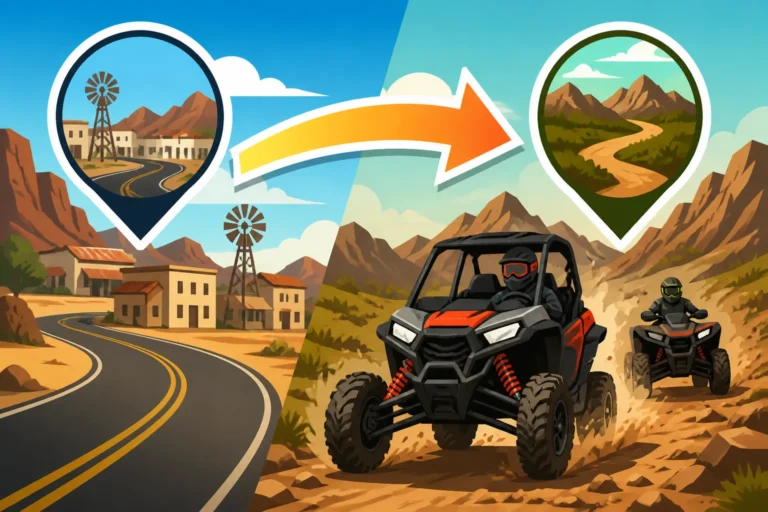
It's incredibly frustrating when you're out on the trails, enjoying the vast expanses of Nevada, and suddenly find your route cut off by a state highway. You're trying to get from one fantastic riding area to another, or perhaps just reach a nearby gas station, and that stretch of pavement feels like an insurmountable barrier. Many riders wonder if it's even legal to touch these roads with their off-highway vehicles (OHVs), and if so, what the specific rules are for crossing. This guide is here to untangle the complexities of Nevada's regulations regarding state route crossings, helping you navigate these situations safely and legally.
Understanding Nevada's General OHV Road Rules
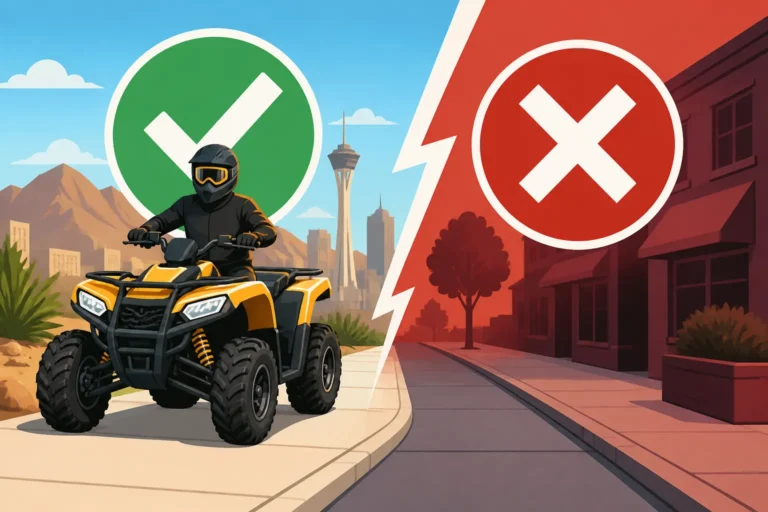
Let's be real, Nevada isn't exactly a free-for-all when it comes to riding your ATV or UTV on paved roads. The general rule is pretty straightforward: off-highway vehicles belong off-highway. This means that major paved roads, especially state highways, are typically off-limits for continuous travel. This regulation is in place for several reasons, primarily safety. OHVs are designed for rough terrain, not high-speed asphalt with cars and trucks. Their tires, suspension, and lack of certain safety features make them a poor fit for public roads.
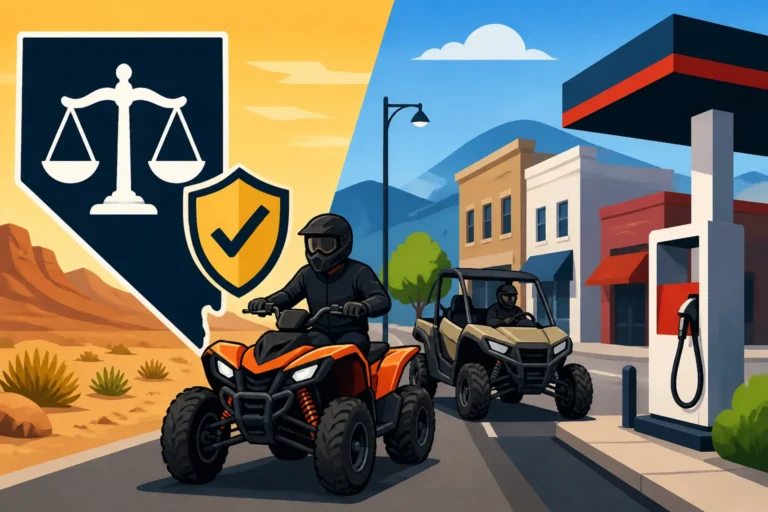
However, like most rules, there are nuances and specific exceptions that can make a rider's life a little easier, especially when navigating between trail systems. You'll often hear about "minor county roads" or "designated routes" where limited OHV use is allowed, and even specific situations like the [Nevada's 2-Mile Limit on Paved Highway] rule which can offer a small window of opportunity to connect trails. But these exceptions don't automatically extend to state routes, which are managed by the Nevada Department of Transportation (NDOT) and carry different classifications and rules. It's easy to get confused, and nobody wants to be pulled over by a deputy just trying to get across the street to the next adventure.
The General Prohibition on State Highways
To be absolutely clear, you generally cannot ride your ATV or UTV along a state highway in Nevada. This includes major arteries like US-95, US-50, or any road designated with an SR (State Route) number. These roads are designed for conventional vehicles and present a significant hazard for OHVs, which typically have lower top speeds, different handling characteristics, and aren't always equipped with the same visibility features as cars and trucks. Imagine a side-by-side chugging along a busy highway shoulder while a semi-truck barrels past at 75 MPH – it’s a recipe for disaster. Law enforcement takes this prohibition very seriously because of the inherent safety risks involved, and getting caught can lead to a significant fine and a ruined day.
Even if a state highway appears quiet or less traveled, the prohibition still stands. The key distinction is between roads designated as state routes and those classified as minor county roads. While some county roads might look similar, their legal designation makes all the difference for OHV operators. Always assume a state highway is off-limits for travel, and only consider a quick, direct crossing under specific, legal conditions. Understanding this fundamental difference is the first step in staying legal and safe on your Nevada adventures.
The Designated Crossing Exception
While continuous travel along a state highway is generally forbidden, Nevada law does make specific allowances for crossing a state route to access another trail or piece of property. This is a critical distinction and a huge relief for riders who often find prime riding areas bisected by these roads. However, this isn't a carte blanche to weave through traffic; it's a very narrow and strictly defined exception. The intent is to allow riders to bridge a gap between legitimate riding zones, not to use the highway as part of their recreational route.
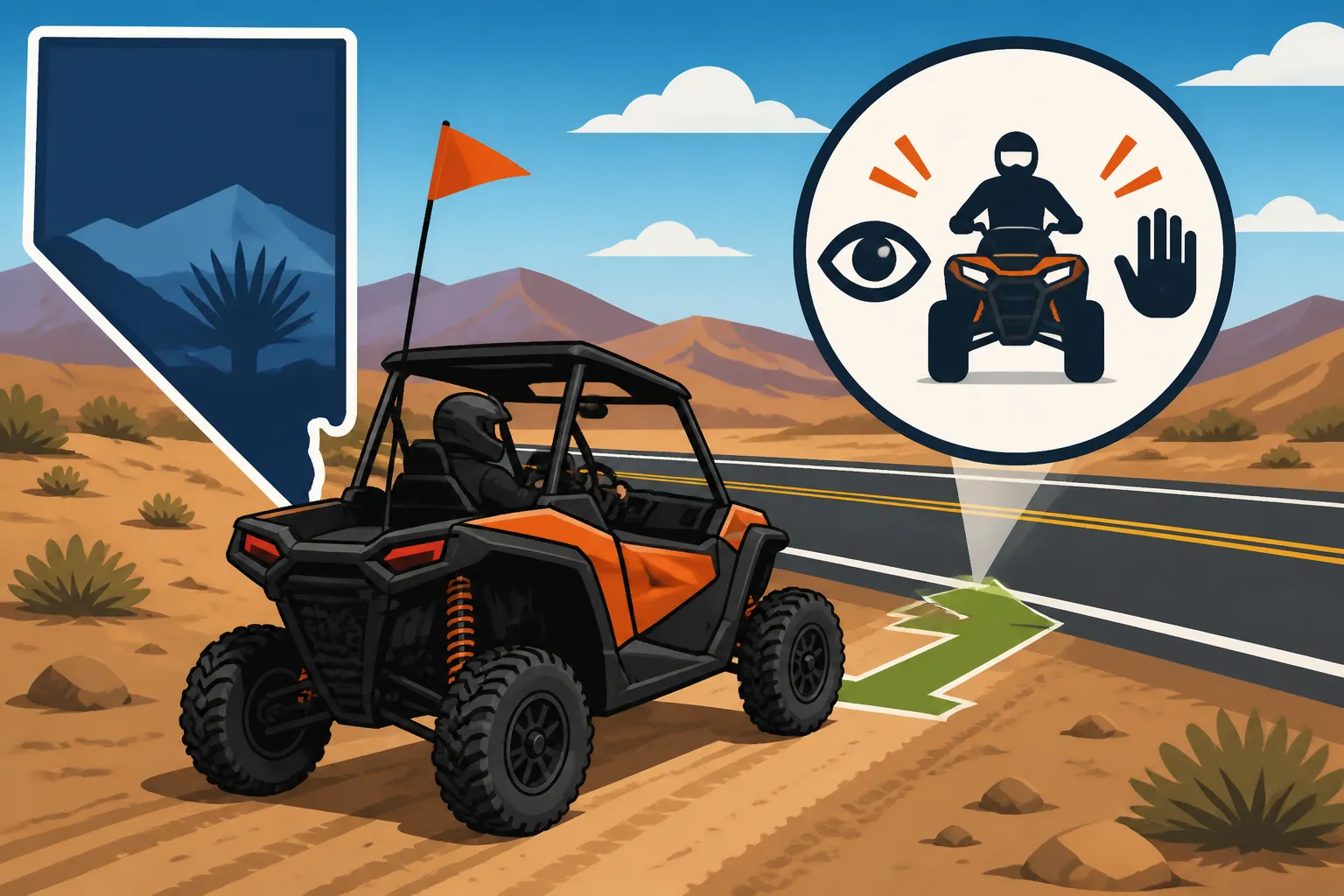
The allowance is almost always for a "direct and perpendicular" crossing. Think of it like a quick dash: you approach the highway, ensure it's safe, cross the lanes as directly as possible, and immediately exit onto the dirt or designated access road on the other side. You are not permitted to ride down the shoulder for any distance, even just a few hundred feet, to find a better crossing point. It has to be as straight an arrow as possible. This rule highlights the state's recognition that while OHVs shouldn't mix with highway traffic, sometimes a brief, unavoidable encounter is necessary to facilitate legitimate off-road use. It’s a pragmatic approach to land access that benefits the OHV community, provided everyone plays by the rules.
Specifics of Crossing a State Route in Nevada
So, you've identified a spot where you absolutely need to cross a state route to continue your ride or get to your destination. What exactly does Nevada law require for such a maneuver? It’s not just about slamming the throttle and hoping for the best. There are clear legal stipulations regarding how to execute these crossings, what equipment your machine needs, and what documentation you, as the operator, must possess. Ignoring these specifics can turn a quick crossing into a very expensive or dangerous encounter with law enforcement or, worse, another vehicle.
Every detail matters here, from the angle of your approach to the condition of your lights. This isn't the time for guesswork or wishful thinking; it's the time for precise adherence to the rules. Think of it as a momentary intersection of two very different worlds: the wild, open desert of your OHV, and the structured, rule-bound asphalt of the highway. Bridging that gap safely and legally requires preparation and attention to detail.
The "Directly Across" Rule
Nevada Revised Statute (NRS) 490.060 is the piece of legislation that typically governs this. It's often interpreted to mean that an OHV may cross a highway at approximately a right angle to the highway and only at a place where a quick and safe crossing can be made. This means no riding parallel to the road, no matter how short the distance. If you're on the shoulder, you're technically "traveling along" the highway, which is prohibited. The crossing must be swift and efficient, minimizing the time your OHV is exposed to highway traffic.
This rule emphasizes minimizing your exposure to the inherent dangers of high-speed traffic. Imagine you're riding your UTV near Logandale and need to cross SR 169 to access another section of trails. You can't ride down the shoulder of SR 169 for half a mile to get to a specific dirt track. Instead, you'd pull up to the highway's edge at a point directly opposite the trail you want to reach on the other side, wait for a clear break in traffic, and then proceed straight across. This requires careful observation and good judgment, as you're making a calculated risk assessment in real-time. It’s about being smart and respectful of the different types of traffic sharing the same space, however briefly.
Equipment Requirements for Road Use
Even for a brief crossing, your OHV needs to meet certain basic equipment standards to be considered "road-ready" in Nevada, especially for visibility. While you might not need the full suite of modifications required for a truly street-legal [Nevada Street Legal UTV Requirements] (which is a different category altogether), essential items are a must. For starters, working headlights and taillights are non-negotiable. These must be visible from a certain distance, typically 500 feet, to alert oncoming traffic to your presence, particularly if lighting conditions are less than ideal. [Nevada Headlight Requirements for Road Use] and [Nevada Taillight and Reflector Rules] detail these specifically.
Additionally, a functional stop lamp (brake light) is required, as are at least one mirror that provides a view of the highway for at least 200 feet to the rear, and a horn. These are crucial for safe interaction with other vehicles, even if only for a few seconds. If you're running a stock machine, check its compliance. Many riders, especially those who frequently navigate areas near roads, choose to upgrade their lighting and mirrors. Companies like SuperATV offer a wide range of aftermarket accessories, from robust LED light bars that vastly improve forward visibility to durable side mirrors designed for the rigors of off-road use, which can significantly enhance your safety during these necessary crossings. Investing in quality equipment is not just about compliance; it's about your safety and the safety of others.
Registration and Operator Requirements
Beyond the machine itself, you, as the operator, and your OHV must also meet certain legal requirements. First and foremost, your off-highway vehicle must be properly registered with the Nevada DMV and display a current OHV decal. This decal signifies that your machine is recognized by the state and that you've paid the necessary fees that contribute to trail maintenance and other OHV programs. Riding unregistered, even for a quick crossing, is a surefire way to get a citation. You can learn more about this by reading [What a Nevada OHV Decal Actually Proves].
Secondly, anyone operating an OHV on a public road, even for a brief crossing, must possess a valid driver's license. This isn't the time for unlicensed teenagers to take the wheel, no matter how quick the crossing might seem. The same rules for operating a motor vehicle on public roads apply to you in that moment. Furthermore, while Nevada's helmet law off-road can be a bit more nuanced depending on age, when you're interacting with public roads, it's always safest, and often required, to wear a helmet, especially for riders under 18. Deputies are not lenient when it comes to these fundamental safety and licensing requirements, particularly when you're venturing onto asphalt.
Safety and Practical Advice for State Route Crossings
Okay, so you know the rules for state route crossings. But simply knowing them isn't enough; you need to execute them safely and intelligently. These brief moments on a highway are arguably the most dangerous part of many off-road trips. The difference in speed, mass, and driver expectations between an OHV and a passenger car or truck is immense. Therefore, approaching these crossings with a heightened sense of caution and a well-thought-out plan is paramount. It’s about minimizing risk and maximizing visibility, not just for you but for everyone else on the road.
Think about the environment: dust from a passing truck, glare from the sun, or even a sudden gust of wind can all impact your judgment or your machine's stability. These aren't conditions you typically worry about on a wide-open dirt trail. That’s why a blend of legal compliance and practical, common-sense safety measures is your best bet when it comes time to traverse that stretch of pavement.
Situational Awareness and Visibility
Before you even think about approaching the edge of a state route, you need to practice extreme situational awareness. Pull over well before the pavement, ideally in a spot that offers a clear, unobstructed view in both directions of the highway. Take your time. Look left, look right, look left again. Pay attention to the speed of oncoming vehicles – what looks like a distant car can be on top of you in seconds on a highway. Remember, OHVs accelerate slower than cars, so your window of opportunity needs to be generous.
Making yourself as visible as possible is also critical. Brightly colored gear helps, and ensuring all your lights are functional (headlights, taillights, brake light) is non-negotiable. If you're riding with a group, consider having one rider spot for the others, particularly if the visibility isn't great or the crossing is tricky. Some riders also equip their machines with tall, brightly colored whips or flags, often purchased from accessory providers like SuperATV, to increase their profile, especially in areas with rolling terrain or limited sightlines. These might not be legally required for a brief crossing, but they can be a significant safety enhancer, especially for other drivers who might not be expecting an OHV.
Communicating with Fellow Riders
If you're riding with a group, clear and concise communication is essential for safe highway crossings. Before you even get close to the pavement, discuss the crossing strategy. Who goes first? Who watches for traffic? What's the signal to proceed? Often, the lead rider will stop before the highway, assess the traffic, and signal when it's safe for the group to cross. It's usually best for riders to cross one at a time, or in small, tightly knit pairs, rather than trying to cross a large group all at once. This minimizes the length of time the entire group is exposed to highway traffic and allows each rider to make their own judgment call on safety.
Hand signals, radio communication, or even just a pre-arranged verbal cue can prevent confusion. Never assume everyone saw the same clear window you did. A simple thumbs-up or a "clear!" over a comms system can make a world of difference. This isn't a race; it's a cooperative effort to get everyone safely to the other side. A moment of impatience or miscommunication can have serious consequences, so take the time to plan and execute the crossing as a team.
Avoiding Risky Crossings
Sometimes, the safest option is simply not to cross. If the traffic is too heavy, the visibility is poor (think blind curves, hills, or dense fog), or if you're approaching an intersection where cars are turning and changing lanes, it might be too risky. In such situations, it's better to find an alternative route, even if it adds miles to your trip, or simply turn back. No trail is worth risking your life or the lives of others. There might be a designated OHV underpass or overpass a few miles down the road, or a less-traveled minor county road that offers a safer alternative.
It's also crucial to avoid crossing at night unless your machine is exceptionally well-lit and you have impeccable visibility. The closing speeds of vehicles on highways at night can be deceiving, and your OHV's silhouette might be harder to discern against the darkness. Always err on the side of caution. If you have any doubt about the safety or legality of a crossing, take a moment to re-evaluate. The beautiful Nevada desert isn't going anywhere; your safety should always come first. Remember, knowing [How Far You Can Ride Pavement in Nevada] is crucial, but knowing when not to ride it is even more important.
Consequences of Non-Compliance
Nobody wants to get a ticket, especially when you're out enjoying nature. But ignoring the rules for crossing state routes in Nevada can lead to more than just a minor inconvenience. The state has clear penalties for OHV violations, and these can range from hefty fines to more severe legal repercussions, especially if an accident occurs. It's a sobering thought, but understanding the potential consequences can serve as a strong motivator to always follow the letter of the law.
Law enforcement officers, whether it's a Nevada State Trooper, a Sheriff's Deputy, or a local police officer, are trained to spot OHV violations on public roads. They are not necessarily looking to ruin your day, but they are there to enforce safety and the law. A quick, illegal dart across a highway can quickly escalate into a legal headache that overshadows your entire riding experience.
Fines and Penalties
If you're caught riding your OHV illegally on a state route, even for a short distance or an improper crossing, you can expect to receive a citation. The fines for operating an OHV unlawfully on a highway can vary, but they are generally significant enough to make you think twice about cutting corners. These fines can stack up too; an officer might not only ticket you for the illegal highway travel but also for lack of proper registration, insufficient equipment (like no mirror or horn), or even operating without a valid driver's license. For instance, you could face [Nevada Tickets for Riding Where You Should Not] or even [Nevada Fines for No Large ATV Decal] if your machine isn't properly marked for any road use.
Beyond the initial fine, repeated offenses or particularly egregious violations could lead to your OHV being impounded. Imagine having your prized UTV towed away from a remote highway shoulder, leaving you stranded and facing impound fees in addition to your citation. It's a scenario that's best avoided by simply understanding and adhering to the rules. These penalties are designed to deter unsafe behavior and ensure that the OHV community respects the boundaries set for public safety.
Safety Risks and Liability
While fines are a financial burden, the most severe consequences of non-compliance involve safety risks and potential legal liability. Operating an OHV improperly on a state highway drastically increases your risk of an accident. The speed differential between your OHV and other vehicles, coupled with your machine's different braking and handling characteristics, can lead to catastrophic collisions. You could suffer serious injuries or even fatalities, and put the lives of any passengers or other drivers at risk.
In the event of an accident caused by your illegal operation on a highway, the legal ramifications can be immense. You could be found liable for damages to other vehicles, medical expenses for injured parties, and even face criminal charges depending on the severity of the incident. Your personal insurance, which may cover off-road use, might not extend to incidents that occur during illegal operation on a public highway. This could leave you financially responsible for potentially millions of dollars in damages. This is where the importance of proper equipment, like reliable brakes and mirrors (perhaps even durable ones from SuperATV), truly comes into play – not just for a ticket, but for your life and your financial future. It's a stark reminder that safety and legal compliance aren't just bureaucratic hurdles; they are fundamental protections for you and everyone else.
Here's a quick overview of what's generally allowed versus prohibited when encountering a Nevada state route with your OHV:
| Action | Generally Permitted | Generally Prohibited |
|---|---|---|
| Travel Along Highway | N/A (unless designated as a minor county road) | Any continuous travel along the paved surface or shoulder of a state route. |
| Crossing Highway | Direct, perpendicular crossing at a safe, visible point. | Crossing diagonally, riding along the shoulder to find a crossing, or crossing in an unsafe location (blind turn, heavy traffic). |
| Equipment | Working headlights, taillights, brake light, mirror, horn. | Missing or non-functional essential safety equipment. |
| Operator Requirements | Valid driver's license, proper OHV registration. | Unlicensed operator, unregistered OHV. |
| Visibility | High situational awareness, clear line of sight, bright lighting. | Crossing during low visibility (night, fog) or in heavy traffic conditions. |
Disclaimer
This article is for general informational purposes only and does not constitute professional advice. Laws, prices and regulations vary by location and change over time. Consult a qualified professional for guidance on your specific situation.