Insurance Nevada Requires for Road Use
It's a common scenario: you’ve got your ATV or UTV, you love hitting the dirt trails out past Logandale or exploring the dunes at Sand Mountain, and maybe, just maybe, you need to ride a short stretch of pavement to get from one section of trail to another, or even just to grab some gas in a small town. But here’s the kicker – that seemingly innocent short trip on a public road can land you in a heap of trouble if you haven’t got the right insurance. This guide is here to clear up the confusion and lay out exactly what Nevada requires for off-highway vehicles (OHVs) that touch public roads, helping you stay legal, protected, and focused on your ride.
Understanding Nevada's Stance on OHVs on Public Roads
When we talk about off-highway vehicles like ATVs and UTVs, there's often a bit of a gray area in people's minds regarding road use. Many riders assume that because their machine is primarily for dirt, road rules don't fully apply. However, Nevada has very clear distinctions, and understanding them is the first step to ensuring you're properly insured.
The "Street Legal" Myth vs. Reality
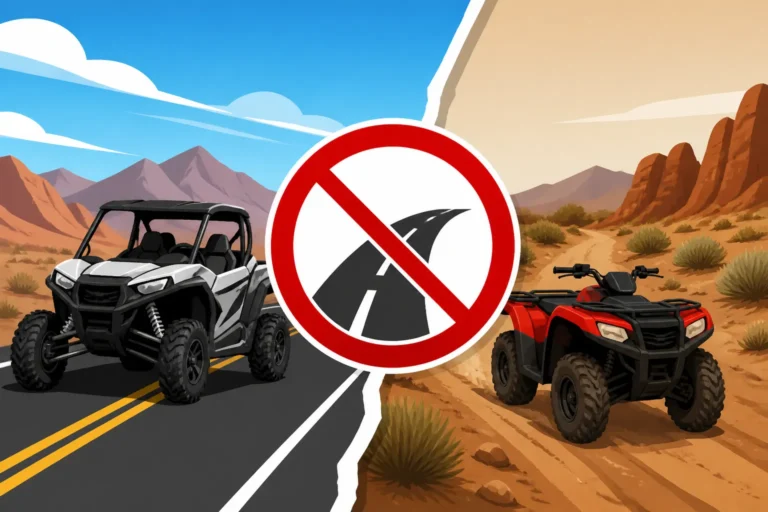
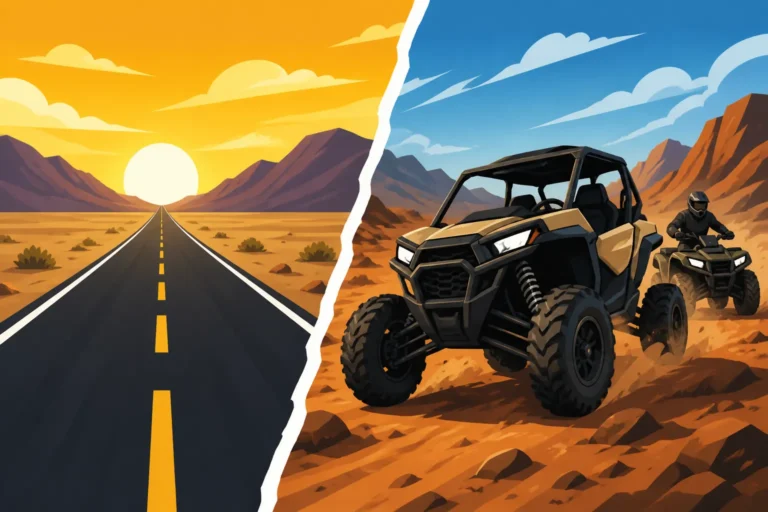
Let's cut through the common misconception right away: for the vast majority of ATVs and UTVs, "street legal" in the same sense as a car simply isn't a thing in Nevada. You won't be cruising down the Strip on your quad, and you certainly won't be getting a standard license plate for it. Instead, Nevada operates on a system of limited road access for certain qualifying OHVs. The distinction is crucial because while a car is designed and intended for all public roads, your OHV is not.
Your off-road machine, even with some modifications, remains fundamentally an off-highway vehicle. The state's regulations are designed to facilitate access to trails and services, not to transform an ATV into a daily driver. This means that while some road privileges are granted, they come with a strict set of conditions that differ significantly from those for cars or motorcycles. Ignoring this fundamental difference is where many riders get into unexpected legal tangles, especially concerning insurance.
The idea that you can make any ATV or UTV "street legal" with a few add-ons is a widespread myth that can lead to costly mistakes. It's more accurate to think of it as "road-permitted" or "road-accessible" under very specific circumstances. Even with all the right equipment, the primary purpose and classification of your machine remain off-road, and this impacts everything from where you can ride to the insurance you need.
Nevada's Large All-Terrain Vehicle Decal
The cornerstone of legal road access for OHVs in Nevada is the [Nevada Large ATV Decal]. This isn't just another sticker; it's the state's way of formally recognizing that your specific machine meets certain criteria that allow it restricted use on public roads. Without this decal, your machine has no business being on any public pavement, even for a moment. Obtaining this decal is paramount and directly triggers the insurance requirements.
To qualify for this decal, your machine must meet the definition of a "large all-terrain vehicle" as outlined in [What Nevada's NRS 490.043 Counts as a Large ATV]. This typically means it has four or more wheels, an engine 70cc or larger, and is designed to carry multiple passengers or have a utility bed. Common examples include most side-by-sides (UTVs) and certain larger ATVs. Standard two-seat sport quads, for instance, generally don't qualify for this specific road-use decal.
The process of getting this decal involves registering your OHV with the Nevada Department of Motor Vehicles (DMV) or an authorized dealer, proving ownership, and often undergoing a VIN inspection. Once you have this decal affixed to your machine, it signifies to law enforcement that your OHV is authorized for limited road use, provided all other conditions are met, including having valid insurance. This decal is your official permission slip, and without it, any talk of road-use insurance is moot.
Limited Road Access, Not Free Reign
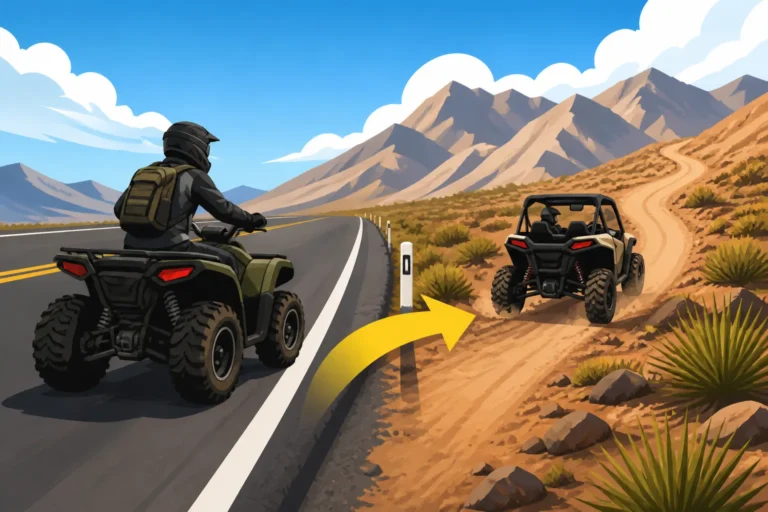
It's absolutely critical to understand that even with the proper [Nevada Large ATV Decal], your access to public roads is severely restricted. We're not talking about riding to the grocery store or commuting to work. Nevada law specifies very particular scenarios where OHVs are allowed on pavement. Primarily, this includes certain minor county roads, crossing state routes, and specific designated routes within certain municipalities. A key limitation often discussed is [Nevada's 2-Mile Limit on Paved Highway] for certain non-designated roads.
This isn't a loophole to turn your off-road machine into a road-going vehicle; it's about facilitating access to vast trail networks and supporting rural communities. You might use a short stretch of county road to connect two trail systems, or cross a highway safely to reach another dirt path. But even for these brief, functional uses, your machine is considered "on the road" in the eyes of the law. This means that at the very instant your tires hit that asphalt, all applicable road laws, including insurance mandates, come into play.
Many riders get caught off guard because they think "just a little bit of pavement" doesn't count. But from a legal and insurance perspective, there's no such thing as a "little bit" when it comes to compliance. The moment you enter that public right-of-way, you are operating a vehicle on a road, and the full weight of Nevada's statutes applies. Understanding and respecting these limitations, along with having the necessary insurance, is paramount for responsible and legal riding.
Why Insurance Becomes Essential for Road-Legal OHVs
So, you've done your homework, your UTV qualifies for the Large ATV decal, and you're ready to tackle those minor county roads to connect trails around Caliente. Excellent! But before you hit that pavement, there's another crucial layer of protection you need: insurance. This isn't just a suggestion; it's a legal requirement tied directly to the privilege of road use.
Protecting Yourself and Others
The fundamental reason for any vehicle insurance, especially liability coverage, is to protect yourself and others from the financial fallout of an accident. When you're riding your OHV off-road, typically on BLM land or designated trails, an accident might involve personal injury to yourself or a passenger, or damage to your own machine. While these are serious, the complexity and cost escalate exponentially when another vehicle, pedestrian, or public/private property is involved on a public road.
Imagine this scenario: you're riding your UTV on a minor county road, carefully following all the rules, but suddenly, an unexpected obstacle causes you to swerve. You clip the side mirror off a parked truck, or worse, you collide with another vehicle, causing damage and injuries. Without liability insurance, you are personally on the hook for all those repair costs, medical bills for injured parties, and potential legal fees. These expenses can quickly spiral into tens or even hundreds of thousands of dollars, a financial burden that could easily devastate your personal finances.
Beyond just the financial aspect, there's the immense stress and emotional toll of an accident. Knowing you have proper coverage provides a significant layer of peace of mind, allowing you to ride with the confidence that an unforeseen incident won't lead to financial ruin for you or the people you might accidentally harm. It’s not about if you’ll have an accident, but when, and being prepared is always the smarter play.
Nevada's Mandate Under NRS 485.185
Nevada doesn't just suggest you have insurance for road use; it mandates it. Specifically, [Liability Insurance Nevada Requires Under NRS 485.185] clearly states that vehicles operated on public highways (which include those minor county roads and crossings) must be covered by liability insurance. This isn't an arbitrary rule; it's a critical piece of public policy designed to ensure that anyone who causes damage or injury on public roads can compensate the affected parties.
This statute is a cornerstone of responsible vehicle operation in Nevada. It ensures that victims of accidents are not left without recourse because the at-fault driver was uninsured. For OHV owners, this means that the moment your vehicle is permitted to operate on public roads – which is exactly what the Large ATV decal signifies – it falls under the purview of this law. There's no exception for "just a short ride" or "only on county roads." The law applies universally to any motor vehicle on a public highway.
The implications are clear: if you intend to exercise the privilege of limited road access for your ATV or UTV, you must comply with this insurance mandate. It removes the distinction between an OHV and a car when it comes to liability for road incidents. Your off-road insurance policy, if you have one, might cover you for dirt-only incidents, but it often does not extend to public road use. This necessitates a specific policy or an endorsement that explicitly covers your OHV for operations on Nevada's public roadways.
Penalties for Non-Compliance
Trying to skirt the insurance requirements on Nevada roads is a risky gamble that can lead to significant and immediate consequences. Law enforcement officers, especially those patrolling areas popular with OHV riders like Lincoln County or near Sand Mountain, are well aware of these regulations. If you're stopped on a public road and cannot produce valid proof of insurance for your OHV, you're looking at more than just a slap on the wrist.
The penalties for operating an uninsured vehicle on Nevada roads can include substantial fines, often starting in the hundreds of dollars, and escalating for repeat offenses. Beyond the monetary penalties, your OHV could be impounded, leaving you stranded and incurring additional towing and storage fees. Imagine your day of riding cut short, your machine taken, and a hefty bill to retrieve it, all because you skipped the necessary insurance.
Furthermore, if you are involved in an accident while uninsured, the legal and financial ramifications are compounded. Not only will you face the penalties for driving uninsured, but you will also be personally liable for all damages and injuries, with no insurance company to back you up. This can lead to lawsuits, wage garnishments, and a severe hit to your credit and financial stability. It's a risk simply not worth taking, especially when the cost of adequate insurance pales in comparison to the potential consequences.
Understanding the Types of Coverage for Road-Legal OHVs
Navigating the world of insurance can feel like trying to ride through deep sand with street tires – confusing and potentially disastrous. But for your road-legal OHV in Nevada, it's crucial to understand the different types of coverage available. This isn't just about meeting the minimum; it's about making sure you're truly protected.
Liability Coverage: The Bare Minimum
Liability coverage is the absolute bedrock of any vehicle insurance policy and is what Nevada mandates for road use. This coverage is designed to protect other people and their property if you are at fault in an accident. It typically has two main components: bodily injury liability and property damage liability.
Bodily injury liability pays for medical expenses, lost wages, and pain and suffering for anyone you injure in an accident. Property damage liability covers the cost of repairing or replacing property you damage, whether it's another vehicle, a fence, a utility pole, or a mailbox. Nevada has specific minimum dollar amounts for these coverages, which your insurance policy must meet. For example, it might require a certain amount per person for bodily injury, a higher amount per accident, and a separate amount for property damage. While these minimums fulfill the legal requirement, they are often quite low and may not be enough to cover the actual costs of a serious accident, leaving you personally exposed for the difference.
It's highly recommended to consider higher liability limits than the state minimums. A serious accident involving injuries or extensive property damage can quickly exceed basic coverage, and without adequate protection, your personal assets could be at risk. When discussing policies, ask your agent about increasing these limits for greater peace of mind. Remember, liability insurance is about protecting your financial future from the mistakes you might inadvertently make on the road.
Collision and Comprehensive Coverage
While liability protects others, collision and comprehensive coverage are about protecting your own valuable machine. These are optional coverages but are highly recommended, especially considering the cost of modern ATVs and UTVs and the custom parts many riders add.
Collision coverage pays for damage to your ATV or UTV resulting from a collision with another vehicle or object, or if it rolls over. If you swerve to avoid a deer and hit a tree, or if you're involved in a fender-bender with a car on a county road, collision would cover the repairs to your machine, minus your deductible. Given the rugged nature of OHVs, and the fact that accidents can happen even on paved roads, this can be invaluable.
Comprehensive coverage protects your OHV from non-collision events. This includes theft, vandalism, fire, natural disasters (like floods or wind damage), and even impacts with animals. Imagine your UTV parked at a trailhead and someone breaks in, or it catches fire due to an electrical issue. Comprehensive coverage steps in for these scenarios. For riders who invest heavily in their machines with aftermarket upgrades from companies like SuperATV – maybe a new winch, upgraded suspension, or custom wheels – this coverage is essential. Many standard policies might only cover the stock value, so you'll want to ensure your custom parts are specifically included, often through an endorsement.
Uninsured/Underinsured Motorist Coverage
This is another optional but incredibly smart addition to your OHV policy, especially for road use in Nevada. Uninsured/underinsured motorist (UM/UIM) coverage protects you and your passengers if you're involved in an accident with a driver who is at fault but either has no insurance (uninsured) or not enough insurance (underinsured) to cover your damages.
It's an unfortunate reality that despite legal mandates, many drivers on public roads are uninsured or carry only the bare minimum liability. If such a driver hits you while you're legally operating your OHV on a Nevada county road, their lack of coverage could leave you with significant medical bills and repair costs for your own machine. [Proof of Insurance for a UTV on a County Road] is what deputies check for, but that doesn't guarantee the other driver will have it.
UM/UIM coverage acts as a safeguard. It essentially steps in to pay for your medical expenses, lost wages, and sometimes even damage to your OHV (depending on your specific policy and state laws) up to your policy limits, when the at-fault driver's insurance falls short or is nonexistent. Given the potential for serious injuries in an OHV accident, and the prevalence of uninsured motorists, this coverage provides a critical layer of financial security that many riders overlook until it’s too late.
Meeting Nevada's Minimum Insurance Requirements
Now that we’ve delved into the types of coverage, let’s get down to the brass tacks of what Nevada actually requires and how to make sure you’re always compliant when your OHV hits the pavement. It’s all about being prepared and having the right documentation.
Nevada's Statutory Minimums
When it comes to operating any motor vehicle on public roads, Nevada law is quite specific about the minimum liability insurance coverage you must carry. While I can't give you exact dollar figures (as these can shift over time and by statute), you should be aware that the law specifies certain dollar amounts for bodily injury per person, a higher amount for total bodily injury per accident, and a distinct amount for property damage per incident. These are not arbitrary numbers; they are the legal floor for protection.
It's important to understand that "minimums" mean just that – the bare legal requirement. These amounts are often set low to make insurance accessible, but they can be woefully inadequate in the event of a serious accident. For example, if you cause a multi-vehicle collision or an accident that results in severe, long-term injuries, the actual costs could easily soar far beyond what the state minimums would cover. Any expenses beyond your policy limits would then become your personal financial responsibility.
Because of this potential for personal exposure, many insurance professionals strongly advise carrying significantly higher liability limits than the state-mandated minimums. While this will increase your premium slightly, the added peace of mind and protection against catastrophic financial loss can be invaluable. When you speak with an insurance agent, be sure to ask about the implications of minimum coverage versus higher limits and make an informed decision based on your risk tolerance and financial situation.
Proof of Insurance: What to Carry
Having the right insurance is only half the battle; you also need to be able to prove it on demand. Nevada law requires that any driver operating a motor vehicle on a public highway carry proof of insurance in the vehicle at all times. For your OHV, this means when you're riding on any public road, you must have your proof of insurance readily available.
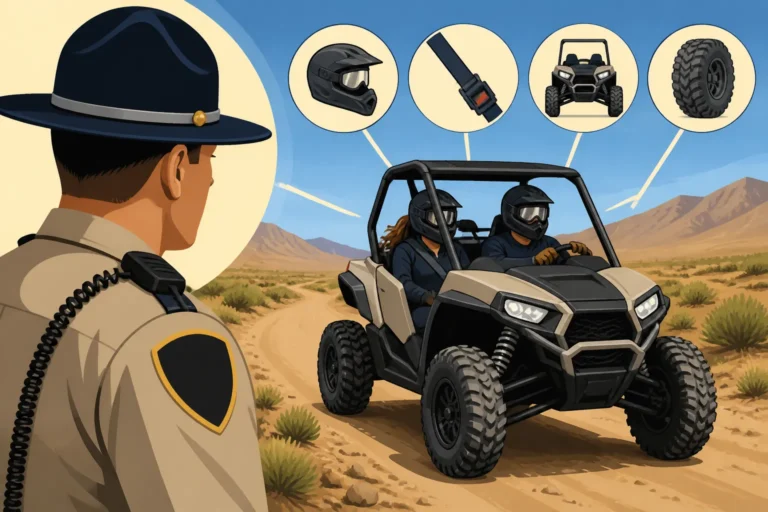
This proof can typically be a physical insurance card issued by your provider, or in many cases, a digital copy displayed on your smartphone. When a law enforcement officer, such as a deputy in Washoe County or a ranger near Sand Mountain, pulls you over for a routine check or after an incident, they will ask for your driver's license, registration (which would be your OHV decal and registration card), and proof of insurance. Failing to produce this proof can lead to a citation for operating an uninsured vehicle, even if you are, in fact, insured.
Given the dusty, wet, and often rugged conditions of OHV riding, keeping paper documents pristine can be a challenge. Many riders opt to keep a digital copy on their phone, or store a physical card in a waterproof, sealed bag or container. The key is accessibility and legibility. Ensure your phone is charged if relying on a digital card, and that any physical card is protected from the elements. Remember, [Keeping Paperwork Dry in a Dusty Machine] is crucial for all your documents, including your insurance card.
Finding the Right Provider
Locating the right insurance provider for your road-legal OHV isn't always as straightforward as buying auto insurance for your car. While many major insurers offer OHV policies, not all of them explicitly cover road use, or they might only do so with a specific endorsement. It’s crucial to shop around and be very clear about your intentions.
Start by contacting your current auto or home insurance provider. They might offer a multi-policy discount if you bundle your OHV insurance, and they may already have your vehicle information on file. However, don't assume their standard OHV policy automatically includes road-use liability. You need to explicitly state that you need coverage for operation on Nevada's minor county roads and highway crossings, as permitted by your Large ATV decal.
If your current provider can't meet your needs, or if their rates are too high, seek out companies that specialize in recreational vehicle insurance. These insurers often have a deeper understanding of OHV nuances, including custom parts, specific usage patterns, and state-specific road-use laws. Always compare quotes from several providers, paying close attention to the coverage limits, deductibles, and any exclusions. Don't be shy about asking questions to ensure your policy truly covers your planned road usage in Nevada.
Practical Scenarios and Common Questions
Even with the best intentions and thorough research, real-world situations often throw curveballs. Let's tackle some common scenarios and questions that arise when thinking about OHV road use and insurance in Nevada.
The "Just Crossing the Road" Dilemma
This is perhaps the most common trap riders fall into. The thought process often goes, "I'm only riding across this two-lane highway to get to the other side of the trail, it's just a quick dash, so insurance can't possibly apply, right?" Wrong. As we've discussed, the moment your wheels touch public pavement, regardless of how brief the encounter, you are operating a motor vehicle on a public highway under Nevada law.
Consider this: you're out near Valley of Fire, exploring some fantastic trails. To reach the next segment, you need to [Nevada Rules for Crossing a State Route]. This crossing might take mere seconds, but during that time, you could be involved in an accident with a car traveling at highway speeds. The damage and injury potential are immense. In such a scenario, if you don't have the appropriate liability insurance for your OHV's road use, you'd be entirely unprotected and in violation of state law.
There is no "grace period" or "minimum distance" exemption for insurance when it comes to public road use. The intent behind the trip doesn't matter; the act of being on the road is what triggers the requirement. So, if your ride involves any segment of public asphalt, even a seemingly insignificant crossing, ensure your insurance is in place and valid. It’s a small step that can save you from monumental headaches.
Out-of-State Machines and Nevada Roads
Nevada is a prime destination for OHV enthusiasts from neighboring states like California, Arizona, and Utah. Many visitors bring their own machines, which may be registered and decaled in their home states. The question then becomes: do these out-of-state machines need Nevada insurance for road use?
Nevada generally offers reciprocity for off-highway vehicle registration from other states, meaning if your machine is legally registered and decaled in your home state, you can ride it on Nevada's off-road trails. However, this reciprocity has limits, particularly when it comes to road use and the duration of your stay. [How Long a Visitor Can Ride Nevada Unregistered] outlines a 15-day window for out-of-state OHVs to ride Nevada's trails.
When it comes to road use, the situation can get trickier. While your home state's insurance policy might extend to limited road use in Nevada, you should absolutely verify this with your own insurance provider before your trip. Some policies are strictly geo-fenced to your home state or exclude any road use in other states. If your out-of-state policy does not cover road use in Nevada, and you plan to ride your OHV on any public roads here (even just to cross a highway), you could be in violation of Nevada's insurance laws. It's always best to call your insurer and get explicit confirmation that you are covered for such limited use in Nevada.
Insurance for a Rented ATV or UTV
Renting an ATV or UTV in Nevada is a popular way for tourists and locals alike to experience the state's vast off-road playground. Many rental companies, like those offering tours near Las Vegas or Mesquite, provide machines for guided tours or independent exploration. When you rent a machine, who is responsible for the insurance?
Typically, the rental company will carry comprehensive insurance on their fleet of machines and will include basic liability coverage as part of your rental agreement. This liability coverage usually meets the state’s minimum requirements for any permitted road use during your rental period. However, it is absolutely crucial to read and understand the rental agreement, especially sections pertaining to insurance, liability waivers, and damage responsibility. [Nevada Rental Insurance and Waivers] can be complex.
Often, rental agreements will have clauses that make you, the renter, financially responsible for any damage to the rented machine, regardless of fault. The rental company might offer a separate "damage waiver" for an additional fee, which reduces or eliminates your financial liability for damages to the rental unit itself. This is different from the liability insurance that covers damage to other vehicles or property. Always clarify what is covered, what your personal liability is, and if purchasing an optional damage waiver is advisable based on your comfort level and planned activities. Don't assume you're fully covered for everything just because you rented the machine.
Beyond Basic Coverage: What Else to Consider
While meeting Nevada's minimum liability requirements for road use is essential, savvy riders often look beyond the basics to fully protect their investment and themselves. Modern ATVs and UTVs can be expensive machines, and many owners customize them heavily.
Custom Parts and Accessories Coverage
For many OHV enthusiasts, the stock machine is just the starting point. Riders frequently upgrade their ATVs and UTVs with a host of aftermarket parts and accessories – think winches, lifted suspension, upgraded tires, light bars, sound systems, or even full cabs and enclosure kits. Companies like SuperATV offer a vast catalog of such enhancements, allowing riders to tailor their machines for performance, comfort, or utility.
The catch? A standard OHV insurance policy might only cover the "actual cash value" of your machine in its stock configuration. If you've invested thousands of dollars in high-performance parts, and your machine is stolen or totaled in an accident, you could be left with a significant financial loss for all those custom upgrades. This is a common point of frustration for riders who discover after an incident that their beloved modifications aren't covered.
To protect this investment, you'll need to discuss "custom parts and equipment" coverage with your insurance provider. This is often an add-on or an endorsement to your policy that allows you to specify a certain dollar amount for your aftermarket parts. Make sure to keep detailed records and receipts for all your SuperATV parts and other accessories. This way, if disaster strikes, your policy will reflect the true value of your customized machine, not just its original factory state.
Medical Payments/Personal Injury Protection (PIP)
While liability insurance covers the medical expenses of others if you're at fault, what about your own injuries or those of your passengers? This is where Medical Payments (MedPay) or Personal Injury Protection (PIP) coverage comes into play. These coverages are optional but can be incredibly valuable for OHV riders.
MedPay or PIP provides coverage for medical expenses for you and your passengers, regardless of who was at fault in an accident. This means if you have a mishap on a county road, or even if you're just riding off-road and take an unexpected tumble, this coverage can help with your hospital bills, doctor visits, and other related medical costs up to your policy limits. Given the inherent risks of off-highway riding and the potential for serious injuries, having this safety net can make a significant difference in covering out-of-pocket medical costs that your primary health insurance might not fully cover or that would incur high deductibles.
Think about it: even a seemingly minor accident can result in costly emergency room visits. With MedPay or PIP, you're ensuring that the immediate financial burden of medical care for yourself and your riding companions is addressed, allowing you to focus on recovery rather than worrying about bills. It's an extra layer of personal protection that many experienced riders consider indispensable.
Roadside Assistance and Towing
Breaking down in the middle of nowhere is no fun, and for OHV riders in Nevada, "nowhere" can be very, very remote. While you might associate roadside assistance with cars, it can be an incredibly practical add-on for your road-legal ATV or UTV, especially if you plan to use those limited county roads for connection.
Imagine you're 20 miles down a graded county road, connecting to a trail system, and your UTV experiences an engine issue or a flat tire that you can't fix on the spot. Without towing coverage, you'd be looking at a very expensive and potentially challenging recovery operation. Getting a full-sized UTV recovered from a remote area can cost hundreds, if not thousands, of dollars.
Many OHV insurance policies offer roadside assistance and towing as an affordable add-on. This coverage can provide peace of mind, knowing that if your machine breaks down on a public road, or even often just off it, help is a phone call away. They can often arrange for towing to the nearest repair shop or a safe location. This is particularly useful for those longer rides that involve significant stretches of Nevada's general and minor county roads, keeping you from being stranded in the vast open desert.
Steps to Get Your OHV Road-Ready and Insured in Nevada
So, you're ready to embrace the limited road access Nevada offers for your OHV. That's awesome! But getting there means following a clear path of legal and practical steps. Let's walk through it to make sure you're fully compliant and protected.
Verify Your Machine's Eligibility
Before you even think about insurance or hitting any paved roads, the very first thing you need to do is confirm that your specific ATV or UTV actually qualifies for limited road use in Nevada. As we discussed, not all off-highway vehicles are created equal in the eyes of the law. You must determine if your machine meets the criteria for a "Large ATV" under [What Nevada's NRS 490.043 Counts as a Large ATV].
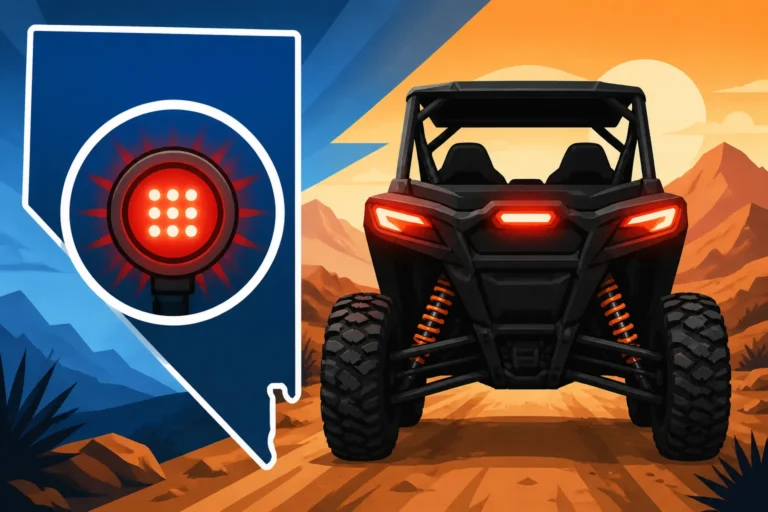
This typically means assessing its seating capacity (four seats or more), whether it has a utility bed, and its engine size (generally 70cc or larger). Most two-seat sport quads, for instance, won't make the cut for a road-use decal. Beyond the basic classification, [Nevada Street Legal UTV Requirements] also specify certain equipment that must be present and functional for road use. This could include headlights, taillights, brake lights, a horn, mirrors, and a spark arrestor.
Take a good look at your machine and consult the Nevada DMV's OHV section guidelines. If your UTV or ATV needs specific additions to meet these requirements, now is the time to plan those upgrades. Many necessary items, like mirrors or a horn kit, can be easily sourced from aftermarket retailers, including SuperATV, which offers a wide range of accessories to help bring machines up to road-legal standards where permitted. Skipping this foundational step means any subsequent efforts to get insured or ride on roads will be futile.
Obtain Your Large ATV Decal
Once you've confirmed your machine's eligibility and ensured it has the necessary equipment, the next critical step is to officially register it and obtain your [Nevada Large ATV Decal]. This decal is your legal permission slip to operate on designated public roads. You can't just slap on some parts and call it a day; the state needs to formally acknowledge your machine's status.
The process involves submitting the appropriate application forms (which you can typically find on the Nevada DMV OHV section website), proving ownership (usually with a title or bill of sale), and often getting a VIN inspection. You can apply for this decal either through the Nevada DMV directly or, more conveniently, through an authorized OHV dealer who can often process the paperwork on the spot. [Applying for a Nevada Large ATV Decal] correctly is key to avoiding delays.
It's important to remember that the act of receiving this decal is what formalizes your machine's limited road-use status and, in turn, unequivocally triggers the state's insurance mandate. Until that decal is prominently affixed to your OHV as required, your machine is strictly for off-road use, and operating it on any public road, even briefly, would be a violation. This decal visually confirms to law enforcement that your vehicle should have the necessary road-use insurance.
Secure the Right Insurance Policy
With your machine qualified and your Large ATV decal in hand (or in process), it’s time to nail down the insurance. This isn’t a step to rush or cut corners on, as it’s your primary financial protection. Refer back to the types of coverage we discussed and carefully consider your needs.
First and foremost, ensure your policy meets Nevada’s minimum liability requirements for operating on public roads. Be explicit with your insurance agent that you need coverage for your OHV’s limited road use under the Nevada Large ATV decal program. Don't assume a general OHV policy will suffice; confirm it specifically covers road incidents. Then, look beyond the minimums. Consider higher liability limits to safeguard your assets, and seriously think about collision and comprehensive coverage to protect your own machine, especially if it's a significant investment or heavily customized with aftermarket parts from brands like SuperATV.
Don't forget to inquire about "custom parts and equipment" coverage if you've added valuable upgrades, and explore options like medical payments and roadside assistance. Compare quotes from several reputable insurers specializing in recreational vehicles. Make an informed decision that balances cost with comprehensive protection, ensuring you're not just legal, but truly secure, every time you choose to ride your OHV on Nevada’s public roads.
Keep Proof of Insurance Accessible
This final step is simple, but absolutely non-negotiable. Once you have your OHV insurance policy, you must keep valid proof of that insurance with you whenever you operate your ATV or UTV on a public road in Nevada. This isn’t just for peace of mind; it’s a legal requirement.
Whether it’s a physical insurance card stored in a waterproof bag or a digital copy accessible on your phone, it needs to be immediately available for inspection by law enforcement. Think about the dusty, often rugged conditions of Nevada’s OHV trails and connecting roads. Having [Keeping Paperwork Dry in a Dusty Machine] is not just good practice, it prevents frustration during a roadside stop. A deputy will ask for it, and being unable to provide it can lead to a citation for driving uninsured, even if you do, in fact, have coverage.
Make it a habit: before every ride that might involve even a single foot of pavement, do a quick check. Driver's license? Check. OHV registration card and Large ATV decal? Check. Proof of insurance? Check. Being prepared means you can focus on the incredible experience of riding Nevada’s diverse terrain, confident that you’re fully compliant and protected.
Disclaimer
This article is for general informational purposes only and does not constitute professional advice. Laws, prices and regulations vary by location and change over time. Consult a qualified professional for guidance on your specific situation.