Does a Ranch Quad Need Nevada Registration?
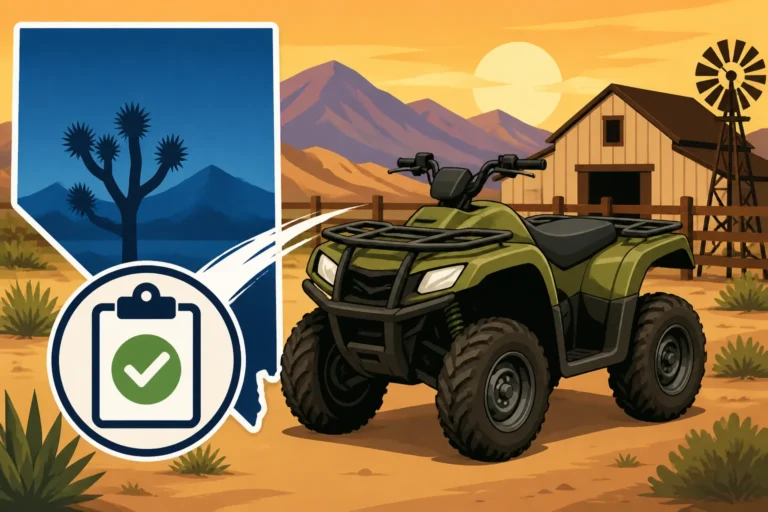
It's a common scenario out here in the wide-open spaces of Nevada: you've got a trusty quad or side-by-side, it's essential for getting chores done around the ranch, and it rarely, if ever, leaves your property. So, why on earth would you need to register it with the state? This guide is going to cut through the confusion and explain Nevada's specific rules regarding off-highway vehicles (OHVs) used for agricultural purposes, helping you understand when your ranch machine might be exempt, and when you absolutely need that decal.
The Core Question: Does Every Off-Highway Vehicle Need a Nevada Decal?
The question of whether an ATV or UTV used exclusively for ranch work needs a Nevada registration decal is one that pops up a lot, and for good reason. It feels counterintuitive to register a machine that never touches public land, doesn't it? Let's clear the air on the general rules first, then dive into the specifics for our hardworking ranch community.
Understanding Nevada's General Registration Rule for OHVs
Generally speaking, if you own an off-highway vehicle in Nevada and plan to ride it on any public land — and this includes everything from open desert areas, designated trails, and even unpaved county roads — it absolutely needs to be registered. This isn't just a suggestion; it's the law. The Nevada Department of Motor Vehicles (DMV), through its OHV Section, manages this registration process, and it's designed to ensure a few things. First, it helps identify machines in case of theft or an accident. Second, and perhaps most importantly for us riders, the fees collected from registration are directly funneled back into the OHV program, funding vital trail maintenance, signage, and safety initiatives across the state. Think of it as your contribution to keeping our incredible riding areas open and well-maintained. We've talked extensively about [Nevada's Annual OHV Registration] and [What Nevada's OHV Registration Fees Pay For] in other posts, which really highlights the good work those dollars do.
The problem arises when your machine is purely a workhorse, not a recreation vehicle. You might have a utility-focused UTV that hauls feed, checks fences, or assists with irrigation on your private ranch, never venturing beyond your property lines. In such a case, the idea of going through the registration process, dealing with VIN inspections, and paying fees for a machine that will never utilize those public trails can feel like an unnecessary burden. This is precisely why the state has carved out certain exemptions, acknowledging that not all OHVs are created equal in terms of their use.
The Specific Rancher's Dilemma
For ranchers, the frustration is palpable. You're out there, day in and day out, often battling the elements, managing livestock, and maintaining vast properties. Your quad isn't a toy; it's a tool, as essential as your tractor or pickup truck. The thought of adding more paperwork and fees for a machine that's essentially confined to your private world can feel like just another hurdle in an already demanding profession. Many ranchers I've spoken with will ask, "Why should I pay for trail access if I'm not even on the trails?" And it's a completely valid question.
This is where understanding the specific nuances of Nevada law becomes crucial. The state recognizes the unique operational needs of agricultural businesses and has implemented a specific exemption for machines used solely for husbandry purposes on private land. It's a lifesaver for many, but it comes with strict conditions that you need to be aware of. Misinterpreting these conditions could lead to fines, even if you genuinely believed your machine was exempt. It’s about knowing the line in the sand and making sure you don't inadvertently cross it.
Unpacking Nevada's "Husbandry Exemption" for Ranch Vehicles
Nevada Revised Statute (NRS) 490.060 is where we find the details about machines exempt from OHV registration. Among these exemptions is a critical one for the agricultural community, often referred to as the "husbandry exemption." This specific provision acknowledges that not all OHVs are used for recreation on public lands, and it aims to alleviate the burden on those who rely on these machines as essential tools for their livelihood.
What Exactly Qualifies as "Husbandry" in Nevada Law?
The term "husbandry" in this context refers directly to agricultural pursuits. Think of it as anything related to farming, ranching, or the raising of livestock. This can encompass a broad range of activities that are integral to operating a ranch or farm. For example, using your ATV to herd cattle across pastures, mend fences along property lines, inspect irrigation systems, transport feed to livestock, or carry tools for general property maintenance would all generally fall under the umbrella of "husbandry purposes." It's about activities directly supporting the agricultural operation of the land.
The key phrase to remember here is "solely for husbandry purposes." This means the machine's primary, if not exclusive, use must be for these agricultural tasks. If you're using your quad to pull a small trailer full of hay to your cattle, that's husbandry. If you're riding it to check on a sick animal in a far pasture, that's husbandry. The law is looking at the functional role of the vehicle in the context of your agricultural enterprise. It's not just about what you're doing, but why you're doing it, and that 'why' has to be rooted in the practical, everyday operations of your ranch.
The "Private Land Only" Clause: A Critical Detail
Here's the really important part, the linchpin of the entire husbandry exemption: it only applies if the off-highway vehicle is operated "exclusively on land owned or leased by the owner of the vehicle." This is not a suggestion; it's a hard and fast rule. What does this mean in practice? It means your ranch quad cannot, under any circumstances, be ridden on public roads, designated OHV trails, Bureau of Land Management (BLM) land, or any other public property, even for a short distance.
Imagine your ranch borders a county road, and you need to move the quad from one part of your property to another that requires a brief hop onto that public road. Even if it's just for a quarter-mile, that short venture onto public asphalt or dirt invalidates the husbandry exemption. Once it touches public ground, even momentarily, it's technically subject to registration requirements. This is a common pitfall for ranchers, as property lines aren't always conveniently located to avoid public access. This is why we have a detailed post specifically on [The Husbandry Exemption for Nevada Ranches], as it's a point of frequent misunderstanding. It can be a real headache, especially for properties that are bisected by public easements or roads, making it seem impossible to avoid public access.
Documenting Your Claim: Proof and Best Practices
While you might feel confident that your machine meets the husbandry exemption criteria, it's always wise to be prepared to demonstrate that if ever questioned by law enforcement. The burden of proof would typically fall on you, the owner. So, what kind of documentation can help you back up your claim?
First, have clear proof of land ownership or a lease agreement for the property where the OHV is used. This shows that the land is indeed "owned or leased by the owner of the vehicle." A property deed, land lease agreement, or similar official document will suffice. Second, it's a good idea to maintain some form of informal log or record of the vehicle's usage. This doesn't need to be overly formal, but a simple notebook detailing when and how the machine is used for husbandry tasks can be helpful. For instance, entries like "Oct 27: Hauled fence posts to north pasture," or "Nov 3: Checked cattle on west range," help establish a pattern of use consistent with husbandry. Third, consider having a statement or affidavit readily available, perhaps created with tools like those offered by LawDepot, affirming that the vehicle is exclusively used for agricultural purposes on private land. This acts as a formal declaration of its exempt status. Having these items on hand can make all the difference if a deputy or ranger ever stops you or inquires about your machine's status. We've previously discussed how to properly document this in [Proving an ATV Is Used Only for Husbandry].
Scenarios Where a Ranch Quad MIGHT Need Registration
Even with the husbandry exemption in place, there are quite a few situations where a ranch quad that seems to be purely a work vehicle could still trip the wire and require full Nevada OHV registration. Understanding these scenarios is key to staying on the right side of the law and avoiding unexpected fines or complications. It often comes down to how and where the machine is used.
Venturing Onto Public Roads or Trails
This is by far the most common reason a ranch machine, otherwise perfectly suited for the husbandry exemption, ends up needing a decal. As we covered, the exemption demands exclusive use on private land. So, what happens if your ranch quad takes even a brief detour onto public property?
Let's say your property is large, and you need to get from one section to another, but a short stretch of a public county road or a designated BLM access road connects the two areas. If you decide to ride your quad on that public stretch, even for just a few hundred feet, you've just moved it out of the exempt category. Similarly, if your ranch borders public land managed by the BLM or Forest Service, and you decide to ride the machine just across your property line onto a public trail or even an unmarked public expanse for any reason — perhaps to check a distant fence line that technically extends onto public ground, or to retrieve a stray animal that wandered off your land – that machine now requires registration. Law enforcement agencies, including local sheriff's deputies and BLM rangers, often patrol these boundary areas. They're looking for unregistered OHVs, and if they catch you riding a machine without a decal on public land, regardless of your intention, you could be cited. It’s important to familiarize yourself with what constitutes [Riding County Roads Legally in Nevada] and the rules for [Riding BLM Land in Nevada] even if you think your machine is exempt.
Recreational Use Beyond Husbandry
Another scenario that voids the husbandry exemption is using the ranch quad for any purpose beyond direct agricultural work. The exemption is very specific about "husbandry purposes." So, if that same quad that hauls feed all week is also used on the weekends for recreational activities, it needs to be registered.
For example, maybe you take your kids for a joyride around the ranch property on a Sunday afternoon, or you use it to go hunting on your private land, or a neighbor comes over, and you let them take it for a spin purely for fun. These activities, while perhaps benign and still on private land, do not fall under the strict definition of "husbandry." The intent of the ride matters. If it's for leisure, entertainment, or even a personal errand not directly related to the farm or ranch's operation, then the machine should be registered. This can be a tough pill to swallow because it means if you want the flexibility for both work and play, even on your own land, registration is your safest bet.
The Gray Areas and When in Doubt
Nevada's vast landscape often means that ranches are situated in remote areas with a mix of private, county, state, and federal lands. This can lead to some truly tricky situations that blur the lines of the husbandry exemption. What if, for instance, a public utility easement crosses your property, and you ride your quad along it to check power lines that serve your ranch? Is that public land? What about accessing a remote part of your property via a "two-track" road that's technically maintained by the county, even if it's entirely within your property lines?
These gray areas highlight the importance of understanding your specific property boundaries and local regulations. While your intent might be purely for husbandry, the legal definition of "public land" can sometimes be broader than you expect. For example, if your ranch abuts BLM land, and you have cattle grazing permits that extend onto federal property, riding your quad on that BLM land to manage those cattle still requires registration, as you're no longer on land owned or leased by you in the exclusive sense.
When facing such ambiguity, the safest approach is almost always to register the machine. The cost of a registration decal and the minor hassle of the process are far less than the potential fines, legal troubles, or even impoundment of your vehicle if you're found in violation. It’s always better to be proactive and informed, especially when dealing with property that intertwines with public access. This is why we created the guide [A Nevada Machine That Only Rides Private Land] to help navigate these complex situations.
What to Do If Your Ranch Quad Needs a Decal
So, you've evaluated your situation, perhaps consulted your property maps, and realized that your beloved ranch quad, despite its workhorse status, isn't going to qualify for the husbandry exemption after all. Maybe you need to cross a short stretch of county road, or you occasionally use it for a recreational ride on private land. Don't worry, getting it registered isn't nearly as daunting as it might seem. The process is designed to be straightforward, ensuring everyone who needs a decal can get one without too much fuss.
The Registration Process: Steps for Ranchers
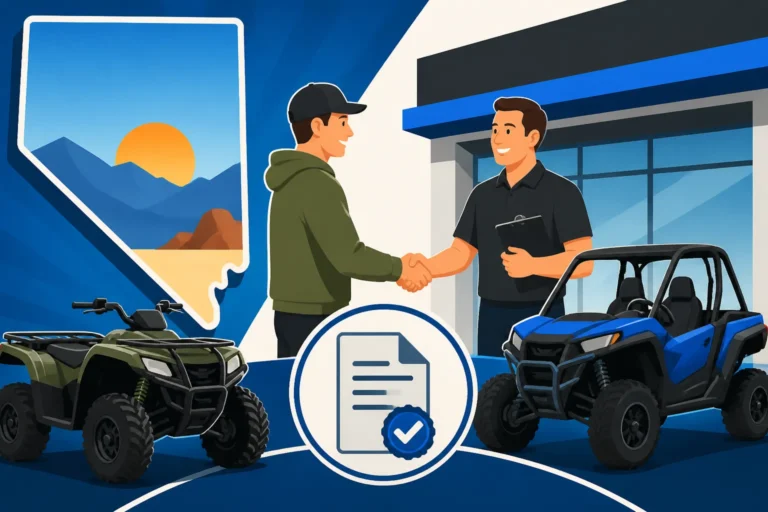
The process for registering an OHV in Nevada is largely the same for a rancher as it is for any other recreational rider. You'll typically start by gathering your paperwork, which usually includes proof of ownership (like a title or a bill of sale) and a valid form of identification. The next critical step is getting a Vehicle Identification Number (VIN) inspection. While the Nevada DMV itself won't perform these inspections, many licensed OHV dealers in the state are authorized to do so. In more rural areas, you might also be able to arrange for a sworn law enforcement officer, such as a sheriff's deputy, to complete the inspection.
Once the VIN inspection is done, you'll need to fill out the appropriate application form, typically an OHV-001 or OHV-012 if you're bringing a machine in from out of state. These forms are readily available online through the [Nevada DMV OHV Section] website. After completing the form, you'll submit it, along with your inspection certificate and proof of ownership, to the DMV. You can do this in person at a DMV office, though many prefer to mail it to the OHV Section in Carson City for convenience, especially those of us living far from urban centers. We’ve covered this process in depth in the [Nevada OHV Registration Paperwork Checklist].
Important Documents You'll Need
Having your documents in order before you start the registration process will save you a lot of time and potential headaches. Here's a quick rundown of what you'll typically need:
- Proof of Ownership: This is usually the original Certificate of Title for the OHV. If you bought the machine new, the dealer would have handled the initial titling. If you bought it used from a private seller, you'll need the signed-over title from the previous owner. If for some reason you don't have a title (perhaps the machine is very old, or you acquired it under circumstances where a title wasn't issued), there are specific procedures to follow, which might involve a bill of sale and an affidavit of ownership. We dive into these situations in [Nevada OHV Registration Without a Title].
- Bill of Sale: Even if you have a title, a comprehensive bill of sale is always a good idea, especially for used machines. It clearly documents the transaction, including the purchase price, date, and details of both buyer and seller. LawDepot can be a useful resource for creating standardized bill of sale documents to ensure all necessary information is included. For more details on what to include, check out [What a Nevada ATV Bill of Sale Should Carry].
- Photo Identification: You'll need a valid form of government-issued photo ID, such as your driver's license, to prove your identity.
- VIN Inspection Certificate: As mentioned, this is proof that your machine's VIN has been physically verified.
- Application Form: The correctly filled-out Nevada OHV registration application (OHV-001 or OHV-012).
Understanding the Costs and Renewal
Let's be realistic: nothing in life is truly free, and that includes the privilege of riding our OHVs. While I can't give you exact numbers here (prices can change, and you should always check the official DMV site for the most current figures), I can tell you about the types of costs involved. You'll have a registration fee, which typically offers you the choice between a [Nevada OHV Registration Fee for One Year] or a [Nevada OHV Registration Fee for Three Years] decal. The three-year option usually offers a slight discount over buying three single-year decals individually, which can be a nice saving for long-term owners.
There are also titling fees if you're titling the machine for the first time or transferring ownership. Sometimes there's a small processing fee, especially if you go through a dealer who helps with the paperwork. The good news is that these fees are generally quite reasonable, especially when you consider where the money goes – back into the trails and public land access we all enjoy.
Once you have your decal, remember that it's not a one-and-done deal. You'll need to renew it before it expires. Nevada usually sends out renewal reminders, but it's always a good practice to mark your calendar so you don't miss the deadline and risk a late fee. Renewals can often be done online or by mail, making it super convenient.
Here's a quick rundown to help you decide if your ranch quad needs that Nevada decal:
| Scenario | Husbandry Exemption Applies? | What to Do |
|---|---|---|
| Solely on Private Land for Husbandry | Yes | Keep proof of land ownership/lease and husbandry use. |
| Briefly Rides County Road to Access another part of Ranch | No | Must register and display decal. |
| Used for Herding on Private Land, Also for Recreational Joyrides on Private Land | No | Must register and display decal. |
| Used on Private Land, but Also for Hunting on Adjacent BLM Land | No | Must register and display decal. |
| Used to Haul Feed Across an Easement or Public Right-of-Way | No (Likely) | Recommend registering to be safe. |
| Used on Property Leased for Agricultural Purposes | Yes | Keep copy of lease agreement. |
| Used on Private Land, Never Touches Public Land, Never for Recreation | Yes | No registration needed, but have documentation ready. |
In the end, understanding the nuances of the husbandry exemption is crucial for any Nevada rancher operating OHVs. While it offers a valuable reprieve from registration requirements for machines used exclusively for agricultural purposes on private land, any deviation from these strict conditions means you'll need to get that decal. Being informed and prepared will save you potential headaches and fines, letting you focus on the important work of ranching in our incredible state.
Disclaimer
This article is for general informational purposes only and does not constitute professional advice. Laws, prices and regulations vary by location and change over time. Consult a qualified professional for guidance on your specific situation.