Registration for a Machine You Only Ride at Logandale
It's a common misconception among off-highway vehicle (OHV) enthusiasts that if you only ride your ATV or UTV on a specific, designated trail system like the fantastic Logandale Trails, you might be exempt from state registration. Many riders think, "Hey, I'm not on the street, and I'm not causing any trouble, so why bother with a decal?" But the reality in Nevada is quite different, and misunderstanding these rules can quickly lead to fines and a spoiled day out. This guide will clarify why your machine needs to be registered, even if its tires rarely touch anything but the dirt paths of Logandale, and walk you through what you need to do to stay legal.
Understanding Nevada's OHV Registration Law for Public Land
Nevada has clear laws governing off-highway vehicles, and these laws don't just apply to machines cruising down county roads or crossing highways. They apply to nearly all OHVs operated on public lands, regardless of whether those lands are part of a massive open desert or a carefully managed trail system like Logandale. The underlying principle is that if you're riding on land accessible to the public, even if it's designated specifically for OHV use, your machine needs to be properly registered with the state.
The state's Department of Motor Vehicles (DMV) oversees the registration process, issuing a decal rather than a traditional license plate for off-road machines. This decal is your proof that you've met the state's requirements. It's not just about showing a number; it's about contributing to the maintenance and safety of the very trails you enjoy. Imagine heading out to Logandale, excited for a day of technical climbs and scenic desert views, only to be stopped by a deputy or ranger. Explaining that you "only" ride there won't hold up in the face of Nevada Revised Statutes (NRS) requirements.
The frustration often stems from the fact that many riders are coming from states with different rules, or they've heard anecdotal information that isn't quite accurate for Nevada. It’s important to remember that Nevada's OHV program is designed to cover a wide range of public land use, and designated trails like Logandale fall squarely within that purview. So, while Logandale Trails is an incredible resource, it's still public land, and that means state registration is a must.
What Constitutes Public Land in Nevada?
When we talk about "public land" in Nevada, we're largely referring to areas managed by federal agencies like the Bureau of Land Management (BLM) and the U.S. Forest Service, as well as state parks and other state-managed areas. Logandale Trails, for example, is a prime example of BLM-managed land that has been specifically developed and maintained for OHV recreation. These areas are not private property; they are open to the general public, and as such, come under the umbrella of state regulations regarding vehicle use.
The distinction between private land and public land is crucial here. If you owned a massive ranch in northern Nevada and only ever rode your ATV within the boundaries of your own property, you would generally not need to register it with the state. The moment you take that same machine onto a public access road, a BLM trail, or even a designated OHV park like Logandale, the registration requirement kicks in. This rule ensures that all vehicles operating in these shared spaces adhere to a minimum standard of identification and that funds are collected to support these areas.
It's easy to blur these lines, especially when you're riding in vast, open spaces that feel remote and unsupervised. However, law enforcement and land management agencies do patrol these areas, and they are trained to look for proper registration decals. A quick stop by a ranger can turn an enjoyable outing into a costly one if your machine isn't compliant. Understanding this fundamental definition of public land is the first step in ensuring you're riding legally in Nevada.
How Logandale Trails Fits Into the Registration Picture
Logandale Trails, located near the stunning Valley of Fire State Park, is a crown jewel for OHV enthusiasts in Nevada. It boasts thousands of acres of diverse terrain, from sandy washes to rocky canyons, with a network of well-marked trails. Because these trails are on public land, specifically managed by the BLM, every ATV, UTV, or other off-highway vehicle operating there must display a current Nevada OHV registration decal. It's as simple as that.
The funds collected from these registrations actually help support facilities and trail maintenance at places like Logandale. When you see improved parking areas, signage, and even vault toilets at these popular riding spots, a portion of that comes from the very registration fees you pay. So, while it might feel like an extra hoop to jump through, your registration directly contributes to making your Logandale riding experiences even better. It’s not just a fee; it's an investment in the future of OHV recreation in the state. [What Nevada OHV Registration Fees Pay For] can give you more detail on where your money goes.
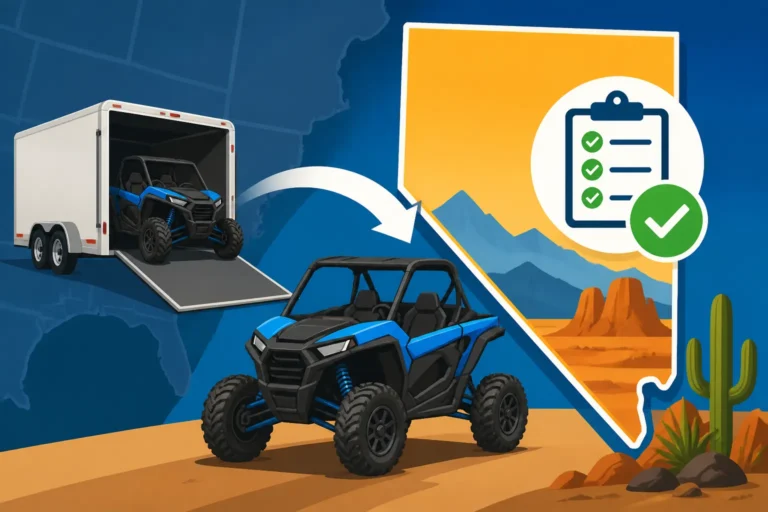
Many riders, particularly those new to Nevada or visiting from out of state, are genuinely surprised by this. They might argue that Logandale feels like an enclosed park, separate from "regular" public roads. However, the state views it differently. The moment you load your machine off your trailer and onto a Logandale trail, you are operating on public land, and the rules apply. Ignoring this can lead to uncomfortable encounters with law enforcement, which no one wants on their riding adventure.
Why Your Logandale-Only Machine Still Needs a Decal
The primary reason your machine needs a decal, even if it lives and breathes only at Logandale, boils down to state law and the funding mechanisms for OHV recreation. Nevada Revised Statutes (NRS) mandate that any OHV operated on public lands or trails must be registered. This isn't just a suggestion; it's a legal requirement designed to ensure accountability, safety, and proper resource management across the state.
Beyond the legal mandate, the registration system is a critical component of maintaining and enhancing the very places we love to ride. The small fee collected for your annual or multi-year decal is earmarked for specific purposes directly related to OHV use. This includes trail construction and maintenance, signage, law enforcement patrols in riding areas, and educational programs. Without these funds, the quality and accessibility of places like Logandale Trails would quickly diminish. It's a user-pay, user-benefit system, ensuring that those who enjoy the trails are the ones contributing to their upkeep.
Think of it this way: your registration is essentially your "ticket" to ride on these public lands. It's a way for the state to identify who is using the trails and to ensure that there's a sustainable funding source for the significant work involved in managing hundreds of thousands of acres of recreational land. From the desert landscapes around Las Vegas to the remote trails near Elko, the decal is a universal symbol of compliance and support for the OHV community. [What a Nevada OHV Decal Actually Proves] further explains the significance of this small sticker.
The Funding Connection to Your Registration Fees
It’s easy to look at a registration fee as just another cost, but in Nevada, those dollars are put to work directly for the OHV community. A significant portion of your registration fee goes into the Nevada Off-Highway Vehicle Program, which then allocates grants to various entities – including local governments and non-profit organizations – for trail projects. This means the money you pay helps build and maintain the very trails you ride at Logandale, Logandale itself being a prime beneficiary of such funding.
These grants fund everything from restoring damaged trails and installing new safety signage to building restrooms and staging areas at popular trailheads. Without a robust registration system, this crucial funding stream would dry up, leaving trail systems vulnerable to neglect and closure. So, while you might feel like you're just paying a fee, you're actually investing in the longevity and quality of your riding experiences. This direct connection ensures that the OHV community is self-sustaining in many ways.
For example, when you see a well-maintained parking lot with clear signage and even trash receptacles at Logandale, that's often a direct result of these registration fees at work. It's a testament to the fact that Nevada's OHV program is designed to cycle resources back into the areas they're collected from, benefiting all riders. This makes the registration not just a legal requirement but a civic responsibility for anyone who values access to Nevada’s incredible off-road opportunities. [Where Nevada OHV Registration Money Goes] offers a deeper dive into the financial flow.
Avoiding Penalties and Hassle on the Trail
The most immediate and practical reason to register your OHV, even for Logandale-exclusive use, is to avoid potential penalties. Nevada law enforcement, including county sheriffs, state park rangers, and BLM officers, have the authority to issue citations for unregistered vehicles on public land. These fines can quickly add up, easily exceeding the cost of registration itself, and they can certainly put a damper on your fun weekend outing.
Beyond the monetary fine, dealing with a citation means time lost, potential court appearances, and the general hassle that comes with legal infractions. Imagine having your UTV loaded up for a day at Logandale, driving all the way out there, only to be turned away or ticketed before you even get to hit the dirt. It’s far simpler and less stressful to ensure your decal is current before you even leave your driveway.
Furthermore, a current registration decal signals to authorities that you are a responsible rider who understands and respects the rules. This can contribute to a more positive interaction if you are stopped for any reason, whether for a routine check or assistance. It's about being prepared and compliant, allowing you to focus on the joy of riding rather than the worry of legal repercussions. [Nevada OHV Late Registration Penalty] outlines the specific costs of letting your registration lapse.
The Essential Steps to Get Your Nevada OHV Decal
Getting your Nevada OHV decal is a straightforward process, but it does require attention to detail and the correct paperwork. Whether you just bought a brand new side-by-side or inherited an older quad, the steps are largely the same for registration. The goal is to provide the state with proof of ownership, a description of the machine, and verification that it meets basic requirements. Once all the ducks are in a row, you'll receive your decal, which you then need to affix to your machine in a visible location.
The process often starts with gathering your proof of ownership, which typically means a Manufacturer's Statement of Origin (MSO) for new machines, or a title and bill of sale for used ones. If you're buying a used ATV privately in Nevada, make sure you get a proper bill of sale. Sometimes, if a title is lost or was never issued for older machines, you might need to go through a different process involving affidavits, which can be facilitated with forms from resources like LawDepot. After you have your ownership documents, the next big step is often a VIN inspection, ensuring the machine's identity matches its paperwork.
Once your paperwork is complete and any necessary inspections are done, you can submit your application and fees to the Nevada DMV. They offer several ways to do this, including through certain dealerships, by mail, or in person. Waiting for your decal can feel like forever when you're itching to ride, but the key is patience and ensuring everything is correctly submitted the first time. [Registering an ATV in Nevada] provides a comprehensive overview of the entire process.
Gathering Your Proof of Ownership
The absolute first step in registering any OHV in Nevada is proving that you legally own it. Without proper proof, the DMV simply cannot issue a decal in your name. For a brand-new machine, this is typically the Manufacturer's Statement of Origin (MSO) or Manufacturer's Certificate of Origin (MCO), which essentially acts as the birth certificate for your vehicle. This document will have the vehicle identification number (VIN) and details about the machine.
For a used OHV, the situation is usually a transfer of ownership, which means you'll need the previous owner's signed-over title. A bill of sale is also critically important, even if the title itself is signed. A well-drafted bill of sale, perhaps generated using an online legal document service like LawDepot, protects both the buyer and the seller by clearly stating the terms of the sale, the purchase price, the date, and confirming the VIN. This is particularly vital if you're buying from a private party and want to avoid future headaches.
What if the previous owner lost the title, or the machine is so old it never had one? Nevada has provisions for these situations, which often involve submitting an affidavit of ownership or going through a bond process. These scenarios are more complex and might require additional research or even contacting the DMV directly for specific guidance. The critical takeaway is that you must be able to demonstrate clear, legal ownership to register your machine. [Buying a Used ATV Privately in Nevada] offers more advice on this.
The VIN Inspection Requirement
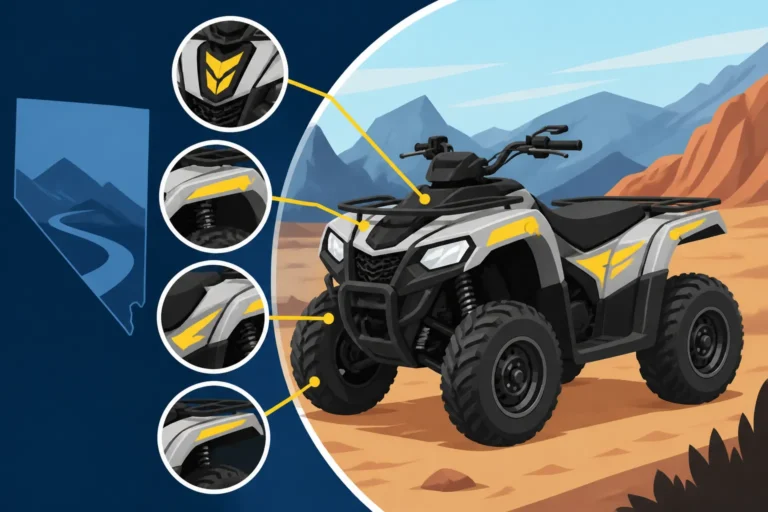
Once you have your proof of ownership, most OHVs require a Vehicle Identification Number (VIN) inspection. This step is crucial for verifying that the machine you're trying to register is indeed the one described on your ownership documents and that its VIN hasn't been tampered with. It's a fraud prevention measure that protects both you and the state. The VIN inspection needs to be performed by an authorized party, not just any mechanic or even yourself.
In Nevada, certified OHV dealers are often the easiest and most convenient option for a VIN inspection. They have the necessary forms and are authorized by the DMV to complete this verification. Some law enforcement officers, such as county deputies or state troopers, can also perform VIN inspections, but it's usually best to call ahead and confirm their availability and willingness to do so, as they may prioritize other duties. The Nevada DMV itself typically does not perform VIN inspections for OHVs. [Which Dealers Can Inspect a VIN in Nevada] can help you find an appropriate facility.
During the inspection, the authorized person will physically locate the VIN on your machine and compare it to your MSO, title, or bill of sale. They'll then complete a specific form, often OHV-002, attesting that the numbers match. This signed and completed form then becomes part of your registration application packet. Without a valid VIN inspection, your registration application will likely be rejected, causing frustrating delays in getting your decal.
Submitting Your Application and Fees
With all your documents in hand – proof of ownership, a completed VIN inspection form, and your filled-out registration application (typically Form OHV-001) – you're ready for the final step: submission. Nevada offers a few convenient ways to process your OHV registration. Many authorized OHV dealers can process registrations directly, often at the time of purchase or after a service visit. This is usually the quickest way to get your decal.
Alternatively, you can submit your application by mail to the Nevada DMV's OHV Section in Carson City. Be sure to send copies of your important documents and keep the originals safe. You can also visit certain DMV offices in person, though not all locations handle OHV registrations, so it’s always wise to check their website or call ahead to confirm. Each method has its own processing times, but submitting a complete and accurate packet significantly speeds things up. [Nevada OHV Registration Processing Times] can give you an idea of what to expect.
Don't forget the fees! There's a registration fee, which can be paid for either a one-year or a three-year decal, plus a small titling fee if your machine is not yet titled in Nevada. These fees are subject to change, so always check the current figures on the Nevada DMV website. Make sure your payment method is acceptable, whether it's a check, money order, or credit card if processing in person or online (if available). Once processed, your decal will be mailed to you, ready to be affixed and get you out on those Logandale trails legally. [Nevada OHV Registration Fee for One Year] and [Nevada OHV Registration Fee for Three Years] detail these costs.
Common Misconceptions and Special Scenarios
Despite the clear rules, several misconceptions persist regarding OHV registration in Nevada. Riders often assume certain conditions grant them an exemption, only to find out the hard way that the law is broader than they thought. From machines only ridden on private land to out-of-state visitors, understanding these nuances is crucial for staying compliant and enjoying Nevada's vast riding opportunities without hassle. It's a tricky landscape to navigate, and the "what ifs" can sometimes feel endless.
One of the biggest areas of confusion revolves around private land use. Many believe that if a machine only ever operates on private property, it needs no state registration. While this is generally true, the devil is in the details. What if you have to cross a short stretch of public land or a county road to get to your private riding area? Suddenly, the rules change. Another common question comes from out-of-state riders who already have a registration decal from their home state. Do they still need a Nevada decal? The answer, as with many legal questions, isn't a simple yes or no.
Then there are specific types of machines or circumstances that might genuinely be exempt, such as very small youth machines under a certain engine size, or those used strictly for agricultural husbandry. Knowing which category your machine falls into is paramount. Misinformation can be costly, so always refer to official sources or consult experts if you're unsure about your specific situation.
| Scenario | Nevada OHV Registration Required? | Key Consideration |
|---|---|---|
| Riding at Logandale Trails | Yes | Logandale is public land (BLM-managed) |
| Riding exclusively on your private ranch | No | Machine never touches public land, including roads or trails |
| Crossing a public road to get to private land | Yes (if crossing is more than 2 miles, or if riding along a public road) | Check local county ordinances for road use rules |
| Out-of-state machine with current registration | Sometimes | Nevada offers reciprocity for 15 consecutive days; after that, it needs Nevada registration |
| Machine used only for farm/ranch husbandry | No | Specific exemption for agricultural use only; no recreational riding on public land |
| Machine under 70cc engine displacement | No | Specific exemption for very small youth models |
| Pre-1976 machine | No | Exemption for older machines, but proof of manufacture year is required |
The Private Land Exception and Its Limits
The most frequently asked question about OHV registration often centers on machines that "never leave private property." And generally speaking, if your ATV or UTV is truly confined to private land – like your own ranch, a private mining claim you own, or a friend's expansive property that doesn't border or intersect public access points – then you likely do not need to register it with the Nevada DMV. This is because the state's jurisdiction for OHV registration primarily applies to vehicles operating on public lands, roads, or trails.
However, this "private land exception" comes with significant caveats. What happens if you need to cross a short stretch of a county road to get from one part of your private land to another? Or if your private property is accessed via a BLM road? In many cases, even a brief foray onto public property, including public roads or rights-of-way, will trigger the registration requirement. Nevada's laws regarding "street legal" OHVs are quite strict, but even for off-road purposes, using any public path connects you to the state's registration mandate. So, while your machine may live on private land, its movement defines its registration need.
A common pitfall is assuming that if a road looks like a private dirt track, it is private. Many unpaved roads in Nevada are actually maintained by counties or are designated BLM routes. It's always best to verify the ownership of the land and roads you plan to use. If there's any doubt that your machine will ever touch public ground, the safest bet is to register it. It's cheaper than a ticket and far less stressful than explaining your interpretation of "private land" to a law enforcement officer. [A Nevada Machine That Only Rides Private Land] explores this in more detail.
What About Out-of-State Riders?
Nevada is a prime destination for OHV enthusiasts from all over the West, and many visitors arrive with their machines already registered in their home states. This leads to a natural question: do out-of-state riders need a Nevada OHV decal? The answer is a bit nuanced but generally favorable for short visits. Nevada law allows for reciprocity, meaning if your OHV is properly registered in another state, you can typically ride it in Nevada for a limited period without needing a separate Nevada registration.
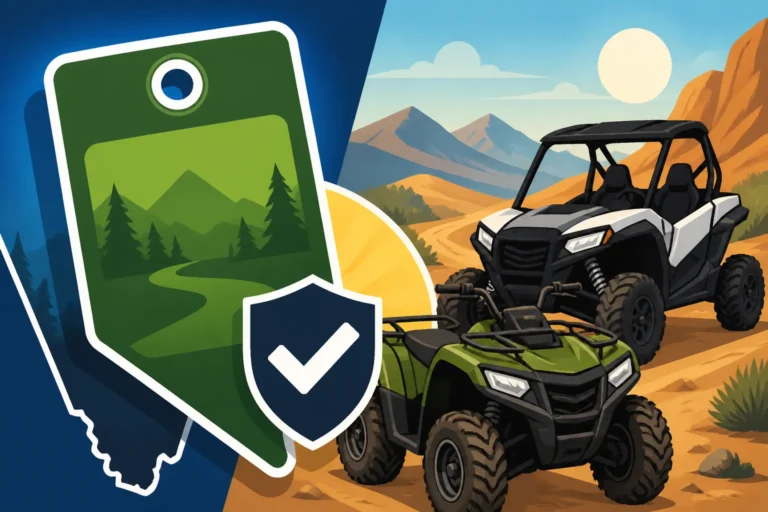
Specifically, Nevada grants a grace period of 15 consecutive days for out-of-state registered OHVs. This means if you're coming from, say, California with a valid Green Sticker, or from Arizona with a current OHV decal, you can ride Nevada's trails – including Logandale – for up to 15 days straight. This is a fantastic benefit for tourists and those just passing through, allowing them to enjoy Nevada's vast public lands without extra bureaucracy. [How Long a Visitor Can Ride Nevada Unregistered] provides specific information.
However, if your stay extends beyond 15 consecutive days, or if you're planning to become a Nevada resident, then your machine will need to be registered in Nevada. The clock starts ticking from the moment you begin operating your OHV in the state. So, for those longer stays or if you've recently moved to the Silver State, be prepared to go through the Nevada registration process. It's designed to accommodate visitors for reasonable durations, but it expects longer-term users to become part of the local system. [Registering an Out-of-State Machine in Nevada] covers this transition.
Exemptions You Might Overlook
While most OHVs on public land require registration, Nevada does have a few specific exemptions that are easy to overlook. Understanding these can save you unnecessary paperwork and fees, but it's critical to ensure your machine genuinely qualifies for one of these categories. These aren't loopholes; they are carefully defined exceptions based on machine type or primary use.
One common exemption is for very small youth machines. Generally, OHVs with an engine displacement of less than 70 cubic centimeters (70cc) are exempt from registration. This is typically for young children's beginner quads, recognizing their limited use and slower speeds. However, it's essential to confirm the exact engine size, as anything 70cc or above will likely require registration. Always double-check the manufacturer's specifications. [Machines Under 70cc and Why They Skip Registration] gives more details.
Another significant exemption is for machines manufactured before January 1, 1976. These older "vintage" OHVs are generally exempt from current registration requirements. This acknowledges the difficulty in titling or tracking very old machines that predate modern OHV laws. If you own such a machine, be prepared to provide proof of its manufacturing date, perhaps through a title, bill of sale, or even a sworn affidavit. Finally, machines used exclusively for agricultural husbandry, such as those on a working farm or ranch that never leave private property for recreational purposes, may also be exempt. Again, this is a very specific use case, and any recreational riding on public land voids this exemption. Always ensure your machine perfectly fits the criteria before assuming it's exempt. [Machines Nevada Exempts From Registration] lists these exceptions clearly.
Disclaimer
This article is for general informational purposes only and does not constitute professional advice. Laws, prices and regulations vary by location and change over time. Consult a qualified professional for guidance on your specific situation.