Nevada Reciprocity With California
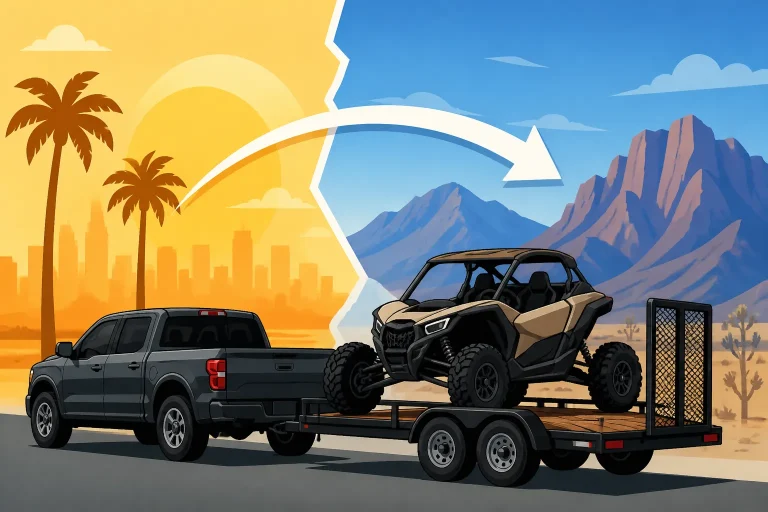
If you’re bringing a California ATV or UTV to Nevada, a California sticker may cover more than just your home-state riding—but it does not mean you can ride indefinitely without checking Nevada’s rules. Here’s how reciprocity works, what paperwork to carry, and when you may need a Nevada OHV decal.
What Nevada reciprocity means for California riders
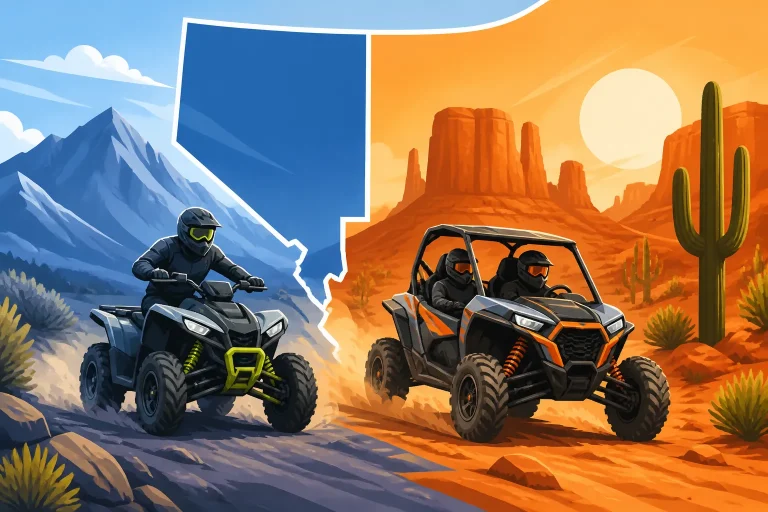
Nevada has a limited exemption for qualifying out-of-state off-highway vehicles operated by nonresidents. In practical terms, a California resident visiting Nevada may be able to ride with current California OHV registration or a valid California permit instead of getting a Nevada decal for a short visit. The exemption is limited to 15 days, so it is not a blanket substitute for Nevada registration on a long stay.
That is the important distinction: reciprocity is a temporary allowance, not a permanent transfer of California registration into Nevada. It also depends on the machine and its paperwork qualifying under Nevada’s rules. Nevada’s nonresident exemption is covered by NRS 490.082; read Nevada’s Nonresident Exemption in NRS 490.082 for more on the rule.
For a visitor, the basic question is not simply, “Does my machine have a California sticker?” Check whether the registration or permit is current, whether the machine is eligible for Nevada’s exemption, and how Nevada counts the 15-day period. If the trip may exceed that limit, contact the Nevada OHV Section or review current official guidance before riding. The details are covered in Nevada’s 15-Day Window for Out-of-State Machines and When a Visitor’s 15 Days Start Counting.
Nevada’s own OHV decal serves as both registration and the state’s trail permit. There is no separate Nevada trail sticker to buy in addition to the decal. A California registration may satisfy the temporary nonresident exemption, but it does not turn into a Nevada decal or change the length of the exemption. See Nevada’s Registration Decal as Your Permit for how the decal works for Nevada-registered machines.
| Situation | What to check before riding in Nevada |
|---|---|
| California resident on a short visit | Current California OHV paperwork, eligibility for Nevada’s nonresident exemption, and the 15-day limit |
| California resident staying longer | Whether a Nevada OHV registration is required and what application documents apply |
| Machine with an expired California sticker or registration | Whether the paperwork is still valid for Nevada’s exemption; do not assume an old sticker is enough |
| Machine with a California road plate | Whether the plate and registration satisfy the requirements for this particular machine and use |
| California resident riding on public land | Registration or exemption status, land access, route restrictions, and local riding rules |
Which California paperwork should you bring?
California riders commonly refer to a green sticker or red sticker. These are part of California’s OHV identification system, but a visible sticker by itself is not a complete trip plan. Carry the current registration or permit documentation associated with the machine, and make sure the identification displayed on the vehicle matches the paperwork.
Before leaving, check that the registration is current and that the machine’s identification details are legible. Keep the registration card or other supporting document somewhere it will not be lost to dust, water, or a bumpy ride. A photo on your phone can be a helpful backup, but it is sensible to carry the original document or an official copy when available. Riding Nevada on a California Green Sticker covers the California-specific question in more detail, while Nevada OHV Registration and Proof of Ownership explains why the paperwork matters.
California’s red-sticker riding schedule is a California rule. It does not automatically set Nevada’s riding season. That does not mean every Nevada route is open whenever you arrive: Nevada land managers can close areas or routes for habitat protection, fire danger, maintenance, or other restrictions. Check the rules for your destination, and do not treat a sticker as permission to ride anywhere.
Also distinguish an OHV registration sticker from a license plate for road use. Some machines are registered for highway use, while others are registered only as off-highway vehicles. The paperwork and privileges are not interchangeable in every situation. A road plate does not, by itself, answer every question about Nevada OHV registration or where the machine may be ridden. If your machine is street-registered, confirm how Nevada treats it for the specific route and activity you have in mind.
A practical pre-trip check is to match the vehicle’s identification number, registration record, and displayed sticker. If the sticker is damaged, expired, or hard to read, resolve the issue with the California agency before the trip rather than expecting a Nevada ranger to infer that the machine is registered. For additional context on the Nevada decal and what it demonstrates, see What a Nevada OHV Decal Actually Proves.
How to plan a Nevada ride on California registration
Use this checklist before loading the ATV or UTV. It helps separate registration questions from the other permissions and preparations a Nevada ride may require.
- Confirm the machine’s status in California. Check that its OHV registration or other relevant registration is current, and bring the matching documentation. If ownership has recently changed, make sure the paperwork reflects the correct owner and machine.
- Check whether Nevada’s nonresident exemption applies. A California address alone does not establish eligibility. Confirm that the operator is a nonresident, that the machine and its paperwork qualify, and that the visit falls within Nevada’s limited 15-day allowance.
- Work out the timing before a long trip. Do not assume the 15 days restart each time you cross the state line or that a long visit can be divided into separate trips. Confirm the counting method with the Nevada OHV Section if your schedule is close to the limit.
- Verify where you plan to ride. Registration does not grant access to every trail, road, or parcel of public land. Check the current travel map, closures, and rules for the destination. Riding Nevada With an Out-of-State Registration and Nevada Rules for Riding Federal Land can help clarify the separate access question.
- Carry documents where you can reach them. Keep the registration paperwork protected from dust and moisture, and make sure the displayed sticker is visible and attached as required. Keeping Paperwork Dry in a Dusty Machine has practical storage suggestions.
- Decide what to do if the trip may run long. If you may exceed the exemption, ask about Nevada registration before riding beyond the allowed period. Do not wait until the final day to learn what application, inspection, or ownership documents you need.
The riding destination matters as much as the paperwork. A Nevada OHV decal, or a qualifying out-of-state registration, does not override a closed route or a land-use restriction. In some areas, riders need to stay on designated routes; in others, rules can differ by land manager and location. Check the current information for the specific area rather than relying on a map saved from an earlier trip.
It is also worth checking whether your route includes a public road. Nevada has separate rules for off-highway riding and for qualifying large ATVs or UTVs on certain roads. A California OHV sticker does not make a machine road legal in Nevada. If your plan involves pavement, review Are ATVs Street Legal in Nevada? and confirm the requirements that apply to your vehicle and route.
When to get a Nevada decal instead
If the visit is likely to run past the 15-day exemption, or if your California paperwork is not current or does not clearly qualify, resolve the registration question before riding. Nevada may require its own OHV registration rather than accepting the machine under the temporary nonresident allowance. The right next step depends on the machine’s ownership documents, history, and registration status.
Ask the Nevada OHV Section what application path fits your circumstances. Keep the answer specific: tell them you are a California resident, describe the machine, explain what California registration it has, and give the dates you expect to ride in Nevada. If you bought the vehicle recently, inherited it, or brought it from another state before establishing Nevada residency, mention that too. Those details can affect which documents or process apply. Registering an Out-of-State Machine in Nevada explains the broader process, and Nevada OHV Registration Paperwork Checklist can help you prepare.
Do not confuse the short-visit exemption with registering a machine after moving to Nevada. A person who becomes a Nevada resident may need to follow Nevada’s registration rules rather than continue relying on California paperwork. The change of residence is a separate issue from a visitor’s temporary ride. See Nevada OHV Registration After Moving to the State if you are relocating.
Finally, keep registration separate from other trip costs and permissions. Some riding areas may require a site-specific pass or have their own operating conditions. Nevada’s OHV decal is not a substitute for every local recreation fee, and a California sticker does not waive those separate requirements. Check the destination’s official information before heading out, especially if you are traveling to a managed recreation area.
The safest approach is straightforward: use current California paperwork only when Nevada’s limited nonresident exemption fits your situation, track the 15-day restriction carefully, and verify the riding area’s rules independently. If any part of the exemption is uncertain, ask the Nevada OHV Section before the machine goes on a Nevada trail.
Disclaimer
This article is for general informational purposes only and does not constitute professional advice. Laws, prices and regulations vary by location and change over time. Consult a qualified professional for guidance on your specific situation.