Nevada OHV Registration Paperwork Checklist
There are few things more frustrating than meticulously preparing for a task, driving all the way to the DMV or a dealership, only to be told you're missing a crucial piece of paper. When it comes to registering your off-highway vehicle (OHV) in Nevada, the paperwork can feel like a labyrinth, especially if you're new to the state or dealing with a unique situation. This guide is here to untangle that process, providing you with a clear, comprehensive checklist of everything you'll need to successfully register your ATV, UTV, dirt bike, or any other OHV in the Silver State, saving you time and a potential headache.
Understanding the Core Requirements for Nevada OHV Registration
Before you even think about heading out the door, it's essential to grasp the fundamental documents Nevada requires for OHV registration. These aren't just arbitrary hoops to jump through; they're in place to establish ownership, ensure proper identification of the vehicle, and confirm that all necessary fees and taxes are accounted for. Without these core items, your journey to legal trail access will hit a dead end.
Proof of Ownership: The Foundation of Your Registration
At the heart of any vehicle registration, whether it's a car or an ATV, is solid proof of ownership. Nevada needs to know that the machine you're trying to register is legally yours. This isn't just about preventing theft; it's about creating a clear chain of title that protects everyone involved in a transaction.
For new machines, this typically means a Manufacturer's Statement of Origin (MSO) or Manufacturer's Certificate of Origin (MCO). This document is like a birth certificate for your OHV, issued by the factory and passed on to the dealer, then to you. It's the first step in establishing ownership. For a used machine, you'll need the previous owner's Nevada OHV title, properly signed over to you. If the machine was titled in another state, you'll bring that out-of-state title.
But what if you bought a used ATV privately and the seller couldn't find the title? This is a common frustration, and it can definitely complicate things. You'll likely need a bill of sale, and potentially an affidavit or other documentation to prove legal transfer. The state wants to see a clear path from the original owner to you. A robust bill of sale should include details like the buyer's and seller's full names and addresses, the vehicle's make, model, year, and most importantly, its Vehicle Identification Number (VIN). If you need help drafting a comprehensive bill of sale that holds up to scrutiny, resources like LawDepot can provide templates that ensure all necessary legal language is included. It’s better to have too much information than not enough when proving ownership. Remember, without undisputed proof of ownership, the DMV cannot issue you a new registration. You might even want to [Check an ATV VIN Before You Buy] to avoid potential issues down the road.
The All-Important Application Forms
It might sound obvious, but having the correct registration application form filled out accurately is absolutely non-negotiable. Nevada's Department of Motor Vehicles (DMV) has specific forms for different scenarios, and grabbing the wrong one or leaving fields blank will lead to immediate rejection.
The primary form you'll encounter for most OHV registrations is often referred to as OHV-001, but there are sometimes variations or supplementary forms depending on your purchase scenario. For instance, if you're bringing in a machine from out of state, there might be a different form or specific sections of OHV-001 that need extra attention. [Why Nevada Has Five Registration Applications] helps explain why there are different versions. You can usually find these forms online on the [Nevada DMV OHV Section] website or pick them up in person at a DMV office. Before you even start filling, read the instructions carefully. Common mistakes include forgetting to sign, missing critical vehicle details like the year or engine size, or not properly indicating how you acquired the machine. Take your time, use black or blue ink, and ensure every applicable box has a clear answer. If you're unsure about a specific field, it's always better to call the DMV or consult their online resources rather than guess.
Vehicle Identification Number VIN Verification
Unlike on-road vehicles, which often get their VIN inspection done at the DMV itself, OHVs in Nevada typically require a VIN inspection from an authorized third party. This is a critical step, as it verifies that the VIN on your physical machine matches the VIN on your ownership documents. This prevents fraud and ensures the vehicle's identity.
So, who can actually perform this all-important inspection? Generally, it's either a licensed Nevada OHV dealer or a sworn law enforcement officer. That means local police, sheriff's deputies, or Nevada Highway Patrol can do it. The catch? The [The VIN Inspection Nevada DMV Will Not Do] is usually because they don't have the staff or specific authority for it at the regular DMV counter. You can't just roll up to any DMV and expect them to stamp your paper. Instead, you'll need to locate a licensed OHV dealer in your area who offers this service, or contact your local law enforcement agency to inquire about their process. Some agencies might have specific days or times they offer this service, or they might require you to bring the machine to the station. Make sure the VIN on your machine is clean, legible, and easily accessible for the inspector. Any discrepancies could cause significant delays, so ensure your documents accurately reflect the physical VIN. [Who Can Do a VIN Inspection in Nevada] goes into more detail on this often-confusing step.
Supporting Documents and Specific Scenarios
While the core ownership and application forms are universal, there are several other documents and situational requirements that might apply to your specific registration journey. Overlooking these can be just as detrimental as forgetting your title.
Residency and Identity Verification
When you register an OHV in Nevada, the state needs to confirm your identity and, if you're claiming Nevada residency, prove that you actually live here. This isn't just about bureaucracy; it impacts the fees you pay and ensures that the vehicle is registered to a legitimate resident.
You'll need a valid form of identification, typically a Nevada driver's license or ID card. If you're new to the state, you might be navigating the process of establishing residency for the first time. The DMV will likely require two proofs of residency in addition to your ID if your license isn't yet a Nevada one, or if they need to update your address. This could include utility bills, a rental agreement, mortgage statements, or bank statements showing your Nevada address. For example, if you just moved to Las Vegas from California, you’ll need to show you’ve truly made Nevada your home before getting a resident registration. This is crucial because Nevada has different fee structures for residents versus non-residents, and the state wants to ensure you're paying the correct amount. Always bring originals or certified copies, as photocopies without an original present might not be accepted. It's all part of making sure you're getting your [Nevada Registration After You Move In] correctly.
Sales Tax and Fee Documentation
Nobody loves paying fees, but they are an unavoidable part of registering any vehicle. When it comes to OHVs in Nevada, you'll need to be prepared for both registration fees and, in many cases, sales tax. Understanding what you owe and having the necessary documentation ready will make the process smoother.
If you purchased your OHV from a licensed Nevada dealer, they will typically handle the collection of sales tax at the point of sale, and this will be documented on your bill of sale or purchase agreement. If you bought the machine privately, you are generally responsible for paying the sales tax directly to the DMV when you register it, unless an exemption applies. The exact sales tax rate depends on the county where you live or where the transaction occurred. The registration fees themselves vary depending on whether you choose a one-year or three-year registration. For instance, the [Nevada OHV Registration Fee for One Year] is less than the [Nevada OHV Registration Fee for Three Years], but the three-year option saves you money in the long run. These fees contribute to important programs; [What Nevada OHV Registration Fees Pay For] includes trail maintenance and safety education.
It's wise to bring various payment methods—cash, check, or a debit/credit card—as not all DMV locations or authorized dealers might accept all forms of payment, or there might be transaction fees for cards. Always check with your specific registration location beforehand. Having your proof of purchase, clearly showing the sale price, is vital for the DMV to calculate the correct sales tax amount. This is part of ensuring [Nevada OHV Registration and Sales Tax] is handled properly.
Special Circumstances: Gifts, Inherited Machines, or Out-of-State Purchases
Sometimes, your OHV journey begins under unique circumstances that require specific documentation beyond the standard purchase scenario. Whether it's a generous gift from a family member, an inheritance after a loss, or a machine brought in from another state, the paperwork will reflect these distinct origins.
If you've received an OHV as a gift, you'll need an Affidavit of Gift. This document legally states that the machine was given to you without monetary exchange. It should clearly identify both the giver and the recipient, along with a detailed description of the OHV, including its VIN. This helps the state waive sales tax, as no sale actually occurred. Similarly, if you've inherited an OHV, you'll need documentation like a death certificate, a copy of the will, or letters of administration to prove your legal right to the machine. This ensures that the vehicle is being transferred to the rightful heir. Crafting these affidavits or other legal documents can feel intimidating, but services like LawDepot can provide templates and guidance to ensure they meet legal requirements and accurately reflect the situation, giving you peace of mind. [Registering a Machine You Inherited in Nevada] offers more specifics on this process.
For machines coming from out of state, the process will involve your out-of-state title or registration, along with the standard Nevada application forms and VIN inspection. The state needs to see that your ownership was valid in the previous jurisdiction before they can transfer it to Nevada. For example, if you're moving your beloved quad from Arizona to Nevada, you'll need its Arizona title and then go through the Nevada registration process. [Registering an Out-of-State Machine in Nevada] provides a detailed walkthrough. In all these special cases, the key is clear, verifiable documentation that explains the transfer of ownership without a standard retail transaction.
Ensuring Your Paperwork Is Ready for Submission
You've gathered all your documents, filled out the forms, and perhaps even had your VIN inspected. Now comes the crucial step of ensuring everything is in perfect order before you present it to the state. A meticulous final check can prevent frustrating delays.
Pre-Submission Checklist: Double-Checking Everything
Before you make that trip to the DMV or dealer, take a deep breath and go through a final checklist. It’s easy to overlook a small detail when you’re eager to get out on the trails. This table will help you systematically review all your documents.
| Document Type | Item Checklist | Notes |
|---|---|---|
| Proof of Ownership | Original MSO/MCO (for new machines) | Provided by dealer. |
| Original Nevada OHV Title (signed over to you) | For used machines from Nevada seller. Ensure seller's signature, date, and printed name are present. | |
| Original Out-of-State Title (signed over to you) | For machines from other states. Check for proper endorsement. | |
| Bill of Sale (for private sales, or as supplementary proof) | Essential for all private sales. Must include buyer/seller info, OHV description, VIN, date, and purchase price. LawDepot offers reliable templates. | |
| Affidavit of Gift (if applicable) | Clearly identifies giver/recipient and OHV. | |
| Death Certificate/Will/Letters of Admin (for inherited machines) | Proof of legal right to machine. | |
| Application Forms | Completed Nevada OHV Registration Application (e.g., OHV-001, OHV-012) | All required fields filled, no blanks. Use black or blue ink. |
| Your Signature and Date | Do not forget this! | |
| Identification & Residency | Valid Nevada Driver's License or ID Card | Current and unexpired. |
| Two Proofs of Nevada Residency (if applicable, e.g., utility bills, lease agreement) | For new residents or address changes. | |
| Vehicle Verification | Completed VIN Verification Certificate (by licensed dealer or law enforcement) | Signed and dated by authorized inspector. Ensure VIN matches all other documents. |
| Payment | Funds for Registration Fees & Sales Tax | Cash, check, or card (confirm accepted methods). |
Go through each item. Are there any missing signatures? Is the VIN on the bill of sale identical to the one on the VIN verification form and the title? Are all names spelled correctly? These small details can cause big holdups. For instance, an incorrect VIN on just one document could mean you have to restart the entire process, including getting a new VIN inspection. This comprehensive Nevada OHV Registration Paperwork Checklist is your roadmap to a smooth transaction.
The Submission Process: Where and How
Once your stack of documents is perfectly assembled, it's time to submit them. Nevada offers a few avenues for this, each with its own benefits and considerations. Understanding your options can help you choose the most convenient and efficient method for your situation.
The most common way to submit your paperwork is in person at a Nevada DMV Full Service Office. This allows you to ask questions, rectify minor issues on the spot, and receive your new registration card and decal quickly, often on the same day. Be prepared for potential wait times, especially during peak hours. Another popular option, especially if you purchased your machine recently, is to submit through a licensed Nevada OHV dealer. Many dealers offer this as a service, streamlining the process for their customers. They are familiar with the forms and requirements, making it a convenient choice. [Registering Through a Nevada Dealer] often means they handle much of the legwork, though they may charge a small processing fee. Lastly, you can often submit your paperwork by mail to the DMV's OHV Section in Carson City. While this can be convenient if you live far from a DMV office, it typically comes with longer processing times, so it's not ideal if you're in a hurry to get your decal. Always make copies of everything you mail, just in case.
What to Expect After Submission
After all your efforts, submitting the paperwork feels like a huge relief. But what happens next? Knowing what to expect can help manage your anticipation and ensure you receive everything you need to legally hit the trails.
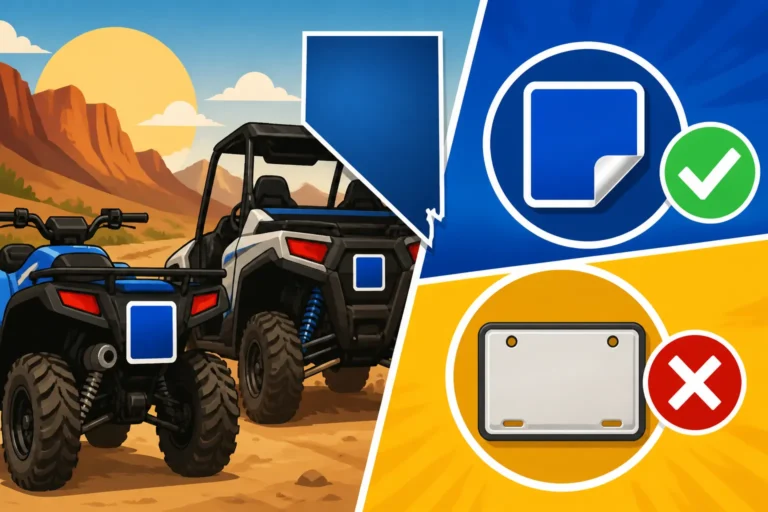
If you submitted in person at a DMV or through a dealer, you might receive your OHV registration card and decal on the same day. This is the fastest turnaround. The decal is what you'll affix to your OHV; [Left Side or Rear: Where the Decal Goes] depends on the type of machine you have (ATV, UTV, or dirt bike) and the specific design of your machine. It's a visual identifier that shows law enforcement your machine is registered. The registration card is a small document you should carry with you whenever you ride. It contains important information about your OHV and its registration status. [What a Nevada OHV Decal Actually Proves] is that you've paid your dues and are legally authorized to operate on designated public lands.
If you submitted by mail, you'll need to be a bit more patient. [Nevada OHV Registration Processing Times] can vary, but generally, it will take a few weeks for the DMV to process your application and mail your decal and registration card to you. During this waiting period, you won't have a valid decal, so it’s best to hold off on riding on public lands until your new decal arrives. Keep copies of your submitted application and proof of payment as temporary documentation in case you're stopped, though these typically won't suffice for full compliance. Once you receive your decal, make sure to apply it correctly and keep your registration card safe in your riding gear.
The journey to getting your OHV legally registered in Nevada doesn't have to be a confusing one. By understanding the core requirements, preparing for specific scenarios, and diligently checking your paperwork, you can navigate the process with confidence. Take your time, consult official resources like the Nevada DMV, and don't hesitate to ask questions if you're unsure. The reward? Uninterrupted enjoyment of Nevada's incredible off-highway trails, knowing you've done everything by the book.
Disclaimer
This article is for general informational purposes only and does not constitute professional advice. Laws, prices and regulations vary by location and change over time. Consult a qualified professional for guidance on your specific situation.