The Husbandry Exemption for Nevada Ranches
If you're a rancher or farmer here in Nevada, you know your ATV or UTV isn't just a toy; it's an indispensable tool. From checking miles of fence line to herding cattle or moving feed, these machines are workhorses. But that nagging question always pops up: do I really need to register this machine if it rarely, if ever, leaves my private property for recreational riding? It's a valid concern, as adding bureaucracy to already demanding work can feel like an unnecessary burden. This guide will walk you through Nevada's specific husbandry exemption, clarifying when your trusty ranch machine can skip registration and what you need to know to stay on the right side of the law.
Understanding the Nevada OHV Registration Mandate and the Rancher's Dilemma
Before we dive into the exemptions, it's important to grasp the general rule regarding off-highway vehicle (OHV) registration in Nevada. It can feel like just another hoop to jump through, but there's a purpose behind it.
The General Rule: Why Most OHVs Need a Decal in Nevada
For the vast majority of recreational riders, bringing home a new ATV or UTV means a trip to get it registered with the Nevada Department of Motor Vehicles (DMV). The state requires all OHVs used on public lands, trails, or roads designated for OHV use to display a current registration decal. This mandate isn't just about collecting fees; it's about funding the very trails and facilities we all enjoy. A portion of those registration dollars goes directly into the Nevada Off-Highway Vehicles Program, which maintains riding areas, develops new trails, and promotes rider safety.
So, for someone hitting the dunes at Sand Mountain or exploring the vast network of trails at Logandale, getting that [Registering an ATV in Nevada] decal is a non-negotiable step. It identifies your machine, shows you're contributing to the riding infrastructure, and ensures you're compliant if a park ranger or deputy stops you. However, for a rancher whose machine is purely a utility vehicle, this general rule often feels misapplied, leading to understandable frustration.
The Cost and Hassle: Initial Thoughts on Registering a Work Machine
Let's be honest, the thought of adding another layer of paperwork and expense to your ranch operations isn't exactly thrilling. You're already juggling feed costs, equipment maintenance, and fluctuating market prices. The idea of taking time out of your busy day to complete forms, potentially get a VIN inspection, and then pay a fee for a machine that might only ever see your own private acreage or leased grazing land seems counterproductive. It feels like an administrative burden that doesn't quite fit the reality of your day-to-day work.
While the cost of [Nevada's Annual OHV Registration] isn't astronomical, it's the principle and the time commitment that can be frustrating. You know your machine is essential for your livelihood, not for weekend thrills. So, the search for an exemption, a way to cut through the red tape, is entirely logical and often necessary for ranchers just trying to make ends meet and manage their property efficiently.
Diving Deep into Nevada's Husbandry Exemption
Fortunately, Nevada law acknowledges the unique needs of the agricultural community. The state provides a specific exemption for OHVs used for husbandry, recognizing that these machines are tools of the trade, not primarily recreational vehicles.
What "Husbandry" Really Means in the Eyes of Nevada Law
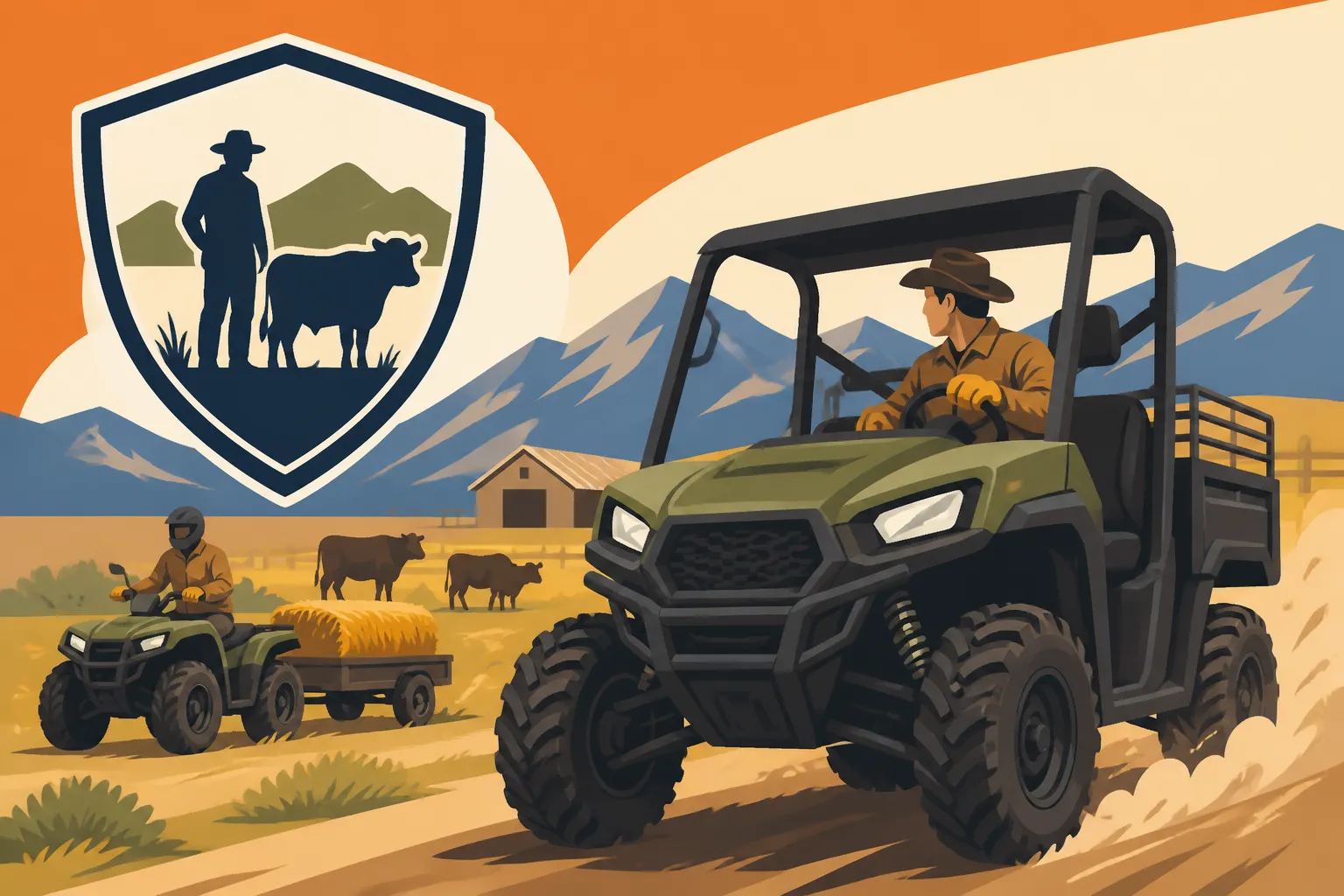
When the law talks about "husbandry," it's referring to activities related to farming, ranching, and the raising of livestock. Think of it as anything directly involved in the operation and maintenance of an agricultural enterprise. This includes, but isn't limited to:
- Livestock Management: Herding cattle or sheep, transporting feed, checking on animals in remote pastures.
- Property Maintenance: Inspecting and repairing fences, moving equipment around the property, maintaining irrigation systems.
- Crop Management: Tilling small plots, transporting seeds or harvested produce within the ranch boundaries.
The legislative intent behind this exemption is clear: to reduce the regulatory burden on Nevada's vital agricultural sector. Lawmakers understood that requiring registration for every quad used to check a water trough or move hay bales would be an undue hardship on a critical industry. It's about differentiating between recreational use of public land and essential work on private land.
The Core Requirements: When Your Ranch Quad Qualifies for Exemption
For your OHV to qualify for the husbandry exemption, it needs to meet a few very specific conditions. It's not a blanket exemption for all machines on a farm, but rather for those used in a particular way and place. The law states that the OHV must be used:
- Exclusively on private land: This is the primary condition. Your machine's everyday use must be confined to your own ranch property, land you lease for agricultural purposes, or other private lands where you conduct husbandry operations. This means no joyriding on public trails or designated OHV areas.
- Solely for husbandry purposes: The key word here is "solely." The machine's purpose must be directly related to agricultural or ranching activities. It's not meant for hauling the kids to the fishing pond on public land, or taking it on a weekend camping trip off-property.
- For crossing a highway: There's a limited allowance. You can cross a highway if it's the most direct route to get from one part of your private or leased land to another, or to access a separate parcel of land also used for husbandry. This is a very narrow exception and comes with its own rules, which we'll discuss shortly.
So, if you have a quad that lives on your ranch, is used daily to check livestock, and rarely, if ever, leaves your property for anything other than a direct crossing of a road to another piece of your ranch, you're likely a strong candidate for this exemption. It truly caters to the working rancher who relies on their OHV as an extension of their daily duties. For a deeper dive, read [Registering a Quad That Never Leaves a Nevada Ranch].
Clarifying "Solely for Husbandry Purposes"
This is where many ranchers have questions, and it's a critical point for maintaining your exemption. What does "solely" really mean? Does one instance of non-husbandry use invalidate it forever?
In practice, "solely for husbandry purposes" means that the primary and intended use of the vehicle is for agricultural tasks. If your machine is regularly used by your family for recreational riding off your private property, or if you frequently take it to town for errands that aren't directly related to your ranch business (like going to the grocery store), you're stepping outside the bounds of the exemption. The intent is for the machine to be a dedicated work tool.
Now, if a deputy sees your machine crossing a public road between two parcels of your ranch, and it's clearly set up for work (say, with a sprayer attached or hay bales on a trailer), they're unlikely to question the exemption. But if they see the same machine on a Sunday afternoon loaded with coolers, fishing gear, and heading towards a popular recreational trail, that's where you run into trouble. The key is consistent, dedicated use for agriculture. Occasional, incidental personal use on your private property is generally not an issue, as long as the machine never leaves that property for non-husbandry activities. It's about where and why the machine is being used when it might come under scrutiny by law enforcement.
Proving Your Claim: What to Do (and Not Do) to Maintain Exemption
Even if your OHV technically qualifies for the husbandry exemption, it's wise to be prepared. While you might not be stopped daily, having some proof on hand can save you a lot of headache if questions ever arise.
Documentation for the "Just-in-Case" Scenario
While an exempt machine doesn't carry a state registration decal, you still need to prove ownership. This is crucial for your own protection against theft and for any potential sale down the line. Keep the following documents secure, perhaps in a water-resistant pouch on your machine or in your ranch office:
- Proof of Ownership: This could be the original manufacturer's certificate of origin (MCO/MSO), a Nevada title if one was issued, or a clear bill of sale from the previous owner. Even for an exempt machine, proper ownership documentation is vital.
- Proof of Agricultural Operation: While not strictly required on the machine, having documents like property deeds, lease agreements for agricultural land, or business licenses for your ranch operation can quickly establish the context of your OHV use if questioned.
Having these records readily accessible can turn a potentially complicated roadside stop into a quick verification. For official-looking documents like a bill of sale or a lease agreement, LawDepot offers templates that can help ensure you have professional, clear records on hand for your farm or ranch machinery. This can be especially useful if you acquired the machine through a private sale. Speaking of which, for advice on private sales, check out [Buying a Used ATV Privately in Nevada].
When You Do Need to Cross Public Roads and the Rules for It
This is the most common scenario where an exempt ranch machine might encounter law enforcement. Nevada law does allow for OHVs used for husbandry to cross public highways, but it's not a free pass to drive down the road. The rules are very specific and must be strictly adhered to:
- Purpose: The crossing must be solely to get from one portion of your private or leased land to another, or to access a separate parcel of land also used for husbandry. You can't use it to drive into town for supplies, even if you pass your property on the way.
- Route: You must take the shortest, most direct route possible across the highway. No detours, no extended travel along the shoulder.
- Safety: You must operate the OHV safely, yielding to other traffic, and adhere to all traffic laws relevant to intersections and crossings.
- Visibility: While not explicitly required for a crossing in the same way a large ATV decal might be, ensuring your machine is visible (especially at dawn or dusk) with proper lighting is always a smart safety measure.
Treat these crossings with the utmost seriousness. Any deviation from these rules could lead to a citation for operating an unregistered OHV on a public highway. A brief journey across a county road to move a herd should be treated with the same caution as pulling a tractor onto the highway. Learn more about the specifics of [Crossing a Highway on an ATV in Nevada].
The Dangers of Misinterpreting the Exemption
It's easy to think, "Oh, it's just a short ride down the road," or "I'm only using it for five minutes." But misinterpreting or abusing the husbandry exemption can lead to unwelcome consequences. Law enforcement officers are trained to identify OHV violations, and they will enforce the law.
The risks include:
- Citations and Fines: Operating an unregistered OHV on public lands or roads (outside the strict crossing allowance) can result in significant fines. These aren't just minor tickets; they can add up quickly.
- Impoundment: In some cases, repeated violations or particularly egregious misuse could lead to your machine being impounded, which means additional fees and a major disruption to your ranch operations.
- Loss of Exemption: A pattern of misuse could lead authorities to challenge the exempt status of your machine altogether, forcing you to register it even for future husbandry use.
The best practice is to always err on the side of caution. If there's any doubt whether your intended use falls within the strict definition of husbandry and the road crossing rules, it's safer to trailer your machine, or consider registering it if you anticipate frequent non-exempt public road use. Understanding [Nevada Fines for Riding Without Registration] is a good motivator to stay compliant.
Comparing Husbandry Exemption to Other Nevada Exemptions
The husbandry exemption is just one of a few ways an OHV might not require registration in Nevada. It's helpful to understand the distinctions, so you don't accidentally confuse one set of rules for another.
Machines Under 70cc: A Different Kind of Exemption
Nevada law specifically exempts OHVs with an engine displacement of 70 cubic centimeters (cc) or less from registration requirements. This is typically aimed at small, youth-sized machines. The rationale here is largely about the limited power and speed of these machines, making them less likely to be used for extensive travel on public trails where larger, faster OHVs operate.
However, even these small machines are still subject to all other OHV laws, such as age restrictions for riders and supervision requirements. The key difference from the husbandry exemption is that the 70cc rule is based solely on engine size, not on the purpose or location of use. A 70cc machine used recreationally still benefits from this exemption, whereas a 450cc ranch quad only gets an exemption if used for husbandry. Learn more about [Machines Under 70cc and Why They Skip Registration].
Pre-1976 Machines: The "Vintage" Loophole
Another specific exemption applies to OHVs manufactured before January 1, 1976. This is often referred to as the "vintage" or "classic" exemption. These older machines are considered exempt from the modern registration requirements, largely because the OHV laws and registration systems were not in place or as robust when these machines were manufactured.
Again, this is a clear-cut exemption based on the age of the vehicle, regardless of its use. So, if you're riding a beautifully restored 1974 Honda ATC, you wouldn't need a decal. But this is very different from the husbandry exemption, which is tied directly to the vehicle's functional role in agriculture. You can explore this further by reading [Pre-1976 Machines on Nevada's Exempt List].
Government Machines and the Purpose-Built Exemption
Finally, OHVs owned and operated by federal, state, or local government agencies are also exempt from registration. These machines are used for official public service, such as park patrols, search and rescue operations, or land management. They operate under a different set of rules and protocols, falling outside the general public registration scheme.
This exemption is about institutional use for public benefit, a stark contrast to the private, commercial use defined by the husbandry exemption. Each exemption category has its own very specific criteria, emphasizing that while the goal might be to reduce red tape, the conditions for doing so are carefully delineated in Nevada law. Learn more about [Government Machines and the Exempt List].
Practical Scenarios and Common Rancher Questions
Let's address some real-world questions and scenarios that often come up for ranchers navigating the husbandry exemption.
"Can My Kids Ride It for Fun on the Ranch?"
This is a common one, especially if the ranch is also home to a family. If the OHV is used solely on your private ranch property and never leaves it for recreational purposes, then technically, its use by your kids for fun on your land doesn't automatically invalidate the husbandry exemption if the primary purpose of the machine remains husbandry. The exemption is about public land use. If the machine truly never touches public land except for those brief, direct crossings for husbandry, then internal private use for fun is generally outside the scope of the registration requirement.
However, if that machine starts being regularly used for recreational rides off the ranch property, even occasionally, then it moves beyond "solely for husbandry purposes" in the eyes of the law, and registration would likely become necessary. It’s a fine line. To keep things clear, remember that the exemption is designed for work on your land. When clarifying internal rules for family use on private property, having a simple agreement or policy document, which LawDepot provides templates for, can be a useful way to outline appropriate use of farm equipment, including OHVs. It helps set boundaries for everyone. For specifics on youth riders, consider [Nevada Rules for a Youth Machine on Public Land].
"What if I Need to Haul a Trailer on a County Road?"
If the purpose of hauling a trailer on a county road is solely for husbandry – for example, moving a load of feed or fence posts between two parcels of your ranch that are separated by that road – then the OHV itself can still qualify for the husbandry exemption during that specific crossing. You must still adhere to the "shortest, most direct route" rule and operate safely.
However, the trailer itself may have its own requirements, such as proper lighting or safety chains, depending on its size and how it's being used. The OHV exemption doesn't automatically extend to everything you might tow. Always ensure your trailer is roadworthy and compliant with general vehicle laws, even if your OHV is exempt. For more on towing with UTVs, see [Nevada Rules for Towing a Trailer With a UTV].
"I Lease Land – Does the Exemption Still Apply?"
Yes, absolutely. The husbandry exemption applies whether you own the land or lease it, as long as the land is used for agricultural or ranching purposes, and your OHV is used solely for husbandry activities on that leased land. The crucial element is the use and location of the machine, not necessarily direct ownership of the property itself.
It's a good idea to have a copy of your lease agreement on hand as part of your "just-in-case" documentation. This helps to quickly establish that the land you are operating on is, in fact, agricultural land for which you have legal access and responsibility. If you're leasing land for your ranch operations, having a robust lease agreement is crucial. LawDepot offers customizable lease templates that can clearly define the terms of your agricultural land use and solidify your claim for the exemption.
"What Happens When I Sell an Exempt Machine?"
When you sell an OHV that has been operating under the husbandry exemption, the exemption does not transfer with the machine. The exemption is tied to the use of the machine by the current owner in a specific context (husbandry on private land).
The new owner will need to assess their own intended use. If they plan to use it for recreational purposes on public land, or for non-husbandry purposes, they will be required to register the machine in Nevada. It's essential to complete a proper title transfer, even for an exempt machine, to ensure clear ownership. When selling your ranch's exempt OHV, a clear bill of sale is essential for both you and the buyer. LawDepot offers templates for these documents, ensuring a smooth and legally sound transaction. This protects both you, as the seller, and the new buyer from any future disputes regarding ownership. Learn more about [Signing Over a Nevada OHV Title].
"Do I Need a Title for an Exempt Machine?"
This is a point of common confusion. Yes, you generally still need a title for an exempt machine. Registration and titling are two separate processes.
- Registration (with the decal) is about allowing your vehicle to be operated on public lands and designated OHV routes. If your machine qualifies for the husbandry exemption, you don't need this.
- Titling is about proving legal ownership of the vehicle. This is fundamental for property rights, for selling the machine, for insurance purposes, and for recovery if it's stolen. Even if your OHV never leaves your ranch, you need a title to prove it's yours.
Without a title, proving ownership can become a nightmare, especially if you ever need to sell the machine or if it's involved in an incident. Always prioritize obtaining and holding onto your OHV's title. If your original title is lost and an official replacement isn't immediately feasible, though it's always best to get an official state title when possible, LawDepot can help draft such documents like a general affidavit of ownership, which can aid in proving your claim. For a complete understanding of the titling process, review [Titling an Off-Highway Vehicle in Nevada].
Nevada OHV Exemption Comparison
To help clarify the various exemptions available for OHVs in Nevada, here's a quick comparison:
| Exemption Type | Primary Criteria | Purpose of Use | Location of Use | Registration Decal Required? |
|---|---|---|---|---|
| Husbandry | Directly related to agricultural/ranching activities | Solely for work (livestock, property maint.) | Private/leased agricultural land | No |
| Under 70cc | Engine displacement of 70 cubic centimeters or less | Any (recreational or work) | Public or private land | No |
| Pre-1976 | Manufactured before January 1, 1976 | Any (recreational or work) | Public or private land | No |
| Government Machines | Owned and operated by federal/state/local agencies | Official public service | Public or private land (for official duties) | No |
This table highlights that while all these categories are exempt from registration, the underlying reasons and the specific conditions for each are quite distinct. The husbandry exemption is uniquely focused on the functional role of the OHV in supporting Nevada's agricultural backbone.
Disclaimer
This article is for general informational purposes only and does not constitute professional advice. Laws, prices and regulations vary by location and change over time. Consult a qualified professional for guidance on your specific situation.