Registering a UTV Versus a Quad in Nevada
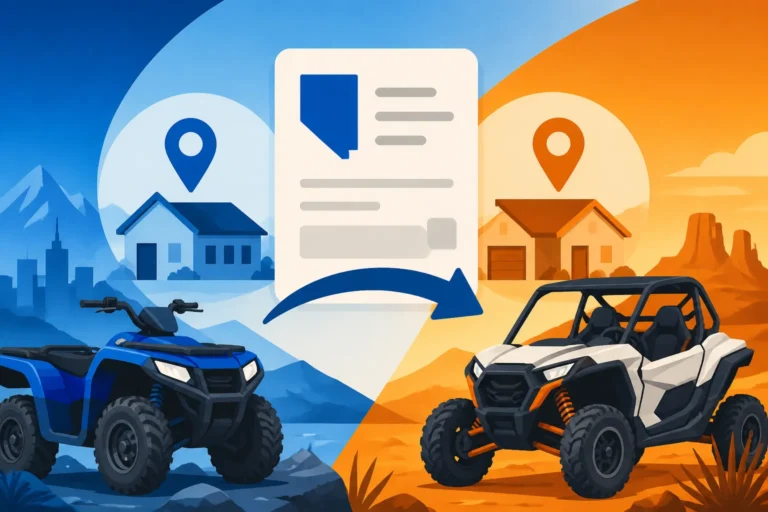
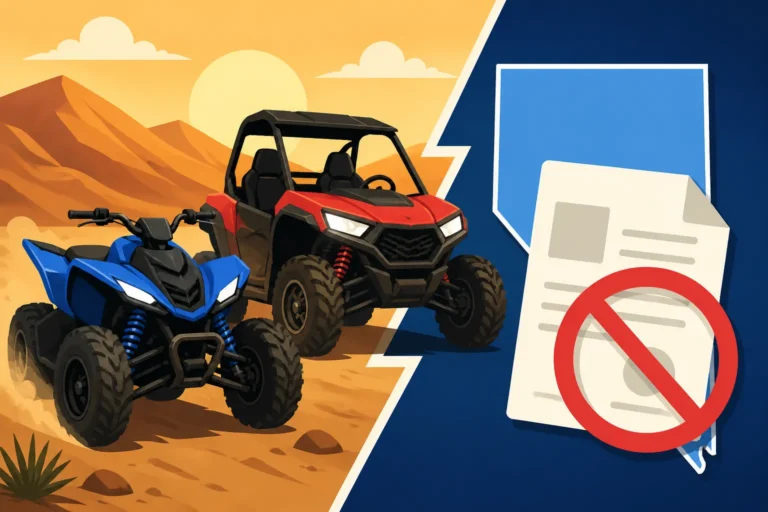
It’s a common scenario: you’re excited about a new off-highway vehicle (OHV), whether it’s a nimble quad or a spacious side-by-side, and you’re ready to hit the Nevada trails. But then the paperwork monster rears its head, and you start wondering, "Does registering my UTV work the same way as registering my quad? Are there hidden differences I need to know about?" It's easy to assume all off-highway vehicles are treated exactly the same, but the truth is, Nevada's system has some subtle distinctions, especially when it comes to potential road use, that can trip up even experienced riders. This guide is here to untangle those complexities, walking you through the registration and titling process for both quads and UTVs in the Silver State, highlighting where the paths converge and where they diverge.
The Core Nevada OHV Registration Process for All Machines
Before we dive into the nuances that separate quads from UTVs, let's lay the groundwork. The fundamental process for getting any off-highway vehicle registered and titled in Nevada shares a lot of common steps. Whether you're planning on tearing up Sand Mountain on a sport quad or exploring the Logandale Trails in a four-seat UTV, you'll need to satisfy these basic requirements. Neglecting these initial steps can lead to frustrating delays and even fines out on the trail, which is the last thing any rider wants.
The Foundation: Decals, Titles, and Applications
Every OHV in Nevada, unless specifically exempted, needs to be registered with the Nevada Department of Motor Vehicles (DMV). This isn't just a suggestion; it's a legal requirement designed to fund trail maintenance and public safety initiatives throughout the state. The primary proof of this registration is the distinctive OHV decal that must be affixed to your machine. Beyond the decal, a proper title serves as your ultimate proof of ownership. Without a clear title, even a valid registration decal can cause headaches down the road, especially if you ever decide to sell your machine or need to prove ownership for other reasons.
When you're first registering, you'll be dealing with a specific set of forms. The main one is typically the OHV-001, or a variation of it, which covers the application for an original Nevada Off-Highway Vehicle registration and title. This form gathers all the crucial information about your machine, from its make and model to its unique VIN. It's not just a formality; it's how the state identifies your machine and ties it to you as the legal owner. Getting this form filled out correctly is paramount. Many riders find themselves making extra trips to the DMV or a dealer because a single field was left blank or filled in incorrectly. Take your time, read the instructions carefully, and ensure every detail is accurate to save yourself a future headache. This initial application sets the stage for everything that follows in your machine's journey to legal trail readiness.
Essential First Steps: VIN Inspections and Fees
Regardless of whether you're bringing in a brand-new quad or a used side-by-side, a critical hurdle in the Nevada registration process is the VIN inspection. This isn't just about verifying numbers; it's a crucial step to ensure the machine isn't stolen and that the vehicle identification number on your paperwork matches the one physically stamped on the frame. It's a safeguarding measure for both you and future owners. One of the most common frustrations riders encounter is learning that the DMV itself won't perform this inspection. That's right, you can't just roll your quad or UTV into your local DMV office and expect them to sign off on it.
Instead, these inspections must be performed by an authorized Nevada OHV dealer or a sworn law enforcement officer. This means you'll need to make a separate appointment or visit a specific location, adding another layer to the registration process. Trying to skip this step or showing up unprepared will only send you back to square one. Understanding [The VIN Inspection Nevada DMV Will Not Do] is key, as is knowing [Who Can Do a VIN Inspection in Nevada]. Once your VIN inspection is complete and your application forms are in order, you'll face the necessary fees. There's a fee for the registration decal itself, a separate fee for the title, and potentially other smaller administrative charges. While we can't give you exact figures, understand that these costs are typically modest but essential to budget for. Nevada offers options for [One Year or Three Years in Nevada] for your registration, allowing you to choose what works best for your riding habits and budget. These fees directly support the OHV program, ensuring that the trails we all love to ride are maintained and accessible.
Unpacking Nevada's Definitions: Quad Versus UTV
While the core registration process might seem largely the same, Nevada's legal definitions, particularly for "All-Terrain Vehicles" (ATVs) versus "Utility Terrain Vehicles" (UTVs), start to introduce some important distinctions. These aren't just semantic differences; they can dictate how your machine is classified, where you can legally ride it, and what additional requirements you might face, especially if you ever dream of taking a brief jaunt on a paved county road. Many riders casually use the terms interchangeably, but the state sees them through a more specific lens.
What Nevada Sees as a Quad (All-Terrain Vehicle)
When Nevada law refers to an All-Terrain Vehicle, or ATV, it generally envisions the classic quad we all know and love. These machines are designed for a specific kind of riding experience. Picture a vehicle where the rider straddles the seat, much like a motorcycle, and steers with handlebars. They typically have three or four wheels and are built for a single operator, though some models are designed to accommodate a passenger behind the driver. The key identifier here is the rider's position and the handlebar steering mechanism.
These are the machines that are synonymous with agile, responsive off-road performance, perfect for tight trails, mudding, or tackling challenging terrain with a direct, intuitive feel. From a regulatory standpoint, a two-seat sport quad, for example, is still considered an ATV. Its design and operational characteristics firmly place it in this category. The distinction becomes particularly important when you start looking at any potential for limited road use, where the ATV's design inherently limits its eligibility under Nevada's "Large ATV" definitions, a point we'll explore further.
UTVs, Side-by-Sides, and the "Large ATV" Designation
On the other hand, Utility Terrain Vehicles (UTVs), often called side-by-sides, present a different picture entirely, both in design and how Nevada regulations sometimes treat them. A UTV features a steering wheel, bucket or bench seats arranged side-by-side (hence the name), and a roll cage or similar occupant protection structure. They can range from utilitarian workhorses with large cargo beds to high-performance sport models built for speed and agility. Their design allows for a more car-like driving experience and often accommodates multiple passengers comfortably.
The critical distinction for UTVs in Nevada comes with the "Large ATV" designation, as outlined in [What Nevada's NRS 490.043 Counts as a Large ATV]. This legal definition is specifically designed to allow certain UTVs, but generally not traditional quads, limited access to minor county roads. To qualify as a "Large ATV," your machine needs to meet specific criteria, often revolving around carrying at least four occupants or having a cargo bed that can transport a certain amount of weight. This is where a sport UTV with four seats or a utility UTV with a functional truck-like bed often finds an advantage over even a two-seat quad, which will almost always fail this particular test. This designation opens up entirely different possibilities for limited street use, setting UTVs apart from their quad counterparts in a significant way.
Distinct Registration Pathways: Off-Road vs. Road-Legal Dreams
While both quads and UTVs start on the same registration path for purely off-road adventures, their journeys can diverge dramatically if you ever envision a short hop on a paved county road. This is where Nevada's regulations draw a clear line in the sand, offering a unique opportunity for certain UTVs that is largely unavailable to traditional quads. Understanding these distinct pathways is crucial to ensuring your machine is legally compliant for every type of riding you intend to do. Many riders get caught out thinking that their standard OHV decal gives them carte blanche, only to find themselves facing a ticket.
Standard Off-Road Registration: Identical for Most
For the vast majority of riders, whether they own a quad or a UTV, the registration process for purely off-road use is essentially identical. This is the pathway for those who intend to keep their machines strictly on designated trails, open BLM land, or private property. You'll go through the steps we outlined earlier: getting your VIN inspection, filling out the standard OHV-001 application, proving ownership with a title or other acceptable documents, and paying the necessary fees. The outcome is the iconic [Nevada's $20 OHV Decal and What It Covers], which you'll proudly affix to your machine.
This decal is your green light for exploring places like the expansive Logandale Trails near Las Vegas, conquering the dunes at Sand Mountain near Fallon, or navigating the vast network of backcountry roads in Elko County. It proves you've done your part to contribute to the state's OHV program, which in turn helps fund the maintenance of these incredible riding areas. So, if your adventures are strictly confined to the dirt, rocks, and sand, you can rest assured that your quad and your friend's side-by-side will follow the same, straightforward registration path to get that essential decal.
The "Large ATV" Decal: A UTV's Road to Pavement
Here's where the paths diverge significantly. For UTV owners who wish to legally operate their machines on minor county roads for limited purposes – like getting from a campsite to a trailhead or accessing services in a small rural town – Nevada offers the "Large ATV" decal. This is a distinct decal and registration process, separate from your standard off-road OHV registration. It's important to stress that this is not a full "street legal" designation in the same way a car or motorcycle is, but it does grant specific, limited road privileges. A traditional quad, by its design and Nevada's definition, will almost never qualify for this decal. This can be a source of real frustration for quad owners who see UTVs on county roads and assume their machine should also be allowed.
To obtain this special decal, your UTV must meet stringent [Nevada Street Legal UTV Requirements]. These typically include specific equipment designed for road safety: working headlights and taillights visible from hundreds of feet, brake lights, mirrors (left and right), a horn, and often DOT-approved tires. Your UTV also needs to meet the "Large ATV" definition regarding passenger capacity (four or more seats) or cargo bed dimensions. The application for this is distinct and requires proof that your machine has all the necessary modifications. This is a significant investment in time and money, but for many UTV owners in rural areas or those who frequent trail systems accessible via county roads, the convenience is well worth it. Before you even think about applying, make sure to review [Nevada Equipment List for Road-Legal UTVs] and confirm your UTV meets every single criteria. It's particularly frustrating for owners of two-seat sport quads to realize [Can a Two-Seat Quad Get a Nevada Road Decal?] is almost always a "no" because their machine doesn't fit the "Large ATV" definition.
Navigating the Paperwork Labyrinth: Bills of Sale and Proof of Ownership
Beyond the specific vehicle definitions, one of the most common stumbling blocks in the registration and titling process for both quads and UTVs is properly proving ownership. Whether you're buying new from a dealer or acquiring a used machine from a private seller, the quality and completeness of your ownership documents are paramount. In Nevada, just like in many other states, clear title and a solid bill of sale are your best friends. Without them, you can find yourself in a bureaucratic nightmare trying to register a machine you legally own, but can't officially prove.
Ensuring a Solid Paper Trail for Purchase
When you buy a brand-new quad or UTV from a licensed Nevada dealer, the process is usually pretty streamlined. The dealer will typically handle much of the initial paperwork, including providing you with a Manufacturer's Certificate of Origin (MCO), which is the factory equivalent of a title for a new vehicle. They'll also often submit your registration and title application to the DMV on your behalf, sometimes for a small fee, which makes the process much smoother.
However, if you're buying a used machine from a private seller, the responsibility shifts entirely to you. This is where a comprehensive bill of sale becomes absolutely crucial. It's not just a receipt; it's a legal document detailing the transaction, the buyer and seller's information, the machine's VIN, purchase price, and date of sale. A good bill of sale, especially if you're going through a private sale, is like your insurance policy against future disputes or questions about ownership. Services like LawDepot can be incredibly helpful for generating a robust, legally sound bill of sale template that ensures all necessary information is captured, protecting both parties. Reviewing [What a Nevada ATV Bill of Sale Should Carry] before any private transaction is highly recommended. For those looking at [Buying a Used ATV Privately in Nevada], don't skimp on this step. A thorough bill of sale can prevent countless headaches down the line.
What to Do If You Don't Have a Title (or a Perfect One)
One of the most anxiety-inducing situations for any OHV enthusiast is acquiring a machine without a clean title, or worse, no title at all. This can happen for various reasons: an old machine, a lost title by a previous owner, or a seller who simply didn't understand the importance of passing it on. It’s a frustrating predicament to own a machine outright but lack the official document proving it. While it's always best practice to insist on a clear title before purchase, sometimes you find yourself in this situation, and thankfully, Nevada has processes to help.
If you're facing a missing title, you might need to pursue an Affidavit of Ownership, sometimes called a bonded title process. This involves swearing under oath that you are the rightful owner, providing as much supporting documentation as possible (like a detailed bill of sale – again, having a well-drafted one from a service like LawDepot can be invaluable here), and potentially posting a surety bond. This bond acts as a safeguard against any future claims of ownership. It's a more involved process and often requires more time and effort, but it's the pathway to legitimizing your ownership and getting that crucial Nevada title and decal. For detailed guidance on this challenging scenario, understanding [Nevada OHV Registration Without a Title] is essential to navigate the necessary steps and gather the right documentation to prove your claim.
Financials and Practicalities: Understanding the Costs and Renewal
Nobody likes surprise expenses, especially when they could have been avoided with a little foreknowledge. When it comes to registering your quad or UTV in Nevada, understanding the various fees, renewal options, and practical considerations like decal placement can save you both money and hassle. While the initial registration gets you on the trails, the ongoing responsibilities ensure you stay there legally, year after year. It's not just a one-and-done deal; planning for renewals is just as important as the initial setup.
Comparing Initial Fees and Renewal Cycles
When you first register your quad or UTV, you'll encounter a few distinct fees. There's the primary registration fee, which covers the cost of your decal. Nevada is pretty flexible here, offering riders the option for either a [Nevada OHV Registration Fee for One Year] or a [Nevada OHV Registration Fee for Three Years]. Many riders opt for the three-year decal, as it often provides a slight cost saving over three individual one-year renewals and, more importantly, reduces the frequency of paperwork you have to deal with. This is a common choice for those who know they'll be keeping their machine for a while.
In addition to the registration fee, there's a separate fee for obtaining your initial title. If you delay your registration past the state's required timeframe (usually 30 days from purchase), you might also incur a late fee. Missing the deadline can feel like a slap on the wrist, but [Nevada's $10 Late Fee on an Expired OHV Decal] is there to encourage timely compliance. When it comes time to renew, the process is generally simpler, often handled online or by mail, but the same fee structures apply. Keeping track of your expiration date, which is clearly marked on your decal, is vital to avoid those frustrating penalties and ensure you can ride without interruption.
Decal Placement and Enforcement Considerations
Once you have that shiny new Nevada OHV decal, proper placement is not just about aesthetics; it's a legal requirement. For both quads and UTVs, the decal must be affixed to the left rear or left side of the machine, in a location that is clearly visible. This isn't an arbitrary rule; it's designed for easy identification by enforcement officers when you're out on the trails. An improperly placed or obscured decal is just as problematic as an expired one. Imagine you're out enjoying the incredible dunes near Amargosa Big Dune or exploring the trails around Caliente, and a deputy approaches for a routine check. If they can't easily spot and read your decal, it can lead to unnecessary delays and questions, even if your paperwork is otherwise in order.
Enforcement officers, whether they are BLM rangers at Sand Mountain or county deputies in Logandale, are specifically trained to look for valid, properly displayed decals. They’re checking to make sure that the vehicle you're operating is legally registered and that you're contributing to the OHV fund that supports the very trails you're enjoying. Understanding [Left Side or Rear: Where the Decal Goes] is critical. It's a small detail, but getting it right ensures a smooth experience when you encounter enforcement out in the vast Nevada landscape. Neglecting this simple step is an easy way to draw unwanted attention and potentially face citations. Knowing [What Rangers Check at Sand Mountain] and other popular riding areas can help you prepare.
Common Misconceptions and Avoiding Costly Mistakes
The world of OHV registration and road use can be a minefield of misunderstandings, even for seasoned riders. It's incredibly easy to make assumptions about what's permissible, only to discover those assumptions can lead to costly fines or even impoundment of your machine. Clarifying these common misconceptions, especially concerning "street legal" status and registration deadlines, is paramount to enjoying Nevada's incredible riding opportunities without unnecessary stress. Nobody wants their adventure cut short by a preventable mistake.
The Illusion of "Street Legal" for All OHVs
Perhaps the biggest misconception among OHV owners, especially those new to Nevada, is the idea that getting an OHV decal somehow makes their machine "street legal." This couldn't be further from the truth. Nevada is notoriously strict about street legality for off-highway vehicles. While some UTVs can qualify for a "Large ATV" decal allowing very limited use on minor county roads, this is a far cry from being truly street legal. Your average quad, with its handlebar steering and straddle seating, simply does not meet the criteria for any form of legal road use beyond very specific, quick crossings.
The "Large ATV" designation, which primarily benefits UTVs meeting specific safety and design requirements, allows for travel on certain county roads, typically for short distances (often a [Nevada's 2-Mile Limit on Paved Highway]) to connect trails or access services. It does not mean you can commute to work, run errands in town, or even ride extensively on city streets. Many cities in Nevada, particularly larger ones like Las Vegas, Henderson, and Reno, have strict ordinances prohibiting OHVs on most public roads, regardless of decals. The phrase "Street Legal ATVs in Nevada: The Short Answer" will tell you almost everything you need to know. It's a common and frustrating mistake to assume that because some UTVs have limited road access, all OHVs do. Always verify local ordinances and the specific allowances of your decal before venturing onto pavement.
The Importance of Timely Registration and Transfers
Another common oversight that can lead to unnecessary expenses is neglecting the deadlines associated with registration and title transfers. Nevada law stipulates that you have a specific window – usually 30 days – from the date of purchase to register your new-to-you quad or UTV. This [Nevada's Thirty-Day Registration Deadline] is not a suggestion; it's a hard limit. Missing it will almost certainly result in [Nevada's $10 Late Fee on an Expired OHV Decal] being added to your registration costs. While ten dollars might not seem like a lot, it's easily avoidable money that could have been spent on fuel for your next ride.
Beyond initial registration, promptly transferring the title into your name after a private sale is equally important. A bill of sale is excellent for proving ownership at the time of purchase, but the official title transfer solidifies your legal claim. Delays can complicate matters if the previous owner has issues, if you lose the bill of sale, or if the state records remain inaccurate. For both initial registration and title transfers, precision and timeliness are key. If you're buying a used machine, ensure the seller properly signs off on the title and that you have all necessary documents, perhaps even using a comprehensive template from LawDepot for your bill of sale, to facilitate a smooth transfer of ownership. Don't let procrastination turn a simple process into a frustrating and costly ordeal.
| Feature / Requirement | Traditional Quad (ATV) | UTV (Side-by-Side) | Key Differences / Nuances |
|---|---|---|---|
| Riding Position | Straddles seat, handlebar steering | Bucket/bench seats, steering wheel | Fundamental design difference, impacts comfort & maneuverability. |
| Standard OHV Decal | Required for off-road use | Required for off-road use | Identical process for pure off-road trail riding. |
| VIN Inspection | Required | Required | Same requirements, done by authorized dealer or sworn officer, not DMV. |
| Proof of Ownership | Title (or MCO for new), Bill of Sale | Title (or MCO for new), Bill of Sale | Same requirements; a robust bill of sale (e.g., via LawDepot) is crucial for private sales. |
| "Large ATV" Decal | Generally does not qualify | May qualify if meets specific criteria | UTVs with 4+ seats or a certain size cargo bed can qualify for limited road use. Quads rarely do. |
| Road Use (Limited) | Limited to specific crossings; almost no county roads | Limited to minor county roads with "Large ATV" decal | "Large ATV" decal for UTVs is not "street legal" but grants specific privileges. |
| Required Road Equipment | N/A (as generally not allowed on roads) | Headlights, taillights, brake lights, mirrors, horn | UTVs seeking "Large ATV" status need specific safety equipment. |
| Registration Fees | Same (1-year or 3-year options) | Same (1-year or 3-year options) | Identical base fees for OHV decal. |
| Titling Fees | Same | Same | Identical base fees for title. |
| Late Fees | Same for delayed registration/renewal | Same for delayed registration/renewal | $10 late fee applies equally. |
| Decal Placement | Left rear/side, visible | Left rear/side, visible | Identical requirement for visibility for enforcement. |
Disclaimer
This article is for general informational purposes only and does not constitute professional advice. Laws, prices and regulations vary by location and change over time. Consult a qualified professional for guidance on your specific situation.