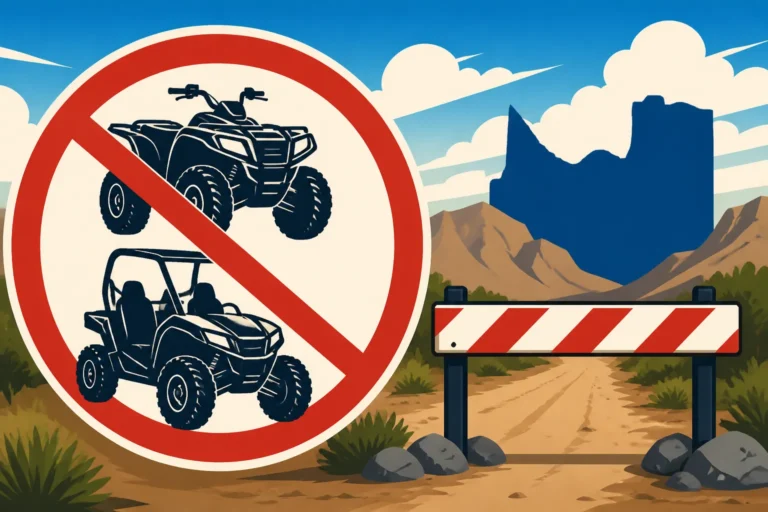
Nevada Seat Belt Rules in a Side-by-Side
Riding a side-by-side in Nevada is an absolute blast, whether you're tackling the sandy dunes of Sand Mountain or exploring the vast network of desert trails around Logandale. But the moment you start thinking about taking your UTV from the dirt onto a paved county road, a whole new set of rules comes into play, and one of the most critical – and often overlooked – is seat belt usage. It can feel like a minefield trying to figure out if you and your passengers are buckled up correctly and legally, especially when the lines between off-road and on-road regulations get blurry. This guide is here to untangle all that confusion, helping you understand exactly what Nevada expects regarding seat belts in your side-by-side when you venture onto public roads.
The Core of Nevada's Seat Belt Requirements for Side-by-Sides
When it comes to seat belts in your side-by-side, Nevada's rules aren't always a simple "yes" or "no." It really depends on where you're riding and what kind of machine you have. While common sense and personal safety should always dictate wearing seat belts off-road, the law gets much more explicit when you start mixing in with regular vehicle traffic.
Understanding Off-Road Versus On-Road Regulations
Let's be real: when you're out on the trails, deep in the desert, or climbing a dune, wearing your seat belt is just good practice. Side-by-sides, by their very nature, are capable of incredible feats, but they can also be prone to rollovers or sudden jolts, even at lower speeds. While Nevada law doesn't necessarily send a ranger out specifically to ticket you for not wearing a seat belt on a dirt trail on BLM land, the safety implications are huge. Most riders I know wouldn't dream of leaving camp without everyone strapped in.
The game changes entirely, however, when you pull off that dirt track and onto a paved county road. Suddenly, your side-by-side isn't just an off-highway vehicle; it's a vehicle interacting with cars, trucks, and the established rules of the road. This is where Nevada's motor vehicle laws kick in, and they bring seat belt mandates with them. The frustrations often stem from the fact that your UTV looks like a recreational machine, but the law might treat it more like a car in certain situations.
When Your Side-by-Side Becomes a "Large ATV" on Nevada Roads
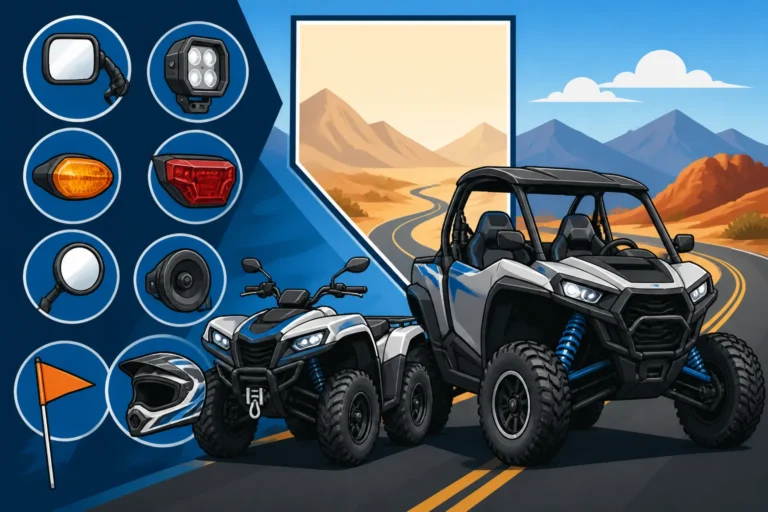
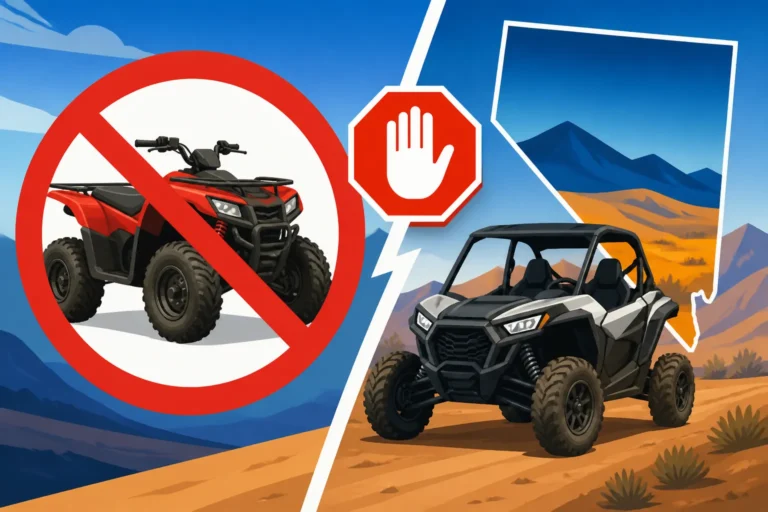
This is the real turning point for seat belt requirements. Nevada law has a specific classification for certain UTVs that allows them limited access to some public roads. It calls them "Large All-Terrain Vehicles" (Large ATVs). Your side-by-side isn't automatically a Large ATV; it has to meet certain criteria outlined in [What Nevada's NRS 490.043 Counts as a Large ATV]. Generally speaking, this classification applies to multi-passenger UTVs (typically with four or more seats) or those with a truck-like bed, like many utility-focused models. A two-seat sport quad, for example, typically won't qualify as a Large ATV for road use.
If your side-by-side meets these "Large ATV" criteria and you've gone through the proper steps to get your specific decal for road use (which is different from your standard OHV decal), then it's subject to the same general seat belt laws as any other car or truck on those designated county roads. This means if you're riding to a trailhead in Caliente or Panaca, or simply crossing a minor county road around Mesquite, every single person in that machine must be properly buckled up. It's a fundamental shift in how the state views and regulates your machine.
Specific Seat Belt Requirements for Road-Legal UTVs
Once your side-by-side qualifies and is authorized for limited road use, the expectation for seat belts isn't just a suggestion – it's a legal requirement. This isn't unique to Nevada; most states with any form of street-legal OHV programs tie into existing motor vehicle safety standards.
Federal Motor Vehicle Safety Standards and Their Impact
When we talk about seat belts for on-road use, we're generally talking about belts that meet Federal Motor Vehicle Safety Standards (FMVSS). These are the same standards that govern the seat belts in your family car. For a UTV that's been designated a "Large ATV" and is operating on Nevada county roads, the expectation is that the factory-installed seat belts are compliant. These are typically three-point restraints, similar to what you'd find in a car, providing shoulder and lap protection.
Now, many UTV owners, especially those who ride hard off-road, often upgrade their seat belts to four-point or even five-point harnesses. Brands like SuperATV offer a wide range of aftermarket harnesses designed for enhanced safety and containment during aggressive off-road driving. These can be fantastic for protecting occupants in extreme terrain. However, if you're using an aftermarket harness for on-road use, it's crucial to ensure that it still meets or exceeds the safety standards required for public roads. While a five-point racing harness might seem superior, ensure it's properly installed and functions as intended for street-legal compliance. Always check the manufacturer's specifications and any local regulations to confirm suitability for road use, as some highly specialized racing harnesses might not be explicitly "DOT-approved" in the same way a factory 3-point belt is, even if they offer superior protection in certain crash scenarios.
Who Must Wear a Seat Belt and Under What Conditions
This is pretty straightforward once your UTV is on a qualifying Nevada road: everyone must wear a seat belt. Nevada's general seat belt laws apply to all occupants of a vehicle, and a Large ATV on a county road falls under this umbrella.
This means:
- The Driver: Absolutely must be buckled in.
- Front Passengers: Also required to wear seat belts.
- Rear Passengers: If your side-by-side has back seats, every occupant in those seats must also be properly restrained.
Beyond just wearing the belt, it must be worn properly. That means snug across the lap and shoulder, not twisted, and not tucked under the arm. For younger riders, this becomes even more critical. Nevada has specific rules regarding [Nevada Minimum Age to Ride on a County Road] and [Nevada Rules for Riders Under 16 on Roads]. These often involve supervision requirements and, critically, ensure that the child can be properly restrained by the vehicle's seat belt system. In some cases, a booster seat or other restraint might be necessary if the factory belt doesn't fit a smaller child correctly, just as it would in a regular car. A [Nevada Rules for a Child Passenger on a Road] also dictates whether they can even ride in the machine on a county road.
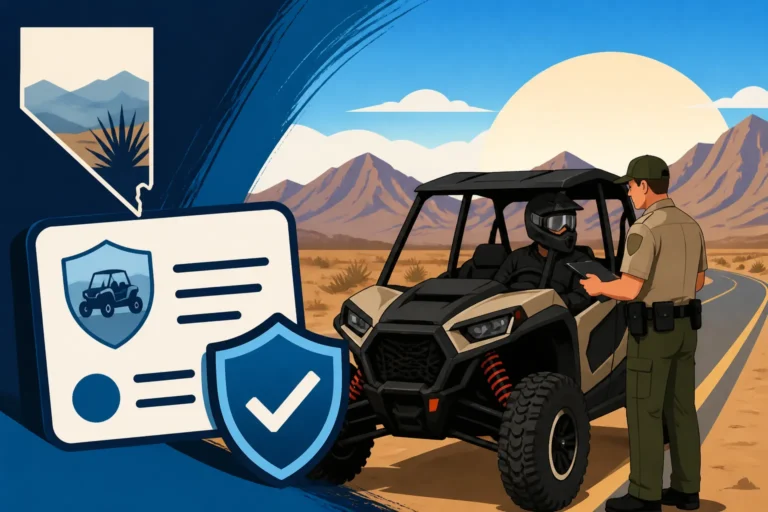
When a deputy pulls you over on a county road, one of the first things they'll look for, besides your registration and driver's license, is whether everyone is buckled up. [What a Nevada Trooper Looks For on a County Road] often includes a quick visual scan for seat belt compliance, and a visible lack of one can lead to an immediate stop.
Practical Considerations and Staying Compliant
Understanding the rules is one thing, but consistently applying them and ensuring your equipment is up to snuff is another. Desert environments can be tough on gear, and seat belts are no exception.
Checking and Maintaining Your Seat Belts
Think about what your side-by-side goes through: dust, sun, moisture, and plenty of jostling. These conditions can take a toll on seat belts. Regular inspection is key to both safety and compliance. Here's what to look for:
- Fraying or Cuts: Check the webbing for any signs of wear, especially near buckles, anchors, or edges. Even small cuts or significant fraying can compromise the integrity of the belt.
- Buckle Functionality: Ensure buckles latch securely with an audible click and release easily when pressed. A sticky or unreliable buckle is a major red flag.
- Retractor Issues: Does the belt retract smoothly and fully when not in use? If it's slow, stiff, or doesn't retract all the way, the mechanism might be failing. This can prevent the belt from tightening correctly in a sudden stop.
- Anchor Points: Visually inspect where the seat belts attach to the frame of your side-by-side. Look for any loose bolts, cracks in the mounting points, or corrosion.
Remember, a damaged seat belt isn't just a safety hazard; it could lead to a citation if it's deemed non-functional or unsafe for road use. It's often cheaper and safer to replace a worn belt than to deal with the aftermath of an accident or a ticket.
Upgrading for Safety and Comfort
Many side-by-side owners choose to upgrade their seat belts for various reasons, whether it's for enhanced safety during aggressive riding or simply for better comfort. As mentioned, brands like SuperATV offer a wide array of aftermarket options, from simple replacement belts to advanced multi-point harnesses.
When considering an upgrade, think about:
- Type of Riding: If you're primarily a recreational rider on mild trails, a high-quality three-point replacement might be all you need. If you're tackling extreme rock crawling or high-speed desert racing, a four- or five-point harness offers significantly more containment and can prevent you from being thrown around the cab.
- Comfort: Some aftermarket harnesses, especially those with padded shoulder straps, can be much more comfortable on long rides than factory belts, which can sometimes dig into your shoulder.
- Installation: Ensure any aftermarket solution is installed correctly and according to the manufacturer's instructions. Incorrect installation can negate any safety benefits and potentially make the system more dangerous.
- Compliance: If your machine is a "Large ATV" used on roads, always double-check that any aftermarket seat belt system you install still meets Nevada's road-use requirements. While off-road harnesses from SuperATV are excellent for their intended purpose, confirm their suitability for the unique requirements of on-road driving if that's part of your plan. You want the best of both worlds: superior off-road protection and legal compliance on pavement.
Consequences of Non-Compliance
Ignoring seat belt laws, especially when operating a Large ATV on public roads, comes with both legal and personal risks that are simply not worth taking.
Fines and Penalties for Seat Belt Violations
In Nevada, failing to wear a seat belt in a vehicle where it's required is a primary offense. This means a law enforcement officer can stop you solely for that violation. The penalties typically involve a fine, and in some cases, it can also lead to points on your driver's license. While the exact amount can vary, it's usually a decent chunk of change that could have been spent on fuel for your next adventure or a cool new accessory.
Keep in mind that these fines apply to each occupant not wearing a seat belt. So, if you're driving your four-seat UTV down a county road and you and three passengers are unbuckled, you could be looking at four separate fines. That adds up quickly! Enforcement is something rangers and deputies take seriously, especially in areas where OHVs frequently interact with road traffic, like around popular riding spots or in small towns.
The Greater Risk: Injury and Liability
Beyond the legal headaches and financial penalties, the most significant consequence of not wearing a seat belt is the increased risk of severe injury or even death in the event of an accident. Side-by-sides, for all their fun, can roll over or experience sudden impacts, particularly when operating on uneven terrain or if an unexpected obstacle is encountered on a road. A seat belt is your primary restraint system, designed to keep you inside the vehicle and prevent you from being ejected or violently thrown around the cabin.
If you or your passengers are injured because seat belts weren't worn, it can also have serious implications for insurance coverage and personal liability. Your [Insurance and Nevada OHV Registration] might be in good standing, but if an accident occurs and non-compliance with seat belt laws is a factor in injuries, it could complicate claims or even lead to increased personal liability. No one wants to think about an accident, but being prepared and compliant is the best defense. Always prioritize safety for yourself and your passengers; those few seconds it takes to buckle up are a small investment for peace of mind and protection.
| Aspect | Off-Road Use (Designated Trails/BLM) | Road-Legal Use (Designated County Roads) |
|---|---|---|
| Legal Mandate | Generally for safety, not always explicitly state-mandated for all off-road scenarios, but highly recommended. | Required for all occupants in a "Large ATV" on qualifying public roads. |
| Type of Belt | Factory 3-point often sufficient, aftermarket harnesses common for performance/safety. | Factory-installed, DOT-compliant 3-point (or better) expected. |
| Enforcement Focus | Safety-conscious riding, general OHV laws (registration, spark arrestor). | All traffic laws, including seat belt usage, just like a car. |
| Consequences of Non-Use | Increased risk of injury, personal responsibility. | Fines, potential points, increased injury/liability risk. |
| Passenger Rules | Varies, but generally common sense applies; children often require supervision. | Strict age/supervision rules may apply, all passengers must buckle up. |
Disclaimer
This article is for general informational purposes only and does not constitute professional advice. Laws, prices and regulations vary by location and change over time. Consult a qualified professional for guidance on your specific situation.