Nevada Rules for Towing a Trailer With a UTV
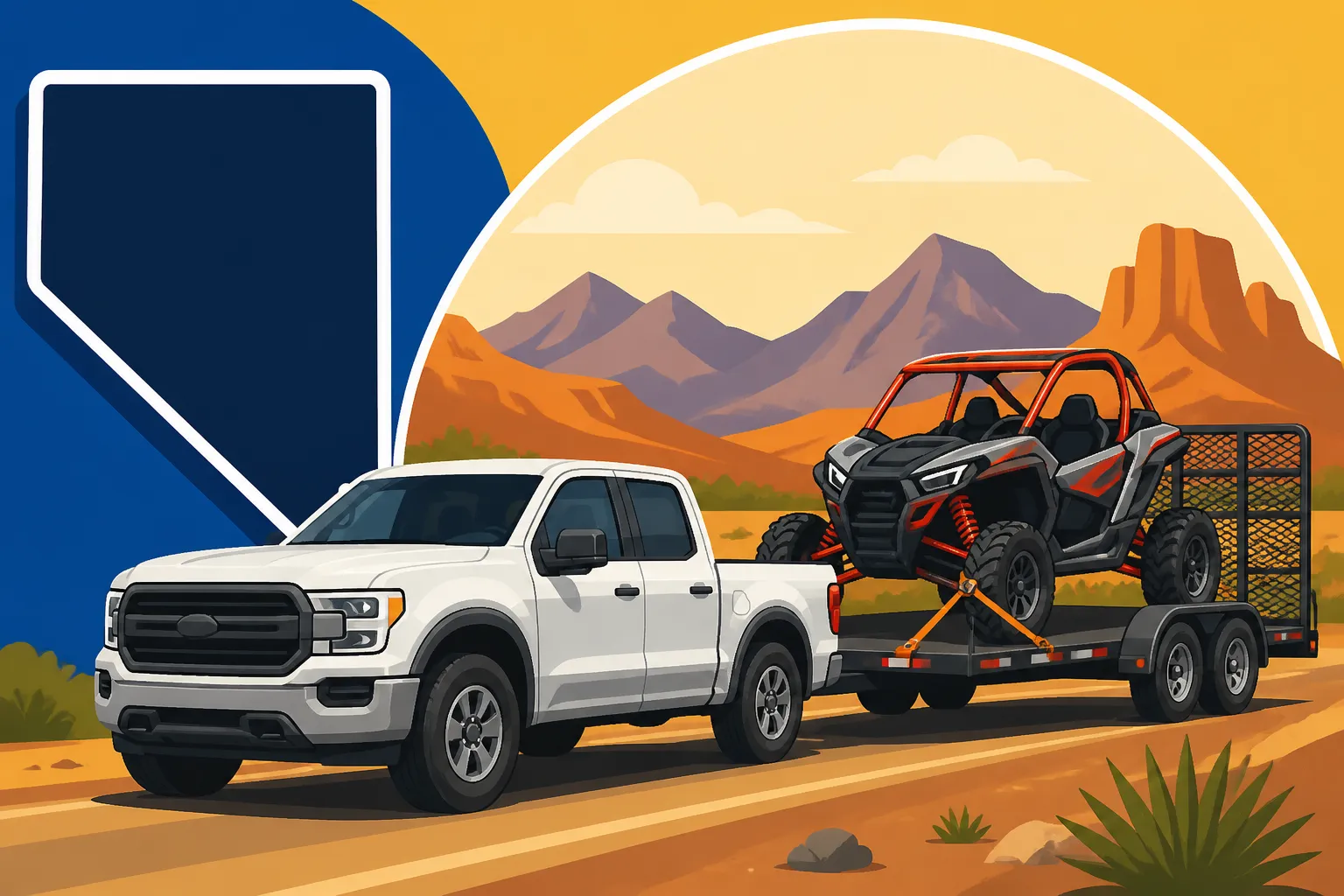
So, you've got yourself a UTV in Nevada, and you're thinking about using it for more than just ripping through the dunes—maybe you want to haul some gear, a small utility trailer, or even help out a buddy who's broken down. It's a common thought, especially with how versatile these machines are becoming, but navigating the rules for towing a trailer with your UTV in the Silver State can feel like trying to find a specific rock in a vast desert. This guide is here to shed some light on the subject, breaking down the legalities, equipment needs, and practical considerations so you can tow safely and stay within Nevada's often-confusing regulations.
The Foundations of Towing with Your UTV in Nevada
Let's start by laying the groundwork. The biggest hurdle many UTV owners face when considering towing isn't necessarily the act of towing itself, but where that towing is permitted. Nevada has clear distinctions between off-highway vehicle (OHV) use on private land, designated OHV trails, and public roads, and these distinctions are absolutely critical when you add a trailer into the mix.
When Towing is Legal and When it Isn't
The ability to tow a trailer with your UTV largely hinges on whether your UTV is street legal and, if not, where you intend to do your towing. For the vast majority of UTVs, they are classified as off-highway vehicles and are not street legal for general road use. This means that pulling a trailer down a busy state highway for an extended period is almost certainly off-limits. You simply can't treat your UTV like a mini-truck for daily errands or long-distance hauling on paved public roads.
However, the rules are much more relaxed when you're on private property or within designated OHV recreation areas. If you're on your own land, or land you have permission to use, you can pretty much tow whatever your UTV can safely handle, within reason. Many ranchers use their UTVs to tow small feed trailers, equipment, or even recover livestock, and this falls perfectly within acceptable use. Similarly, on recognized OHV trails or in open riding areas like Sand Mountain or Logandale, towing a small camp trailer, a cooler full of supplies, or a broken-down machine is generally fine, assuming you follow all other OHV regulations for those areas. The challenges arise when your towing needs cross into the realm of public roads, even for short distances. This is where you really need to pay attention to details and understand the specific provisions Nevada has for OHVs on roadways.
Understanding Nevada's "Large ATV" Designation
Nevada law, specifically NRS 490.043, has a unique designation for what it calls a "large all-terrain vehicle." This category is crucial because it's the only way an OHV, including most UTVs, can gain limited access to certain public roads in Nevada. If your UTV meets the criteria to be considered a large ATV, it opens up the possibility of riding on minor county roads and crossing state highways for short distances. This is a game-changer for someone who might need to tow a trailer from their camp to a nearby trailhead, or cross a paved road to access another section of dirt.
To qualify as a "large ATV," your machine must meet a specific set of requirements, including having a curb weight of 900 to 2,500 pounds, a width from 50 to 80 inches, and a non-straddle seating position. Crucially, it also needs to have a utility or storage box, or the capability of seating four or more people. Many modern side-by-sides, especially multi-passenger utility models like a Can-Am Defender or a Polaris Ranger, often fit this description. Sporty two-seat UTVs, on the other hand, rarely do because they lack the utility box or four-seat capacity. If your UTV qualifies as a large ATV and you obtain the special [Nevada's Large All-Terrain Vehicle Decal] for it, then you can legally operate it on minor county roads and cross state routes. This means you could, in theory, tow a trailer on these specific roads, provided you meet all other road-use requirements like lights, mirrors, and insurance. It's a conditional freedom, not a blanket permission, but it's essential for anyone considering road-adjacent towing. Without this decal, your towing options on public roads are virtually non-existent, confined only to the shortest, most direct crossings of highways. You can learn more about the general requirements in [Nevada Street Legal UTV Requirements].
Equipment Requirements for Towing a Trailer
Once you've figured out where you can legally tow, the next big question is how. Towing safely and legally, even on private land or designated trails, requires the right equipment. Skimping here isn't just risky for your machine; it's dangerous for you, your passengers, and anyone else around.
Essential UTV Modifications and Accessories
The core of towing with any vehicle, including a UTV, starts with a proper hitch. While many UTVs come with a receiver hitch from the factory, especially utility models, some sportier machines might not. If yours doesn't, or if you need a more robust option, an aftermarket hitch is a must-have. Companies like SuperATV offer a range of heavy-duty hitches and towing accessories designed to integrate seamlessly with various UTV models, providing a secure attachment point for your trailer. You'll need to match your hitch receiver size (usually 1.25-inch or 2-inch) to your trailer's drawbar or ball mount.
Beyond the physical hitch, trailer lights are absolutely non-negotiable if you plan to tow on any public road, even for a short crossing. Nevada's vehicle codes, even for limited OHV road use, demand that a trailer be properly lit. This means having tail lights, brake lights, and turn signals that mirror your UTV's signals, as well as reflectors. This usually requires a wiring harness that plugs into your UTV's electrical system, providing power to the trailer lights. Some UTVs have a factory trailer plug, but many don't, requiring an aftermarket kit. For heavier trailers, or those that significantly impact your UTV's handling, you might even consider brake controllers if the trailer has electric brakes, though this is less common for typical UTV-towed trailers. Finally, consider suspension upgrades. Towing puts extra strain on your UTV's rear suspension. If you plan on regularly hauling heavy loads, especially on rough terrain, heavy-duty springs or a lift kit with stronger shocks from a company like SuperATV can prevent sag, improve stability, and maintain proper ground clearance.
Trailer-Specific Requirements
Just as your UTV needs to be equipped, your trailer has its own set of legal and safety requirements. The most obvious, as mentioned, are lights. A trailer must have functional tail lights, brake lights, and turn signals, visible from 500 feet, if it's going to be on any public road, even for a brief crossing. This ensures other drivers can see your intentions and know you're slowing down or turning. Reflectors are also mandatory, typically red on the rear and amber on the sides, to enhance visibility, especially at night or in low light.
Safety chains are another critical component. These chains, crossed under the tongue of the trailer, provide a fail-safe in case the primary hitch connection separates. Nevada law requires them for all towed vehicles on public roads. Beyond the legalities, proper weight distribution on the trailer is paramount for safety. Too much tongue weight can cause your UTV's rear to sag, affecting steering and braking, while too little can lead to dangerous trailer sway. Always try to load your heaviest items over the trailer's axle, with just enough tongue weight (typically 10-15% of the total trailer weight) to keep it stable. And speaking of weight, ensure your trailer's tires are properly inflated for the load you're carrying. An under-inflated tire can quickly overheat and fail, especially in the Nevada desert heat. This attention to detail on both the UTV and the trailer ensures a safer and more compliant towing experience.
Practical Considerations and Safety Tips for UTV Towing
Okay, so you've got the legalities squared away and your equipment is top-notch. Now, let's talk about the practical side of actually towing a trailer with your UTV in Nevada. It's a different beast than towing with a pickup truck, and understanding these nuances can save you a lot of headaches, or worse, a dangerous situation.
Weight Limits and Capacity
This is arguably the most critical safety factor when towing with a UTV: knowing and respecting your machine's towing capacity. Unlike trucks, UTVs generally have much lower towing capacities, and exceeding them can lead to catastrophic failure, loss of control, and severe damage to your UTV. Every UTV manufacturer specifies a maximum towing capacity, usually found in your owner's manual. This figure is not a suggestion; it's a hard limit. You need to consider the total weight of your trailer plus everything you're loading onto it (Gross Vehicle Weight Rating, or GVWR).
Never assume your UTV can "just handle a little more." Overloading not only strains your engine and transmission but also severely compromises your UTV's braking ability and stability. Imagine trying to stop a heavy trailer rolling downhill on a loose gravel road in the desert – if your UTV can't handle the weight, you could easily lose control. Always err on the side of caution. If you're unsure of the weight of your loaded trailer, find a local scale (like at a landfill or trucking station) and weigh it. It's a small inconvenience that could prevent a major accident. Beyond towing capacity, also be mindful of your UTV's tongue weight capacity. Too much downward force on the hitch can cause your front wheels to lift slightly, making steering difficult and dangerous, especially at speed or on uneven terrain.
Navigating Different Terrains
Towing a trailer significantly changes how your UTV handles, and this is magnified when you move from pavement to dirt, sand, or rocky trails.
On paved roads (for those brief, legal crossings or approved minor county roads), your stopping distance will increase dramatically. You'll need to start braking much earlier and apply more gentle, consistent pressure. Hard braking with a trailer can cause it to sway violently or even jackknife. Also, take turns wider than usual to prevent the trailer from clipping curbs or going off the road. The added length of the trailer means you can't cut corners the way you would when riding unburdened.
When you hit the dirt roads or off-road trails, things get even more complex. Loose surfaces like sand or deep gravel reduce traction, making it harder for your UTV to pull the load and easier for the trailer to push or pull your UTV offline. Engage four-wheel drive if your machine has it, and possibly lock your differential for maximum traction. Speed is your enemy; go slow, especially over bumps, dips, or washouts. A sudden jolt could damage your trailer, your UTV, or cause the load to shift. Climbing steep hills with a trailer is particularly challenging; ensure you have enough momentum, but not too much speed, and be ready to downshift. Descending steep grades requires low gear and careful, controlled braking to prevent the trailer from pushing your UTV down the hill too fast. For more on navigating trails, check out [Nevada Rules for Riding a Dirt Road to Camp].
Visibility and Braking
Your field of vision changes drastically when you add a trailer. Standard UTV mirrors, if you even have them, often don't provide enough visibility around a towed trailer, especially a wider or taller one. Investing in extended side mirrors can greatly improve your ability to see what's happening behind you, which is crucial for safe lane changes (if on a road), backing up, and simply monitoring your trailer's behavior. Many aftermarket options exist, including those from SuperATV, that attach easily to your roll cage.
As for braking, as we touched on, the added weight of a trailer significantly increases your stopping distance. You need to anticipate stops much further in advance. If your trailer has its own braking system, ensure it's properly adjusted and functional. If not, your UTV's brakes are doing all the work for both vehicles, and they can overheat and fade quickly, especially during long descents or repeated stops. Always test your brakes thoroughly in a safe, open area before heading out on a serious tow job. It's also important to ensure your UTV's tires are in good condition and properly inflated, as they are your primary contact with the ground and critical for braking efficiency.
Legalities Beyond Equipment: What Else You Need to Know
Beyond the physical setup of your UTV and trailer, there are some administrative and legal requirements that you absolutely cannot overlook, especially if your towing venture involves even the slightest interaction with public roads. Ignoring these can lead to fines, citations, or even legal trouble in the event of an accident.
Registration and Decals for Your UTV and Trailer
First and foremost, your UTV itself needs to be properly registered in Nevada, displaying a valid OHV decal. This is a basic requirement for riding on any public land or crossing public roads in the state. If you don't have it, you're already starting on the wrong foot. For details, see [Registering an ATV in Nevada].
If your UTV qualifies as a "large ATV" and you plan to utilize those limited road access privileges while towing, you must have the [Nevada's Large All-Terrain Vehicle Decal] affixed to your machine. This decal signals to law enforcement that your UTV is authorized for specific road use. Without it, even short crossings could result in a citation. For the trailer itself, Nevada generally requires trailers to be registered and titled if they are going to be operated on public roads. Even if it's a small utility trailer designed for gardening, if it touches a paved road, it typically needs plates. The exact requirements depend on the trailer's weight and type, but it's crucial to check with the Nevada DMV regarding trailer registration. Don't assume that just because your UTV is registered, your trailer is good to go.
Insurance and Liability
This is one of those topics that no one likes to think about until it's too late. When you're towing a trailer with your UTV, especially if you're on a public road, even briefly, liability becomes a huge concern. Your standard OHV registration typically doesn't require liability insurance for off-road use, but if you're operating on roads, even those minor county roads open to large ATVs, Nevada law does require liability insurance for your UTV. Specifically, if your UTV is considered a large ATV and you're operating it on public roads, you need to meet the minimum liability coverage requirements outlined in NRS 485.185. This protects you in case you cause an accident involving another vehicle or property while towing.
Imagine you're crossing a state highway with your UTV and trailer, and due to the added weight, you can't stop in time, leading to a fender bender with a passing car. If you don't have the required insurance, you could be personally on the hook for all damages, which could be financially devastating. Even off-road, while not legally mandated, having insurance is a really smart idea. What if your trailer breaks loose on a trail and damages a fellow rider's machine? Or injures someone? Your homeowner's policy might offer some limited coverage for personal property, but dedicated OHV insurance is always the safest bet for protecting yourself and your assets. Review [Insurance and Nevada OHV Registration] for more context.
Specific Road Rules When Towing
If your UTV is road-legal as a large ATV, and your trailer is properly registered, you still need to abide by all applicable traffic laws when you're on those authorized roads. This isn't just about common sense; it's about staying safe and legal.
- Speed Limits: You must adhere to the posted speed limits. Remember, your UTV with a trailer handles very differently than a car, so sometimes even the posted limit might be too fast for safe towing conditions.
- Turning: You will need a much wider turning radius. Practice turning in an open area to get a feel for how your trailer tracks behind your UTV. Misjudging a turn can lead to your trailer hitting obstacles or drifting into another lane.
- Lane Position: When towing, it's often advisable to use the furthest right lane where practical, or maintain a position that allows other traffic to safely pass you. However, you're still entitled to your lane.
- Signaling: Always use your turn signals well in advance when changing lanes or turning. With a trailer, your intentions need to be communicated even more clearly.
- Passing: Avoid passing other vehicles, especially on two-lane roads. The reduced acceleration and increased length of your combined rig make passing a much riskier maneuver.
- Alcohol and Drugs: Absolutely no operating a UTV, with or without a trailer, under the influence of alcohol or drugs. Nevada DUI laws apply equally to OHVs on roads as they do to regular vehicles.
By understanding and respecting these specific road rules, you can help ensure that your brief excursions onto Nevada's county roads for towing purposes are as safe and lawful as possible. Remember, the goal is to get your gear, or a broken machine, from point A to point B without incident or legal repercussions.
| Aspect of Towing | Private Land / Designated OHV Area | Nevada Large ATV Decal Roads (Minor County Roads/Crossings) | State Highways / Restricted Roads |
|---|---|---|---|
| UTV Registration | Required (NV OHV Decal) | Required (NV OHV Decal + Large ATV Decal) | Not Permitted |
| Trailer Registration | Not always required | Required | Not Permitted |
| Trailer Lights | Recommended for safety | Required (Tail, Brake, Turn, Reflectors) | Not Permitted |
| Safety Chains | Recommended for safety | Required | Not Permitted |
| Hitch | Required | Required | Required if towing |
| Towing Capacity | Adhere strictly | Adhere strictly | Adhere strictly |
| Liability Insurance | Recommended | Required (NRS 485.185) | Not Permitted |
| Speed Limits | Safe & appropriate | Posted limits; use caution with trailer | Not Permitted |
| Driver's License | Recommended | Required (Valid Driver's License) | Not Permitted |
Disclaimer
This article is for general informational purposes only and does not constitute professional advice. Laws, prices and regulations vary by location and change over time. Consult a qualified professional for guidance on your specific situation.