Nevada Interstate Highway ATV Ban
There’s a common daydream among ATV and UTV enthusiasts: hopping on your machine and just riding, unencumbered, from your garage straight to the trailhead, perhaps even taking a shortcut down a major highway. However, when it comes to Nevada, that dream often crashes head-on with the harsh reality of the law, especially concerning interstate highways. This guide will meticulously break down why riding your off-highway vehicle (OHV) on Nevada's interstates and major state routes is generally off-limits, the specific regulations governing this ban, and how to navigate around it safely and legally.
The Core Reality: Nevada's Ban on Interstate and Major Highways
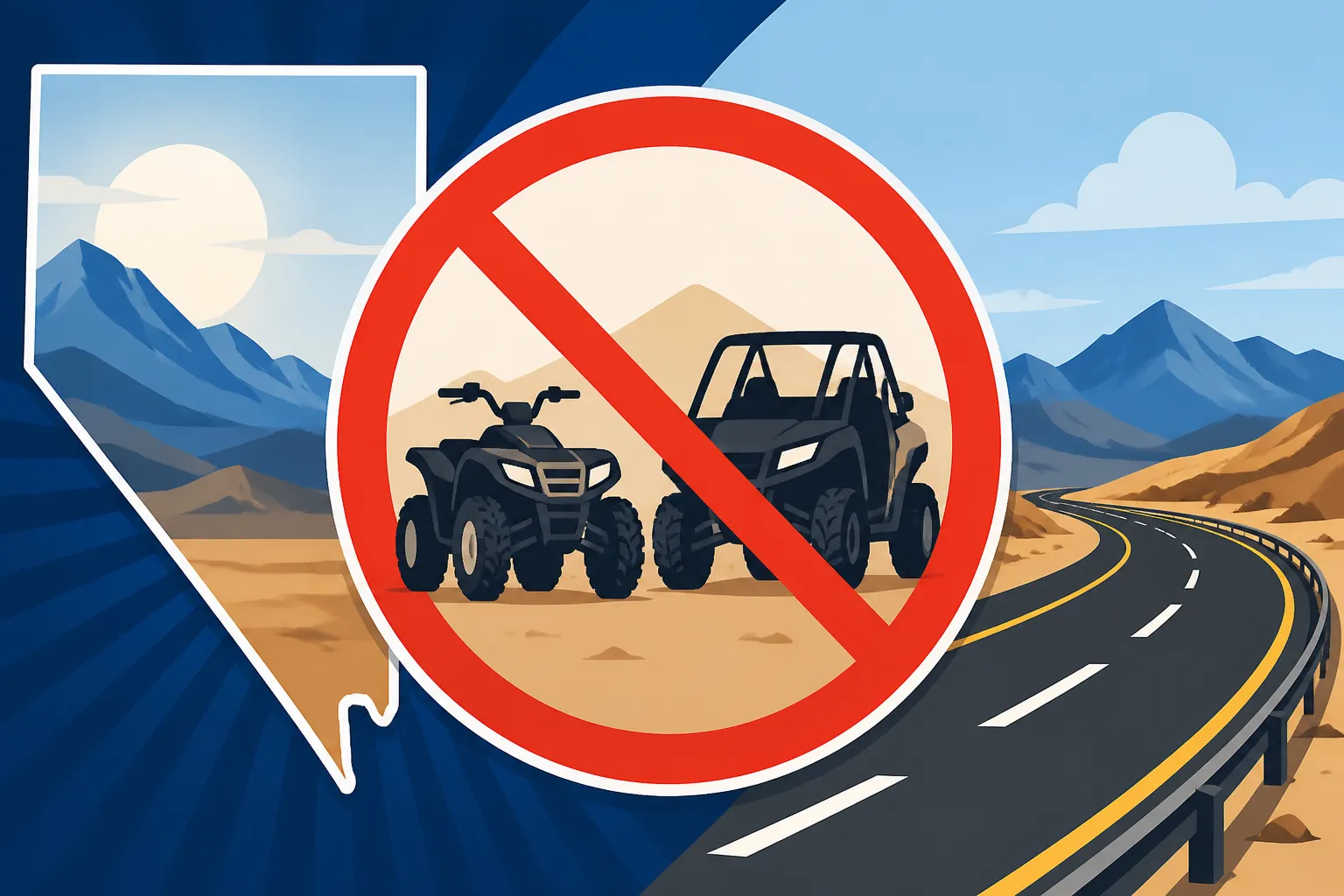
It’s an understandable temptation. You’ve got a powerful machine, a side-by-side that can cruise comfortably at higher speeds, and you see that paved road stretching out, looking like the quickest path to your next adventure. But here in Nevada, that convenience is overridden by very specific safety concerns and legal statutes. Simply put, while Nevada has made significant strides in allowing OHVs on certain county roads and designated routes, the state’s biggest, fastest arteries—the interstate highways and many primary state routes—remain strictly forbidden territory for your ATV or UTV. This isn't just a suggestion; it's a hard-and-fast rule with significant implications.
Understanding NRS 490.100 and Its Impact
The foundation of this prohibition lies squarely in Nevada Revised Statute (NRS) 490.100. This particular statute, among others, clearly outlines what constitutes an "off-highway vehicle" and, crucially, where those vehicles are permitted to operate. While it permits OHVs on certain public roads and highways that are not designated as part of the interstate highway system, it explicitly prohibits their operation on the shoulders, access roads, or main travel lanes of any interstate highway. This is a critical distinction that many riders, especially those new to the state or just visiting, often overlook. The law is designed to create a clear boundary, ensuring that these vehicles, which aren't built to the same specifications as passenger cars or trucks for high-speed highway travel, stay off roads where they could pose a serious hazard. Even if your UTV is equipped with turn signals, mirrors, and a horn—perhaps even some sturdy aftermarket accessories from a brand like SuperATV—those additions don't magically make an interstate legal for your ride.
Think of it this way: the statute isn't just about whether your machine can keep up with traffic for a short burst; it's about the fundamental design of the vehicle, the speed differentials, and the severe danger a slower, less visible OHV poses in a high-speed, multi-lane environment. There's a reason cars have crumple zones and airbags, and off-road machines are built for different challenges. The law is trying to protect you, other drivers, and everyone on the road. It means you absolutely cannot ride your quad down I-15 through Las Vegas, or even consider a cruise along I-80 heading to Reno. The same generally applies to major state highways like US 95 or US 93, unless specific, limited exceptions for crossing or designated routes apply, which we’ll cover later. [Nevada's Interstate Highway ATV Ban] is a serious aspect of OHV law here, and understanding it is step one to responsible riding.
Why the Ban Exists: Safety and Vehicle Limitations
The rationale behind Nevada's ban on OHVs on interstates and primary state highways is rooted in pragmatic safety considerations. It’s not about stifling your fun; it’s about preventing catastrophic accidents.
First, consider the speed differential. Interstate highways are designed for vehicles traveling at 70-80 mph, sometimes more. Even the fastest UTVs, while impressive off-road, are typically not engineered to sustain those kinds of speeds for prolonged periods on pavement, nor do they handle or brake like a passenger car in such conditions. A UTV traveling at 55 mph on a highway where traffic is moving at 75 mph creates a dangerous closing speed for other vehicles, significantly increasing the risk of rear-end collisions.
Second, visibility is a major concern. ATVs and UTVs, by their nature, are smaller and sit lower than most highway traffic. This makes them inherently harder for drivers of cars and semi-trucks to see, especially at highway speeds where reactions need to be instantaneous. While you might add a flag or reflective tape, these measures are often insufficient to overcome the inherent visibility challenge on a bustling interstate.
Finally, the engineering and crashworthiness standards for OHVs are entirely different from those for street-legal vehicles. OHVs are built to absorb impacts from terrain, navigate obstacles, and provide protection in off-road environments. They are not designed to withstand high-speed impacts with other vehicles on asphalt. The risk of severe injury or fatality in an interstate collision involving an OHV is exceptionally high. Nevada also has specific [Nevada Street Legal UTV Requirements] for certain county roads that highlight the additional equipment needed even for low-speed road use, a stark contrast to the demands of an interstate. Imagine trying to stop a fully loaded side-by-side with aggressive knobby tires designed for dirt, suddenly needing to perform an emergency brake on smooth, wet pavement at 70 mph; the outcome would likely be far from ideal.
Distinguishing Between Road Types in Nevada
Navigating Nevada's OHV laws means understanding that not all paved roads are created equal. The state has a tiered system, and while interstates are a definite no-go, there are other types of roads where OHV use is permissible under certain conditions. This distinction is crucial for planning your rides and avoiding legal trouble.
Interstate Highways vs. County Roads
This is the most critical distinction for any OHV owner in Nevada.
-
Interstate Highways and Primary State Routes: These are the big ones—the multi-lane, high-speed thoroughfares like I-15, I-80, US 95, and US 93. As we've discussed, these are off-limits for OHVs under nearly all circumstances. You won't find any exceptions that allow you to simply ride along them for convenience or pleasure. Think of them as dedicated corridors for conventional highway traffic, where OHVs simply don't belong due to safety and legal reasons.
-
County Roads and Minor State Routes: This is where things get a bit more nuanced and rider-friendly. Many county roads and some minor state routes are open to OHV use in Nevada, provided your machine meets specific equipment requirements and you adhere to certain rules. These roads are typically lower speed limits, less traffic, and often serve as connectors to popular riding areas. The ability to ride on these roads allows riders to travel from a staging area to a trailhead, or even between small towns. This is where your machine might actually need things like proper lighting, mirrors, and a horn, perhaps even some aftermarket mirrors from SuperATV to ensure you're fully compliant and safe for navigating these routes.
Understanding this difference is key. You might legally ride your UTV on a paved county road just outside of Logandale, but trying the same thing on the shoulder of SR 169 (which is a state route, but often acts like a county road in rural areas) without knowing the specific local designation could still land you in hot water. Always verify the specific road designation and any local ordinances before you ride on pavement. [Which Nevada County Roads Qualify for ORVs] is a great resource to explore this further.
The "2-Mile Rule" and Designated Routes
Beyond the general distinction between interstates and county roads, Nevada has specific provisions that permit limited OHV use on paved surfaces. These include the "2-mile rule" and, in certain cities or counties, designated routes.
-
The 2-Mile Rule: This often-misunderstood rule allows a registered OHV to travel up to two miles on certain paved county roads or minor state highways to gain access to an OHV trail or riding area. It's a pragmatic allowance, recognizing that not all trails begin directly off dirt roads. However, it's not a free pass to cruise through town. The intent is strictly for accessing legitimate off-road areas. So, if your trailhead is just a short hop down a paved road from your staging spot, this rule might apply. But remember, "up to two miles" means exactly that, and it's always subject to local ordinances. Many riders use this rule to get from their campsite at a place like Logandale to the official trailhead, rather than trailering for a very short distance. It’s important to understand [How Far You Can Ride Pavement in Nevada] and that this rule has limitations.
-
Designated Routes and City/County Ordinances: Some Nevada cities and counties have taken the initiative to designate specific paved routes within their jurisdictions where OHVs are permitted. This is often done in communities that are hubs for off-roading, allowing riders to get fuel, grab a meal, or reach lodging. Mesquite, for example, has a reputation for being OHV-friendly, but even there, you’re usually restricted to specific, clearly marked routes. These routes are usually well-signed, and it's absolutely vital to stick to them. Riding off a designated route in a city can quickly lead to a ticket. [Nevada Cities Over 100,000 and Designated Routes] will explain how some larger cities handle this, often by creating specific, limited corridors. In these instances, the city or county has gone through the process of determining where OHVs can safely integrate with other traffic.
It's crucial to always check local ordinances for any town or county you plan to ride through. What's allowed in one area might be strictly forbidden just a few miles down the road. This patchwork of rules can be frustrating, but it reflects local communities' efforts to balance recreation with safety.
What if You Need to Cross a Major Highway?
Sometimes, an adventure requires you to get from one side of a major highway to the other. Perhaps your favorite trail system is bisected by a US highway, or you need to reach a specific staging area that requires a brief, unavoidable encounter with a busy paved road. This is where understanding legal crossing procedures becomes paramount. You absolutely cannot simply ride across an interstate, even at low speeds or at an unmarked location. That's incredibly dangerous and illegal. But there are provisions for crossing certain other major roads.
Legal Crossing Points and Procedures
While riding along an interstate is completely out of the question, Nevada law does make allowances for crossing certain state routes and major highways under specific, controlled conditions. This is usually only permitted at designated intersections.
-
At Designated Intersections: If you need to cross a state route (like US 95 or US 93, but not an interstate), you generally must do so at an intersection that has a traffic control device—a stop sign or a traffic light. This ensures that you can safely enter and exit the roadway, yielding to or stopping for other traffic as necessary. You're expected to cross directly, perpendicular to the flow of traffic, and without lingering or riding along the highway itself. The goal is to minimize your time on the paved surface, treating it like a necessary, brief transit. This is also where equipping your UTV with appropriate lighting and turn signals, perhaps even heavy-duty LED lights from SuperATV for better visibility, becomes a critical safety measure, allowing other drivers to clearly see your intentions. Remember, even with these precautions, you are responsible for safely crossing and watching for other vehicles. [Nevada Rules for Crossing a State Route] outlines these requirements in more detail.
-
Signage and Local Rules: Always keep an eye out for specific signage that might indicate permitted OHV crossings or restrictions. Some areas might have clear "OHV Crossing" signs, while others might implicitly allow crossings at regulated intersections. However, the absence of a "no OHV crossing" sign doesn't automatically mean it's allowed. When in doubt, err on the side of caution or seek local guidance. This is particularly true in areas like Lincoln County, where deputies are often vigilant about OHV compliance. They'll be looking for safe, legal crossings.
It's important to differentiate between crossing a highway and using its shoulder or travel lanes. The crossing is a single, direct maneuver. If you find yourself in a situation where you need to travel along a major state route for any distance, you're likely in violation, even if it's "just for a minute."
Planning Your Route to Avoid Highway Encounters
The best defense against violating the interstate ban and major highway restrictions is proactive route planning. With the vast amount of public land and designated trails in Nevada, there's almost always an alternative to riding where you shouldn't.
-
Utilize OHV-Friendly Maps and Resources: Before you head out, consult maps that specifically highlight OHV trails, staging areas, and designated routes. The Nevada Trail Finder website is an excellent resource for this, as are detailed BLM (Bureau of Land Management) maps. These maps will show you approved routes and help you identify where paved roads act as barriers or permitted connectors. Planning ahead ensures you stick to dirt roads, legal county roads, or designated routes, avoiding any temptation to cut across a major highway. Brands like SuperATV often offer accessories like GPS mounts or storage solutions for maps, which can be invaluable tools for effective navigation.
-
Trailer When Necessary: Sometimes, the most sensible and safest option is to trailer your ATV or UTV to your destination. If a major highway separates you from the ideal staging area, or if the "2-mile rule" simply won't get you far enough down a paved county road to the dirt, hitching up your trailer is the way to go. It eliminates all legal and safety risks associated with riding on prohibited roadways. Many popular riding spots, such as Sand Mountain, Logandale Trails, or Nellis Dunes, have ample parking for trucks and trailers, making this a convenient option. [Riding to the Trailhead, Not to the Store] really captures the essence of this strategy – use your machine for the fun parts, not the highway slog.
-
Scout Ahead (Virtually or Physically): If you're venturing into a new area, do some virtual scouting with satellite maps or, if possible, drive the paved sections in your truck first. This allows you to identify legal access points, confirm road designations, and spot any potential pitfalls that could lead you onto a restricted roadway. Knowing exactly where the county road ends and the state highway begins, or where a designated OHV route diverts from general traffic, will save you a lot of headaches.
Here's a quick comparison of different Nevada road types for OHV access:
| Road Type | General OHV Access | Typical Speed Limits | Key Restrictions / Notes |
|---|---|---|---|
| Interstate Highways | Prohibited | 65-80 mph | Absolute ban on shoulders, access roads, and main lanes. No exceptions for crossing. |
| Primary State Routes | Generally Prohibited | 55-75 mph | Prohibited for travel along. Limited crossing allowed at controlled intersections. |
| Minor State Routes | Limited / Conditional | 35-55 mph | Often open under "2-mile rule" or specific local ordinance. Check signage carefully. |
| County Roads | Often Permitted | 15-55 mph | Most common for OHV access. Requires street-legal equipment (lights, mirrors). |
| Designated City/County OHV Routes | Permitted | Varies by ordinance | Clearly marked routes within towns, usually for access to services/trailheads. Stick to signs. |
| BLM / Forest Service Roads | Permitted | Varies, usually low | Off-highway bliss! No street-legal equipment needed (but safety gear always recommended). |
Consequences of Violating the Interstate Ban
Ignoring Nevada's strict laws regarding OHV use on interstate highways and major state routes carries serious consequences. It's not just a slap on the wrist; you're looking at potential legal trouble, significant financial penalties, and, most importantly, putting yourself and others at extreme risk.
Fines and Legal Ramifications
Operating an OHV on a prohibited roadway in Nevada is a traffic infraction that can lead to substantial fines and other legal headaches. A Nevada Highway Patrol trooper or a local sheriff's deputy has the authority to issue a citation, and those tickets aren't cheap.
-
Significant Fines: While specific amounts can vary, expect fines that are comparable to other serious traffic violations. These aren't just minor parking tickets; they can easily run into the hundreds of dollars. The state takes these prohibitions seriously because of the inherent safety risks involved. For instance, [Nevada Fines for No Large ATV Decal] or [Nevada Tickets for Riding Where You Should Not] show that authorities are serious about compliance across the board.
-
Impoundment: In addition to a fine, your ATV or UTV could be impounded. This means your machine will be towed away, and you'll be responsible for hefty towing fees, storage fees, and any other administrative costs associated with getting it back. This can quickly add hundreds, if not thousands, of dollars to your day's unwelcome expenses. Imagine being stranded miles from home, having to arrange for transportation and dealing with the hassle of retrieving your impounded machine.
-
Points on Your Driving Record: Depending on the specific citation and the circumstances, a violation could even result in points being assessed against your driver's license, potentially affecting your insurance rates. While an OHV is often treated differently than a car, operating it illegally on a public road can still link back to your driving privileges.
-
Reckless Driving Charges: If your actions are deemed particularly egregious, such as driving at excessive speeds, weaving through traffic, or causing other drivers to take evasive action, you could face more severe charges like reckless driving. This carries much higher fines, potential license suspension, and could even lead to criminal charges depending on the severity of the offense. The sight of an OHV on an interstate is alarming for most drivers, and law enforcement will act swiftly and decisively. [What a Nevada Trooper Looks For on a County Road] gives you an idea of the vigilance law enforcement maintains.
Safety Risks and Accident Potential
Beyond the legal and financial penalties, the most crucial consequence of riding an OHV on an interstate or major highway is the profound safety risk it poses. This isn't theoretical; it's a grim reality.
-
High-Speed Collisions: As discussed earlier, the speed differential alone makes an OHV on an interstate a moving target. Even if you're riding cautiously, other drivers might not see you, might misjudge your speed, or might react poorly to an unexpected obstacle (you!) in their path. Collisions at highway speeds are often devastating, and an open-cockpit or partially protected OHV offers minimal crash protection.
-
Limited Evasive Maneuvers: While OHVs are agile off-road, their handling characteristics on pavement, especially at high speeds, are significantly different from a car. Swerving to avoid an obstacle or performing an emergency stop can be much more challenging, particularly with knobby tires and a high center of gravity. One wrong move, and you could lose control, leading to a rollover or a collision.
-
Lack of Roadside Assistance: If you break down on an interstate while riding your OHV, you're not just inconveniently stalled; you're in a highly dangerous situation. Vehicles whizzing by create a massive safety hazard, and roadside assistance services are often not equipped to handle OHV breakdowns on major highways, potentially leading to long waits in a precarious position.
-
Legal Liability: In the unfortunate event of an accident, if you were operating your OHV illegally on a prohibited roadway, you would almost certainly be found at fault. This could expose you to massive legal liability for damages, injuries, or even fatalities to other parties, far beyond what any personal insurance might cover. [Insurance and Nevada OHV Registration] clarifies what basic insurance covers, but it’s unlikely to cover illegal highway use. It's a risk simply not worth taking.
Ultimately, Nevada's ban on OHVs on interstate highways is there for a reason: to keep everyone safe. By understanding and respecting these rules, you not only protect yourself from legal trouble but, more importantly, from potentially life-threatening situations. Stick to the trails, the designated routes, and the legal county roads, and save the interstates for your truck and trailer.
Disclaimer
This article is for general informational purposes only and does not constitute professional advice. Laws, prices and regulations vary by location and change over time. Consult a qualified professional for guidance on your specific situation.