Nevada Headlight Requirements for Road Use
Navigating Nevada's expansive trail systems and the occasional county road on your ATV or UTV can be an incredible experience, but the rules for legally riding on paved surfaces, even for short stretches, often feel like a confusing maze. One of the biggest points of confusion revolves around what kind of headlights your machine actually needs to be considered road-legal. This guide is here to untangle those regulations, helping you understand the specific headlight requirements in Nevada so you can ride confidently and safely, without worrying about an unexpected conversation with a deputy.
Understanding Nevada's Basic Headlight Mandate for Road Use
When you're out on the trails, your headlights are primarily for seeing where you're going, especially if you're out past dusk or hitting some of those epic night rides. But when you venture onto a county road, even for a brief two-mile stretch to connect trails or grab some fuel, the purpose of your headlights shifts dramatically. Now, they're not just about your visibility; they're about your machine's visibility to other drivers, cyclists, and pedestrians. This fundamental difference is why Nevada has specific rules for headlights when an OHV is operating on designated roads.
The "Always On" Rule for Road Use
It might seem obvious, but for any machine to be considered road-legal in Nevada, its headlights must be functional and turned on when operating on a public road, especially between dusk and dawn, or at any other time when visibility is poor. This isn't just a suggestion; it's a critical safety measure. Imagine trying to spot a UTV on a poorly lit rural road at night if its lights aren't on – it's a recipe for disaster. This "always on" rule extends beyond just nighttime; if you find yourself on a county road in a dust storm, heavy rain, or even thick fog that rolls in over the mountains, your headlights need to be illuminated. It's about making sure your presence is known to everyone else sharing that roadway, no matter the conditions. Many modern UTVs come with automatic headlights, which can be a huge help here, but always double-check they're actually on and working before you hit the pavement.
Why Off-Road Lights Aren't Always Road Legal
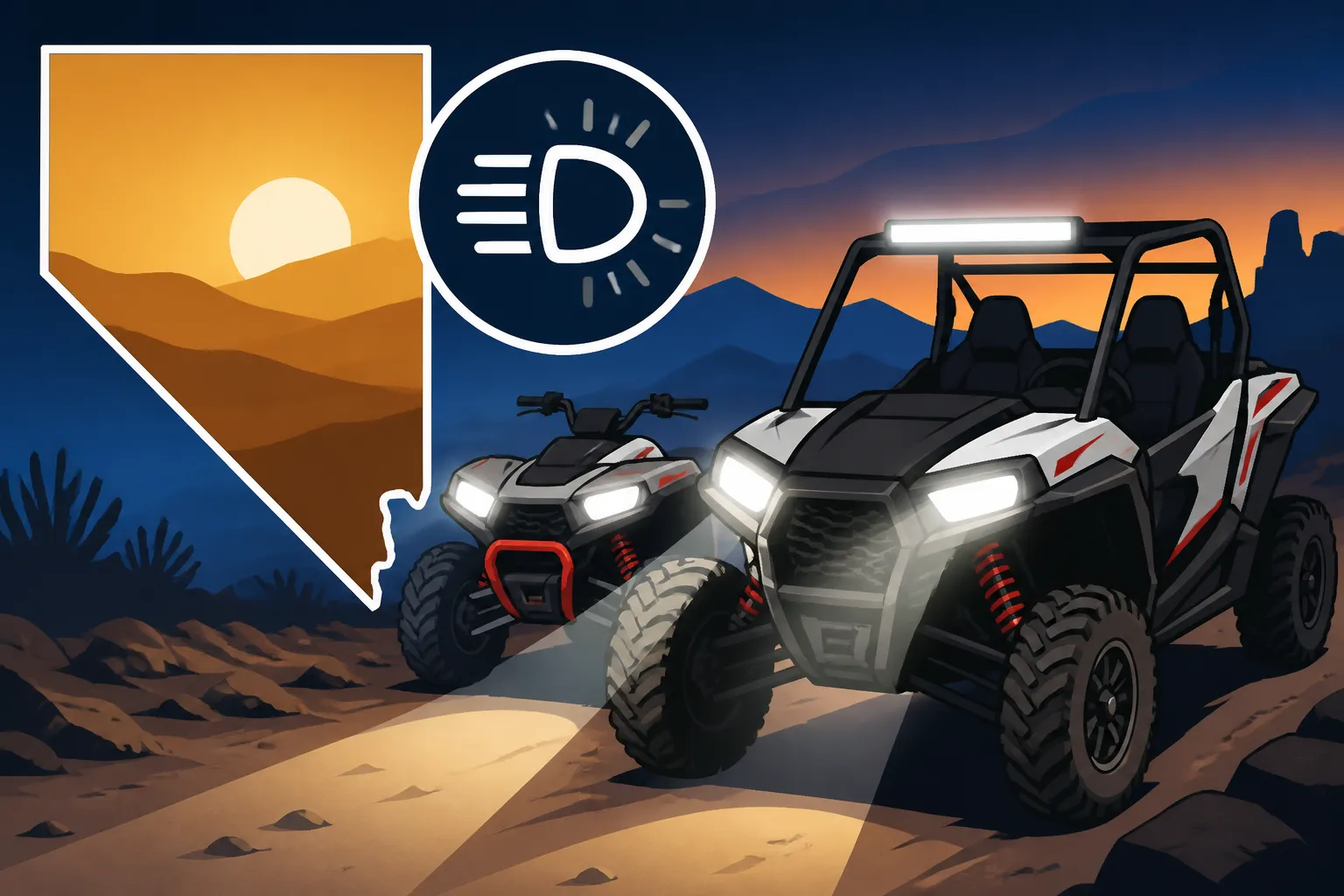
Here's where many riders get tripped up. The massive, bright LED light bars and pod lights that are absolutely fantastic for illuminating a dark desert trail at 2 AM are often not suitable, and in some cases, outright illegal, for use on public roads. These lights are designed for maximum forward illumination, often without a specific beam pattern that prevents blinding oncoming traffic. Nevada, like most states, cares a lot about glare. Your typical off-road light bar might throw a wall of light that blinds drivers coming the other way, creating a serious hazard. Road-legal headlights, by contrast, have a very specific beam pattern designed to illuminate the road ahead without sending excessive light upward or directly into the eyes of other drivers. This is why you'll often see distinct 'high beam' and 'low beam' settings on compliant headlights. The low beam cuts off sharply to avoid blinding others, while the high beam provides more distant illumination when no oncoming traffic is present. It's crucial to understand this distinction; just because a light is bright doesn't mean it's legal for the street. You need lights that cast a specific, controlled pattern.
The "Visible From 500 Feet" Rule in Nevada
This is perhaps the most critical legal aspect of headlight requirements for OHVs on Nevada roads. Nevada law states that your headlights must be capable of illuminating persons and vehicles at a distance of at least 500 feet ahead under normal atmospheric conditions. But what does that really mean for your machine? It's more than just being able to see a bit down the road; it's about projecting enough light to be seen and to clearly identify potential hazards far enough in advance to react safely. This ties directly into the general rules outlined in Nevada Headlight Requirements for Road Use.
Interpreting "Illuminating Persons and Vehicles at 500 Feet"
Think about it from the perspective of a Nevada State Trooper or a local sheriff's deputy checking your machine. They're not just looking for a glow; they're looking for effective illumination. This means your headlights need to be bright enough and aimed correctly to make a person walking on the shoulder or a parked vehicle clearly visible from a distance that gives you ample stopping time, especially at typical county road speeds.
This rule impacts several factors:
- Brightness (Lumens): While the law doesn't specify a minimum lumen count, it's implied that your lights need sufficient output. Older halogen bulbs might struggle to meet this standard, especially as they age or if your machine's charging system isn't optimal. Modern LED headlights, however, often exceed this requirement with ease, offering crisp, powerful illumination. When considering upgrades, many riders look for aftermarket solutions from reputable brands that specify their lights meet DOT (Department of Transportation) standards, which often align with these visibility requirements. SuperATV is one such brand that offers a range of DOT-approved lighting options that can help ensure you meet these visibility standards.
- Beam Pattern: As discussed, a compliant beam pattern is essential. Your headlights should have a distinct cutoff on low beam to prevent blinding oncoming traffic, while still providing broad and far-reaching illumination. A scattered or unfocused beam, common with some cheaper aftermarket off-road lights, simply won't cut it. The light needs to be concentrated where it's needed most: on the road ahead.
- Aiming: Even the brightest headlights are useless if they're aimed incorrectly. If they're pointed too high, they'll blind other drivers and won't effectively illuminate the road close to your machine. If they're too low, your 500-foot visibility will plummet. This often requires a bit of fine-tuning, typically done by parking your machine on a level surface about 25 feet from a wall and adjusting the light beam until it's at the correct height and position. The general rule of thumb is that the top of your low beam cutoff should be slightly below the headlight's center height on the wall. This minor adjustment can make a huge difference in compliance and safety.
What Happens When Your Lights Don't Measure Up?
If your headlights don't meet the "500 feet" rule, you're not just risking your safety; you're risking a citation. A law enforcement officer observing your machine on a public road, especially after dark, can issue a ticket for non-compliant lighting. This can be particularly frustrating if you thought your bright off-road lights were more than sufficient. The fines associated with such violations can quickly add up, and it's far better to invest in proper, compliant lighting upfront. This is just one of the many [Nevada Fines for No Large ATV Decal] that can come your way if you're not fully prepared.
Beyond Just Headlights: Other Lighting Requirements for Nevada Road Legal OHVs
While headlights are critical, they are just one piece of the puzzle for a truly road-legal OHV in Nevada. The state's regulations are designed to ensure comprehensive visibility, meaning other lighting components also need to meet specific standards. Think of it as a complete system of communication to other drivers. You'll want to ensure all of these are in order to comply with [Nevada Street Legal UTV Requirements].
Taillights and Reflectors: The Rear View
Just as crucial as seeing what's ahead is being seen from behind. Nevada law mandates that your OHV must have at least one red taillight, visible from a distance of 500 feet to the rear. This light must be illuminated whenever your headlights are on. Many modern UTVs come with integrated taillights that are more than sufficient, but if you're modifying an older ATV or custom-building a buggy, you'll need to make sure you add a robust, bright taillight.
In addition to the taillight, red reflectors are also required on the rear of your machine. These reflectors serve as a passive safety measure, bouncing light back from other vehicles' headlights even if your own taillight fails or is difficult to see due to dust or distance. They don't need to be huge, but they need to be present and clean to do their job effectively. When compiling your [Nevada Equipment List for Road-Legal UTVs], be sure to include these often-overlooked items.
The All-Important Stop Lamp
Imagine hitting the brakes on a county road, and the driver behind you has no visual cue. That's why a functional stop lamp, or brake light, is absolutely non-negotiable for road use. Nevada requires that your OHV have at least one red stop lamp on the rear, which illuminates when you apply the brakes. This light must be visible from a distance of 500 feet to the rear in normal atmospheric conditions.
Ensuring your brake light is bright and responsive is vital. Test it regularly: have a friend stand behind your machine while you press the brake pedal, checking that it lights up quickly and noticeably. If your machine's stock brake light isn't cutting it, or if you've done modifications, consider upgrading. Many aftermarket solutions, including those you might find through suppliers like SuperATV, integrate brighter LED technology that offers superior visibility. Remember, the goal is to give other drivers maximum warning that you're slowing down or stopping. [Nevada Stop Lamp Requirement for UTVs] offers more details on this crucial piece of safety equipment.
Turn Signals: Communicating Your Intentions
While not explicitly covered under "headlight requirements," turn signals are an integral part of road-legal lighting and often come as part of comprehensive lighting kits for street legality. If you're going to be on a county road, especially if you're making turns or changing lanes, clear indication of your intentions is paramount. Nevada requires turn signals that are visible from both the front and rear. They need to flash amber or red (for the rear) and be easily discernible by other motorists. While some older ATVs might not have come with them stock, for UTVs pursuing road legality, adding a robust turn signal kit is almost always a requirement. These kits usually integrate into your existing wiring and provide a switch to operate them, making your road rides much safer and more compliant with the spirit of the law.
Ensuring Your Lights Meet Nevada's Standards and Avoiding Issues
It’s one thing to know the rules, but it’s another to confidently ensure your off-highway vehicle actually meets them. This goes beyond just installing new lights; it involves maintenance, proper aiming, and regular checks to stay compliant, especially if you enjoy [Riding County Roads Legally in Nevada].
Pre-Ride Checks and Maintenance
Before you even think about hitting a paved road, make a habit of conducting a quick, thorough lighting check. This is especially true if your machine has been sitting for a while, or if you've recently been on a particularly rough or dusty ride.
- Walk-Around: Have someone stand outside the vehicle while you activate all your lights – headlights (low and high beam), taillights, brake lights, and turn signals. Check for proper illumination and functionality. If you're alone, use a reflective surface or park near a window to see your lights.
- Cleanliness: This sounds simple, but dusty or muddy light lenses significantly reduce light output and visibility. The Nevada desert is notorious for dust, and it accumulates everywhere. Always give your lenses a quick wipe-down before a road ride.
- Wiring and Connections: Vibrations and trail abuse can loosen wires or damage connections. If a light isn't working, often the first place to look is at the wiring harness. Corroded contacts or frayed wires can cause intermittent or complete failure.
- Bulb/LED Health: Halogen bulbs can burn out, and while LEDs are more durable, individual diodes can sometimes fail, reducing overall brightness. If your lights seem dim, it might be time for a replacement.
Aiming Your Headlights Correctly
We touched on this earlier, but proper headlight aiming deserves its own dedicated attention. It’s a delicate balance: illuminate the road for you, but don't blind oncoming traffic.
- The 25-Foot Rule: Park your OHV on a level surface, 25 feet from a flat wall. Measure the height of the center of your headlight from the ground. Mark that height on the wall.
- Adjusting the Beam: When your low beams are on, the top edge of the brightest part of the beam (the "cutoff") should typically be about 2-4 inches below the center mark you made on the wall. This ensures the light projects far enough forward without shining into the eyes of drivers in regular passenger vehicles. Most OEM and aftermarket headlights have adjustment screws or bolts to fine-tune this.
- Professional Help: If you're unsure, or if your machine's suspension modifications make aiming tricky, a qualified mechanic or OHV shop can often help with proper aiming. This small step can prevent major headaches down the road.
Upgrading for Compliance and Safety
If your stock lights don't quite cut it, or if you're converting an off-road machine for occasional road use, upgrading is often necessary. This is where researching DOT-compliant aftermarket options becomes crucial.
- DOT-Compliant Lighting Kits: Many manufacturers, including those like SuperATV, offer specific "street legal" or "DOT compliant" headlight assemblies. These are designed to meet federal Department of Transportation standards, which typically satisfy Nevada's requirements for beam pattern, brightness, and color. They often come with clear instructions for installation and aiming.
- LED Conversions: If your machine uses traditional halogen bulbs, converting to LED bulbs can dramatically improve brightness and efficiency, making it easier to meet the 500-foot visibility rule for both your headlights and [Nevada Taillight and Reflector Rules]. However, ensure any LED conversion kit is specifically designed for your headlight housing to maintain a proper beam pattern; simply swapping bulbs can sometimes lead to a scattered, non-compliant light.
- Integrated Solutions: For those doing extensive modifications, consider integrated lighting solutions that combine headlights, turn signals, and sometimes even horn and hazard light controls into one seamless system. This simplifies wiring and ensures all essential road-legal lighting components are in one place.
By taking these steps, you not only improve your safety and the safety of others on Nevada's roads but also ensure you're riding legally, preventing any unnecessary interruptions to your adventure. [What a Nevada Trooper Looks For on a County Road] often starts with these visible safety items.
Disclaimer
This article is for general informational purposes only and does not constitute professional advice. Laws, prices and regulations vary by location and change over time. Consult a qualified professional for guidance on your specific situation.