Driving From Fallon to Sand Mountain Recreation Area
Driving from Fallon to Sand Mountain Recreation Area is a straightforward trip east on U.S. Highway 50, but the last thing you want is to miss the entrance, arrive short on fuel, or discover you have no signal when you need directions. This guide covers the drive, where to prepare, and what to check before unloading your ATV or UTV.
The route from Fallon to Sand Mountain
Follow U.S. Highway 50 east
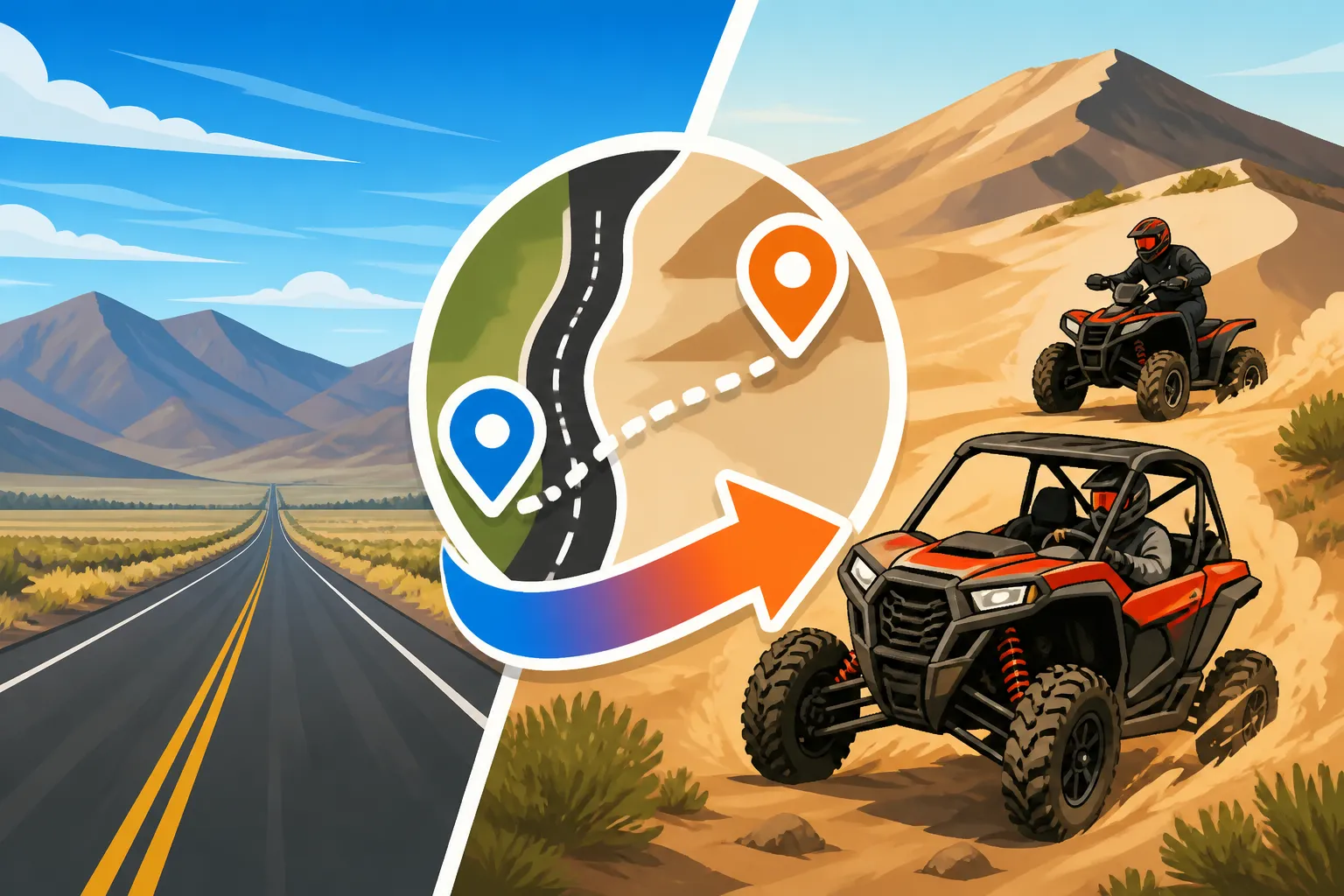
From Fallon, take U.S. Highway 50 east toward the Sand Mountain Recreation Area. The entrance is commonly described as roughly 25 miles east of town, and the route is paved. Watch for recreation-area signs and the signed turnoff as you approach; don’t assume your phone will announce the turn in time.
This is a simple drive in good conditions, but it still helps to know the route before leaving Fallon. If you are towing a trailer, a missed turn can be more than a minor inconvenience: turning around may be awkward, especially if traffic is moving quickly or the shoulder is narrow. Review the route while you have a reliable connection, then keep a navigation option available offline. An app such as onX Offroad can be useful for checking your planned route and nearby mapped features, but use road signs and safe driving judgment as well.
For a broader look at the highway approach, see [Getting to Sand Mountain on Nevada's US 50]. If your phone map labels the destination differently, search for Sand Mountain Recreation Area or the Sand Mountain access area and confirm you are following the route to the public entrance—not a nearby dirt track.
Know what the drive is and is not
The drive to the recreation area is not the same as riding an ATV or UTV to it. Keep your machine on the trailer or in the tow vehicle until you reach the designated riding area. U.S. 50 is a public highway with regular traffic, and a machine intended for off-highway use should not be treated as a way to travel along the highway to the dunes.
The area is associated with a large dune field and marked recreation routes, but the surrounding desert is not an invitation to ride anywhere that looks open. Stay within routes and riding areas that are open to motorized use. A map app can help with orientation; onX Offroad may also help you review mapped roads before the trip. Still, map lines do not replace posted signs, closures, or land-management rules on the ground.
If you are deciding how much time to allow after leaving town, include more than the highway drive. Loading, fueling, checking your gear, finding the entrance, and setting up at the recreation area all take time. A short drive can still become a rushed arrival if your group is meeting people, towing several machines, or traveling with children.
Avoid relying on a single navigation source
Before you leave Fallon, save or write down the general route: head east on U.S. 50 and follow the signed access to Sand Mountain. Download or save whatever map information your navigation app allows, and make sure you can identify the destination without a live connection. Cellular coverage can be unreliable in remote riding areas, so do not wait until you are near the dunes to look up directions.
The onX Offroad app can be one part of that plan, especially if you use it to review maps before leaving town. It is sensible to compare what you see in an app with signs and land-management information. If the app suggests a shortcut on an unpaved road, do not assume it is an appropriate public route or a better way to reach the recreation-area entrance.
If your group is meeting at the site, agree on a meeting point before the drive. Give everyone the same destination name and a simple route description. That way, a passenger in a second vehicle is less likely to follow a vague pin to the wrong side road or wait at a highway pullout that is not the recreation-area entrance.
Prepare in Fallon before heading east
Fuel the tow vehicle and the machines
Treat Fallon as the place to take care of basic fuel and supply needs. A short desert drive does not mean you should leave with a nearly empty tank, especially when you are towing. The tow vehicle may use more fuel than usual, and detours, waiting, or a return trip to town can add up. Check the fuel level before leaving rather than counting on finding a convenient stop beside the recreation area.
Plan machine fuel separately from vehicle fuel. Estimate what your ATV or UTV will need for the riding you intend to do, then allow a practical reserve for changes in the day. Soft sand, repeated climbs, low-speed maneuvering, and extra laps can affect fuel use. Carry fuel only in appropriate, secured containers and follow applicable rules for transporting it. More planning tips are covered in [Where to Fuel Before Sand Mountain] and [Water and Fuel Planning in Nevada].
Water deserves the same attention. Bring enough for the whole group, including a reserve, rather than assuming you can refill at the dunes. Desert heat, wind, and physical effort can make people feel worn down before they realize how much they have lost through sweat. Keep drinking water accessible in the vehicle and on the ride, not buried beneath luggage or riding equipment.
Check the machine and trailer
A quick inspection in Fallon is easier than troubleshooting on the highway shoulder or at the recreation area. Check tire pressure on the tow vehicle and trailer, make sure trailer lights work, and confirm that the load is secured. Look over the tie-downs, hitch connection, safety chains, and spare tire. If you are traveling with several machines, check that each is positioned securely and does not shift when the trailer moves.
For the ATV or UTV, look at tires, brakes, steering, fluids, and the basic fasteners you can reasonably inspect. Confirm that the battery is charged and that you have the key, any required documents, and the tools you may need for a minor issue. Dust and sand can make small problems harder to spot later, so a brief check before departure is worthwhile.
A first-time visitor may also want to check the machine’s dune setup before leaving town. Sand riding can feel different from riding a hard-packed trail, and an unfamiliar machine may need a little time to get used to. If this is your first visit, [Sand Mountain for a First Dune Trip] offers a useful way to think through the experience before you arrive.
Pack for a remote recreation area
Organize gear so you can reach the items you need without unloading half the trailer. Bring helmets and suitable eye protection, gloves, sturdy footwear, drinking water, sun protection, and a basic first-aid kit. A dust mask or face covering can be helpful when vehicles are moving sand nearby. Pack a trash bag, too, so you can take your waste with you when you leave.
Keep critical items in a place where they can be found quickly: vehicle keys, phone, navigation device, registration documents, and any access or pass information you need. A sealed pouch or dry bag can help protect papers and electronics from dust. If you use onX Offroad or another navigation app, save the map ahead of time and make sure someone in the group knows how to open it.
Check the recreation-area information before setting out for details such as day-use hours, access instructions, and available facilities. Facilities in remote areas may be limited, so plan on being self-sufficient. [Sand Mountain Day Use Hours] and [Sand Mountain's Six Vault Toilets] can help you prepare for the practical side of a visit.
Arriving at Sand Mountain and starting your ride
Make the entrance and parking area your reset point
After turning off U.S. 50, take a moment to orient yourself before unloading. Follow posted signs, look for designated parking and staging areas, and keep vehicles and trailers where they will not block traffic or access. If you arrive with a group, choose a place to gather that does not interfere with other visitors.
Unload on stable ground and secure the tow vehicle and trailer. Before starting a ride, make sure everyone has a helmet, understands the meeting point, and knows what to do if the group gets separated. A simple plan—such as returning to the staging area if separated—can prevent a confusing search across a broad, open landscape.
Take a look at conditions before heading out. Wind can change visibility and shift the feel of the sand, while heat can affect both riders and machines. If the dunes are busy, give other riders space and avoid cutting across someone’s line. For additional context, read [Sand Mountain When the Wind Picks Up] and [The 600-Foot Dune Near Fallon, Nevada].
Check closures, maps, and riding boundaries
Before riding, look for signs or notices about closures and restricted areas. Conditions and management notices can change, and habitat protection may limit where motorized travel is allowed. Stay on open routes and within the designated riding area. Do not use a map app as permission to cross a closure or ride off an authorized route.
The area’s scale can make distances feel deceptive. A feature that looks close from the staging area may take longer to reach than expected, particularly if the sand is soft, the route is unfamiliar, or the group includes newer riders. Keep the group together at a pace everyone can manage, and check that each rider has enough fuel and water for the planned loop.
Use a map as a planning aid rather than a substitute for local information. onX Offroad may help you review your route and identify mapped features before you ride, but posted signs and official land-management notices should guide decisions about access. For trip preparation, [Nevada Trail Maps Worth Downloading] and [Nevada Trail Closures to Check Before You Go] are useful related reads.
Plan your return before the day gets late
Set a return time before riding, especially if your group has a long drive home or is towing. It is easy to lose track of time when the dunes are fun and the group keeps taking “one more run.” Leave enough daylight to pack carefully, check that every machine is secured, and drive back to Fallon without rushing.
Before loading, inspect the machines for loose gear, leaks, or damage. Brush off excess sand where practical, but avoid creating dust or mess that affects nearby visitors. Check that tie-downs are tight and that the trailer lights and connection are still secure. A last-minute walk-around can catch a strap that shifted during loading or a piece of equipment left on the ground.
If conditions change, adjust the plan. Strong wind, fatigue, a mechanical concern, or a rider who is uncomfortable are all good reasons to stop early. Sand Mountain is close enough to Fallon for a manageable day trip, but the desert setting still rewards a conservative approach: arrive prepared, ride within your group’s ability, and leave with enough time and fuel for the return.
Quick checklist for the Fallon drive
| Before leaving Fallon | At the recreation area | Before driving back |
|---|---|---|
| Confirm the U.S. 50 east route and save directions | Follow signs to designated staging and parking | Check machines and secure each load |
| Fuel the tow vehicle and plan machine fuel | Review posted notices and riding boundaries | Confirm trailer lights and tie-downs |
| Check trailer tires, lights, hitch, and straps | Keep water, helmets, and essentials accessible | Pack out trash and loose gear |
| Bring water, sun protection, and basic tools | Agree on a group meeting point | Leave enough time for a relaxed drive |
| Save maps for offline use if possible | Ride only where motorized use is allowed | Recheck fuel and vehicle readiness |
For a straightforward outing, the key is to treat the drive as a small but important part of the ride. Leave Fallon with fuel, water, a clear route, and a machine that is ready to go. Follow U.S. 50 east, use the signed recreation-area access, and take a few minutes to check conditions before unloading. That preparation helps keep the day focused on riding rather than solving avoidable problems.
Disclaimer
This article is for general informational purposes only and does not constitute professional advice. Laws, prices and regulations vary by location and change over time. Consult a qualified professional for guidance on your specific situation.