Sand Mountain on a Holiday Weekend
A holiday weekend at Sand Mountain can turn a relaxing dune ride into a crowded, dusty day if you arrive without a parking plan, enough water, or a route in mind. This guide explains how to prepare for busy conditions near Fallon, Nevada, what to bring, how to ride considerately, and when it may be wiser to choose a quieter time or another area.
Plan for a busier-than-usual Sand Mountain visit
Decide whether the holiday weekend suits your group
Sand Mountain Recreation Area is a popular destination for off-highway vehicle riders, and holiday periods can bring more trailers, side-by-sides, ATVs, and people on foot into the same area. That doesn’t mean every holiday visit will be packed, but it does mean you should plan for more activity and less room to improvise than on an ordinary day.
Think about who is coming with you. A group of experienced riders who can adapt to changing conditions may be comfortable with a busy weekend. A family with a first-time rider, a young child, or someone who feels uneasy around fast-moving vehicles may prefer an earlier arrival, a quieter day, or a more controlled riding area. For a first dune outing, review [Sand Mountain for a First Dune Trip] before deciding what feels manageable.
It also helps to talk through expectations before you leave. Agree on a meeting point, a turnaround time, and what the group will do if someone gets separated. If one person wants to climb dunes while another prefers marked routes and easier terrain, decide how you’ll split up and reconnect. Those small conversations can prevent the familiar holiday argument that starts when everyone is tired, dusty, and ready to head back.
Build your route and arrival plan before leaving Fallon
Sand Mountain is outside Fallon, and the drive there is part of the day’s planning—not just a quick errand between rides. Check your route, trailer setup, fuel level, and travel timing before departing. If your group is coming from farther away, allow for breaks and make sure drivers know where they’ll turn off. [Driving From Fallon to Sand Mountain Recreation Area] is a useful companion for planning the approach.
Arriving earlier can give you more choice about where to park and unload, particularly when several groups are traveling together. Have one person focus on driving and spotting while another watches for pedestrians, children, and equipment as the trailer is positioned. If you’re unloading in a busy area, keep machines and loose gear organized rather than spreading everything across neighboring space.
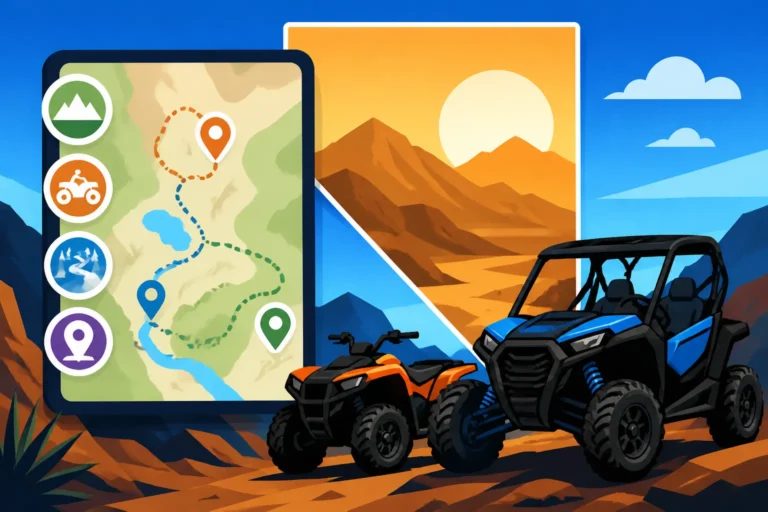
Do not assume that a phone map will work reliably throughout the trip. Download the maps you need before leaving town and bring a paper backup or a clearly agreed meeting location. onX Offroad can help you review routes and save map information for offline use, which is handy when reception is limited. Still, treat any map as a planning aid, not as permission to ride a closed or restricted route.
Check access details before you set out
Before traveling, confirm the area’s current access information, any seasonal notices, and how visitor passes or day-use requirements work. Rules and site conditions can change, and arriving at the entrance without knowing what is required can create an avoidable delay. [Buying a Sand Mountain Pass Before You Arrive] can help you think through that part of the visit.
Check the hours as well as the access requirements. A late start may leave your group with less daylight than expected, especially if you’re also setting up camp, unloading a trailer, or helping a new rider get comfortable. [Sand Mountain Day Use Hours] is a useful topic to review when setting your schedule.
If your plans depend on camping, confirm what facilities are available and what you need to bring yourself. Do not count on finding drinking water simply because the site is established. [Camping at Sand Mountain Without Water] and [Sand Mountain's Six Vault Toilets] can help set realistic expectations. Pack out your rubbish and leave the site ready for the next group.
Pack for crowds, desert conditions, and a long day
Bring more water and practical supplies than you think you need
A holiday ride can take longer than planned. You may wait to unload, pause while a group gets organized, or spend extra time helping someone recover a stuck machine. Heat, wind, and physical effort can also make a day feel harder than it looked on the calendar. Bring enough drinking water for the whole group, including a reserve, and keep it accessible rather than buried beneath camping gear.
Pack food that can handle dust and warmth, plus a basic first-aid kit, sunscreen, eye protection, and clothing that covers exposed skin. Gloves and a neck covering can make a dusty ride more comfortable. Secure loose items before riding; a hat, bottle, or small bag that falls from a moving machine can become a hazard for someone behind you.
Fuel planning deserves attention, too. Consider how much fuel your machine uses in soft sand, not just how far it travels on a road. Check your tank before leaving town and avoid assuming there will be a convenient place to refuel at the riding area. [Where to Fuel Before Sand Mountain] is relevant if you’re working out your stops around Fallon.
Prepare your machines for sand and stop to reassess
Soft sand puts different demands on a machine than a maintained road. Before unloading, check tires, controls, lights, brakes, and any recovery equipment you plan to carry. Make sure everyone knows how to use the basic controls and where the machine’s recovery points are. If you’re borrowing or renting a vehicle, read its operating guidance and confirm what equipment is supplied.
Set a conservative pace when you first enter the riding area. Sand texture, visibility, and traffic can change from one section to another. Give other machines room, avoid following too closely, and slow down when visibility is reduced by dust. If you cannot see clearly ahead, don’t keep moving at the same speed simply because the rider in front of you is doing so.
Plan to stop and check in with the group. A rider who is nervous or tired may not say so while everyone is moving. Use breaks to drink water, check for loose gear, and make sure each person still knows the return plan. If the wind picks up or sand starts affecting visibility, pause and reconsider the route rather than pressing on. See [Sand Mountain When the Wind Picks Up] for more on adapting to changing conditions.
Keep essentials reachable and protected from dust
At a busy site, small practical details can save time. Store registration and other important documents in a sealed bag, and keep your phone protected from dust and impacts. A photo of paperwork can be a useful backup, but it should not replace documents you are required to carry. Keep keys, medication, and a basic tool kit somewhere you can reach without unpacking the entire vehicle.
Assign one person to keep track of the group’s water, first-aid supplies, and meeting plan. This is especially helpful when several machines are involved or when riders have different levels of experience. Make sure everyone knows the agreed stopping point and what to do if a machine has a problem. Don’t rely on a single person’s phone battery or mobile coverage for the whole group.
Ride thoughtfully in a crowded dune area
Give other riders space and stay within permitted areas
Dunes can hide what’s on the other side of a rise. Approach unfamiliar terrain with care, maintain enough space to react, and avoid cresting a dune without a clear view of what lies beyond it. A busy holiday weekend makes that caution more important: another rider, a parked machine, or a pedestrian may be out of sight until you reach the top.
Stay on routes and areas where riding is allowed. A tempting shortcut can lead into fragile habitat or a closed area, and tracks left by other vehicles are not proof that a route is open. Review [Staying on Sand Mountain's Marked Trails] and [Riding Around Protected Dune Habitat] before your visit. A downloaded map in onX Offroad may help with orientation, but check the official area information for restrictions and closures.
Be considerate when passing or stopping. Give people on foot a wide berth, avoid crowding another machine, and choose a safe place to pull over rather than stopping abruptly in a travel line. If your group is waiting for a rider, move to a spot that does not block access or create a blind corner for approaching traffic.
Make a simple plan for children and less-experienced riders
Children and beginners need a plan suited to their skills, not the ambition of the most confident adult in the group. Before riding, explain where they can travel, what signals the group will use, and what to do if they lose sight of the others. Keep the route short enough that a rider can turn back without feeling pressured to continue.
For younger riders, check the machine, protective gear, supervision arrangements, and applicable rules before the trip. Don’t assume that a child who has ridden on a quiet property is ready for a crowded dune environment. If the area feels too busy, use the day to watch, learn, or take a break instead of pushing a new rider into conditions they find intimidating.
Adults should avoid splitting up without agreeing on when and where to regroup. If one rider is more comfortable on a different route, identify a clear meeting point first. Encourage anyone who feels uncomfortable to speak up early; there is no benefit in continuing until someone is exhausted or frightened.
Know when to stop, change plans, or leave
A good holiday ride is not measured by the number of dunes climbed. If visibility drops, a rider feels unwell, the machine develops a problem, or the area becomes too congested for your group’s comfort, stop and reassess. Moving to a safer spot, taking a longer break, or ending the ride early can be the best decision of the day.
Leave extra time for loading and departure. When several groups are packing up at once, rushing around trailers and moving machines can create unnecessary risk. Keep children and bystanders clear while vehicles are being loaded, secure the trailer properly, and do a final check for tools, rubbish, and personal belongings.
If the holiday atmosphere is not what your group enjoys, you do not have to force it. Consider a weekday or a less busy period for a more relaxed outing, or compare other destinations in [Nevada's Dune Riding Areas Compared]. The best choice is the one that matches your group’s experience, patience, and comfort level—not simply the one with the biggest dunes.
| Before the trip | What to do | Why it helps |
|---|---|---|
| Access and rules | Check current access information, hours, and pass requirements | Avoids surprises at arrival |
| Route and maps | Review the drive and save maps for offline use | Helps when reception is limited |
| Water and food | Pack for delays as well as planned riding time | Makes a long, hot day easier to manage |
| Fuel | Start with an adequate supply and plan stops near Fallon | Reduces the chance of an interrupted ride |
| Group plan | Choose a meeting point and agree on a turnaround time | Makes regrouping simpler |
| Machine checks | Inspect controls, tires, brakes, and recovery gear | Helps catch problems before unloading |
| Riding choices | Stay on permitted routes and adjust to visibility | Protects riders and sensitive areas |
Disclaimer
This article is for general informational purposes only and does not constitute professional advice. Laws, prices and regulations vary by location and change over time. Consult a qualified professional for guidance on your specific situation.