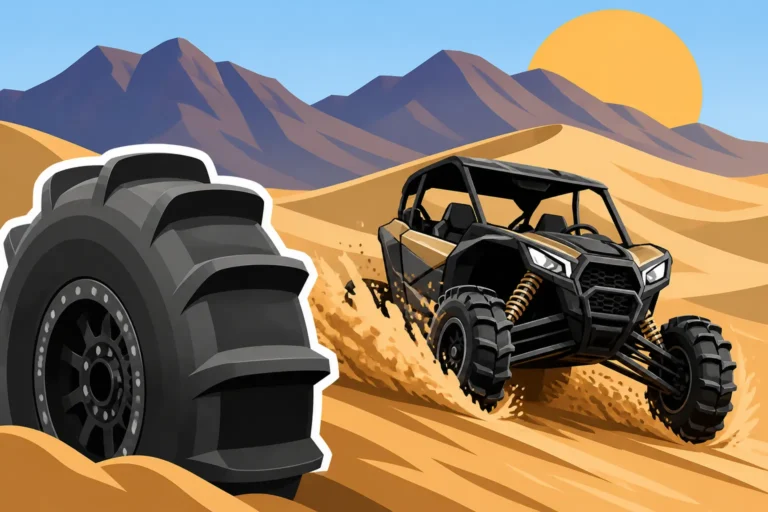
Nellis Dunes and the Las Vegas Skyline
Nellis Dunes can look like an easy escape from Las Vegas: load the machines, follow the desert edge and ride beneath a wide-open sky. But loose sand, changing traffic, heat and confusing route boundaries can turn a casual outing into a stressful one. This guide explains how to plan a safer visit, what to expect on the ground and how to make the most of the dunes.
What Nellis Dunes Is Like
A desert riding area beside the city
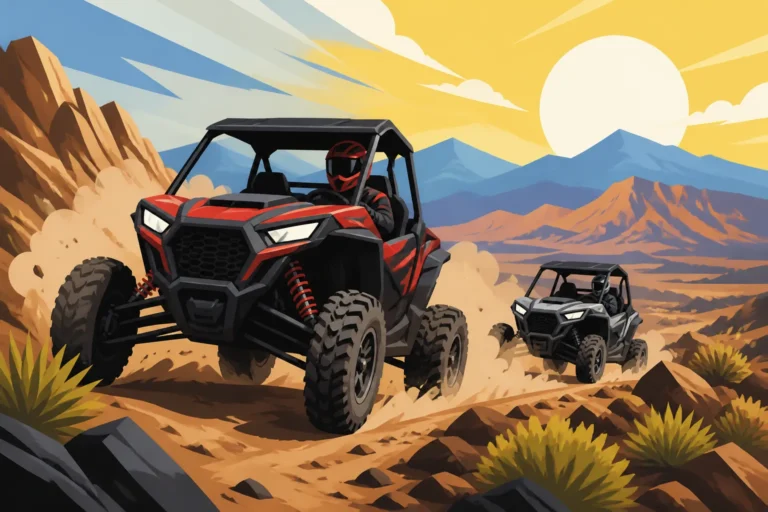
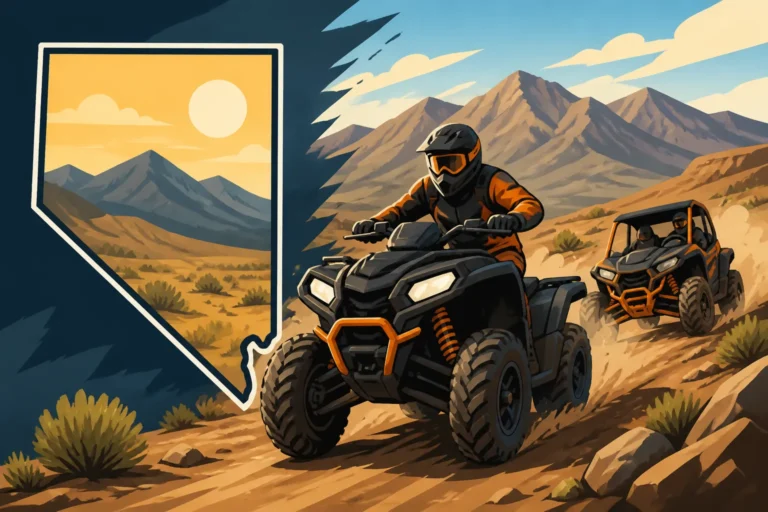
Nellis Dunes is a public-land off-highway vehicle area near Las Vegas. Its draw is the contrast: open desert terrain and rolling sand close to a major urban area. Riders come for dune play, informal routes and the feeling of getting out into the Mojave landscape without driving far from town. It is a popular option for a quick ride, but “close to the city” does not mean the area is developed or easy to navigate.
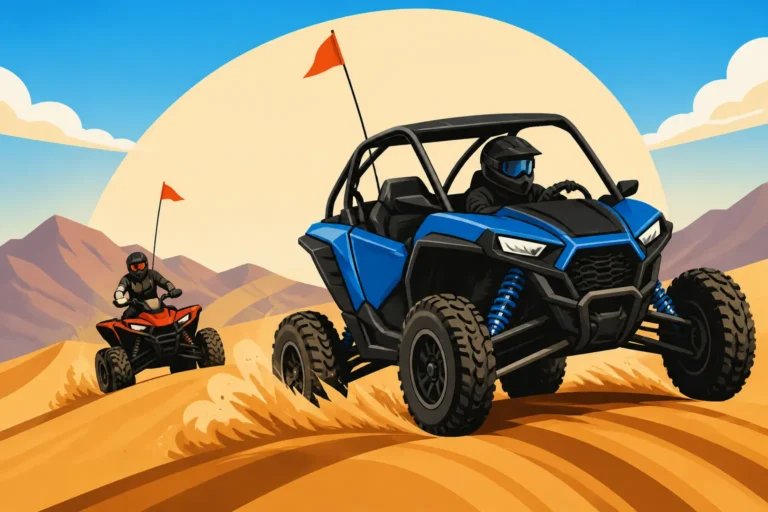
The terrain is not one uniform field of soft sand. You may encounter dune faces, sandy washes, firmer desert ground, tracks left by other riders and areas where vegetation or land conditions call for extra care. The surface can change over short distances. A route that feels manageable on a broad, firm stretch may lead toward softer sand or a steeper slope, so look ahead rather than following tracks automatically.
The Las Vegas skyline and surrounding city are part of the experience, but the view can be deceptive. In town, help, fuel and supplies are close at hand. Out on the open ground, your group still needs to be self-sufficient. Bring water, carry basic recovery supplies and decide how you will regroup if riders get separated. For an overview of nearby options, see [Nevada OHV Areas Near Las Vegas].
What the ride feels like
Nellis Dunes can suit several kinds of outing. A group may spend most of a short visit cruising on familiar open ground, while another group may focus on practicing controlled climbs and descents. Families might prefer a conservative route with frequent stops and a clear turn-around point. There is no single “right” way to ride the area; the important thing is to match the terrain to the least experienced rider and the capabilities of the machine.
Expect dust, engine noise and other traffic, particularly when the area is busy. A popular riding area is shared space, not a private playground. Riders may be on ATVs, UTVs, dirt bikes or other permitted OHVs, and not everyone travels at the same speed. Keep your attention on the ground ahead, leave room to react and avoid cresting a dune at speed when you cannot see what is on the other side.
Conditions also shape the character of a visit. Wind may shift loose sand and reduce visibility; recent weather can alter washes and tracks; and summer heat can make even a short outing physically demanding. Rather than treating a planned route as fixed, make a habit of checking conditions before departure and turning around if the ride stops feeling comfortable. A shorter outing with everyone in good shape is better than pushing on just to reach a particular spot.
Choosing the right time and expectations
A quick ride near Las Vegas may sound like an easy after-work plan, but build in enough time to unload, check equipment, orient the group and ride back before anyone is tired or rushed. If you have never been to the dunes, choose daylight and leave a generous margin before sunset. New riders need time to learn how the sand responds under their tires and to get used to the area’s traffic patterns.
Weekend periods and holidays can bring more vehicles, more dust and more waiting around at busy access points. A quieter time may feel less hectic, but it does not remove the need for a route plan or emergency supplies. Check the forecast and any land-management notices before leaving, and be ready to change plans if the weather, access or visibility is poor.
It helps to set a simple goal for the trip. For example, “ride for an hour on manageable ground and be back at the trailer before the heat peaks” is more useful than “explore until we find something interesting.” A clear plan makes it easier to keep beginners comfortable and to notice when the group should stop. For a closer look at the area’s changing crowds and atmosphere, read [Nellis Dunes on a Saturday].
| Planning question | A practical approach |
|---|---|
| Is this a first visit? | Keep the route conservative, ride in daylight and stay together. |
| Is anyone new to sand? | Practice on open, gentle ground before attempting steeper terrain. |
| Is it hot or windy? | Shorten the ride, carry extra water and turn back if visibility or comfort drops. |
| Are you relying on a phone map? | Download or prepare the map before leaving areas with reliable service. |
| Are you planning to camp? | Make separate overnight arrangements; Nellis Dunes is not a camping destination. |
| Is the group mixed in skill or machine type? | Set a pace for the least experienced rider and agree on regrouping points. |
Planning Your Route and Access
Understand the open area before you ride
One of the easiest mistakes at a desert riding area is assuming that every visible track is an authorized route. Tire marks can lead toward closed or sensitive ground, private property, military land or simply a place that is difficult to return from. Identify the riding area and its boundaries before unloading, and use current land-management information rather than relying only on a track someone shared in a group chat.
A map is most useful when you study it before the ride. Look for access points, open routes, boundaries, nearby roads and places where your group can pause without blocking traffic. Use an offline map or downloaded route information if available; mobile coverage can be unreliable in the desert, and a phone that shows a moving dot without usable map detail is not much help. Tools such as onX Offroad can help riders prepare and orient themselves, but a digital map should support—not replace—posted signs and land rules.
Avoid treating a marked line on a phone as permission to ride anywhere around it. Map information can be incomplete, and land conditions or closures can change. When you reach a sign or boundary that conflicts with what you expected, follow the sign and stop to reassess. For more preparation ideas, see [Nevada Trail Maps Worth Downloading] and [Planning a Ride With Trail Finder].
Make arrival and parking part of the plan
Before driving out, confirm how you intend to reach the riding area and where you can safely unload and park. Do not assume a broad patch of dirt is an established staging area. Keep trailers and tow vehicles out of travel lanes, avoid blocking access for emergency or land-management vehicles, and leave enough room for other visitors to maneuver. If the place is crowded, do not make a tight, hurried unload beside moving OHVs.
Check your tow vehicle, trailer and tie-downs before leaving town. A loose ramp, unsecured machine or trailer light problem is much easier to fix in a driveway than on a dusty shoulder. Carry the tools you need to load and secure the machines, and agree on a meeting point in case members of your group arrive separately. Keep keys, phones and paperwork somewhere they will not be buried in loose gear.
Nellis Dunes is close to Las Vegas, but do not treat that proximity as a guarantee of convenient services at the riding area. Plan to arrive with fuel, water, food and basic supplies already handled. If you are visiting for the first time, allow extra time to get oriented rather than trying to squeeze the full outing between errands. The ride starts when you leave home, not when the first machine reaches the sand.
Check boundaries, access and closures
Public-land access is not necessarily unrestricted access. Route designations, temporary closures, habitat protections, fire restrictions and land boundaries can affect where riding is allowed. A route that appears open in an old screenshot may no longer be appropriate. Check official notices before travel and read posted signs when you arrive, especially if you have not visited recently.
The landscape can make boundaries difficult to spot. A wash or broad sandy area may look like a natural continuation of the ride, even when the permitted route ends nearby. Keep the group together when approaching unfamiliar edges, and stop before anyone crosses an uncertain boundary. If you cannot establish that an area is open to OHV use, choose a route you can verify instead of taking a chance.
onX Offroad can be useful for comparing your location with planned routes and boundaries, especially if you prepare the map before heading out. Still, a mapping app is not an official ruling on land access. Pair it with current agency information, physical signs and common sense. If information appears to conflict, pause and choose the more conservative option rather than assuming the least restrictive interpretation is correct.
Choosing and Preparing Your Machine
Match the machine to the terrain and riders
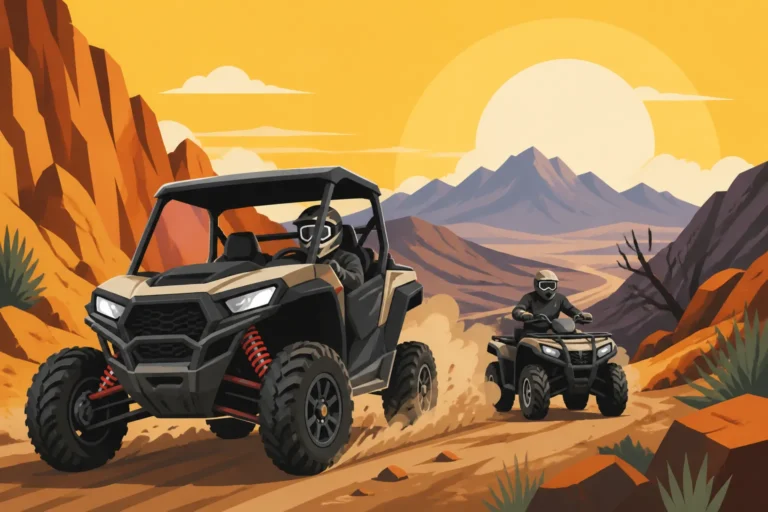
An ATV can be a good choice for a solo rider who is comfortable handling sand and has a machine suited to the terrain. A side-by-side offers seating for passengers and may make it easier for a group to carry water, tools and recovery gear, but its size can limit where it is practical to travel. Neither machine type makes loose sand or steep terrain automatically safe.
Consider the experience of everyone who will ride, not only the most confident person in the group. A powerful machine can be harder for a beginner to manage, while a small or heavily loaded machine may struggle in soft sand. Think about rider size, passenger needs, machine condition, tire setup and the kind of terrain you actually plan to cover. If one person is uncomfortable with the choice, adjust the plan before unloading.
For UTV owners, check the vehicle’s seating, belts and protective equipment before the trip. Do not exceed the manufacturer’s passenger capacity or assume that a bed is a safe place for a rider. Secure cargo so it cannot shift, and make sure passengers understand how to stay seated and use the restraints properly. For registration questions specific to a side-by-side, see [Nevada OHV Registration for a Side-by-Side].
Inspect the machine before leaving town
A basic pre-ride inspection can prevent a frustrating breakdown in the sand. Check tires for damage and appropriate pressure for the machine and terrain, look for loose hardware, test the brakes and confirm that steering feels normal. Inspect the chain or belt as applicable, check fluid levels and make sure the battery and lights are in working order. Follow your owner’s manual for maintenance and setup rather than copying another rider’s settings without context.
Pack a small set of tools that fits the machine and the likely problems you can handle safely. A compact tire repair kit, basic hand tools, spare fuses and a tow strap may be useful, depending on your vehicle and skill. Keep equipment secured so it does not become a hazard during a turn or rollover. If a problem is beyond your ability to fix, do not keep riding in the hope that it will disappear.
Fuel planning matters even on a nearby outing. Sand can demand more from a machine than a short road trip, and detours or slow riding can use fuel unexpectedly. Start with enough fuel for the plan, preserve a reserve and avoid making a far-off destination the only point where you can turn around. A small amount of planning can keep “we are nearly there” from turning into a long walk back to the staging area.
Carry the basics for a self-supported ride
Bring more water than you think you will need, especially in warm weather or when the group includes children, new riders or passengers who are not used to desert conditions. Water should be easy to reach, not buried under helmets and tools. Take breaks before people feel unwell, and remember that effort, direct sun and protective riding gear can increase the strain of a ride.
A practical kit might include a first-aid kit, sun protection, snacks, a charged phone, a paper or offline map, a basic tool kit and a way to communicate with the group. The exact list depends on the length of the ride and the people involved. If you carry a satellite messenger or another emergency communication device, know how it works before you need it. Do not assume that one phone will provide reliable service for everyone.
Keep essential items protected from dust and sand. A dry bag or sealed container can keep spare layers, documents and electronics cleaner and easier to find. Agree on who carries what before departure; otherwise, several riders may assume someone else packed the first-aid kit or extra water. [Carrying Water for a Desert Ride] offers more on a supply that deserves a place at the top of every desert checklist.
Riding Sand More Safely
Start slowly and learn the surface
Sand changes how a machine moves. Tires can sink, the front end may wander and a small steering input can feel different from what you expect on firm ground. Start on open, gentle terrain at a pace where you have time to respond. Give yourself room to practice controlled acceleration, braking and turns before following more experienced riders toward steeper or softer areas.
Avoid making a first dune climb a test of confidence. Look at the slope, the run-up, the landing area and what is hidden beyond the crest. If you cannot see the full route or identify a safe way down, do not commit to it. A machine that loses momentum on a climb can become difficult to control, and turning around on a steep face may be riskier than choosing another line from the beginning.
Riders should make decisions for their own skill level, not for the audience watching from below. It is fine to walk a route, wait for another rider to demonstrate a safe line or choose to stay on easier ground. If a rider becomes tense or starts making rushed choices, stop somewhere safe and reset. The dunes will still be there after a break.
Manage speed, spacing and visibility
Keep enough distance from other machines to avoid dust and allow room for an unexpected stop. Do not follow close behind a rider who is climbing or descending a dune, and avoid stopping where another vehicle may crest into your path. When visibility is poor, slow down or stop in a location where you can be seen. Continuing at the same speed through a wall of dust is a gamble, not a riding strategy.
Dune crests deserve particular caution because you may not be able to see the other side. Do not charge over a blind crest simply because the tracks ahead appear to continue. Approach with a speed that lets you stop, check the slope and scan for other riders. Likewise, avoid cutting across the line of someone already climbing or descending. Make your movements predictable, and give other riders space to react.
A group should agree on simple communication before setting out. Decide how to signal a stop, what to do if someone loses sight of the group and where to regroup after a difficult section. Wait at safe, visible locations rather than scattering to search. For shared-area habits that reduce conflicts, read [Nevada Trail Etiquette on Shared Dunes].
Keep the outing within the group’s ability
Skill levels can vary considerably even when everyone has ridden before. One person may be confident on a quad, while another is new to sand or uncomfortable riding near other traffic. A sensible group leader sets a pace that includes the least experienced rider and checks in regularly. Let faster riders go only when there is a clear plan for how and where they will meet the group again.
Children and teenagers need close supervision suited to their age, experience and machine. Give young riders clear instructions about staying within the group, stopping when asked and avoiding routes they have not been shown. Keep them away from blind crests and areas with fast cross-traffic. If a child is tired, overheated or overwhelmed, end the ride rather than insisting on one more loop.
Take breaks before fatigue changes the way people ride. Tired riders may miss signs, misjudge distances or react too late to a machine in the dust. A simple check-in—asking whether everyone feels steady, hydrated and ready to continue—can reveal a problem before it becomes an emergency. If someone is uncomfortable, make the plan easier; do not pressure them to keep up.
Heat, Dust and Desert Conditions
Plan around heat and sun
Southern Nevada’s dry climate can make heat easy to underestimate. Riders may not notice how much they are sweating, and the wind from a moving machine can create a false sense of comfort. Wear appropriate protective clothing while managing sun exposure, and keep water within reach. Take shade breaks where available, and be willing to shorten the outing if the group is struggling.
Start earlier in the day when conditions call for it, and check the forecast before you leave. A ride that seems manageable in cool morning air can become punishing as the day warms. Plan a turnaround time, not just a destination, and allow for loading, traffic and the drive home. If the temperature or conditions are unsuitable for the riders in your group, postponing is a reasonable choice.
Learn to recognize when someone needs to stop. Headache, dizziness, unusual weakness, nausea or confusion are reasons to get out of the heat and seek appropriate help. Do not treat these symptoms as ordinary tiredness that can be fixed by pushing through one more run. [Nevada Desert Riding in Summer Heat] and [Riding Nevada Before the Heat of the Day] can help with broader seasonal planning.
Protect yourself from dust and wind
Dust is more than an inconvenience. It can limit what you see, irritate eyes and airways, and make it harder to judge where other riders are moving. Use suitable eye protection and a dust covering appropriate to the conditions. Keep extra clean eyewear or a lens cloth in a protected place, since grit on a lens can make visibility worse rather than better.
Leave a longer gap behind other vehicles when the air is dusty. If a group gets spread out, stop somewhere safe and visible rather than rushing after the dust cloud. If the wind increases enough to make route markers or other machines difficult to see, pause and reassess. A planned route is not a reason to ride when you can no longer see well enough to make safe decisions.
Protect the machine as well as yourself. Dust can work its way into equipment and affect air filters, moving parts and storage compartments. Follow the manufacturer’s maintenance guidance, and inspect the machine after a dusty ride. Keep drinks and food sealed, and store important electronics so they are not exposed to loose grit. A little care at the staging area can make cleanup and maintenance less frustrating when you get home.
Think about wind, weather and ground changes
Weather in the desert can change the riding experience quickly. Wind can blow loose sand and dust across open ground, while rain can alter washes and create hazards that were not present on a dry visit. Check conditions before departure and look for relevant land-management notices. If a route crosses a wash, remember that distant rain can affect desert drainage; do not enter water or a wash when conditions are uncertain.
After weather, do not assume that tracks or familiar landmarks will look the same. Sand may shift, visibility may be lower and a route that was easy to follow may be harder to identify. Slow down and use your map, signs and surroundings together. If you are unsure whether a route is safe or open, turn back or choose a known alternative.
Avoid riding when you are distracted by discomfort, fatigue or a machine problem. Desert conditions can make small issues grow: a loose strap, a leaking tire or a rider who is short on water can become a larger problem after the group has traveled farther from the staging area. Treat changes in weather and rider condition as reasons to reassess the plan, not as minor interruptions to ignore.
Rules, Registration and Responsible Use
Know your registration obligations
Nevada OHV registration requirements depend on the machine and circumstances, and riders should confirm what applies to their specific vehicle before operating on public land. A decal or other required documentation is not something to leave at home because the ride is short or close to town. Keep required paperwork available, and make sure the machine’s identification information is legible and consistent with its records.
Visitors bringing a machine from another state should not assume that its home-state sticker automatically settles every Nevada requirement. Reciprocity rules and exemptions can depend on the machine and how long it is in the state. Check the current Nevada rules before the trip, especially if the machine will remain in Nevada beyond a short visit. For background on how Nevada’s OHV decal relates to riding access, see [Nevada's Registration Decal as Your Permit].
Keep the decal affixed in the required location and maintain it so it remains visible. Sand, washing and sun exposure can wear at decals over time. If you are unsure where yours belongs or whether it is still readable, review [Nevada OHV Decal Placement Rules] and resolve the question before riding. At the trailhead is a poor time to discover that paperwork or placement is not in order.
Respect land boundaries and other visitors
Ride only where OHV use is allowed, and stay off closed routes, protected areas and private property unless you have permission. Do not assume an open-looking stretch of desert is open to cross-country travel. Follow posted signs and the land manager’s route information. If a boundary is unclear, stop and verify rather than crossing it because another set of tracks goes that way.
Keep your machine under control near other visitors, wildlife and working vehicles. Avoid spinning tires unnecessarily, creating large dust clouds around people or leaving trash behind. Pack out everything you bring in, including broken straps, food wrappers and vehicle parts. Be considerate around people who are unloading, walking or waiting at access points.
Noise and riding behavior affect whether an area remains welcoming to everyone. Use equipment in good working condition, avoid reckless high-speed passes near others and do not turn a shared riding area into a competition without considering who else is nearby. Respectful habits are practical: they lower the chance of injury, reduce conflict and help protect continued access for the riding community.
Understand the difference between riding and camping
Nellis Dunes is a riding destination, not a place to plan an overnight camp. Arrange lodging or camping elsewhere and return to the dunes for the ride. If you are towing in from outside Las Vegas, plan the overnight portion separately rather than expecting to sleep beside the machines at the riding area. More detail is available in [Why You Cannot Camp at Nellis Dunes].
Separate camping plans also make it easier to carry only what is needed for the day’s ride. Keep the staging area orderly, and do not leave equipment, trash or food behind while you ride. If you need an overnight base, look for an established option that allows your intended use and check its rules before arrival. Availability and conditions can vary, so make those arrangements before leaving home.
A day-use mindset encourages better preparation: arrive ready, ride within the time and supplies you have, and leave the area in good condition. Do not use an improvised camp as a substitute for a planned destination. Treat the desert as a place you are visiting, not as a space where anything goes simply because it appears empty.
A Practical First-Visit Plan
Before leaving home
Start with the basics: confirm the riding area is open, review current access and route information, and check the weather. Choose a conservative ride plan based on the least experienced person in your group. Tell someone where you are going and when you expect to return, especially if you are traveling without another group nearby.
Prepare the machine and tow vehicle in advance. Check tires, brakes, fluids, fuel, tie-downs and trailer equipment. Pack water, protective gear, first aid, snacks, tools and a map that can be used without dependable cell service. Keep registration documents and other required paperwork accessible and protected from dust.
Agree on a few group rules before anyone starts the engine. Set a turnaround time, decide what to do if the group gets separated and identify a place to regroup. Make clear that any rider can call for a stop if they feel unsafe or unwell. These conversations may feel overly cautious in the driveway, but they prevent confusion when engines, wind and dust make communication harder.
At the staging area
Unload only where it is safe and appropriate, keeping trailers and vehicles clear of access routes. Before riding, walk around each machine for a quick check and make sure everyone has their helmet, eye protection and other necessary gear. Point out the planned direction of travel, boundaries and the first regrouping location.
Start with an easy section. Let new riders experience how their machine behaves before the group adds speed or more difficult terrain. Watch for signs that someone is struggling—hesitation, repeated loss of control, frustration or fatigue—and adjust the ride accordingly. Do not let the most confident rider set a pace that leaves others behind.
Keep the first loop short enough that you can return, reassess and change the plan. Check fuel, water, machine condition and how everyone feels. If things are going well, continue within the same conservative limits. If conditions are worse than expected, ending early is a successful decision, not a failed trip.
After the ride
Give yourself time to load carefully and secure each machine before driving away. Check that the staging area is clean and that nothing—tools, bottles, straps or trash—has been left behind. Look over the machines for damage or sand buildup that needs attention before the next ride. A quick post-ride inspection can catch issues before they become expensive repairs.
Check in with the group about what worked and what did not. Maybe the route was too ambitious, the water was hard to reach or the dust made communication difficult. Write down those lessons while they are fresh, then adjust the next outing. If the group enjoyed the area but wants a different pace, compare it with other choices such as [Nellis Dunes for Beginners] or [Nellis Dunes for a Quick Evening Ride].
Above all, leave room for a more conservative plan next time. Nellis Dunes rewards riders who pay attention to the terrain, respect other users and know when to stop. The city may be nearby, but the ride still calls for desert preparation. Bring what you need, verify where you can ride and make the safest choice for the people and machines in your group.
Disclaimer
This article is for general informational purposes only and does not constitute professional advice. Laws, prices and regulations vary by location and change over time. Consult a qualified professional for guidance on your specific situation.