Nevada OHV Registration for a Side-by-Side
It can feel like a maze trying to figure out the ins and outs of registering your beloved side-by-side here in Nevada. Many of us get an awesome new UTV, eager to hit the trails, only to be met with a stack of paperwork and regulations that seem designed to confuse. This guide is here to walk you through the entire process of getting your side-by-side properly registered in Nevada, making sure you understand each step and what to expect.
Understanding Nevada's OHV Registration for Your Side-by-Side
Getting your side-by-side ready for Nevada's incredible trails isn't just about having the right gear; it’s also about having the right paperwork. Nevada takes its off-highway vehicle (OHV) registration seriously, and for good reason. It helps fund trail maintenance, ensures responsible riding, and keeps our state's vast open lands accessible for generations of enthusiasts. But let's be real, navigating the system can sometimes feel like a ride on a rocky wash – a bit bumpy if you don't know the path!
For many, the first question is whether their specific machine even qualifies as an OHV that needs registration. Generally, if it's not street-legal and designed for off-road use, then yes, it likely needs to be registered. This includes most ATVs, dirt bikes, and, of course, side-by-sides, also known as UTVs. The state has pretty clear definitions, and it's always best to err on the side of caution and get it registered to avoid any headaches down the road.
The state's OHV program has evolved over the years, aiming to streamline the process while still maintaining critical oversight. The decals you display on your machine are more than just stickers; they're your proof of compliance and your ticket to legal trail access. Without one, you could face fines, and nobody wants their epic weekend ride cut short by an enforcement officer. So, let's dive into what makes a side-by-side a unique case for registration.
Is Your Side-by-Side an Off-Highway Vehicle in Nevada?
When we talk about "off-highway vehicles" in Nevada, it's a broad category. But side-by-sides often introduce a bit of confusion because some folks might think their larger size or enclosed cab might put them in a different class than a traditional ATV. The truth is, most side-by-sides, whether they're two-seaters built for sport or four-seaters designed for utility and family outings, fall squarely under the OHV umbrella. They are specifically designed for off-road environments and don't meet the requirements for conventional street-legal vehicles.
Nevada's legal definitions are quite clear on this. An OHV is generally a motor vehicle that is designed primarily for off-highway use, is fifty inches or less in width, has an unladen weight of one thousand five hundred pounds or less, and travels on three or more wheels; or a motor vehicle that is designed primarily for off-highway use and travels on four or more wheels. This second part is key for side-by-sides, as they almost always have four wheels and are definitely designed for getting out into the backcountry.
So, whether you've got a Polaris RZR, a Can-Am Maverick, a Yamaha Wolverine, or a Kawasaki Teryx, if it's intended for dirt roads, dunes, and trails, it's considered an OHV. This means it needs to go through the same registration and titling process as any other off-road machine. Don't let the different terminology or machine type throw you off – the registration requirements are consistent across the board for most recreational off-highway vehicles.
The Importance of Registering Your UTV
Some people might wonder why they need to go through the trouble of registering their UTV. After all, if you're only riding on private land, do you still need to register it? The answer is nuanced, but for the vast majority of side-by-side owners who plan to enjoy Nevada's incredible public lands, registration is non-negotiable. It's not just a hoop to jump through; it's a fundamental part of responsible OHV ownership in our state.
The money collected from registration fees directly supports the very trails and riding areas that we all love. These funds contribute to things like trail maintenance, signage, mapping, and even educational programs that promote safe riding. Without these fees, the infrastructure we rely on to access our favorite spots would quickly deteriorate. So, in a very real sense, your registration helps keep the trails open and enjoyable for everyone. You can learn more about this by checking out [What Nevada OHV Registration Fees Pay For].
Beyond supporting the trails, proper registration also provides crucial proof of ownership. This becomes incredibly important if your machine is ever stolen or if you decide to sell it. The registration card, along with your title, serves as official documentation of who legally owns the side-by-side. Trying to sell a UTV without current registration or a clear title can be a major headache, often scaring away potential buyers or forcing you to jump through extra hoops later.
Key Differences for Side-by-Sides vs. ATVs
While side-by-sides and ATVs both fall under the OHV classification, there are a few subtle differences that might pop up during the registration process, particularly concerning the physical inspection and decal placement. It's not a huge hurdle, but it's good to be aware of. Generally, the core requirements for [Registering a UTV Versus a Quad in Nevada] are quite similar, but the practical application can vary slightly due to the machine's design.
For instance, the VIN (Vehicle Identification Number) inspection is a mandatory step. While an ATV's VIN is usually easy to spot on the frame, a side-by-side's VIN might be in a slightly different location, sometimes requiring a bit more searching, often under seats, in wheel wells, or on frame rails obscured by bodywork. Inspectors are familiar with these variations, but knowing where yours is can speed up the process. This is especially important since [The VIN Inspection Nevada DMV Will Not Do], requiring you to visit an authorized dealer or law enforcement.
Another practical difference lies in decal placement. Nevada has specific rules about where your registration decal needs to be displayed so it’s clearly visible. For ATVs, it's usually on the left-front fender. For side-by-sides, which often have different body configurations, it typically goes on the left-rear fender or a prominent, visible location on the left side of the machine. Always refer to the guidelines provided with your decal to ensure correct placement, as incorrect placement could lead to a citation if an officer can't easily verify your registration.
Essential Steps to Register Your Side-by-Side in Nevada
Alright, let's get down to brass tacks: what do you actually do to register your side-by-side? The process, while requiring attention to detail, is straightforward once you know the steps. The key is to be organized and have all your documentation in order before you head to an authorized agent or submit your application. Rushing or missing a single piece of paperwork can lead to frustrating delays, sending you back to square one.
The Nevada Department of Motor Vehicles (DMV) oversees OHV registration, but it's important to remember that they don't handle every aspect directly. For example, while they process the paperwork, they don't typically perform the VIN inspections themselves. This division of labor means you'll interact with different entities, so knowing who does what is half the battle. This guidance should help you assemble everything needed for a smooth experience, whether you're buying new or used.
Remember, Nevada has a [Nevada's Thirty-Day Registration Deadline] after you purchase a machine to get it registered and titled. Missing this window can result in additional fees. So, once you bring that shiny new (or new-to-you) side-by-side home, don't procrastinate!
Gathering Your Ownership Documents and Proof of Purchase
This is where the foundation of your registration application is built. Without the correct ownership documents and proof of purchase, you simply won't be able to register your side-by-side. The specific documents you'll need depend on how you acquired your machine – whether it was a brand-new purchase from a dealer, a used machine from a private seller, or even if you moved here from another state.
If you bought your side-by-side from a licensed Nevada dealer, they will typically handle a lot of the initial paperwork for you, including submitting your title application. You'll need your sales contract, and they'll likely provide you with a temporary registration or a receipt that serves as proof of purchase while the official documents are processed. This usually makes the process much smoother, as dealers are well-versed in the requirements.
For private party sales, it's crucial to get a properly executed bill of sale and the original title, signed over to you by the seller. The title is the bedrock of ownership. Make sure all names are spelled correctly, and the VIN on the title matches the VIN on the machine perfectly. If the seller doesn't have a title, that's a red flag and could lead to significant issues with registration. Websites like LawDepot can provide templates for a solid bill of sale if you're buying privately, ensuring all the necessary legal information is included to prove your purchase. Having these documents correct from the start saves a lot of hassle later.
Navigating the VIN Inspection Process for UTVs
The VIN inspection is one of those mandatory steps that sometimes catches new OHV owners by surprise. Unlike passenger vehicles, the Nevada DMV does not perform VIN inspections for off-highway vehicles. This means you can't just roll up to your local DMV office expecting them to check the number. Instead, you have two primary options for getting your UTV's VIN verified.
Your first and often most convenient option is to take your side-by-side to a licensed Nevada OHV dealer. Many dealerships offer this service, and since they work with these machines daily, they know exactly where to find the VIN and how to complete the necessary paperwork. There's usually a small fee for this service, but the convenience and expertise are often well worth it. You can find out more about this by researching [Which Dealers Can Inspect a VIN in Nevada]. They will complete a "Verification of Vehicle Identification Number" form, which is critical for your application.
Your second option is to have a sworn law enforcement officer perform the inspection. This could be a sheriff's deputy, state trooper, or city police officer. While this might seem like a free option, it often requires you to coordinate with an officer's schedule, which can sometimes be more time-consuming. Regardless of who performs the inspection, they'll verify that the VIN on your machine matches your ownership documents and complete the required form, confirming the machine's identity before it can be legally registered.
Completing the Necessary Nevada DMV OHV Forms
Once you have your ownership documents in hand and your VIN inspection completed, it's time to tackle the forms. This can feel a little daunting because Nevada actually has a few different forms for OHV registration, depending on your specific situation. Don't worry, it's not as complicated as it sounds, but paying close attention to which form you need is crucial. You might be surprised to learn that [Why Nevada Has Five Registration Applications].
The most common form is the OHV-001, "Application for Registration and Title of Off-Highway Vehicle." This is your go-to form for most new registrations, whether you bought your machine from a dealer or a private party. You'll fill in details about yourself, the side-by-side, and its acquisition. Ensure all sections are completed accurately and legibly. If you purchased from a private seller, you'll also likely need to apply for a title simultaneously. Understanding [Nevada OHV Title Fees for a Resident Machine] will also be important here.
There are other forms for specific scenarios, such as registering an out-of-state machine (OHV-012) or if you're only applying for a duplicate title. Always double-check the Nevada DMV website or consult with an authorized registration agent to ensure you're using the correct form for your situation. Having a robust set of documents, possibly even organized using a service like LawDepot for custom legal forms like a bill of sale, will make filling out the official state forms much simpler as all the critical information will be readily accessible.
What to Expect After You Submit Your Side-by-Side's Registration
You've done the hard work: gathered your documents, gotten your VIN inspected, and carefully filled out the forms. Now what? The final stage is submitting everything and waiting for your official Nevada OHV decal and registration card. The waiting period isn't usually too long, but knowing what to expect can help ease any anxiety. Patience is a virtue, especially when dealing with any government agency processing paperwork.
Once your application is submitted and accepted, the state will process your request. This involves reviewing all your documents to ensure everything is in order and that your side-by-side meets all the requirements for registration. If there are any issues or missing information, they will typically contact you, which is why providing accurate contact details on your forms is so important. You can often track the general [Nevada OHV Registration Processing Times] online or by contacting an authorized agent.
Eventually, you'll receive your official OHV registration decal and card in the mail. This is the moment you've been waiting for! The decal is a sticker that must be affixed to your side-by-side in a visible, designated location. The card should be carried with you whenever you're riding your UTV on public lands, serving as immediate proof of your current registration.
Understanding Nevada's Decal System for OHVs
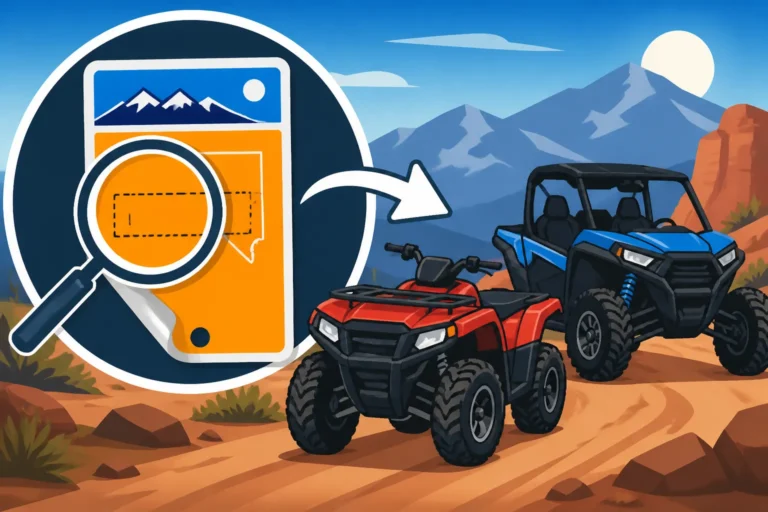
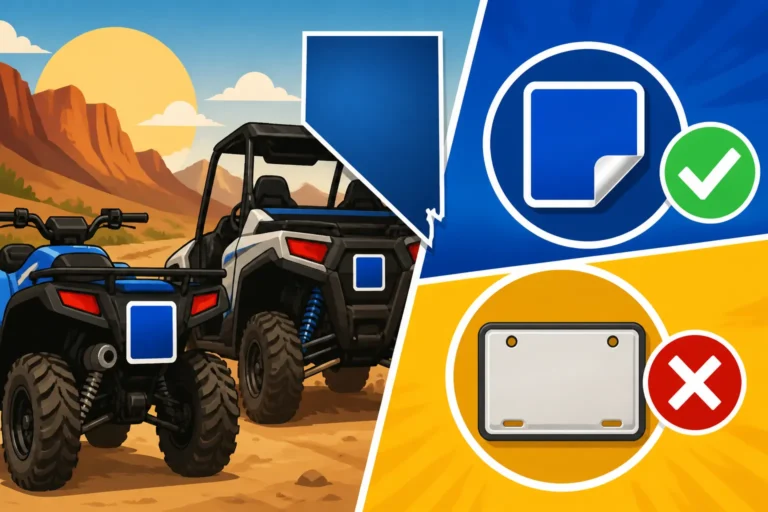
Nevada uses a decal system to signify that an off-highway vehicle is properly registered. Unlike street-legal vehicles that get a metal license plate, side-by-sides, ATVs, and dirt bikes receive a colorful sticker that's renewed periodically. This decal is your official permission slip to ride on designated public lands across the state. Without it, you could face penalties, so it's essential to understand its purpose and how to display it correctly.
The decal itself contains important information, including your registration number and the expiration date. It's designed to be clearly visible, allowing law enforcement and land managers to quickly verify that your machine is compliant. [What a Nevada OHV Decal Actually Proves] is that you've paid your dues and your machine is recognized by the state as a legal off-highway vehicle for use on public trails. Make sure to affix it securely in the specified location on your side-by-side – typically the left rear, in a spot that won't easily get covered by mud or obstructed by accessories.
Most decals are issued for either a one-year or three-year period, giving you flexibility. Choosing a three-year decal can be more convenient as it reduces the frequency of renewals, but it's a larger upfront cost. Whichever option you choose, just be mindful of the expiration date. Letting your registration lapse is an easy way to run into trouble out on the trails.
Common Pitfalls and How to Avoid Them
Even with the best intentions, it's easy to stumble into common pitfalls during the OHV registration process for a side-by-side. One of the most frequent issues is incomplete paperwork. Forgetting a signature, leaving a field blank, or submitting illegible forms can all lead to your application being rejected or delayed. Always take your time filling out forms, and consider having someone else review them before submission.
Another common problem arises with the VIN inspection. Sometimes, owners assume the VIN is easy to find, only to discover it's hidden or obscured. Before you even think about the inspection, locate your side-by-side's VIN and ensure it's clean and readable. If it's corroded or damaged, you might need to address that before an inspector can verify it. Forgetting to get the proper VIN verification form completed by an authorized party is also a big one, so make sure you confirm they are authorized to do so.
Lastly, don't underestimate the importance of the title. Buying a side-by-side without a clear, properly signed-over title is one of the biggest risks you can take. If the seller can't produce a title or claims it was "lost," walk away or insist they obtain a duplicate title before you complete the purchase. This is where a reliable bill of sale, perhaps generated through a service like LawDepot, can bridge some gaps, but it’s rarely a substitute for a missing title when it comes to official state registration. Your [Titling an Off-Highway Vehicle in Nevada] is just as important as the registration itself.
Renewing Your Nevada OHV Decal for Your UTV
Congratulations, you've successfully registered your side-by-side! But the journey doesn't end there. Just like your driver's license or car registration, your OHV decal has an expiration date, and you'll need to renew it periodically to keep your UTV legal on Nevada's trails. Thankfully, renewing is generally much simpler than the initial registration process, as most of the heavy lifting for proof of ownership is already done.
Nevada typically sends out renewal reminders before your decal expires, which is a helpful nudge to get the process started. However, these reminders can sometimes get lost in the mail, or you might simply overlook them. It's always a good idea to mark your calendar or set a reminder on your phone for a month or two before your decal's expiration date. Being proactive ensures you don't accidentally ride with an expired decal, which could result in a citation. You can usually find out [What Nevada's OHV Renewal Form Asks For] to prepare.
Renewing your Nevada OHV decal can often be done online or by mail, offering convenient options that save you a trip to an authorized agent. You'll typically pay a renewal fee, and then a new decal will be mailed to you. Once you receive your new decal, make sure to remove the old one and affix the new one in the correct location on your side-by-side. This simple step keeps you compliant and allows you to continue exploring Nevada's incredible backcountry with peace of mind. For more details on the process, look up [Renewing a Nevada OHV Decal].
| Requirement | New Purchase (Dealer) | New Purchase (Private) | VIN Inspection Method | Proof of Ownership | Typical Decal Duration |
|---|---|---|---|---|---|
| Application Form | OHV-001 (Dealer may submit) | OHV-001 | Licensed OHV Dealer or Law Enforcement | Sales Contract | 1 or 3 Years |
| VIN Verification | Dealer completes | Owner arranges | Licensed OHV Dealer or Law Enforcement | Titled Owner's Name on Doc | 1 or 3 Years |
| Title | Dealer applies for | Original, signed over | N/A | Original Title, Bill of Sale | 1 or 3 Years |
| Proof of Purchase | Sales Invoice | Bill of Sale (LawDepot example) | N/A | Sales Invoice, Bill of Sale | 1 or 3 Years |
| Fees | Registration, title, dealer submission | Registration, title (higher fee possible for out-of-state) | Inspection fee, registration, title | N/A | Varies by choice |
Disclaimer
This article is for general informational purposes only and does not constitute professional advice. Laws, prices and regulations vary by location and change over time. Consult a qualified professional for guidance on your specific situation.