Nevada Rules for Riding a Ranch Road You Do Not Own
Nevada ranch road rules explain how off-road riders can identify private property, recognize BLM land, and avoid legal trouble.
Legal here, illegal one county over.
What each state allows, the mirrors, horn and signals a conversion requires, and the county and city overrides that quietly change the answer.

Nevada ranch road rules explain how off-road riders can identify private property, recognize BLM land, and avoid legal trouble.
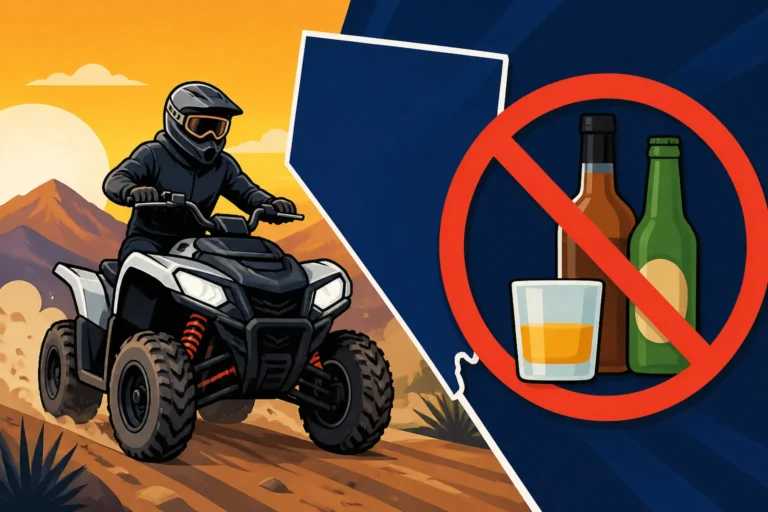
Nevada DUI laws apply to ATV and UTV riders, meaning a blood alcohol content of 0.08 percent or higher makes off-highway driving illegal.
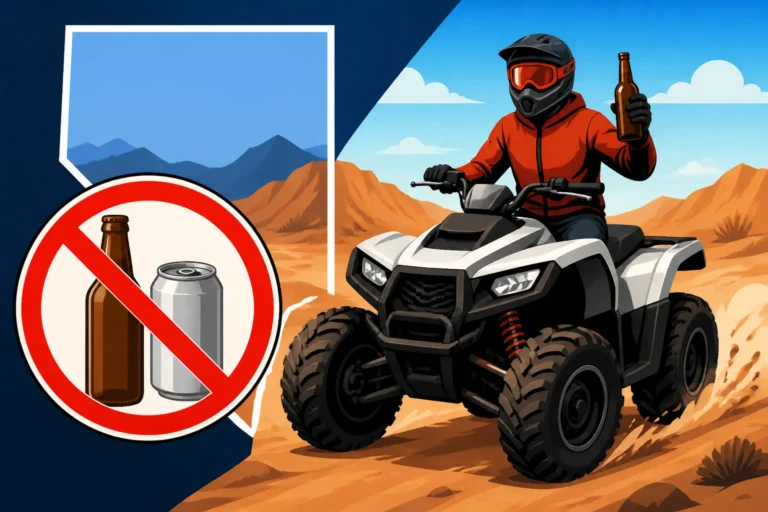
Nevada open container laws prohibit open alcoholic beverages on public roadways and roads used by off-highway vehicles and ATVs.

Nevada canal and levee road regulations explain when off-highway vehicle riders can legally use maintenance routes.

Nevada State Park regulations prohibit off-road OHV riding, permitting only street-legal vehicles on designated paved and graveled roads.
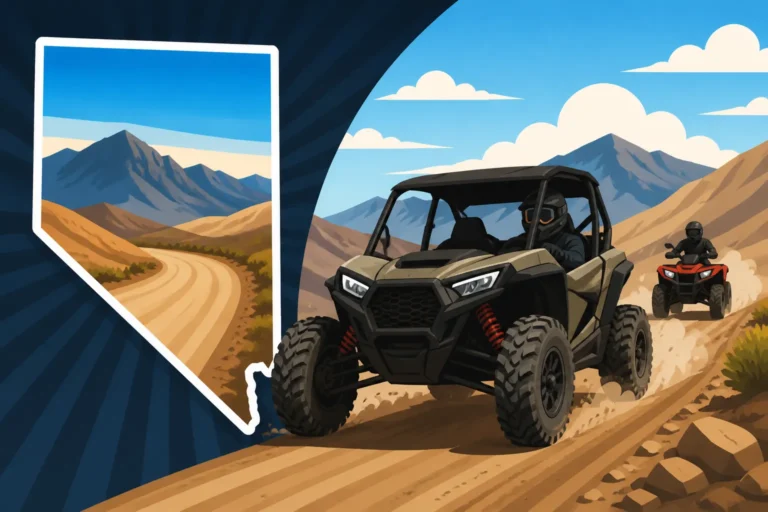
Nevada rules regarding off-highway vehicle operation on graded county roads under NRS 490 and local ordinances.
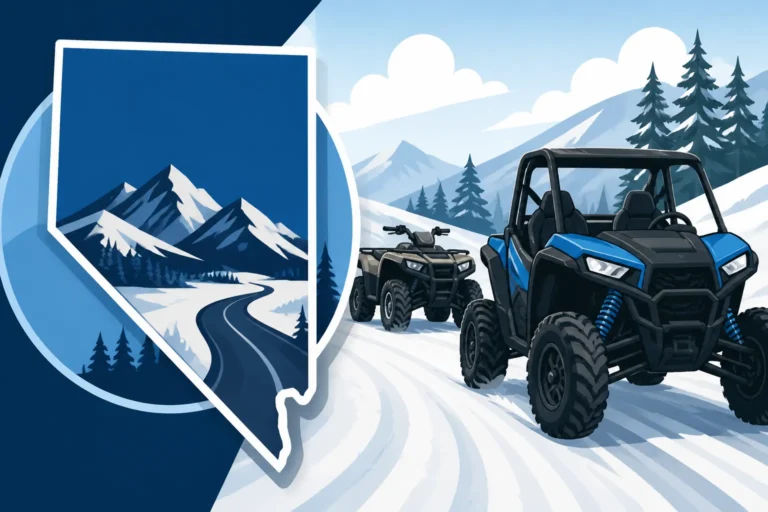
Nevada laws for riding large all-terrain vehicles on snow-covered county roads include specific vehicle definitions and two-mile pavement limits.

Nevada off-highway vehicle regulations explain public and private dirt road access, county road distinctions, and legal camping travel requirements.
Nevada firearm carry laws for off-highway vehicles explain open and concealed rules on public lands and state parks.
Nevada UTV towing regulations explain legal trail use, public road limits, and large ATV weight requirements from 900 to 2500 pounds.