Headlight Aim and the 500-Foot Rule
Nevada headlight requirements for street legal ATVs and UTVs include the 500-foot visibility rule and proper aiming methods.
Legal here, illegal one county over.
What each state allows, the mirrors, horn and signals a conversion requires, and the county and city overrides that quietly change the answer.
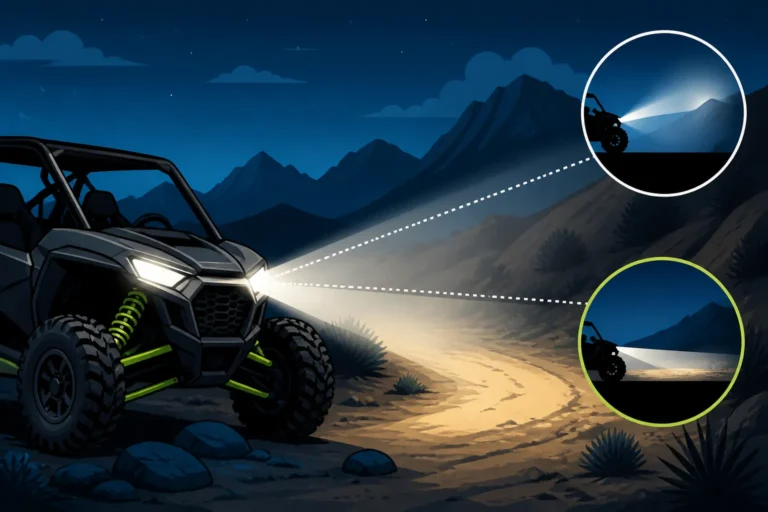
Nevada headlight requirements for street legal ATVs and UTVs include the 500-foot visibility rule and proper aiming methods.

Nevada forest road rules explain federal travel plans, state laws, and large all terrain vehicle decals for off-highway vehicles.
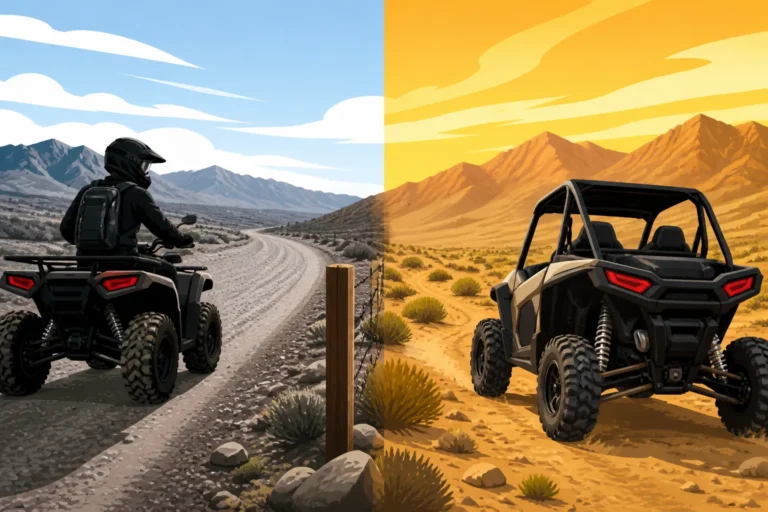
Nevada land ownership boundaries between county roads and Bureau of Land Management property, plus visual clues for riders.
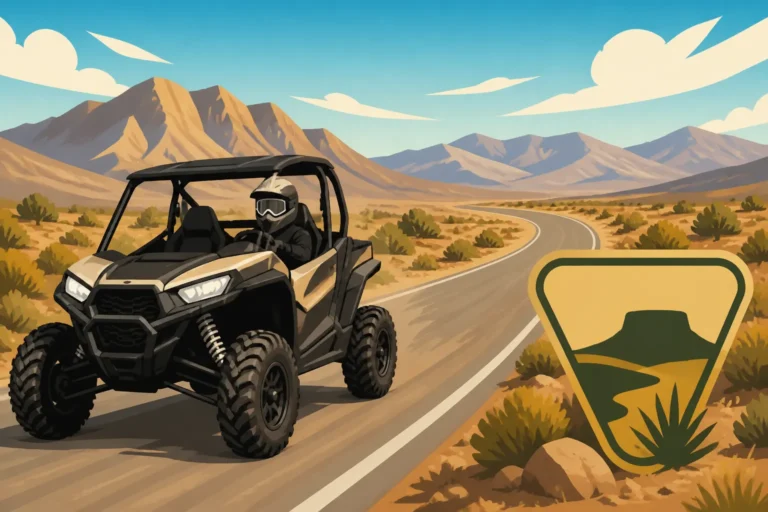
Nevada OHV riders crossing from county roads to Bureau of Land Management property must obey designated route rules.
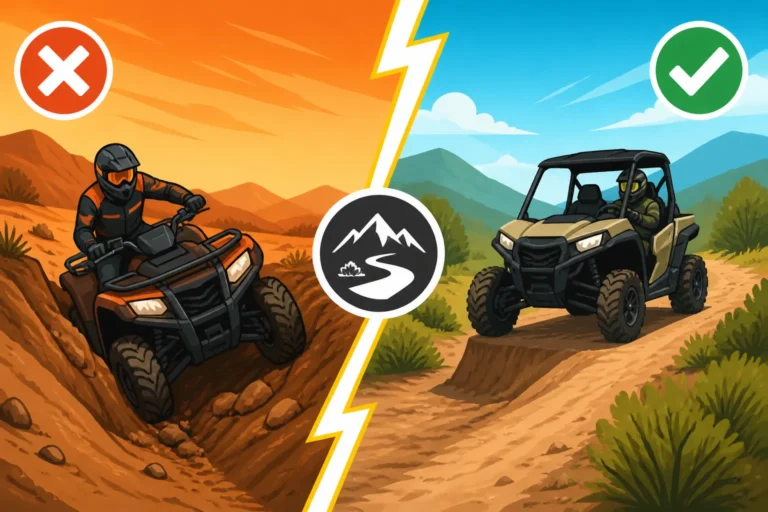
Nevada off-highway vehicle laws explain whether riding an ATV or UTV on road shoulders and drainage ditches is legal.

Nevada law NRS 490.060 allows certain off-highway vehicles to operate on paved roads for up to two miles to connect trails.
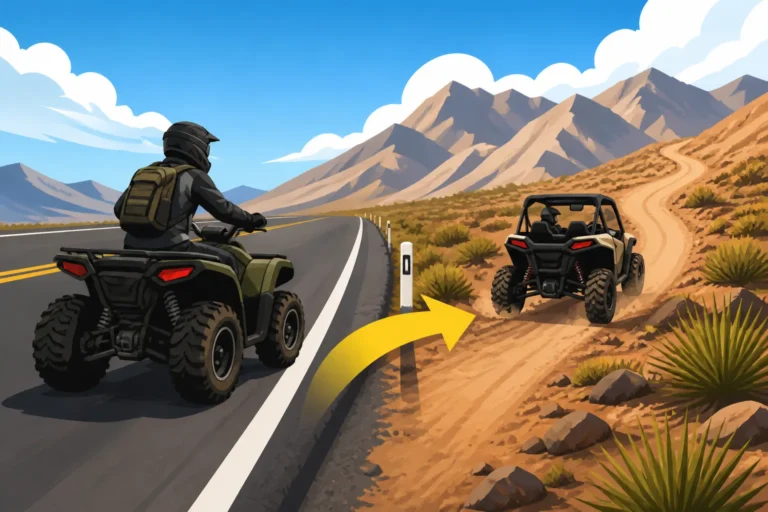
Nevada off-highway vehicle regulations explain if riding ATVs and UTVs on public paved road shoulders is legal.

Nevada road rules for carrying children in the back seat of large all-terrain vehicles with four or more seats.

Nevada law regarding riding two-up on a county road explains vehicle requirements and passenger rules for ATVs and UTVs.

Nevada law requires teenagers operating large all-terrain vehicles on county roads to hold a valid driver license and maintain adult supervision.