Liability Waivers at a Rental Counter
A rental-counter waiver can look like a quick signature, but it may decide who pays after a rollover, collision or broken part. In Nevada, the exact terms depend on the rental company and the agreement, not on a single statewide waiver form. Before signing, separate damage protection from insurance, ask what is excluded and confirm what you must do if something goes wrong.
What a rental-counter waiver usually means
A waiver is a contract term that may limit or change what the rental company can charge you for damage to its machine. It is not automatically insurance, and the word “waiver” does not tell you how much protection you are getting. Read the actual agreement and any separate damage-protection document.
Rental companies may use different names, such as a damage waiver, damage protection plan or collision waiver. The name alone is not enough to establish what it covers. One agreement might reduce your responsibility for certain damage; another might apply only after a deductible, or exclude common riding situations. Some may not be optional. Ask the company to explain the specific terms in writing before you pay or sign.
A waiver for damage to the rented ATV or UTV is also different from liability coverage. Damage protection may address the rental company’s machine, while liability insurance generally concerns claims by other people for injury or property damage. Medical expenses for you or your passengers may be handled under yet another policy, if one applies. Do not assume that a waiver covers all three categories.
| Term or document | What it may address | What to confirm |
|---|---|---|
| Damage waiver or protection plan | Damage to the rental machine | Covered events, exclusions, deductible and maximum responsibility |
| Liability insurance | Claims involving injury or damage to someone else’s property | Who is insured, where coverage applies and any limits or exclusions |
| Personal accident or medical coverage | Certain injuries to the renter or passengers | Who qualifies, what expenses are covered and how claims are made |
| Rental agreement | Your overall duties and restrictions | Approved routes, riders, reporting steps, fees and return conditions |
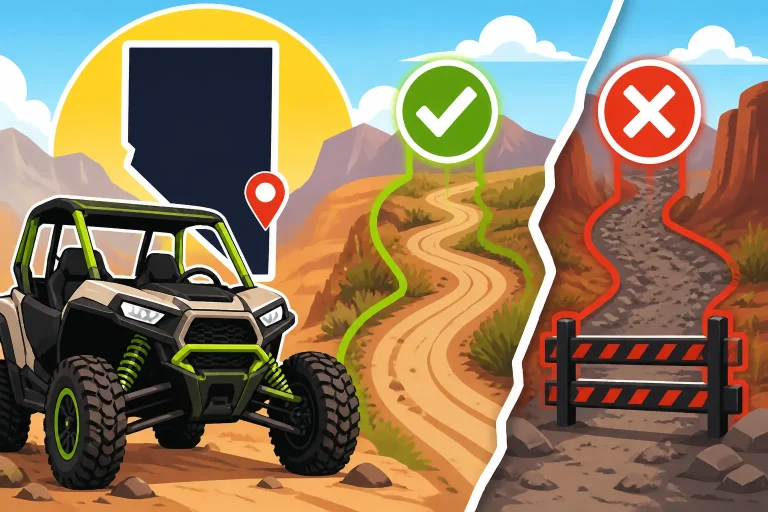
This distinction matters on a Nevada ride because a machine can be damaged without anyone else being involved. A rollover on a permitted trail, for example, may trigger a different contract provision from a collision with another vehicle. Similarly, the fact that a route is open to riding does not prove that your rental agreement allows the machine to be taken there.
If you are renting rather than bringing your own machine, start with [Renting an ATV in Nevada] and What a Nevada Rental Includes. They can help you identify what to ask about before you reach the counter. For a closer look at the contract itself, see What a Rental Agreement Covers.
Questions to ask before signing
Ask the staff member to point to the relevant clause, not just summarize it verbally. If the answer is “you should be fine,” that does not tell you what happens after a claim. You want to understand the situations that change your financial responsibility and the steps required to qualify for any protection.
What damage is covered, and what is excluded?
Ask whether protection applies to collision, rollover, theft, vandalism, fire, water damage, broken windshields, tires, wheels, undercarriage damage and accessories. These are examples to check, not a universal list of coverage. A contract may treat individual parts or events differently.
Pay particular attention to exclusions tied to how the machine is used. A company may limit or deny protection if you:
- Ride outside an approved area or on a prohibited route
- Use the machine in a way the contract forbids, such as certain dune or rock-crawling activity
- Let an unauthorized person drive
- Carry more passengers or weight than permitted
- Ride under the influence or behave recklessly
- Fail to report an incident promptly
- Ignore instructions after damage occurs
Do not assume that a guided tour, a rental-company recommendation or a trail’s public availability overrides a written restriction. If you plan to ride at a particular place, ask whether the rental agreement permits it. The terms in What a Rental Contract Says About Dunes are especially relevant if dunes are part of your plan.
Is there a deductible or a limit?
A waiver may reduce your responsibility without eliminating it. Ask whether you would still owe a deductible, whether the deductible applies per incident or per damaged item, and whether your responsibility can exceed that amount in certain circumstances. Confirm whether towing, recovery, transportation, downtime, cleaning or administrative charges are treated separately from repair costs.
Ask for examples. “What would I owe if the machine rolls over on an approved route?” is more useful than “Does the waiver cover rollovers?” The first question encourages the staff member to explain how the waiver, exclusions and other fees work together. If an answer is unclear, ask them to show you where the contract says it.
Does it cover people or only the machine?
Ask whether the company offers liability coverage or medical coverage separately, and whether either is included in the rental price or must be purchased. Find out whether the coverage applies to every permitted driver and passenger, and whether it applies during the entire rental period and on the approved riding area.
Do not treat the damage waiver as proof that you are insured against a claim by another rider. Likewise, your personal auto or health insurance should not be assumed to cover an off-highway rental. If you plan to rely on an outside policy, contact that insurer before the ride and describe the actual activity and vehicle. The contract can also set requirements that remain your responsibility even if you have separate coverage.
What must you do after an incident?
Ask how soon you must notify the company, which phone number to call and whether you must contact law enforcement or another authority in particular circumstances. Clarify whether you should move the machine, arrange recovery or wait for company instructions. Follow the written procedure, and keep a record of whom you contacted and when.
The same questions apply to a breakdown that does not involve a collision. A mechanical failure may be handled differently from damage caused by impact or misuse. Ask who can authorize a repair or recovery and whether you may arrange one yourself. If you act without approval, you could create a dispute over the charge or the waiver.
How to review the agreement at the counter
A busy counter and a group waiting to leave can make it tempting to sign quickly. Take a few minutes to read the waiver and rental agreement before handing over a signature. If staff cannot provide time to review the terms or answer basic questions, consider whether you are comfortable proceeding.
- Confirm who may drive. Check that every intended driver is named or otherwise approved under the agreement. Do not assume a friend or family member can take a turn.
- Check the permitted riding area. Ask for the specific boundaries or route restrictions, especially if you will ride outside a guided tour. A verbal description can be easy to misunderstand, so request a map or written directions where available.
- Read the exclusions and charges. Look for damage exclusions, deductibles, recovery costs, cleaning requirements, late-return terms and any separate charges for prohibited use.
- Photograph the machine before departure. Record existing scratches, cracks, worn tires and other visible condition issues. Make sure the company notes any damage it has not already documented. Keep the photos until the rental is fully closed out.
- Check the return process. Ask when and where the machine must be returned, how it should be fueled or cleaned, and whether an employee will inspect it with you. Photograph the machine again at return and keep a copy of the completed paperwork.
- Keep the documents accessible. Save the signed agreement and the company’s incident number or contact details. A phone photo can be useful, but it should not replace any document the company requires you to carry. Paperwork a Nevada Rental Machine Carries explains why it is sensible to know what documents accompany a rental.
If you do not understand a clause, ask for a plain-language explanation and have the staff member identify the matching written language. If the explanation and contract appear inconsistent, ask which one controls and request written clarification before signing. Do not rely on a promise that is not reflected in the agreement.
You can also ask whether you may decline a protection option and what changes if you do. A rental company may have separate terms for renters who accept or decline a product. Avoid assuming that a credit card benefit, personal policy or membership program will pay a claim; verify eligibility and exclusions with the provider before relying on it. A card benefit that covers a conventional rental vehicle, for instance, may not apply to an off-highway machine.
When damage happens
First, make sure everyone is safe and get medical help if needed. Do not put yourself or others at risk to protect the machine or gather evidence. Once the immediate safety issue is handled, follow the rental company’s reporting instructions and any applicable legal requirements.
Record the location, time and circumstances as accurately as you can. Take photographs if it is safe to do so, including the machine, the surrounding area and any other property involved. Get contact information from other people involved and avoid guessing about the cause or agreeing to pay an amount before you understand the process. Promptly notify the rental company, even if the damage appears minor.
Ask for an incident report or written confirmation that you reported the problem. Keep receipts and records of calls or messages. If the company says the waiver does not apply, ask which contract provision it is relying on and request an itemized explanation of any charge. A disagreement may turn on an exclusion, an unapproved driver, a route restriction or a reporting requirement, so the documents and timeline can matter.
A waiver cannot make unsafe riding safe, and it does not replace following the rental company’s instructions. Before setting off, make sure the driver understands the controls, passengers know how to use required safety equipment, and everyone knows where riding is allowed. If you are uncertain about whether a machine or route is suitable for your group, ask before accepting the keys. For other rental terms that can affect the bill after a ride, see Nevada Rental Damage Charges and Nevada Rental Insurance and Waivers.
A good counter conversation is specific: what is protected, what is excluded, what you may still owe, and what you must do after an incident. If the answers remain unclear, taking more time or choosing another rental arrangement is safer than signing based on assumptions.
Disclaimer
This article is for general informational purposes only and does not constitute professional advice. Laws, prices and regulations vary by location and change over time. Consult a qualified professional for guidance on your specific situation.