Camping at Sand Mountain Without Water
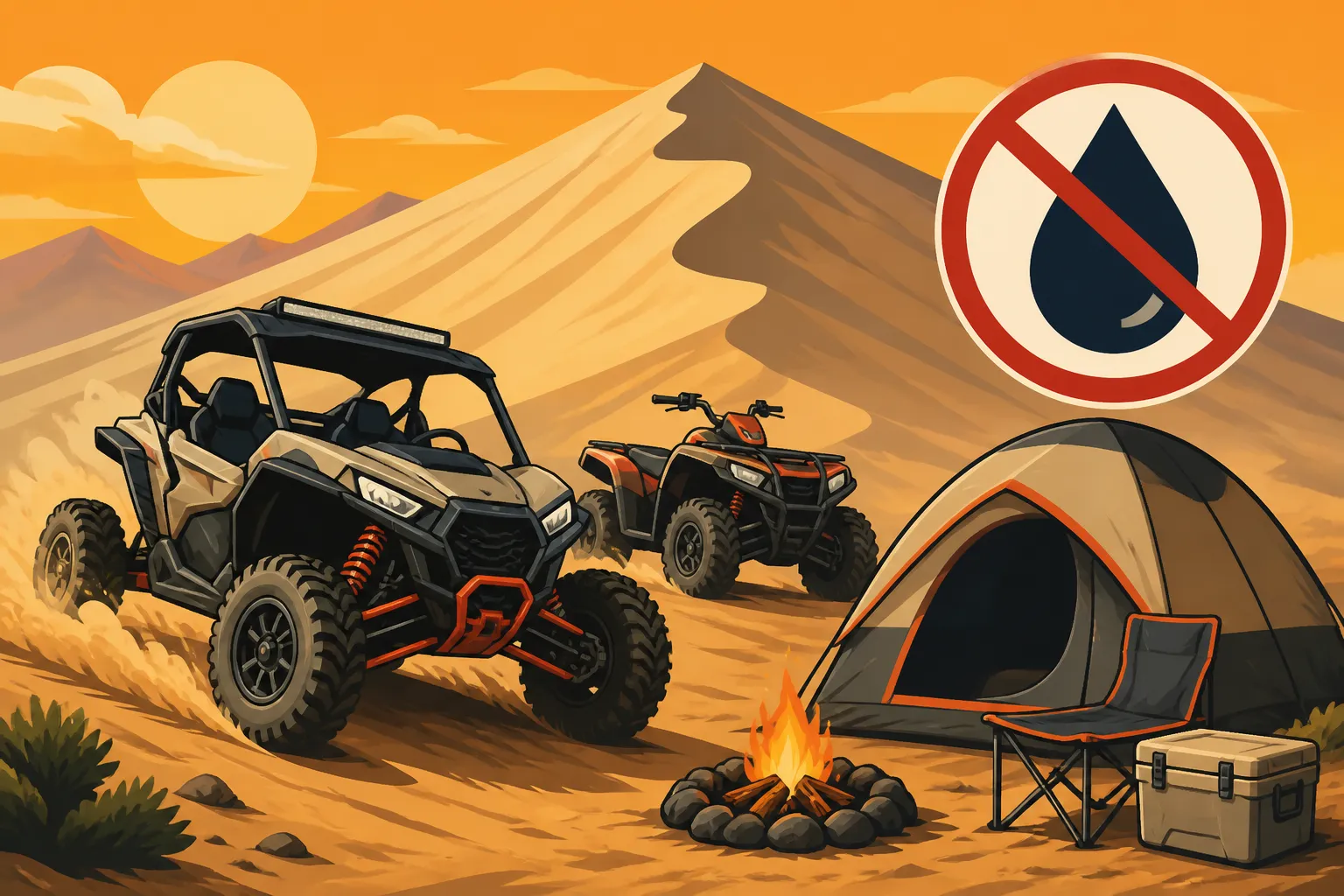
Sand Mountain Recreation Area can feel wonderfully remote, but that also means you can’t count on finding drinking water when you arrive. If you’re camping near Fallon, Nevada, plan to bring everything you’ll drink, cook with, and use for basic cleanup. This guide covers how to estimate supplies, transport and store them, and make a practical no-water camp plan.
Plan your water before you leave Fallon
Work out what your group will actually use
Start with the people, the number of nights, and the activities you have planned. Drinking water is only part of the total: you may also need water for cooking, brushing teeth, washing hands, and cleaning food-preparation items. A dune ride in hot, dry conditions can increase your needs, so don’t base your supply on a cool evening at camp.
A simple planning method is to list each person and each use, then add a reserve. For example, a group of four staying two nights should count water for four people across the full trip—not just for the time spent at camp. Add extra for a longer ride day, delays, a spill, or a container that becomes unusable. It’s better to return with some water than to discover you have none left before packing up.
Keep drinking water separate from water intended for washing or other non-drinking tasks. Clearly label containers so nobody has to guess which one is safe to drink from. If you’re traveling with children, let them know which bottles and jugs are for drinking and where the backup supply is kept.
| Water use | Planning question | Practical approach |
|---|---|---|
| Drinking | How many people will be riding and camping? | Bring a generous supply and keep some immediately accessible |
| Cooking | What meals need water for preparation? | Check recipes before leaving and include the required amount |
| Hand and dish cleanup | Can you reduce water use without skipping hygiene? | Use minimal water and pack out waste as required |
| Emergency reserve | What if you’re delayed or a container leaks? | Keep backup water separate from everyday-use containers |
| Vehicle or equipment needs | Does a machine or support vehicle need its own supply? | Keep machine-related needs separate from potable water |
There is no dependable faucet to top up from at the recreation area, so treat your supply as finite. For more context on the area’s facilities, read Vault Toilets and No Water at Sand Mountain and Sand Mountain's Six Vault Toilets. The vault toilets can help with basic sanitation, but they are not a source of water.
Buy and fill supplies before the final drive
Fallon is the sensible place to finish errands, check your containers, and fill water before heading toward Sand Mountain. Don’t assume you’ll find a convenient place to refill close to the dunes. A last-minute stop can also be stressful if your group is trying to meet others, reach camp before dark, or unload several machines.
Use sturdy, clean containers with secure lids. Smaller jugs are easier to lift and pour than one very large container, while a larger sealed reservoir can reduce the number of separate containers you need to manage. Whichever setup you choose, test it at home: fill it, place it in the position it will ride, and check for leaks after a short drive.
Make water easy to reach without unpacking your whole vehicle. Keep the day’s drinking supply near the cooler or riding gear, and secure the reserve separately. If you’re planning the approach from town, [Driving From Fallon to Sand Mountain Recreation Area] is a useful related topic to review before setting off.
Allow for riding, heat, and unexpected delays
The amount of water you bring should reflect more than the time spent sitting at camp. Riding, walking across sand, loading or repairing machines, and helping another rider can all make a day more demanding. In warm weather, pace the day and take breaks rather than waiting until someone feels depleted to stop for a drink.
Build your plan around the possibility that the day won’t go exactly as expected. A machine may need attention, a rider may take longer to return, or wind and dust may slow down packing. Keep enough water available for the group to handle a delay without dipping into the last container too early. Water and Fuel Planning in Nevada and [Carrying Water for a Desert Ride] can help you think through supplies beyond the campsite.
Pack and protect water for a dry campsite
Choose containers that suit your vehicle
A water jug that fits neatly in a garage may be awkward in a packed truck or trailer. Before the trip, measure the space where it will go and leave room to secure it. Containers should not slide into riding gear, tools, or loose cargo when you brake or turn. Keep them away from sharp edges and hot equipment that could damage plastic or affect the taste of the water.
Think about how you’ll dispense water once you arrive. A spigot makes it easier to fill bottles or a cooking pot without lifting a heavy container. If your group uses a pump or portable dispenser, check that it works before departure and bring any batteries or parts it needs. A backup way to pour water is useful if a tap breaks or a pump fails.
Don’t overload one person with a container they can’t lift safely. Several smaller jugs are often easier to carry from the vehicle to the camp area and easier to divide between vehicles. For a larger group, consider assigning one person to check the reserve at the start and end of each day so everyone knows what remains.
Keep drinking water clean and easy to identify
Dust is part of a dune trip, and open containers can collect it quickly. Keep lids closed when water isn’t being poured, and avoid dipping cups or hands into a shared container. Pour water into personal bottles or clean cups instead. A little care prevents the whole group from having to question whether the supply is still clean.
Store drinking water out of direct sun where possible. A shaded, secure spot inside a vehicle or under suitable covered storage can help keep containers more comfortable to use. Don’t leave a jug where it can be kicked, driven over, or buried under bags and tools. If a container leaks or becomes visibly contaminated, set it aside rather than mixing it with the clean supply.
A mapping app such as onX Offroad can be useful for organizing an offline route and keeping your campsite area in view when cell coverage is limited. Download the information you need before leaving service, and don’t treat a phone map as a substitute for carrying enough water or telling someone your plans. Sand Mountain's 4,795 Acres offers more background on the recreation area’s scale.
Make a low-water routine for camp
When there is no running water, small habits matter. Use a hand sanitizer suitable for the task when appropriate, and reserve clean water for drinking, cooking, and essential handwashing. For meals, choose foods that don’t require extensive washing or large amounts of water to prepare. Pack the cooking plan before leaving so you know what each meal will use.
For dishes, scrape food into your trash bag before wiping cookware clean. Use as little water as practical, and don’t pour food scraps or wash water onto the ground. Pack out waste and follow the site’s rules for disposal. These steps help conserve water and keep a shared recreation area cleaner for the next group.
A simple camp station can prevent waste: keep the clean-water jug, hand-cleaning supplies, and trash bag together, but separated enough that nobody confuses them. Give everyone the same quick instructions when you arrive. That’s especially helpful with a larger group, where one person may unknowingly use the drinking-water reserve to rinse a dusty pan.
Set up camp with the site and conditions in mind
Know what facilities can and cannot do
Sand Mountain is a popular riding and camping destination, but a facility’s presence doesn’t mean every camp need is covered. Vault toilets are not washrooms with taps, and you should not expect potable water, showers, or a place to refill containers. Arrive prepared to be self-sufficient for your whole stay.
Before choosing a spot, check current access information and follow posted signs. Use the established camping areas and avoid blocking routes, other camps, or equipment access. Conditions and site management can change, so confirm the applicable rules before your trip rather than relying on a campsite description from an old post.
If you’re comparing this trip with other places to stay, Camping at Nevada OHV Areas and Nevada Dispersed Camping Rules for Riders are useful topics to review. They can help you think through general camping responsibilities, but always follow the signs and instructions for the specific area you visit.
Keep sanitation manageable without running water
A no-water campsite calls for a simple cleanup plan. Bring enough hand-cleaning supplies, trash bags, and any other items your group needs to manage food and personal waste responsibly. Keep food scraps contained, secure trash against wind, and pack everything out as required. Desert wind can scatter lightweight packaging before you realize it has blown away.
Avoid using more water than necessary for washing. A small amount in a controlled basin is easier to manage than repeatedly pouring from a large jug. Dispose of wastewater only where permitted, and never assume that pouring it onto sand is acceptable. Check the rules for the area and keep soaps or other products away from places where runoff could create a problem.
Toilets may be available, but they do not remove the need to bring your own hygiene supplies. Pack toilet paper and hand-cleaning products, and make sure children know where the facilities are and how to use them. If a facility is closed or out of service, your group should already have a lawful backup plan.
Check weather, closures, and timing
Desert conditions can change how comfortable a trip feels and how quickly your group uses supplies. Heat, wind, dust, and a long ride day can all affect the plan. Check conditions before leaving and be ready to shorten the ride or change your schedule if the weather makes the day uncomfortable or unsafe.
For a first visit, consider arriving with enough daylight to choose a site, secure the machines, and organize water before dark. Holiday periods can bring more traffic and busier camping areas, so allow extra time and avoid assuming your preferred spot will be open. [Sand Mountain on a Holiday Weekend] covers some of the planning considerations for a busier visit. You can also review Sand Mountain Day Use Hours before setting your riding schedule.
Use a practical checklist before leaving
Do a final water and gear check
Before you pull out of Fallon, count the people, nights, and planned riding days one more time. Confirm that every container is full, clean, closed, and secured. Check the reserve separately from the water you expect to use first. If a jug is shared across two vehicles, make sure both drivers know where it is and who is responsible for bringing it.
A final checklist is more reliable than assuming someone else packed the basics:
- Count drinking water for every person and every planned day.
- Add a separate reserve for delays or unexpected use.
- Include water needed for cooking and essential cleanup.
- Check that containers are clean, leak-free, and tightly sealed.
- Secure water so it cannot tip, slide, or be crushed.
- Keep a day supply accessible and the backup supply protected.
- Pack trash bags, hand-cleaning supplies, and meal items that use little water.
- Confirm route, access, and site information before leaving cell service.
- Tell someone outside the group where you’re going and when you expect to return.
An offline map from onX Offroad can help you review your route before you lose service, but download it in advance and carry a backup plan for navigation. Make sure your group agrees on a meeting point and what to do if riders become separated. Good preparation matters more in a remote area because a simple delay can become a bigger inconvenience when there’s no nearby place to refill supplies.
Know when to change the plan
If your group arrives with less water than expected, don’t treat the shortage as something to solve by stretching everyone’s supply indefinitely. Reduce or cancel riding, keep people together, and prioritize getting to a dependable source or leaving the area safely. The same goes if weather, equipment trouble, or a health concern makes the original plan unrealistic.
Parents and group leaders should make the water plan clear before the trip begins. Each rider should know where their personal drinking water is, how to access the reserve, and who to tell if supplies are running low. A written plan can prevent confusion when several people are tired, dusty, and trying to pack up at once.
Camping at Sand Mountain without water can still be comfortable when you arrive prepared. Bring a realistic supply, protect it from dust and damage, use it thoughtfully, and verify site rules before you go. That turns a remote-camp inconvenience into a manageable part of the trip rather than an avoidable problem.
Disclaimer
This article is for general informational purposes only and does not constitute professional advice. Laws, prices and regulations vary by location and change over time. Consult a qualified professional for guidance on your specific situation.