Buying a Used ATV Privately in Nevada
Buying a used ATV or UTV from a private seller in Nevada can feel a bit like navigating a maze without a map. You're probably looking for that perfect machine to hit the dunes or trails, but you're also worried about getting stuck with a lemon, or worse, a machine with murky paperwork that leaves you unable to register it. This guide is here to cut through the confusion, walking you step-by-step through the process to ensure your private purchase is smooth, legal, and puts you on the trail with confidence.
The All-Important Paperwork: What You Absolutely Need
When you're shelling out your hard-earned cash for an off-highway vehicle (OHV), the paperwork might seem like a secondary concern to the roar of the engine or the gleam of the tires. But believe me, as someone who's seen plenty of riders get into a bind, it's the most critical part of the transaction. Without the right documents, that sweet deal can quickly turn into a headache you can't ride away from.
The Nevada OHV Title: Why It's King
In Nevada, the Certificate of Title is the absolute bedrock of OHV ownership. Think of it as the birth certificate and legal deed rolled into one for your ATV or UTV. It proves who legally owns the machine, plain and simple. When you're buying privately, the seller must be the person whose name appears on this title, or they must have proper legal documentation to act on behalf of the titled owner. If the seller can't produce a title, or the name on it doesn't match their ID, consider that a colossal red flag.
Sometimes, sellers might claim they "lost" the title. While this can happen legitimately, it should still be a point of concern for you as the buyer. They need to apply for a duplicate title from the Nevada Department of Motor Vehicles (DMV) before you complete the sale. This ensures a clean transfer of ownership. It’s also worth noting that some older machines, particularly those manufactured before 1976, may not have been issued a title in Nevada, as they predate certain titling requirements. In these specific cases, other forms of proof of ownership become paramount, but for most modern ATVs and UTVs, the title is non-negotiable. You can learn more about [What an OHV Title Looks Like] to familiarize yourself with the document.
Crafting a Solid Bill of Sale
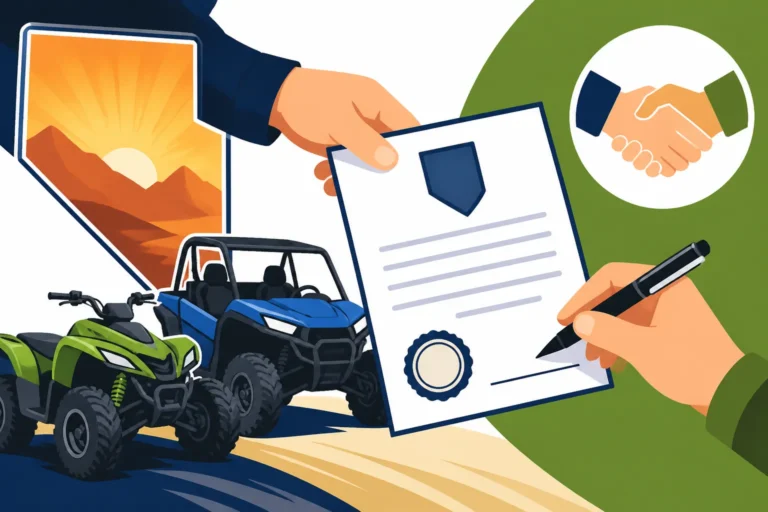
Even with a perfectly clear title, a well-drafted bill of sale is your best friend when buying a used ATV privately. While it might not always be strictly required by the DMV for title transfer, it provides a written record of the transaction, protecting both you and the seller. Imagine a scenario where a dispute arises about the sale price or the condition of the machine—without a bill of sale, it's often your word against theirs.
A good bill of sale should include several key pieces of information. This includes the full names and addresses of both the buyer and seller, the date of the sale, and the agreed-upon purchase price. Crucially, it needs a detailed description of the ATV or UTV, including its make, model, year, and—most importantly—the Vehicle Identification Number (VIN). Adding an "as-is" clause is also common in private sales, stating that the buyer is accepting the machine in its current condition with no warranties from the seller. If you're unsure how to draft one, resources like LawDepot offer customizable bill of sale templates that can cover all these bases, giving you peace of mind.
Proof of Ownership Beyond the Title
There are rare situations where a title might not be present, or additional documentation is needed to support the transfer. As mentioned, very old machines might fall into this category, or perhaps a machine was acquired through unusual circumstances, like inheritance. In cases where a title is genuinely missing, the seller needs to initiate the process for a [Replacing a Lost Nevada OHV Title] before the sale. This often involves specific forms and potentially a waiting period.
If a seller claims "no paperwork at all," this is a huge red flag that should make you walk away. While some states have different rules, Nevada takes OHV ownership seriously. Buying a machine without any proof of ownership is a risky gamble; you could inadvertently purchase stolen property, or find yourself unable to register the machine in your name, rendering it useless for legal riding. Even if the machine seems perfectly fine, the absence of proper documentation means you have no legal claim to it, and that's not a position any rider wants to be in. Always prioritize machines with a clear paper trail, even if it means passing up a seemingly great deal on an undocumented one.
Verifying the Machine and the Seller
Once the paperwork looks promising, it's time to dig into the machine itself and make sure the person selling it is legitimate. This part of the process is where you can save yourself a ton of future headaches and potential financial loss. A thorough inspection and a few careful questions can make all the difference.
The VIN Check: Your Best Defense Against Trouble
The Vehicle Identification Number (VIN) is more than just a random string of characters; it's the unique identifier for your ATV or UTV. Verifying the VIN is absolutely non-negotiable when buying privately. First, ensure the VIN on the physical machine matches the VIN listed on the title and any bill of sale. Sometimes unscrupulous sellers might try to swap titles or alter numbers. Pay close attention to the stamping—look for any signs of tampering, scratches, or mismatched fonts.
Beyond matching numbers, you need to run the VIN through a theft database. While some states offer public access, often an authorized VIN check service can provide a report that reveals if the machine has been reported stolen. This small step can save you from inadvertently buying hot property, which could lead to you losing both the machine and your money without recourse. You can also ask about [Checking an ATV VIN Before You Buy] to understand common practices. Remember, a Nevada Deputy or certified dealer can inspect the VIN as part of the registration process, but doing your own preliminary check is crucial for your peace of mind before you hand over any money.
Assessing the Machine's Condition
Now for the fun part: checking out the actual ATV or UTV! This isn't just about kicking the tires; it's a comprehensive inspection that requires a keen eye and a bit of mechanical savvy. Start with the frame – look for cracks, bends, or poor welds, which can indicate serious accidents or abuse. Inspect the suspension components, including shocks, A-arms, and tie rods, for damage or excessive play. Tires should have good tread and no dry rot.
Move on to the engine. Look for leaks (oil, coolant, fuel), cracked hoses, or loose wires. Check the oil level and color – clean oil suggests the seller maintained it, while very dark, sludgy oil could mean neglect. Ask the seller to start it cold; listen for unusual noises like knocking, ticking, or excessive smoke from the exhaust. If possible, take it for a test ride, but only if it's safe and legal to do so. Pay attention to how it shifts, brakes, and handles. Does it pull to one side? Are the brakes spongy? Does the throttle stick? These are all indicators of potential issues that could cost you money down the line.
Red Flags to Watch Out For
Sometimes, your gut feeling is the best tool you have. If something feels off, it probably is. Be wary of an unusually low price that seems too good to be true, especially for a machine that looks pristine. This can often signal a hidden problem or a stolen vehicle. A seller who is reluctant to meet in a public place, or insists on meeting at an obscure location, should also raise an eyebrow. Legitimate sellers usually have nothing to hide.
Any reluctance from the seller to show you the original title, or if they offer excuses about why they "can't find" it, is a major red flag. Similarly, if the VINs don't match across all documents and the machine, or if the seller's story about the machine's history seems inconsistent, proceed with extreme caution. Watch out for a seller who pressures you into making a quick decision or demands cash only without a paper trail. Remember, this is a significant purchase, and you have every right to take your time, ask questions, and ensure you're making a wise investment. Don't let excitement override your common sense.
Navigating the Financials and Transfer Process
You've found the right machine, the paperwork looks good, and the seller seems trustworthy. Now it's time to talk money and make the deal official. This stage requires careful consideration to protect your finances and ensure a smooth transition of ownership in the eyes of the state of Nevada.
Agreeing on a Fair Price
Before you even start negotiating, do your homework. Research the market value of similar ATVs or UTVs in your area. Online classifieds, forums, and resources like Kelly Blue Book for powersports can give you a solid baseline. Factor in the machine's condition, mileage (if applicable), and any aftermarket accessories. If your inspection revealed issues or potential repairs needed, use those as leverage in your negotiation.
Don't be afraid to make an offer below the asking price; sellers often price a little high expecting to negotiate. Be polite but firm, and be prepared to walk away if you can't reach a price you're comfortable with. A fair price benefits both parties – the seller gets a reasonable amount for their machine, and you get a good deal on your new ride without overpaying.
Secure Payment Methods
When it comes to payment, cash can be king in private sales, but it also carries significant risks. Carrying large sums of cash makes you a target, and once it's exchanged, it's hard to trace if something goes wrong. A cashier's check, obtained directly from your bank, is a much safer option. It provides a paper trail and guarantees funds while being less susceptible to fraud than a personal check.
Even better, consider meeting at your bank to conduct the transaction. You can have your bank issue a cashier's check on the spot, and the seller can deposit it directly into their account, verifying the funds immediately. This provides a secure and verifiable transaction for both parties. Avoid wire transfers or electronic payments to unknown individuals, as these can be difficult to reverse if you encounter a scam. It's about protecting yourself and your investment.
The 30-Day Clock: Registering Your New-to-You Machine
Congratulations, you've made the purchase! But your journey isn't quite over. Nevada has a very specific timeframe for registering your newly acquired OHV. You have a mere 30 calendar days from the date of purchase to complete the registration process. This isn't just a suggestion; it's a legal requirement. Failure to register within this period can result in penalties, typically in the form of late fees.
This [Nevada's Thirty-Day Registration Deadline] is critical, so don't procrastinate. The clock starts ticking the moment you take ownership, so make a plan to gather all your documents and visit the DMV OHV section or submit your paperwork promptly. Missing this window means an extra cost on top of your registration fees, and nobody wants that. It's much easier to take care of it right away than to deal with the hassle and added expense later. You can also refer to [Nevada's Thirty Day Clock After a Purchase] for more detailed information.
After the Sale: Registration and Riding Legal
You've got your machine, you've handled the money, and now it's time to make it official with the state of Nevada. This final step ensures you can legally enjoy your new ATV or UTV on public lands without worry.
Submitting Your Paperwork to the Nevada DMV OHV Section
To register your privately purchased OHV, you'll need to submit a specific set of documents to the [The Nevada DMV OHV Section]. Typically, this includes:
- The original Certificate of Title, properly signed over to you by the previous owner.
- A completed Nevada Off-Highway Vehicle Application for Title and Registration (Form OHV-001).
- Your bill of sale, especially if the purchase price isn't clearly indicated on the title.
- Proof of identity (driver's license or state ID).
- Payment for the applicable registration fees and any title fees.
You can submit these documents in person at a DMV office, mail them to the OHV Section in Carson City, or in some cases, certain dealers might be able to process them for you. Be prepared for [Nevada OHV Registration Processing Times], which can vary, so factor that into your plans if you're hoping to ride soon after purchase. Calling ahead or checking the DMV website for current requirements and processing estimates is always a good idea.
Getting Your Decal and Registration Card
Once your application is processed and approved, the DMV will issue you an OHV registration decal and a registration card. The decal is a small sticker that must be prominently displayed on the left side of your machine, or on the rear if it's a side-by-side. This decal is your visible proof to law enforcement and land managers that your machine is legally registered to operate in Nevada. Without it, you could face fines and warnings.
The registration card is equally important. It contains vital information about your machine and its registration status. You must carry this card with you whenever you're operating your OHV. It's smart to keep it in a waterproof bag or container on your machine to protect it from the elements. This card, along with your decal, is what [What a Nevada OHV Decal Actually Proves] when a ranger or deputy checks your compliance. Pay attention to [Left Side or Rear: Where the Decal Goes] to ensure correct placement.
Understanding Future Costs and Renewals
Registration isn't a one-and-done deal. Your Nevada OHV registration will expire, and you'll need to renew it to continue riding legally. Nevada offers options for [One Year or Three Years in Nevada] of registration, allowing you to choose what works best for your riding habits and budget. Be sure to mark your calendar or set reminders for when your registration is due.
The DMV usually sends out renewal reminders, but it's ultimately your responsibility to ensure your decal stays current. If you miss the renewal deadline, Nevada imposes a [Nevada's $10 Late Fee on an Expired OHV Decal]. This is just another reason to stay on top of your paperwork. Renewing is typically a straightforward process that can often be done online or by mail, making it easy to keep your machine legal. For more details, refer to [Renewing a Nevada OHV Decal].
Common Pitfalls and How to Avoid Them
Even with the best intentions, it's easy to stumble into common traps when buying privately. Being aware of these potential issues beforehand can help you sidestep them entirely and ensure your purchase is a success.
Buying a Machine Without a Title
This is perhaps the biggest and most common pitfall. While the thought of a cheap ATV or UTV without a title might be tempting, the headaches it can cause far outweigh any initial savings. As discussed, a title is the primary proof of ownership. Without it, you risk:
- Buying a stolen machine: If it's stolen, you'll lose both the machine and your money, and potentially face legal trouble yourself.
- Inability to register: The Nevada DMV will likely refuse to register a machine without proper proof of ownership, leaving you with an expensive paperweight that can only be ridden on private land.
- Difficulty reselling: When it's your turn to sell, you'll face the same challenges, severely limiting your market.
While there are specific, narrow exceptions for [When a Title Is Not Required at All], such as for [Pre-1976 Machines on Nevada's Exempt List], these are rare. For most modern OHVs, insist on a clear, signed-over title from the seller. If they can't produce one, it's almost always best to walk away.
The Importance of a Clear Bill of Sale
Sometimes buyers think if they have the title, a bill of sale isn't necessary. This is a mistake. While the title establishes ownership, the bill of sale documents the transaction itself. It proves the date of sale, the agreed-upon price, and any specific conditions. This document is invaluable for several reasons:
- Tax purposes: It establishes the sales price for sales tax calculations.
- Dispute resolution: If there's a disagreement about the condition of the machine post-sale, or if the seller later tries to claim they didn't sell it, the bill of sale is your proof.
- DMV requirements: Even if not strictly for title transfer, the DMV may request it for clarity, especially if the title doesn't list a purchase price.
As mentioned earlier, utilizing a standardized template from a service like LawDepot can ensure all necessary information is included, protecting both parties. Think of it as your insurance policy for the purchase.
Dealing with Out-of-State Sellers (and Machines)
Buying an OHV from a seller in a different state, or one that has an out-of-state title, introduces another layer of complexity. Each state has its own titling and registration laws, and what's perfectly legal in Arizona or California might require extra steps or documentation in Nevada.
Before committing to such a purchase, you need to understand [Registering an Out-of-State Machine in Nevada]. This often involves different application forms and potentially additional inspections, such as a VIN inspection performed by a Nevada law enforcement officer or an authorized dealer, to verify the machine's identity before it can be titled and registered here. It's crucial to research Nevada's specific requirements for out-of-state machines to avoid unexpected delays or roadblocks. Don't assume that because it was legal elsewhere, it will seamlessly transfer to Nevada. A little research upfront can save you a lot of grief.
Disclaimer
This article is for general informational purposes only and does not constitute professional advice. Laws, prices and regulations vary by location and change over time. Consult a qualified professional for guidance on your specific situation.