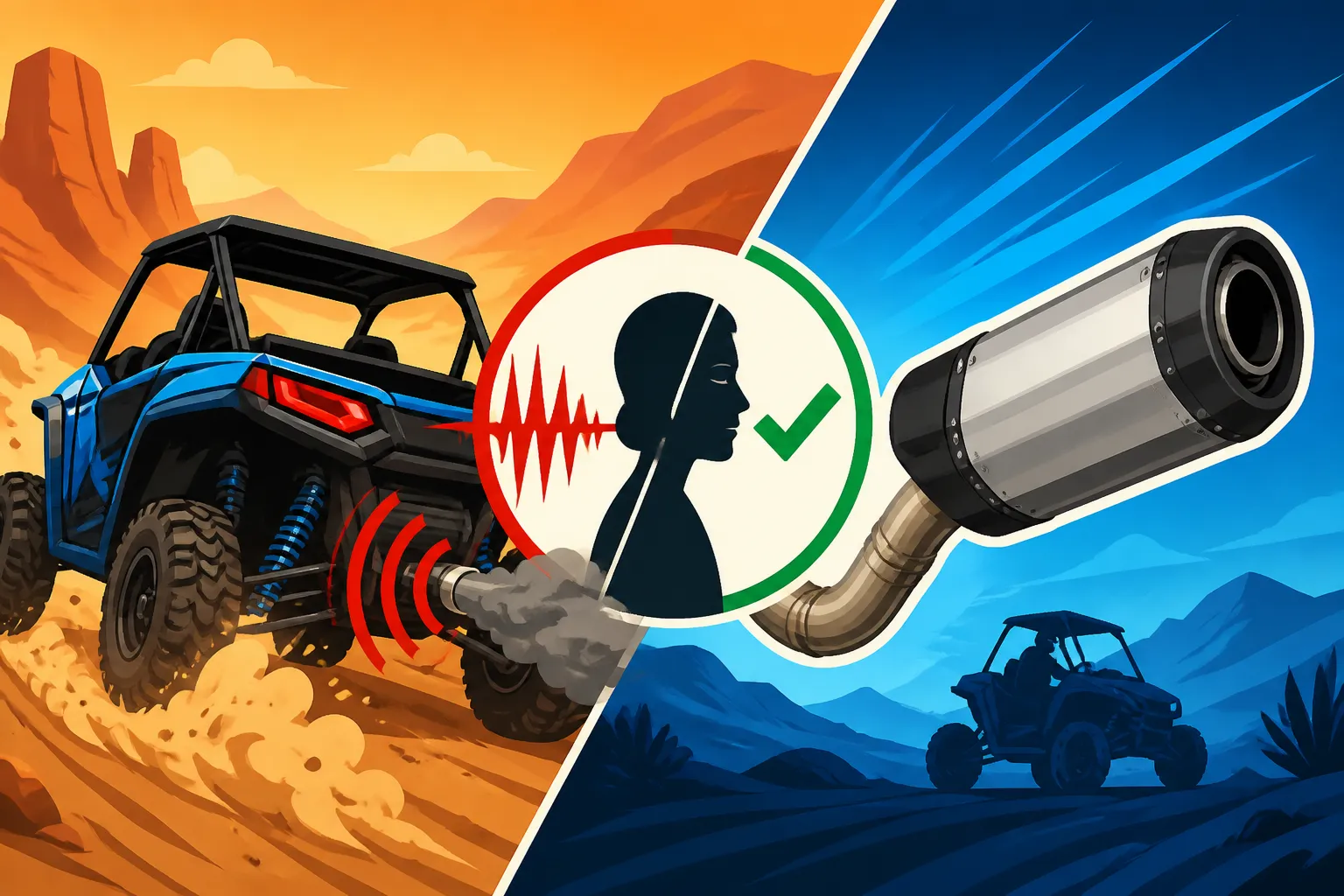
Sound Limits and Aftermarket Exhaust
There's nothing quite like the roar of a powerful ATV or UTV, especially with an aftermarket exhaust that truly unleashes its voice. But out here in Nevada, where our trails often weave near residential areas and our street-legal UTVs might cruise through a small town, that exhilarating sound can quickly become a legal headache. This guide will help you understand Nevada's sound limits for off-highway vehicles and navigate the world of aftermarket exhaust systems so you can enjoy your ride without facing fines or frustrating your neighbors.
Understanding Nevada's Sound Limit Laws for OHVs
For many of us, the sound of our machine is part of the experience, a symphony of power and freedom. But the State of Nevada, like many other places, has established clear regulations to manage noise pollution, especially from off-highway vehicles (OHVs). These laws aren't just arbitrary rules; they're designed to protect the peace and quiet of communities, minimize disturbance to wildlife, and ensure responsible recreation for everyone. Ignoring them can lead to citations, especially if you're riding a [Street Legal ATVs in Nevada: The Short Answer] machine on designated county roads.
The Specific Decibel Levels You Need to Know
Nevada's sound limits for OHVs are outlined in the state' statutes and are pretty specific. They differentiate between new machines sold by dealers and machines already in operation, which is an important distinction for us riders. For OHVs manufactured after January 1, 1976, the general limit is 96 decibels (dB) when measured at 20 inches from the exhaust outlet, with the engine at a specific RPM (usually half of the maximum rated RPM). For machines manufactured before 1976, the limit is often a bit more lenient, typically around 101 dB.
These numbers might seem a bit technical, but they're crucial. Think about it this way: 96 dB is roughly equivalent to the sound of a lawnmower or a powerful motorcycle at full throttle. Anything significantly louder starts to approach the threshold of hearing damage over prolonged exposure and certainly becomes an intrusive nuisance in quieter environments. It's a delicate balance between enjoying our machines and being considerate of others.
Why These Limits Exist
The reasons behind Nevada's sound limits are multifaceted, touching on both environmental and community concerns. First and foremost, excessive noise can be a major source of frustration for residents, particularly those who live near popular riding areas or along county roads where [Riding County Roads Legally in Nevada] is permitted for certain OHVs. No one wants their weekend peace shattered by a constant barrage of roaring engines. These limits help ensure that public lands remain accessible for recreation without creating unbearable noise pollution for adjacent communities.
Beyond human comfort, noise limits also play a vital role in protecting Nevada's diverse wildlife. Constant loud noise can disrupt animal behavior, interfere with mating calls, and even lead to habitat abandonment. Our beautiful desert landscapes are home to many sensitive species, and minimizing our impact, including noise, is part of being a responsible steward of these lands. The limits also contribute to rider safety by reducing overall sound levels in shared riding areas, allowing for better communication and awareness of other trail users. It's about finding that sweet spot where we can all enjoy the outdoors.
How Law Enforcement Measures Sound
When a Nevada deputy or ranger suspects your machine might be too loud, they won't just guess. They have specific procedures and equipment to conduct a sound test. The most common method involves a sound level meter, a specialized device that accurately measures decibels. The test is typically performed with the machine stationary, engine warmed up, and the microphone placed at a precise distance (usually 20 inches, at a 45-degree angle) from the exhaust outlet. The engine is then revved to a specific RPM, often 1/2 of its maximum rated RPM, and the reading is taken.
It's a standardized procedure, often following SAE (Society of Automotive Engineers) Recommended Practice J1287, to ensure fairness and accuracy. This means that subjective "it sounds loud" judgments are (or should be) replaced by objective data. If you're pulled over and questioned about your exhaust, understanding this process can help you communicate effectively with the officer. It’s a good idea to know what they're looking for, so you can make informed decisions about any modifications you might consider.
The Appeal and Reality of Aftermarket Exhausts
Let's be honest: many of us are drawn to aftermarket exhaust systems for a reason. They promise a lot, and often deliver on those promises. But the reality is, once you start modifying your machine, you also take on the responsibility of ensuring those modifications remain compliant with state law. It's a balance between enhancing your ride and staying on the right side of the rules, especially when you're looking to ride a [Nevada Street Legal UTV Requirements] machine on a county road.
Why Riders Choose Aftermarket Exhausts
There are a few compelling reasons why riders, myself included, often eye an aftermarket exhaust. First, there's the quest for performance. Many stock exhausts are designed for quiet operation and broad appeal, which can sometimes restrict engine breathing. An aftermarket system can often improve exhaust flow, leading to a noticeable bump in horsepower and torque. This can make a huge difference, especially in the sand dunes or climbing steep trails.
Then there's the sound. Let's face it, a deeper, throatier exhaust note can be incredibly satisfying, giving your machine a more aggressive and powerful presence. It's part of the sensory experience of off-roading. Finally, aesthetics play a role. Aftermarket exhausts often look sleeker, more robust, or just plain cooler than their factory counterparts, adding a custom touch to your ride. Brands like SuperATV offer a range of products that not only enhance performance but also contribute to the overall look and feel of your machine.
The Legal Risks of Modifying Your Exhaust
As tempting as those benefits are, the legal risks associated with non-compliant aftermarket exhausts are significant and should not be taken lightly. The primary risk is, of course, a citation or fine for exceeding Nevada's decibel limits. These aren't just minor slaps on the wrist; they can be substantial, and repeated offenses can lead to even harsher penalties. Imagine planning a fun weekend riding [Sand Mountain: Nevada's Great Basin Dune] only to get pulled over for excessive noise before you even hit the sand.
Beyond fines, there's the potential for your OHV registration to be suspended or revoked if you repeatedly fail to meet sound standards. This would effectively make your machine unusable on public lands, a nightmare scenario for any avid rider. Furthermore, some aftermarket exhausts remove or modify the spark arrester, which is a critical safety device designed to prevent wildfires. Riding without a functional spark arrester is illegal and incredibly dangerous, especially in our dry Nevada climate. It's crucial to understand that while an aftermarket exhaust can offer performance gains, it must also meet all legal requirements, including those for sound and spark arresters.
When an Aftermarket Exhaust is Compliant
The good news is that not all aftermarket exhausts are created equal, and many are designed with legal compliance in mind. An aftermarket exhaust is generally considered compliant if it:
- Meets or exceeds SAE J1287 standards: Reputable manufacturers will often design their systems to pass this industry standard, which aligns with Nevada's sound measurement methodology. They'll usually state this compliance clearly in their product specifications.
- Includes a functional spark arrester: This is non-negotiable for riding on public lands. A spark arrester prevents hot carbon particles from escaping the exhaust and igniting dry vegetation. Look for systems that are US Forest Service (USFS) approved.
- Allows for quiet inserts or decibel reducers: Many performance exhausts come with, or can be fitted with, removable inserts that effectively reduce the sound output to legal levels. This gives you the flexibility to tune your machine's sound for different riding environments – louder for private property or closed courses, quieter for public trails and roads.
Brands like SuperATV often provide options that balance performance with compliance, including systems that incorporate spark arresters and are designed to accommodate quiet inserts. Always read product descriptions carefully and don't hesitate to ask questions before you buy to ensure your choice will keep you legal while you're enjoying the [Best Places to Ride an ATV in Nevada].
Navigating Aftermarket Options Responsibly
Choosing an aftermarket exhaust isn't just about picking the loudest or most powerful option. It's about making a responsible decision that enhances your riding experience without violating the law or disturbing others. With a little research and careful consideration, you can find a system that gives you that extra kick and satisfying rumble, all while keeping your machine legal. This is particularly important if you frequently ride near towns or use county roads as part of your route, which Nevada allows for [What Qualifies as a Large ATV in Nevada].
What to Look for in a Compliant Aftermarket System
When you're shopping for an aftermarket exhaust, don't just focus on horsepower gains or the sound clips on YouTube. You need to scrutinize the product details for specific features that ensure legal compliance in Nevada:
- SAE J1287 Compliance: Look for clear statements from the manufacturer that the exhaust system is designed to meet or has been tested to comply with SAE J1287 standards. This is the gold standard for OHV sound measurement.
- Integrated Spark Arrester: This is non-negotiable for riding on almost all public lands in Nevada. The spark arrester should be USFS approved. If a system doesn't include one, or if it's a "race-only" system, you risk a fine and fire hazard.
- Decibel Reducers/Quiet Inserts: Many performance exhausts are inherently louder than stock. The best systems offer optional or included quiet core inserts that can be easily installed or removed to bring the sound level down to legal limits when needed. These are invaluable for versatility.
- Build Quality: A well-made exhaust will last longer and perform better. Look for high-quality materials like stainless steel, strong welds, and good fitment. A durable system will handle the rigors of off-road riding.
By prioritizing these features, you can ensure that your aftermarket upgrade from a brand like SuperATV not only boosts performance and sound but also keeps you compliant with Nevada's regulations, preventing issues with [Nevada's $10 Late Fee on an Expired OHV Decal] or other infractions.
The Importance of a Spark Arrester
Let's talk about spark arresters for a moment, because they are absolutely critical and often overlooked when riders focus solely on sound. In Nevada, where the landscape is predominantly dry and prone to wildfires, a functional spark arrester is not just a recommendation—it's a legal requirement for any OHV operating on public lands. This small, often simple, device is designed to prevent incandescent carbon particles (sparks) from exiting your exhaust system and igniting dry brush, grass, or leaves.
Riding without a USFS-approved spark arrester is a serious offense that carries hefty fines and can even lead to criminal charges if your machine causes a wildfire. Beyond the legal consequences, it's an act of extreme irresponsibility in our fire-prone state. Always check that your stock exhaust still has its spark arrester intact and that any aftermarket system you install explicitly states its spark arrester compliance. Don't compromise on this safety feature; it protects our environment, our communities, and your ability to keep riding.
Testing Your Own Machine
So, you've installed that new aftermarket exhaust, or maybe you're just curious about your current setup. How do you know if you're within Nevada's legal sound limits? The best way is to test it yourself. You can purchase an affordable handheld decibel meter online, or even use a reputable sound meter app on your smartphone (though dedicated meters are usually more accurate).
Follow the SAE J1287 testing procedure as closely as possible:
- Warm up your engine.
- Find a quiet, open area away from reflective surfaces that could skew readings.
- Position the microphone 20 inches from the exhaust outlet, at a 45-degree angle to the flow of the exhaust.
- Rev your engine to 1/2 of its maximum rated RPM. Your owner's manual should list the redline or maximum RPM; calculate half of that.
- Take several readings and average them.
This self-test gives you a good indication of where you stand. If you're consistently above 96 dB (for post-1976 machines), you might need to install a quiet insert, or consider a different exhaust system. It's far better to find this out in your driveway than from a deputy on the trail.
Consequences and Prevention
Nobody wants to deal with a fine or the hassle of a citation, especially when you're out trying to relax and enjoy the trails. Understanding the consequences of a loud exhaust in Nevada can be a strong motivator to ensure your machine is compliant. More importantly, knowing how to prevent those issues in the first place means more carefree riding and less stress.
Fines, Tickets, and Your Registration
Let's get straight to it: if a law enforcement officer determines your OHV exceeds the legal sound limits in Nevada, you can expect a citation. The specific fine amount can vary depending on the jurisdiction (state, county, or federal land), but it's typically an expensive lesson. Repeated offenses can lead to escalating penalties, which might include having to appear in court, significant additional fines, or even the requirement to bring your machine into compliance and have it re-inspected before you're allowed to ride again.
The most severe consequence, and one that every rider dreads, is the potential for your OHV registration to be suspended or revoked. If you're riding a machine that needed [Registering an ATV in Nevada], and it's found to be consistently out of compliance with state laws, including sound limits, the ability to legally operate your OHV on public lands and designated county roads could be taken away. This isn't just about a noisy exhaust; it's about the privilege of enjoying our trails responsibly. Avoid the headache by making sure your machine is legal from the start.
Tips for Keeping Your Machine Legal and Quiet
Staying on the right side of the law when it comes to exhaust noise doesn't have to mean sacrificing all performance or sound. Here are some actionable tips to help you keep your OHV legal and quiet:
- Choose Wisely: When buying an aftermarket exhaust, prioritize systems that are explicitly advertised as SAE J1287 compliant and include a USFS-approved spark arrester. Look for options that come with quiet inserts. Brands like SuperATV often have options designed with compliance in mind.
- Install Quiet Inserts: If your exhaust system offers them, always use quiet inserts or spark arrester screens when riding on public lands, especially near populated areas or designated quiet zones. Save the wide-open, louder setup for private property or sanctioned race events.
- Regular Maintenance: A well-maintained exhaust system is less likely to develop leaks or rattles that can increase noise levels. Check for loose bolts, cracks, or missing packing material regularly.
- Be Mindful of Your Environment: Even with a compliant exhaust, riding aggressively with high RPMs near homes or other trail users can still be perceived as excessively loud. Practice good trail etiquette and moderate your throttle in sensitive areas.
- Educate Yourself: Understand the specific laws for the areas you ride. Some counties might have additional ordinances, even for [Nevada County Roads Open to UTVs].
- Carry Proof of Compliance: If your aftermarket exhaust came with documentation proving its SAE compliance or spark arrester approval, keep a copy with your other OHV paperwork, such as your [What the Registration Card Must Show]. This can be helpful if you're ever questioned by law enforcement.
By being proactive and responsible, you can enjoy the enhanced performance and sound of an aftermarket exhaust without running afoul of Nevada's sound limits or disturbing others who share our beautiful outdoor spaces.
Exhaust System Comparison: Stock vs. Aftermarket
Here’s a quick overview comparing common characteristics of stock and aftermarket exhaust systems for OHVs.
| Feature | Stock Exhaust | Aftermarket Exhaust |
|---|---|---|
| Sound Level | Generally quieter, designed for broad appeal | Often louder; can be tuned with inserts for compliance |
| Performance | Optimized for reliability & economy; adequate flow | Typically designed for increased horsepower & torque |
| Spark Arrester | Almost always included and USFS approved | Varies; must be checked for USFS approval/inclusion |
| Cost | Included with machine; replacements can be costly | Varies widely, from moderate to premium |
| Weight | Often heavier materials for durability/sound dampening | Can be lighter due to different materials & design |
| Legality (Nevada) | Generally compliant with sound limits | Must be SAE J1287 compliant & have spark arrester |
| Flexibility | Fixed sound output | Often offers quiet inserts for variable sound output |
Disclaimer
This article is for general informational purposes only and does not constitute professional advice. Laws, prices and regulations vary by location and change over time. Consult a qualified professional for guidance on your specific situation.