Carrying a License on a County Road Ride
So, you’ve geared up for an amazing day of tearing up the trails and dunes across Nevada’s stunning landscapes. Your UTV or ATV is prepped, the cooler is packed, and your riding buddies are ready to roll. You're just about to pull out of the driveway, or perhaps you're already at a trailhead that requires a short paved connector, and a sudden thought hits you: "Wait, do I need my driver's license even on a county road?" It's a question that catches many off-guard, but it’s absolutely vital for staying legal and safe. This comprehensive guide will dive deep into Nevada’s specific rules for carrying your driver's license when your off-highway vehicle (OHV) ventures onto those designated county roads, helping you navigate the nuanced differences between off-road adventures and on-road obligations.
The Basics: When Nevada Law Says "Driver's License Required"
It's easy to assume that because your ATV or UTV is primarily an off-road machine, the rules for driving on pavement don't really apply. After all, you're not in a car, right? This line of thinking, while common, can lead to some unexpected and unwelcome encounters with law enforcement. Nevada draws a very clear line in the sand—or rather, on the asphalt—between riding strictly off-road and using your machine on any public roadway, even minor county roads.
Distinguishing Off-Road from County Road Travel
When you're out on wide-open Bureau of Land Management (BLM) land, exploring the vast network of designated trails, or climbing a sand dune, the primary rules governing your ride are focused on OHV registration, safety equipment like helmets, and responsible riding practices. In these pure off-road environments, your standard driver's license isn't necessarily the first thing a ranger will ask for regarding your right to operate the vehicle itself, though age restrictions and supervision rules still apply, especially for younger riders.
However, the moment your tires touch a maintained, publicly accessible county road, everything changes. Nevada law, particularly through its revised statutes (NRS 490 for OHVs and NRS 482 for general motor vehicles), begins to treat your UTV or ATV much more like a traditional automobile. While your machine might not be "street legal" in the sense of being able to cruise down Interstate 15 or park at the grocery store in downtown Reno, it can be "road legal" on specific types of county roads under strict conditions. This distinction is crucial because it triggers requirements that many off-road enthusiasts might not be accustomed to. It's often misunderstood, leading to confusion and, unfortunately, citations.
The Driver's License Mandate for Road-Legal Machines
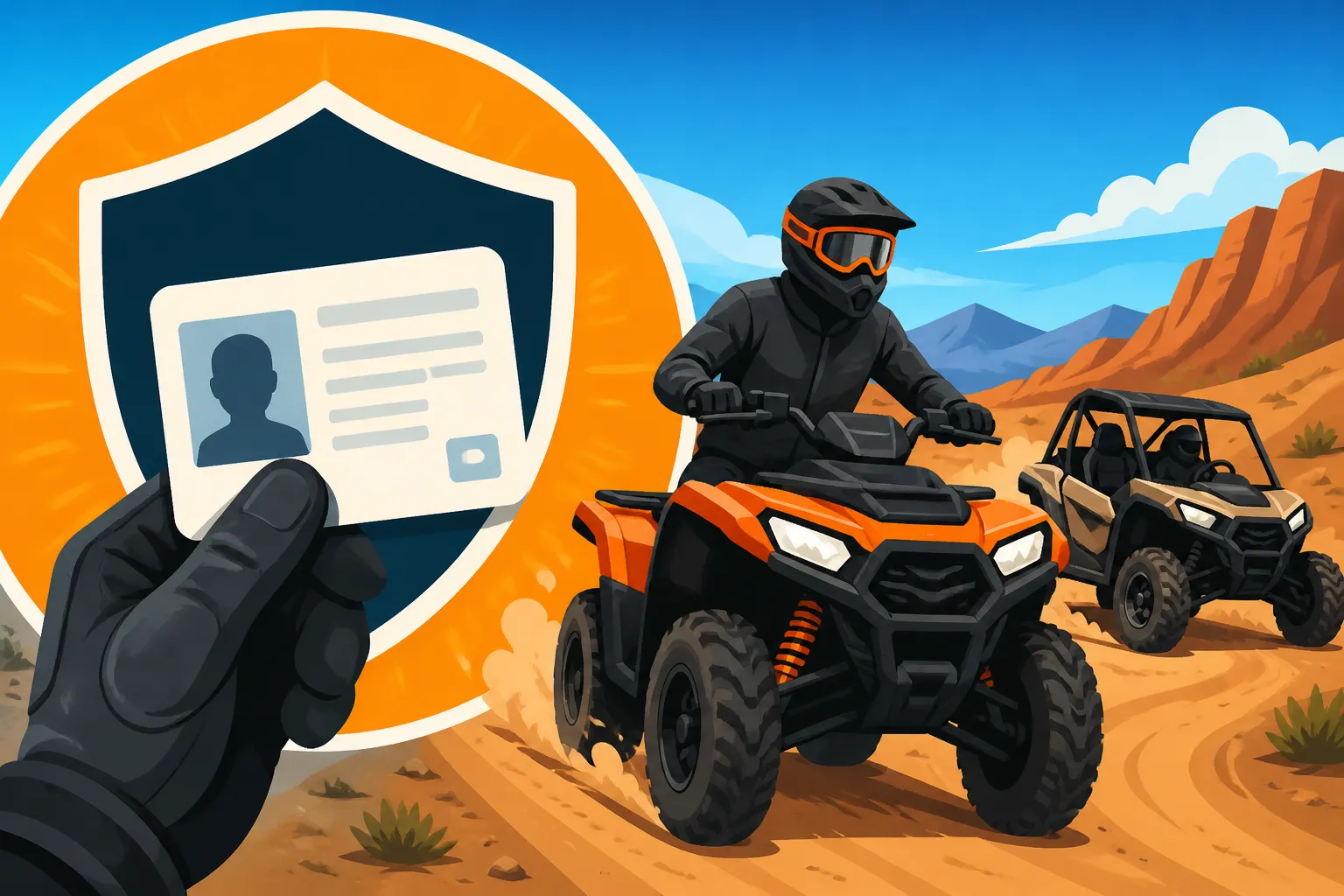
Let's get straight to the point: if you're operating a "road-legal" UTV or a "large ATV" on a designated county road in Nevada, a valid driver's license is an absolute must-have. Nevada Revised Statute 490.060 explicitly states that a person must possess a valid driver's license to operate an OHV on a highway. While "highway" might sound intimidating and conjure images of major interstates, in Nevada's legal framework, it broadly includes public county roads that are open to vehicular travel. This means that a deputy, sheriff, or state trooper has every right to ask for your license when you're riding your UTV or ATV on one of these designated routes.
The rationale behind this requirement is straightforward: when you’re on a public road, even a dusty back-country one, you're interacting with other traffic, following traffic laws, and assuming the responsibilities of a driver. These machines, especially modern UTVs, are increasingly powerful and often weigh as much as small cars, making them fully capable of causing significant damage or injury if not operated safely and responsibly. Therefore, the state requires proof that you have the basic competence and legal authorization to drive a motor vehicle. Your standard Class C driver's license, the one you use to drive your truck or car, is typically what’s needed. You generally won't need a motorcycle endorsement unless your machine is registered as a motorcycle, which is quite rare for a typical UTV or larger ATV. For more specifics, checking out [Nevada Driver's License Rules for UTV Road Use] can provide even deeper insight into these requirements.
It’s worth noting that the requirements for what constitutes a "large ATV" capable of road use are very specific, generally relating to gross vehicle weight, width, and seating capacity. You can learn more about these nuances, and the associated costs, by reading up on [What Qualifies as a Large ATV in Nevada] and [Nevada Large ATV Decal Cost]. Understanding these definitions is the first step in ensuring you're compliant before you even think about hitting the pavement.
What a Deputy Checks During a Roadside Stop
So, you're cruising down a county road, perhaps heading from your camp to a trailhead, or just enjoying a scenic backroad drive. Suddenly, you see flashing lights in your rearview mirror. Your heart might do a little flip-flop, but if you're prepared, there's no need to panic. Knowing what a deputy or state trooper is looking for during a stop can make the process much smoother and less stressful.
Essential Documents Beyond Your License
When a law enforcement officer pulls you over on a Nevada county road, they're not just going to ask for your driver's license and send you on your way. They're typically going to want to see a few key pieces of paperwork to ensure your machine is legally allowed to be there and that you're authorized to operate it. This usually includes:
- Your valid driver's license: As discussed, this is non-negotiable for road travel.
- Your OHV registration card: This card proves your machine has been properly registered with the Nevada DMV and has a current decal. This is proof that you've paid your dues and your machine is recognized by the state.
- Proof of insurance: For road-legal OHVs, especially UTVs, liability insurance is required. This demonstrates that you have financial responsibility in case of an accident. You can dive deeper into this specific requirement by reading [Liability Insurance Nevada Requires Under NRS 485.185].
One of the biggest frustrations for many riders is keeping these documents safe and dry in an environment that is often dusty, muddy, or even wet. There's nothing worse than fumbling for a soggy, illegible registration card. I've personally seen more than one rider pull out a crumpled, dirt-stained piece of paper that barely resembled a valid document. This is where a little forethought goes a long way. Consider investing in waterproof document holders, sturdy ziplock bags, or integrated storage compartments that offer better protection. For instance, companies like SuperATV offer a range of storage solutions, from sturdy cargo boxes to integrated glove box organizers, that can be a real lifesaver for keeping your important documents safe, dry, and easily accessible.
While a deputy might accept a clear photo of your registration or insurance card on your phone, a physical copy is always preferred and sometimes explicitly required. Don't rely solely on your phone, especially in remote areas where reception might be spotty or if your battery dies. Have those hard copies ready. Knowing exactly [What a Nevada Trooper Looks For on a County Road] can help you prepare for these routine checks.
The Importance of a Physical License
In today's digital age, many people rely on digital copies of documents, or even apps that claim to store your driver's license. While some states have begun to pilot digital driver's licenses, Nevada has not broadly adopted this as a primary form of identification for roadside stops. This means that a physical, valid driver's license is almost always what a law enforcement officer will expect and often require you to produce.
Imagine this scenario: you're stopped on a county road outside of Pioche, and you realize your physical wallet, with your license, is back at camp. You might be able to show a digital photo, but that’s entirely at the discretion of the officer. More often than not, they will want to see the actual card. Not having your physical license in your possession, even if you technically have one, can lead to a citation for "failure to possess" or "failure to display" a valid driver's license. This might be a lesser offense than "driving without a license" (which implies you don't have one at all), but it's still a headache and a potential fine you'd rather avoid.
It's also worth considering specific situations, such as for military personnel. While some states have allowances, it's always best to check the specific Nevada statutes regarding [Nevada Rules for a Posted Service Member] to ensure you're fully compliant, as exceptions are rare and highly specific. The bottom line is to make carrying your physical driver's license just as routine as putting on your helmet before you head out, especially when there's any chance you'll be on a county road.
Consequences of Riding Without a License on County Roads
Ignoring the requirement to carry a valid driver's license when riding your ATV or UTV on a Nevada county road isn't just a minor oversight; it can lead to significant legal and financial repercussions. It's not just about a simple ticket; the domino effect can be quite severe, impacting your wallet, your driving record, and even your ability to get proper insurance coverage.
Citations and Penalties
Operating an OHV on a public roadway in Nevada without a valid driver's license is a clear violation of state law. If a law enforcement officer pulls you over and you cannot produce a valid license, you're likely going to receive a citation. The specific penalties can vary based on whether you possess a license but simply failed to have it with you, or if you don't have a valid license at all.
For "failure to possess" a valid license, the fines are typically lower, and it might not carry points against your driving record, or perhaps only a minimal amount. However, if you are found to be "driving without a valid license" (meaning you never obtained one, or yours is suspended/expired), the consequences are much more serious. This can result in substantial fines, points added to your driving record, and potentially even an impoundment of your vehicle, depending on the circumstances and the officer's discretion. Repeat offenses escalate the penalties dramatically. These types of infractions not only hit your bank account but can also increase your auto insurance premiums down the line. It's a preventable expense and hassle that no rider wants to face. These fines are in addition to other potential citations, such as [Nevada Fines for No Large ATV Decal] if your machine isn't properly marked for road use.
Insurance Implications
This is perhaps one of the most critical, yet often overlooked, consequences of riding without a proper driver's license on a county road. Your OHV insurance policy, which is mandatory for road-legal machines in Nevada, is built on the premise that you, the operator, are legally qualified to drive. If you're involved in an accident while operating your ATV or UTV on a county road without a valid driver's license, your insurance company could deny coverage.
Think about it: most insurance policies have clauses that state coverage is void if the operator is engaging in illegal activity, and driving without a valid license on a public roadway certainly falls into that category. This means that if you cause an accident, you could be personally liable for all damages, including property damage to other vehicles, medical expenses for injured parties, and even legal fees. These costs can quickly skyrocket into tens or even hundreds of thousands of dollars, completely wiping out your savings and putting your financial future at risk. No matter how many fantastic, safety-enhancing accessories you have from SuperATV, like their heavy-duty bumpers or rock sliders, they can protect your machine, but they won't protect you from the financial disaster of an uninsured accident caused by operating without a license. It’s a sobering thought, but one that underscores the absolute necessity of being properly licensed when you're on any public road.
Practical Tips for a Smooth Ride on Nevada County Roads
Navigating Nevada's diverse terrain often means transitioning between challenging off-road trails and the more mundane (but legally significant) stretches of county roads. Being prepared for these transitions is key to a hassle-free and enjoyable riding experience. A little planning before you head out can save you a lot of grief later on.
Pre-Ride Checklist for Road Segments
Before you even turn the key or hit the start button, especially if your route includes any county road travel, it’s a smart move to run through a quick checklist. This ensures you have all the necessary documents and your machine is properly equipped. It’s not just about compliance; it’s about peace of mind.
Here's a simple checklist to keep handy:
| Item | Description | Check (Y/N) |
|---|---|---|
| Valid Driver's License | Physical, unexpired, and in your possession. | |
| OHV Registration Card | Current registration card (physical preferred, or clear photo). | |
| Proof of Insurance | Current insurance card or declaration (physical preferred, or clear photo). | |
| Helmet | Always a good idea, and often required even on roads depending on age. | |
| Seatbelts | If applicable to your UTV, ensure all passengers are buckled in. | |
| Operational Headlights | Visible for 500 feet at night or in low light. | |
| Operational Taillights | Visible for 500 feet at night or in low light, with a working stop lamp. | |
| Mirrors | At least one rearview mirror, often two side mirrors for road travel. | |
| Horn | A functional audible warning device. | |
| Spark Arrester | Required on both road and trail to prevent fires. | |
| Muffler | To keep sound levels within legal limits. |
Meeting all these requirements ensures you comply with [Nevada Equipment List for Road-Legal UTVs]. Many SuperATV components, such as their DOT-approved mirrors, turn signal kits, and horns, are specifically designed to help you meet these road-legal equipment requirements. While they make the compliance easier, always remember to verify your personal documents are in order too! Making this checklist a habit can prevent uncomfortable roadside stops and potential citations.
Educating Yourself and Your Riding Buddies
The best defense against fines and frustrations is knowledge. As a rider in Nevada, it's your responsibility to understand the state's OHV laws, and that includes the specific rules for county road use. This knowledge isn't just for you; it's something to share with your entire riding group. Imagine a scenario where you're properly licensed, but your buddy, unaware of the rules, is not. That could mean your whole group gets delayed or even cut short if they receive a citation.
Take the time to discuss these regulations with your friends and family before heading out. Explain the difference between pure off-road riding and those moments when you'll be on a county road. Emphasize why a driver's license is required and why all documents need to be readily accessible. This is especially important for younger riders. Nevada has very specific rules about [Nevada Minimum Age to Ride on a County Road] and strict [Nevada Rules for Riders Under 16 on Roads], including supervision requirements and the need for a safety certificate in some cases. Ensuring everyone in your party is up to speed on these regulations fosters a safer and more enjoyable experience for all. By creating a culture of preparedness and shared knowledge, you not only protect yourselves but also contribute to a positive image of OHV recreation in Nevada.
Disclaimer
This article is for general informational purposes only and does not constitute professional advice. Laws, prices and regulations vary by location and change over time. Consult a qualified professional for guidance on your specific situation.