Riding Nevada Trails on a South Dakota Plate
It's incredibly common for off-road enthusiasts to seek out ways to make their machines more versatile, especially when it comes to riding legally on county roads or getting to and from trailheads without trailering. The idea of getting a "street legal" plate from a state like South Dakota for your ATV or UTV has gained a lot of traction, offering what seems like a straightforward solution to these challenges. However, when you bring that South Dakota-plated machine to Nevada, things can get a little more complicated than you might expect. This guide will help you understand what riding Nevada trails and roads with a South Dakota plate really means, dispelling some common myths and setting realistic expectations.
The Appeal of Out-of-State "Street Legal" Plates
Many riders find the process of making an off-highway vehicle (OHV) street legal in their home state to be cumbersome, if not impossible. States like Nevada have very specific, and often strict, requirements for what qualifies an OHV for limited road use. This leads many to look for alternative solutions, and that's where states known for more flexible vehicle registration laws, such as South Dakota, come into play.
Why South Dakota is a Popular Choice
South Dakota has developed a reputation as a state where it's relatively easy to title and register an OHV, often without requiring residency. The process typically involves submitting paperwork, and once approved, you receive a license plate that theoretically makes your machine "street legal" across the country. For many, this sounds like a dream come come true – a way to legally ride from their campsite to the store, or connect between trails without the hassle of loading and unloading a trailer. The intent is usually pure: to enjoy more riding freedom and convenience.
The "Street Legal" Dream vs. Local Realities
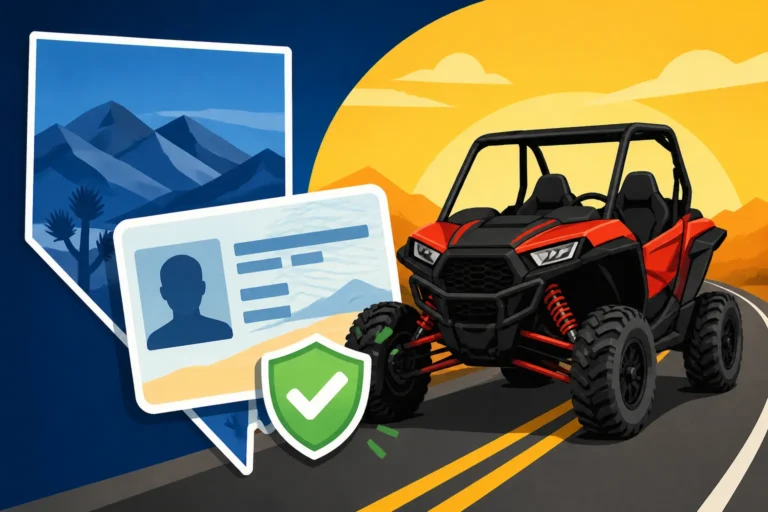
The core issue here is that "street legal" is often determined by the laws of the state where the vehicle is registered, and then recognized by other states through reciprocity agreements. While a South Dakota plate might indeed make your ATV or UTV legal on South Dakota roads, it doesn't automatically grant you carte blanche to ride on Nevada's roads, especially beyond very limited circumstances. Each state has the right to set its own rules for vehicles operating within its borders, particularly when it comes to specialized categories like OHVs. The plate might be valid, but the rules of the road you're on are paramount.
Nevada's Rules for Out-of-State OHV Registration
Nevada is a fantastic state for OHV riding, boasting vast open lands and incredible trails. To manage this access and ensure safety, Nevada has its own set of registration and operation laws. It's crucial to understand how these apply to your South Dakota-plated machine.
The 15-Day Non-Resident Exemption
If you're a non-resident visiting Nevada with your OHV, the state offers a temporary grace period. You can ride your machine, even with an out-of-state plate or decal, for up to 15 consecutive days. This is great news for those on vacation or just passing through. The key here is "consecutive" – you can't ride for 15 days, go home for a weekend, and then come back for another 15 days without re-evaluating your situation. This allowance is designed for transient visitors, not for extended stays or regular use if you're establishing residency. You can learn more about [Nevada's 15-Day Window for Out-of-State Machines] if you plan to visit for a short period.
When 15 Days Isn't Enough: Establishing Nevada Registration
What happens if you fall in love with Nevada's trails and decide to stay longer, or even move here? That 15-day exemption quickly becomes irrelevant. If you plan to use your OHV in Nevada for more than 15 consecutive days, or if Nevada becomes your primary residence, you'll need to register your machine with the Nevada Department of Motor Vehicles (DMV). This means your South Dakota plate alone won't cut it. You'll need to go through the process of getting a Nevada OHV decal. This usually involves proving ownership, getting a VIN inspection, and paying the necessary fees. For those making the move, understanding how to handle [Registering an Out-of-State Machine in Nevada] is a critical step.
Navigating Nevada Roads and Trails with a South Dakota Plate
This is where the rubber meets the road – literally. Many riders get a South Dakota plate specifically for the flexibility of road use. However, Nevada has specific, strict rules about what constitutes a "street legal" OHV for use on its county roads.
Off-Road Trail Riding: What Your Plate Does and Doesn't Do
For the most part, if you're strictly riding off-road on designated trails or open BLM land, a valid South Dakota registration and plate will generally be accepted within the 15-day non-resident window. Nevada's primary concern for off-road use is that the machine is registered somewhere and that you adhere to all other off-road riding rules (like spark arrestors, sound limits, and staying on designated routes). The South Dakota plate demonstrates that the machine has a home state registration. However, it's still about registration, not necessarily full "street legality" for Nevada's public roads.
The "Street Legal" Illusion on Nevada County Roads
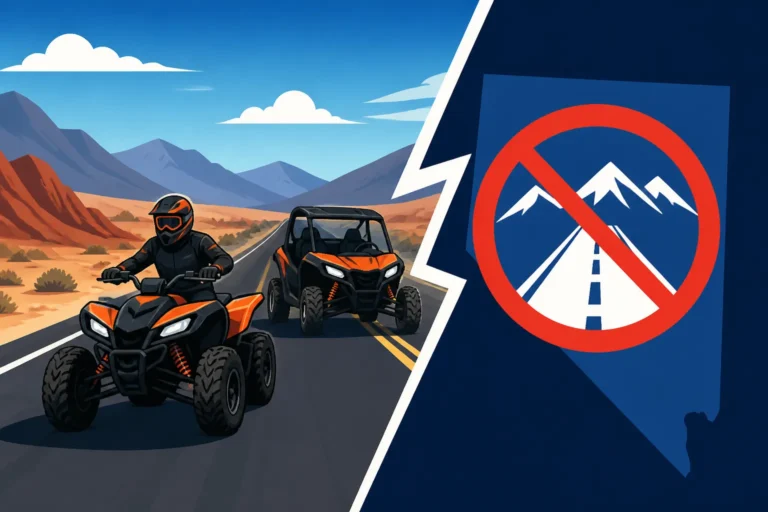
This is the biggest point of confusion and potential trouble. A South Dakota "street legal" plate does not automatically make your OHV street legal on Nevada's county roads beyond the very limited allowances for all registered OHVs. Nevada has very specific criteria for what it calls a "large ATV" (which includes most UTVs and larger ATVs) that can qualify for a special decal allowing limited county road access. This involves meeting a strict equipment list and applying for a specific [Nevada Large ATV Decal].
Here's the critical difference:
- South Dakota Plate: Proves your vehicle is registered and "street legal" according to South Dakota law.
- Nevada Large ATV Decal: Proves your vehicle meets Nevada's specific requirements for limited county road use in Nevada.
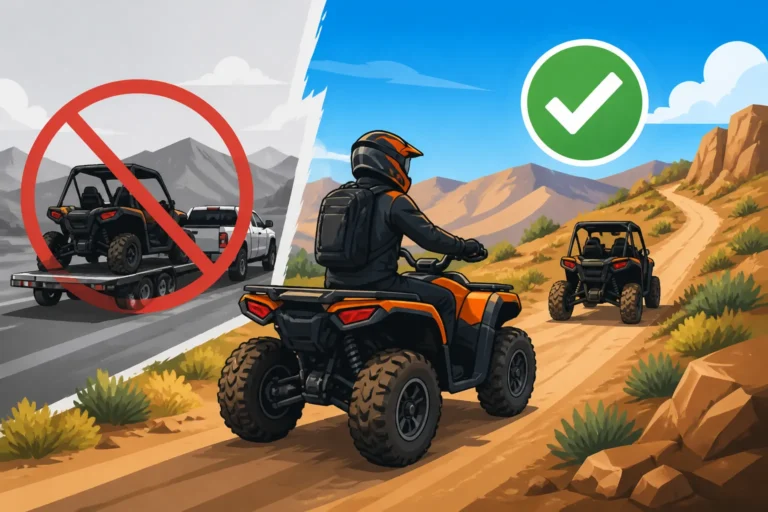
Even with a South Dakota plate, you would still need to meet Nevada's equipment requirements (like mirrors, turn signals, horn, specific headlights/taillights, DOT-approved tires, etc.) if you wanted to operate on county roads beyond what an unregistered OHV could do. Many aftermarket providers, like SuperATV, offer a wide range of accessories designed to help machines meet these types of requirements, such as turn signal kits, mirrors, and street-legal tire options. However, simply adding parts from SuperATV doesn't bypass the need for proper registration and compliance with Nevada law. For instance, without a Nevada Large ATV Decal, you're generally limited to [Riding County Roads Legally in Nevada] for short distances (up to two miles) to connect trails or cross a highway, which is permitted for any properly registered OHV, not just those with a special street legal plate.
What Nevada Law Enforcement Looks For
When a deputy or ranger pulls you over, they are primarily looking for two things:
- Proof of Registration: Do you have a valid registration for your machine? Your South Dakota plate would satisfy this for the initial 15-day non-resident period.
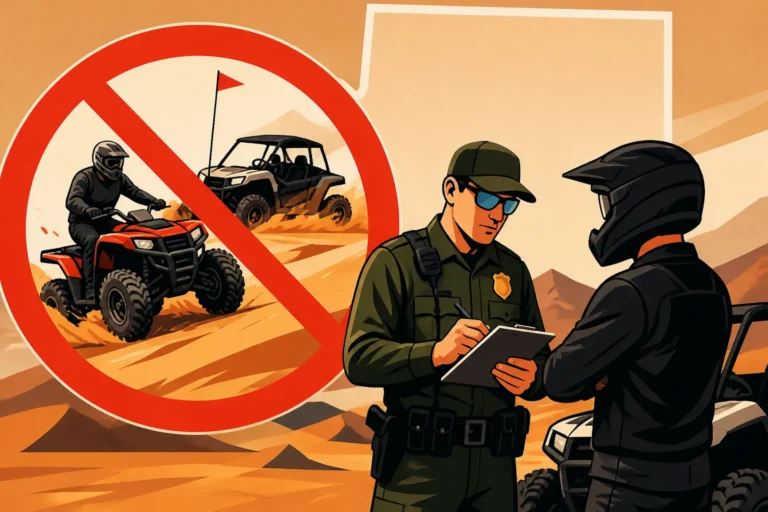
- Compliance with Operating Rules: If you're on a public road, do you meet Nevada's specific requirements for road operation? This is where the South Dakota plate often falls short. Nevada law enforcement will be checking for things like the [Nevada OHV Decal Placement Rules] (for Nevada registered machines) and ensuring you meet the equipment list for Nevada road use, regardless of where your machine is titled. A South Dakota plate does not grant an exemption from Nevada's road-use equipment mandates. They are also looking to see if you possess a valid driver's license if you're on a county road.
If you are riding beyond the permissible limits for an OHV on a county road without the proper Nevada Large ATV decal and equipment, a South Dakota plate won't protect you from a citation. It's a common misconception that because your machine is "street legal" in one state, it automatically is in all others.
Making Your Machine Truly Nevada-Compliant
If your goal is extensive road use in Nevada, or if you become a Nevada resident, relying solely on your South Dakota plate is a gamble. The safest and most compliant route is to meet Nevada's specific requirements.
Beyond the Out-of-State Plate: Nevada Registration
For residents, or those planning prolonged stays, the South Dakota plate is a temporary solution at best. You'll need to officially register your machine in Nevada. This involves a few key steps:
- Proof of Ownership: You'll need your title and bill of sale.
- VIN Inspection: Nevada requires a VIN inspection for out-of-state vehicles. [The VIN Inspection Nevada DMV Will Not Do] is a common point of confusion, as the DMV itself doesn't perform them for OHVs; you'll need a licensed dealer or a sworn law enforcement officer.
- Application: Complete the necessary Nevada OHV registration forms. The [Nevada OHV Registration Paperwork Checklist] can help you gather everything you need.
- Fees: Pay the applicable registration and titling fees. Once registered, you'll receive a Nevada OHV decal. This decal, regardless of whether it's a [Nevada OHV Registration Fee for One Year] or for [Nevada OHV Registration Fee for Three Years], is what signifies your machine's legality for off-road use in the state. What that decal actually proves is your compliance with Nevada's off-highway vehicle registration laws, allowing you to legally ride on designated trails and open areas.
Upgrading for Nevada County Road Use
If you truly want to maximize your road access in Nevada, you'll need to go a step further and apply for the [Nevada Large ATV Decal]. This involves meeting a specific list of equipment requirements:
- Headlights and Taillights: Must be visible from 500 feet.
- Stop Lamp: A brake light that functions correctly.
- Reflectors: On the rear of the machine.
- Horn: An audible warning device.
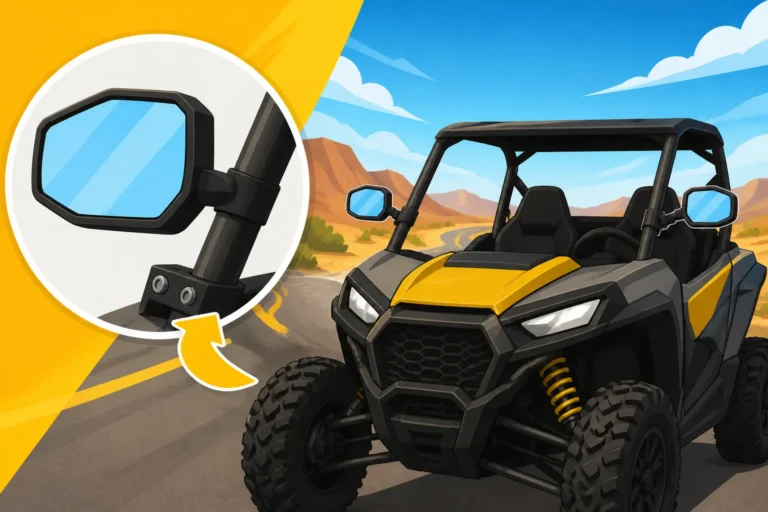
- Mirrors: At least one rearview mirror, and often two are recommended for better visibility.
- Spark Arrester: A U.S. Forest Service-approved spark arrester is mandatory.
- Muffler: To ensure sound limits are met.
- Seatbelts: For all occupants if the machine came equipped with them from the factory.
- Windshield: While not explicitly required for all, many large ATVs have them.
Companies like SuperATV offer many of these components as aftermarket upgrades. You can find robust mirrors, universal turn signal kits, and durable horns that can help get your machine up to Nevada's standards. For example, installing a turn signal kit from SuperATV can be a key step in equipping your UTV for potential road use. Remember, even with all these upgrades, you still need to formally apply for and receive the Large ATV Decal from the Nevada DMV. Simply having the equipment or a South Dakota plate isn't enough; you need the specific Nevada authorization for road use.
| Feature / Consideration | South Dakota Plate (for Nevada Non-Residents) | Nevada OHV Decal (for all off-road use) | Nevada Large ATV Decal (for limited road use) |
|---|---|---|---|
| Primary Function | General registration, "street legal" in SD | Allows off-road use on public lands in NV | Allows limited county road use in NV |
| Eligibility | SD-registered, any rider | Any rider, any OHV | Specific "large ATV" criteria, equipment list |
| Duration in Nevada | 15 consecutive days (non-resident only) | 1-year or 3-year term | 1-year or 3-year term |
| Road Use in Nevada | Very limited (2 miles to cross/connect) | Very limited (2 miles to cross/connect) | Designated minor county roads, specific rules |
| Required Paperwork | SD registration card, ID | Title, VIN inspection, application, fees | NV OHV Decal, specific equipment proof, fees |
| Enforcement Focus | Valid registration, general OHV rules | Valid NV decal, general OHV rules | Valid NV Large ATV decal, equipment, license |
| Residence Requirement | No SD residency | NV residency (or extended stay) | NV residency (or extended stay) |
In conclusion, while a South Dakota plate might seem like a golden ticket for street legality, it has significant limitations when operating your ATV or UTV in Nevada. For short visits, it covers your basic registration needs for off-road trails. But for any extended stays, or if you aspire to utilize Nevada's county roads for more than quick crossings, you'll need to fully comply with Nevada's OHV registration and specific "large ATV" road-use requirements. Always check the latest Nevada DMV regulations to ensure your machine is properly equipped and registered for wherever you plan to ride.
Disclaimer
This article is for general informational purposes only and does not constitute professional advice. Laws, prices and regulations vary by location and change over time. Consult a qualified professional for guidance on your specific situation.