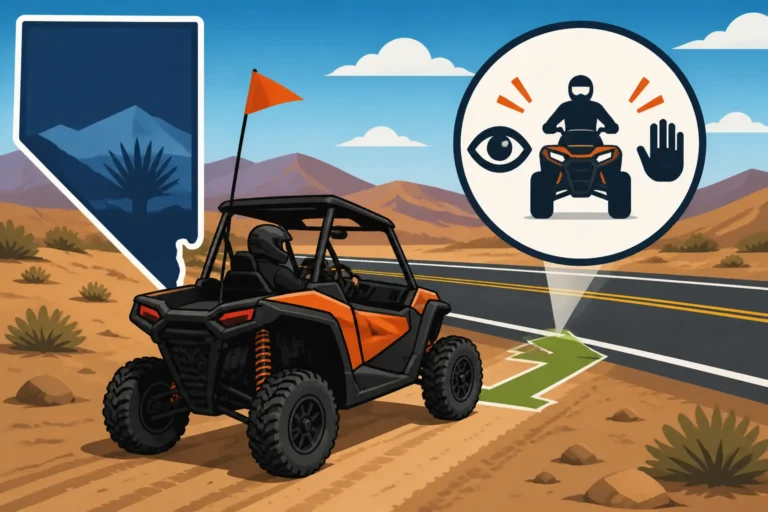
Washoe County Roads and Large ATVs
Figuring out where you can legally ride your ATV or UTV in Nevada can feel like navigating a maze, especially when it comes to paved roads. And when you throw in the specific rules for counties like Washoe, with its bustling urban centers like Reno and Sparks spilling out into vast open lands, the confusion only compounds. Many riders just want to get from their campsite to a trailhead, or perhaps connect two dirt roads with a short hop on pavement, only to find themselves worried about getting a ticket. This guide will help you understand the nuances of riding large ATVs and UTVs on Washoe County roads, breaking down the state and local rules so you can ride confidently and legally.
The Nuance of "Street Legal" in Nevada and Washoe County
When we talk about "street legal" for off-highway vehicles (OHVs) in Nevada, it's not a simple yes or no answer. It's more of a "sometimes, under specific conditions" situation, especially when you consider large ATVs and UTVs. This distinction is critical because many riders assume if they just add a horn and some turn signals, they're good to go. The reality, particularly in a diverse area like Washoe County, is far more complex.
What Nevada Defines as a "Large ATV" for Road Use
Nevada law, specifically NRS 490.043, creates a category for certain OHVs that can potentially be driven on some paved roads. It calls them "Large All-Terrain Vehicles." To qualify, your machine must meet specific criteria that usually include being more than 70 inches wide, weighing over 1,300 pounds, having four or more seats, or possessing a truck bed. Think about those big, multi-passenger side-by-sides with utility beds – those are the machines this designation is really designed for. This definition is the starting point for any discussion about riding on county roads. If your machine doesn't fit this bill, it won't even be considered for the special road-use decal, no matter how many accessories you bolt on.
Why Most "Sport" Machines Don't Qualify
This strict definition immediately rules out a huge number of popular OHVs. Your typical two-seat sport quad or even many smaller, two-seat sport UTVs simply won't meet the size and weight requirements. They don't have four seats, and they certainly don't have a truck bed. This often comes as a surprise and a frustration for riders who have invested in their machines, only to find they can't legally drive them on paved county roads even for a short distance. While these machines are fantastic for ripping up the dunes or tackling technical trails, [Why a Two-Seat Sport Quad Fails Nevada's Test] often boils down to their design intent: they're built for pure off-road performance, not for commuting. Adding mirrors or a horn, while good for safety, doesn't change the fundamental classification of the vehicle under Nevada law.
The Distinction Between State and County Rules
Here's where it gets even trickier, especially in Washoe County. While Nevada state law provides the framework for what a "Large ATV" is and what equipment it needs to be road-ready, individual counties have the power to create their own ordinances that further restrict or even prohibit OHV use on county roads. This means that even if your UTV technically qualifies as a "Large ATV" under state law and has all the required equipment, a local county ordinance could still say "no riding here" on certain roads or in specific areas. It’s like the state says, "You can bring a ladder to the party," but then the homeowner (the county) says, "You can't use it in this room." This layered approach means riders need to look beyond just state statutes and dig into the local rules for their riding area, which is particularly relevant for diverse regions like Washoe County that blend urban development with rural and open land.
Washoe County's Specific Rules for Off-Highway Vehicles
Washoe County, being home to major urban areas like Reno and Sparks, takes a more structured approach to OHV use on its paved and unpaved county roads. Unlike some more rural counties that might have broader allowances, Washoe County has specific ordinances designed to manage traffic, noise, and safety within its communities. This means you can't just assume an unpaved county road is fair game, let alone a paved one.
Understanding Washoe County Ordinance 1507
Washoe County Ordinance 1507 is the local regulation that governs where OHVs, including those designated as Large ATVs, can and cannot operate within the county's jurisdiction. This ordinance often specifies that OHVs are generally prohibited on paved county roads unless those roads are explicitly designated as routes for OHV use. This is a crucial distinction: instead of being allowed unless specifically prohibited, it's often prohibited unless specifically allowed. This approach helps manage the impact of OHVs in populated areas and on roads shared with traditional vehicle traffic. It means that while [Nevada's General and Minor County Roads] might seem like an open invitation, Washoe County's local laws impose a different set of expectations and restrictions. Riders need to actively seek out maps or information from the county to identify these designated routes, rather than relying on a general assumption of legality.
Designated Routes Versus Open Season
The concept of "designated routes" is paramount in Washoe County. This means you're not typically allowed to roam freely on all county roads. Instead, the county may identify specific stretches of road, often connecting trail systems or providing access to remote areas, where OHV use is permissible for Large ATVs. These routes are usually clearly marked, and deviating from them onto non-designated roads could lead to a citation. For standard OHVs that don't qualify as Large ATVs, the rules are even stricter, usually confining them exclusively to off-road trails and prohibiting any use on paved county roads whatsoever. It’s a stark contrast to some more remote areas where the vastness of the land might suggest an "open season" approach. In Washoe County, a more urbanized environment, careful planning and adherence to posted signage are absolutely essential.
The "Road to Trailhead" Dilemma in Washoe
One of the most common and frustrating scenarios for OHV enthusiasts in any state is the "road to trailhead" dilemma. You've got your machine loaded up, you drive it a short distance from your house or campsite, and there's a paved county road separating you from the dirt trails. In many places, riders hope for a short hop on the pavement to connect to the fun. However, in Washoe County, unless that specific stretch of paved county road is a designated OHV route under Ordinance 1507 and your machine qualifies as a Large ATV, that short hop is technically illegal. This can force riders to trailer their machines even for very short distances, adding inconvenience and taking away from the spontaneity of riding. It’s a policy designed for safety and to reduce community impacts, but it certainly presents a challenge for riders trying to navigate the beautiful Washoe landscape. This is where knowing the rules becomes vital, as ignorance won't excuse a ticket from a Washoe County Sheriff's deputy.
Equipping Your Large ATV for Conditional Road Use
Even if Washoe County has designated routes where Large ATVs are permitted, your machine needs to be properly equipped to meet Nevada state requirements for road use. This isn't just about safety; it's about compliance with the law. Without the correct gear, even on a designated route, you could face penalties. It's an investment, but a necessary one to enjoy the limited road access available.
Required Equipment for Nevada Road-Legal Machines
For any machine designated as a "Large ATV" under Nevada law to be legally operated on a paved road, it must have a specific set of equipment. This isn't optional; it's mandatory for both your safety and to avoid fines. [Nevada Equipment List for Road-Legal UTVs] includes, but isn't limited to:
- Headlights and Taillights: These need to be visible from a distance, typically 500 feet, to ensure you can see and be seen, especially during dawn, dusk, or adverse weather.
- Stop Lamp: A functional brake light is crucial to signal your intentions to traffic behind you.
- Reflectors: Often required on the sides and rear, these help your vehicle be seen even if the lights aren't active.
- Horn: A working horn is essential for alerting pedestrians or other vehicles to your presence.
- Mirrors: You'll need at least one rearview mirror, and often two, to give you a clear view of traffic approaching from behind. Many riders opt for robust aftermarket options from companies like SuperATV that can withstand off-road abuse while still providing legal visibility.
- Spark Arrester: While primarily for off-road fire prevention, a U.S. Forest Service-approved spark arrester is also required for road-legal use in Nevada, ensuring compliance with emission and safety standards.
- Muffler: Your machine must have an adequate muffler to keep noise levels within legal limits.
- Seat Belts: If your Large ATV has seats, it must have functional seat belts for all occupants, similar to a standard car.
It’s about making your off-road machine act more like a traditional vehicle when it's on public roads.
Driver's License and Insurance Requirements
Operating any motorized vehicle on a public road in Nevada, even a Large ATV on a designated county route, requires you to be a licensed driver. [Nevada Driver's License Rules for UTV Road Use] are clear: you must possess a valid driver's license, just as if you were driving your car. This isn't just a recommendation; it's a legal requirement. Furthermore, [Liability Insurance Nevada Requires Under NRS 485.185] also applies. You must carry proof of liability insurance, providing coverage for any potential accidents or damages you might cause while operating your Large ATV on the road. Without a valid license and insurance, even a properly equipped Large ATV on an allowed Washoe County route is operating illegally, exposing you to significant legal and financial risks. It's simply not worth the gamble.
The Importance of the Large ATV Decal
Beyond the equipment, driver's license, and insurance, your qualifying Large ATV needs a specific decal issued by the Nevada Department of Motor Vehicles (DMV). This isn't your standard OHV registration decal. It's a special decal that identifies your machine as meeting the criteria for conditional road use. [Applying for a Nevada Large ATV Decal] involves a specific application process, including certifying that your machine meets the size and weight requirements and is equipped with all the necessary safety features. This decal acts as visible proof that your machine has gone through the proper channels and is legally allowed on designated roads. Without this decal, even with all the bells and whistles, your machine isn't considered "road legal" in Nevada. Think of it as your machine's special passport for limited pavement travel.
Navigating the Washoe County Landscape Responsibly
Once you understand the regulations, the next step is to embrace responsible riding. This isn't just about avoiding a ticket; it's about preserving riding opportunities, respecting other users, and ensuring the safety of yourself and others in the beautiful, yet complex, Washoe County environment.
Researching Your Route Before You Go
Before you even load up your machine, thorough research is your best friend. In Washoe County, with its specific ordinances and designated routes, you cannot rely on guesswork. Start by checking the Washoe County website for maps and ordinances, specifically looking for information related to OHV use and road designations. You might also consult the local BLM (Bureau of Land Management) office or Forest Service for maps that differentiate between open roads, restricted roads, and designated OHV trails. [What a Nevada Trooper Looks For on a County Road] often includes checking for this specific knowledge. Don't be afraid to call local law enforcement agencies, like the Washoe County Sheriff's Office, or the Public Works Department if you have specific questions about a particular road or area. They are the authorities on what is permissible within their jurisdiction. Planning your route in advance, knowing exactly where you can and cannot ride, will save you a lot of headache and potential fines.
Consequences of Riding Illegally
The temptation to take a shortcut on a prohibited road or to ride a machine that doesn't meet the "Large ATV" definition can be strong, but the consequences of riding illegally in Washoe County can be severe. Fines for OHV violations, including operating on a prohibited road or without the proper registration and equipment, can be substantial. Beyond monetary penalties, repeat offenses or egregious violations could even lead to your machine being impounded. This means not only a financial hit but also the significant hassle of retrieving your machine, often with additional fees. More broadly, every instance of illegal riding contributes to a negative perception of the entire OHV community. This makes it harder for advocates to push for more riding areas or more lenient regulations in the future. Respecting the rules, even when they're inconvenient, is crucial for the long-term health of our sport. For example, riding on [Reno Streets and Where OHVs Cannot Go] can quickly lead to trouble.
Advocacy for More Riding Opportunities
While the regulations in Washoe County might feel restrictive, it's important to remember that laws can change, and riding opportunities can expand through sustained advocacy. If you're passionate about expanding legal OHV access, consider getting involved with local OHV clubs or organizations like the Nevada Offroad Association. These groups work directly with local governments, land management agencies, and community members to identify new routes, maintain existing trails, and advocate for more sensible regulations. By joining forces, riders can present a united front, offering solutions and demonstrating responsible stewardship of the land. This proactive approach can make a real difference in the long run, ensuring that future generations of riders in Washoe County and across Nevada have ample opportunities to enjoy their passion. Companies like SuperATV, who are deeply invested in the OHV community, often support these advocacy efforts, recognizing the importance of maintaining access to riding areas.
Comparing Standard OHV Registration vs. Nevada Large ATV Decal
To clarify the distinct pathways for off-highway vehicles in Nevada, especially concerning road use, here's a quick comparison.
| Feature | Standard Nevada OHV Registration Decal | Nevada Large ATV Decal (for Conditional Road Use) |
|---|---|---|
| Primary Purpose | Legal off-road operation on public lands | Conditional on-road operation (if permitted) |
| Vehicle Type | Any OHV (ATV, UTV, dirt bike, etc.) | Specific "Large ATVs" (per NRS 490.043) |
| Road Use Allowance | Generally prohibited on paved public roads | Allowed on some designated public roads |
| County Road Access | Limited to non-designated dirt/gravel roads | Possible on designated paved/unpaved county roads |
| Equipment Required | Spark arrester, muffler, working brakes | Full road-legal equipment (lights, horn, mirrors, etc.) |
| Driver's License | Not required for off-road operation | Required for on-road operation |
| Insurance Required | Not required for off-road operation | Required for on-road operation |
| Application Process | General OHV registration forms | Specific "Large ATV" application with certification |
| Cost | Standard OHV registration fees | Standard OHV registration fees + specific decal fee (if any) |
This table should help illustrate why simply having a standard OHV registration isn't enough to ride on Washoe County's paved roads, even if they're county roads. The "Large ATV" designation and decal are critical.
Disclaimer
This article is for general informational purposes only and does not constitute professional advice. Laws, prices and regulations vary by location and change over time. Consult a qualified professional for guidance on your specific situation.