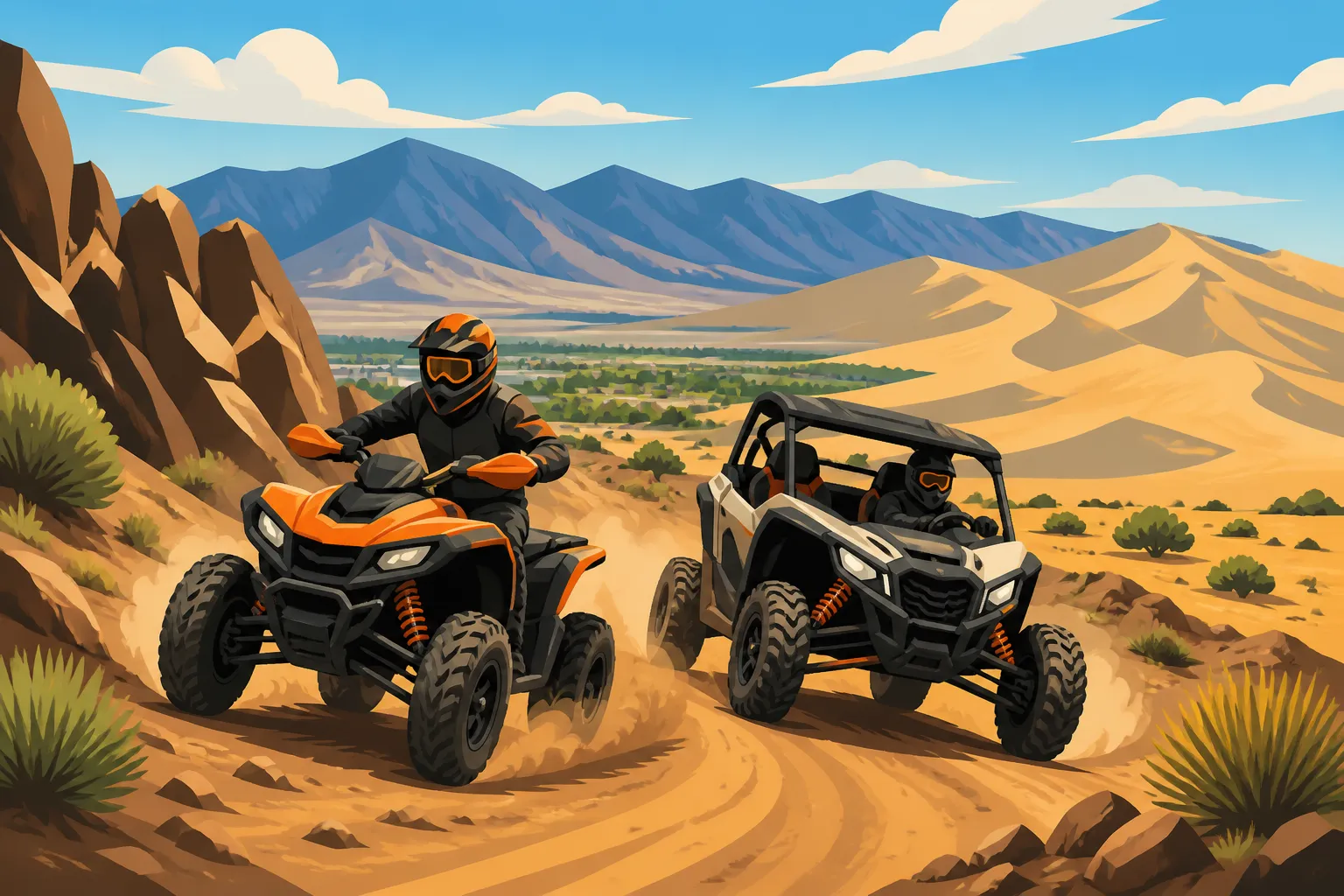
Streets Around Fallon and Sand Mountain
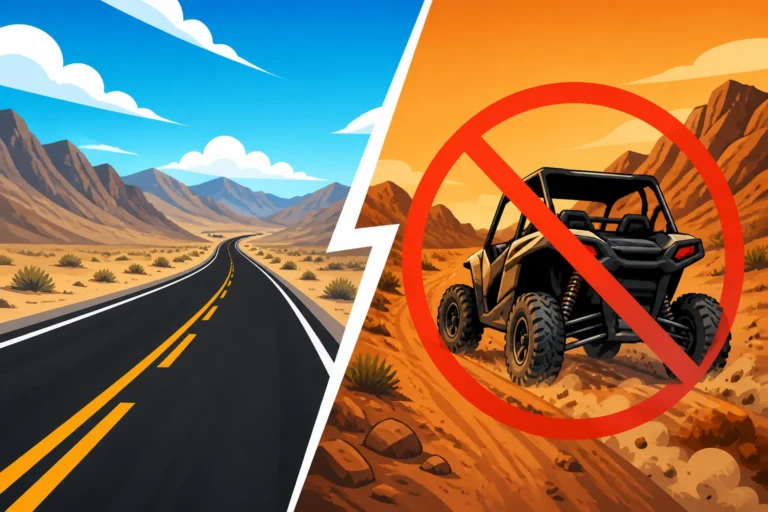
It's incredibly frustrating when you just want to get your quad or side-by-side from one amazing riding spot to another, or even just from your campsite to the gas station, only to be met with confusing road rules. In Nevada, especially around popular areas like Fallon and the incredible Sand Mountain, navigating public roads with your off-highway vehicle (OHV) can feel like a legal minefield. This guide will walk you through the specifics of Nevada's road laws for ATVs and UTVs, focusing on what you need to know for riding in and around Fallon and accessing the iconic Sand Mountain Recreation Area.
Understanding Nevada's Street Legal Framework for OHVs
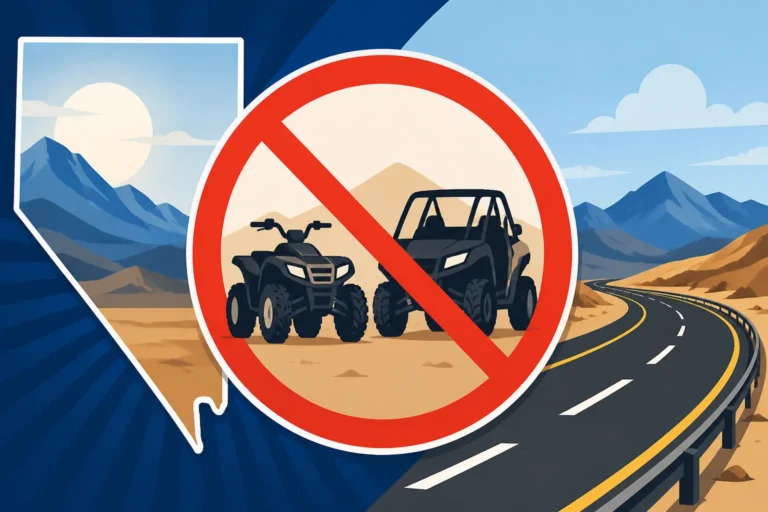
Nevada has some very specific, and often misunderstood, rules about when and where an off-highway vehicle (OHV) can legally touch pavement. Unlike some states that allow a straightforward process for making an ATV or UTV "street legal," Nevada has a much narrower approach. It's not about converting your machine; it's about a specific designation for certain types of utility vehicles and very limited circumstances.
The "Large ATV" Designation and Why It Matters
First, let's talk about Nevada's "Large All-Terrain Vehicle" (Large ATV) designation, as outlined in NRS 490.043. This is the critical piece of the puzzle for understanding road legality. The state defines a Large ATV as a side-by-side or UTV that meets one of two criteria: it must have four or more seats, or it must be equipped with a utility bed that can carry a load. This definition immediately disqualifies the vast majority of sport quads and even many two-seat sport side-by-sides from being considered a Large ATV for road use purposes.
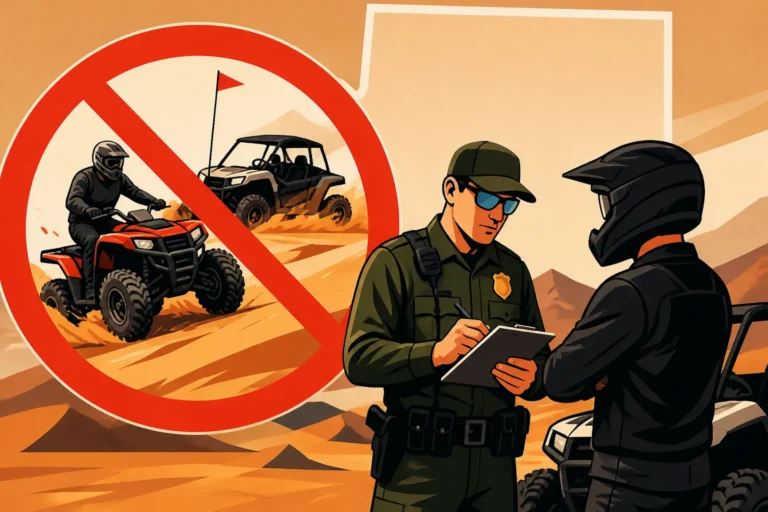
Think about your typical sport quad—a Yamaha Raptor or a Honda TRX. While they're powerful and fun, they only have one or two seats and no utility bed. They simply don't fit the state's legal definition of a Large ATV. Similarly, a two-seat Polaris RZR, while a UTV, won't typically qualify either unless it's explicitly designed with a utility bed that fits the criteria. This distinction is paramount because only machines that meet the Large ATV definition can apply for the specific decal that allows limited road travel. Without this decal, your machine is strictly off-road, no exceptions, no matter how short the distance. [What Nevada's NRS 490.043 Counts as a Large ATV]
Limited Road Use: The 2-Mile Rule and Designated Routes
Even if your side-by-side proudly bears the Large ATV decal, its road use is severely restricted. Nevada law generally prohibits OHVs from operating on paved highways, interstates, or city streets. The primary exception is the "2-mile rule." This rule allows a Large ATV to travel up to two miles on a paved county road if it's the most direct route to access a designated OHV trail or area from a point of origin like a campsite or private property. It's not a free pass to cruise into town for groceries or a scenic drive. It's strictly for accessing off-road areas.
Furthermore, cities and counties in Nevada have the authority to establish specific designated routes within their jurisdictions where OHVs can legally operate. This means that while the state has a general framework, your local rules can be even more restrictive, or in some rare cases, slightly more permissive on specific, clearly marked routes. Always check local ordinances for the specific area you plan to ride. Riding on an undesignated paved road, even if it's a short hop, can lead to a ticket, and frankly, it's just not safe for you or other motorists. [How Far You Can Ride Pavement in Nevada]
Essential Equipment for Road-Legal Machines
For those machines that do qualify as a Large ATV and are utilizing the 2-mile rule or a designated local route, there's a mandatory list of equipment you must have to be considered road-ready. This isn't optional; a law enforcement officer will be checking for these items. You'll need working headlights and taillights that are visible from at least 500 feet, a stop lamp (brake light), at least one rearview mirror, and a horn.
Additionally, your machine must have an approved muffler system that limits noise, a spark arrester to prevent wildfires, and working seatbelts if it originally came equipped with them. For safety, many riders will add turn signals and a safety flag, even if not strictly required by state law for these limited road uses, simply to enhance visibility. Brands like SuperATV offer excellent aftermarket solutions for these requirements, from street-legal kits with turn signals and horns to robust mirrors that can withstand off-road vibrations. [Nevada Equipment List for Road-Legal UTVs]
Navigating Fallon and the Surrounding Areas by OHV
Fallon, Nevada, is a vibrant community in Churchill County, often serving as a gateway to extensive desert riding. However, like many towns, its paved streets are generally off-limits to OHVs. Understanding the local nuances is key to avoiding an unexpected conversation with law enforcement.
Specific Rules for Churchill County Roads
Churchill County, where Fallon is located, follows the state's general provisions regarding OHV use on county roads. This means that if your machine is a properly decaled "Large ATV," you might be able to utilize the 2-mile rule on certain county roads to access trailheads. However, this is always subject to the road actually being a county road and not a state highway or a city street within Fallon's incorporated limits. The key is intent and direct access; you can't just be out for a spin on paved roads.
It's common for riders to want to leave their accommodation in Fallon and ride straight to the dirt. While tempting, Fallon's city streets are typically closed to OHVs. You'll likely need to trailer your machine out of town to designated staging areas or private property before you can legally unload and ride off-road. Always look for signage or check with the local Churchill County Sheriff's Office or BLM field office for current, hyper-local information on specific roads. [Streets Around Fallon and Sand Mountain]
Riding to the Trailhead: Practicality Versus Legality
The desire to ride from your lodging or a local gas station directly to the dirt trails is completely understandable. It saves time, hassle, and the need to constantly load and unload your machine. However, in Nevada, the practicality of this desire often clashes with the strict legal framework. Unless you're parked directly adjacent to a trailhead or a large expanse of open land and your machine is a qualified Large ATV, you're likely going to need to trailer your OHV.
Consider this: if you're staying at a hotel in Fallon, riding your side-by-side down Maine Street to get to US 50, even for a short stretch, is almost certainly illegal. Those are city streets and a state highway. The 2-mile rule is not for getting into town, but for getting out to the dirt. Many riders simply accept that trailering is part of the experience when starting from an urban or semi-urban area, ensuring they stay compliant and safe.
What a Deputy Looks For
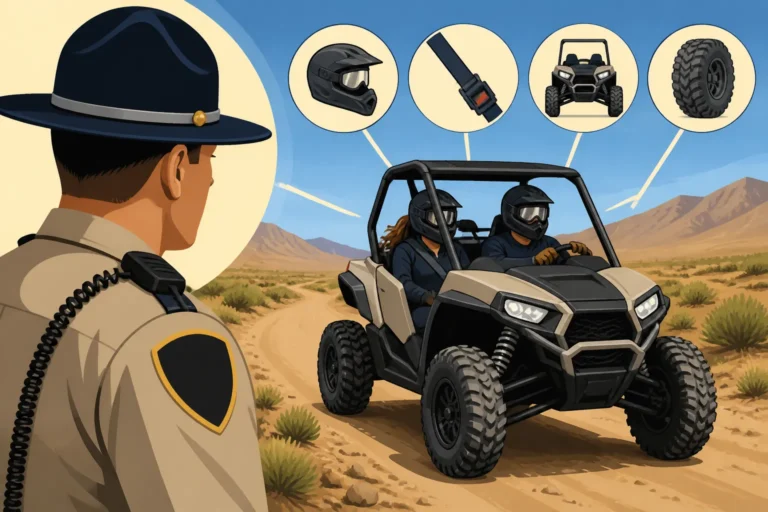
When a Churchill County Sheriff's Deputy or a Nevada Highway Patrol Trooper spots an OHV on a paved road around Fallon, they're typically looking for several things. First and foremost, they'll check if the machine is a "Large ATV" and if it bears the proper, current Nevada Large ATV decal. Without this, your machine doesn't even qualify for limited road use. Next, they'll assess the situation: Are you on a county road? Are you using the shortest, most direct route to access an off-road area? Are you within the 2-mile limit?
They will also be checking for the mandatory safety equipment: working headlights, taillights, a brake light, a rearview mirror, and a horn. If you're operating a Large ATV on a county road, you'll also need a valid driver's license and proof of liability insurance. They aren't trying to ruin your fun, but they are enforcing laws designed to keep OHV riders and other motorists safe. Having all your paperwork in order and your machine properly equipped, perhaps with quality mirrors from a brand like SuperATV, goes a long way. [What a Nevada Trooper Looks For on a County Road]
Road Access to Sand Mountain Recreation Area
Sand Mountain is an iconic Nevada destination for OHV enthusiasts, famous for its massive dune and miles of surrounding trails. Accessing this incredible area often involves a short stretch of paved road, but riders need to understand the nuances of this access.
Getting to the Dune From US 50
The main access point to Sand Mountain Recreation Area is off of US 50, "The Loneliest Road in America." From US 50, you'll turn onto Sand Mountain Road, which is a paved county road that leads directly into the recreation area. This is a classic scenario where the 2-mile rule for Large ATVs might come into play. If you're camping at a designated spot just off the pavement or launching from private land nearby, and your machine qualifies as a Large ATV with the proper decal, you might be able to legally ride this short stretch to the staging areas.
However, the vast majority of riders trailer their machines all the way to the main parking and staging areas within the BLM-managed recreation site. This eliminates any ambiguity and ensures you're not riding your OHV on any public paved road where it might not be permitted. Even if you're only a few miles out, trailering is often the safest and most legally sound option, especially if your machine isn't a "Large ATV."
Internal Roads Within the Recreation Area
Once you are inside the Sand Mountain Recreation Area boundaries, the rules often change. Many internal roads within BLM-managed lands, even if they appear well-maintained or gravel, are considered off-highway routes, and your OHV registration decal covers their use. These are not typically subject to the same strict "paved road" limitations as public county roads or state highways. You'll see plenty of OHVs riding these internal access roads freely, provided they are within the designated riding areas and not violating any specific BLM closures or rules.
Always be mindful of speed limits, dust, and other visitors, including campers and other vehicles. While the rules are more relaxed inside, it's still a shared space, and courtesy goes a long way. This is also where your [Nevada OHV Decal Placement Rules] become important, as rangers at Sand Mountain will be checking for current registration.
Avoiding Fines: Safe and Legal Practices Near Sand Mountain
The rangers and deputies who patrol the Sand Mountain area are well-versed in OHV laws. They want everyone to have a good time, but safety and compliance are paramount. To avoid fines:
- Know Your Machine's Classification: Is it a "Large ATV" by Nevada's definition? If not, it shouldn't be on paved roads, even for a short hop.
- Proper Decal: If it's a Large ATV, ensure you have the current, visible Large ATV decal from the DMV. [Nevada's Large All-Terrain Vehicle Decal]
- Required Equipment: Make sure your Large ATV has working headlights, taillights, a stop lamp, a mirror, and a horn. Many riders opt for quality aftermarket lights and mirrors, perhaps from SuperATV, for enhanced durability and visibility in dusty conditions.
- Stay Off Pavement (Unless Permitted): When in doubt, don't ride on paved roads. Trailer your machine to the staging areas.
- Be Aware of Local Rules: While Sand Mountain is largely BLM land, the access roads are county roads, and local rules can apply.
- Carry Documentation: Always have your driver's license, OHV registration, and proof of insurance on you, especially if you're operating on a road. [Keeping Paperwork Dry in a Dusty Machine]
Equipment and Best Practices for Road Sections
Even for the limited road sections that might be permissible, outfitting your machine properly and riding defensively are crucial for safety and compliance.
Equipping Your Machine for Brief Road Use
If your machine qualifies as a Large ATV and you plan to use it on the brief, legally permitted road sections, ensure it's equipped beyond the bare minimum. While a single rearview mirror might be required, consider adding a second one for better visibility, especially if you're navigating turns or traffic. A robust set of mirrors that can handle the bumps and vibrations of off-road use, like those offered by SuperATV, is a smart investment.
Beyond the essentials, ensure your lighting is in top condition. LED headlights and taillights offer superior brightness and longevity. A loud horn is also critical for alerting other drivers to your presence. Remember, you're sharing the road with vehicles that are much larger and faster, and drivers may not be expecting to see an OHV. Every piece of equipment that enhances your visibility and ability to communicate with other drivers is an advantage. [Nevada Equipment List for Road-Legal UTVs]
Safety Considerations and Visibility
Riding an OHV on a paved road, even for a short distance, presents different challenges than riding off-road. Pavement offers less traction, making sharp turns or sudden stops more hazardous. Always wear appropriate safety gear, including a helmet, even if Nevada law doesn't always mandate it for riders over 18 on private roads. On public roads, a helmet is often required. [Nevada Helmet Law for Road Riding]
Visibility is your biggest concern. Wear bright clothing, use a tall whip flag, and ensure all your lights are on, even during the day. Ride predictably, stay to the right side of the lane, and use hand signals if your machine doesn't have turn signals. Remember, the goal is to get to the dirt safely, not to blend in with traffic. Be extra cautious at intersections and when entering or exiting paved sections.
Carrying Proper Documentation
Regardless of whether you're riding strictly off-road or utilizing those brief paved sections, always carry your essential documents. This includes your valid driver's license (if operating on a road), your Nevada OHV registration card, and proof of liability insurance (required for Large ATVs on public roads). It's also wise to have a copy of your bill of sale or title to prove ownership.
Many riders keep these documents in a waterproof bag or container securely attached to their machine. A photo of your documents on your phone can sometimes suffice for quick verification, but always have the physical copies readily available. Being prepared means a smoother interaction with law enforcement and helps ensure your ride continues without unnecessary delays or fines. [What the Registration Card Must Show]
Nevada OHV Road Use Requirements Summary
To quickly recap the key requirements for legal OHV road use in Nevada for a Large ATV:
| Requirement | Applies To | Details |
|---|---|---|
| Machine Type | All OHVs on paved roads | Must be a "Large ATV" (4+ seats OR utility bed). Most quads/2-seat UTVs do not qualify. |
| Registration | Large ATVs on paved roads | Current Nevada Large ATV decal required. Your regular OHV decal is not enough for road use. |
| Road Type & Limit | Large ATVs on paved roads | County roads only, up to 2 miles, direct access to OHV trail/area. Not for general travel. |
| Local Ordinances | All OHVs | Local cities/counties may have additional restrictions or designated routes. Always check. |
| Driver's License | Driver of Large ATV on paved roads | Must possess a valid driver's license. |
| Insurance | Large ATVs on paved roads | Proof of liability insurance required. |
| Headlights/Taillights | Large ATVs on paved roads | Visible from 500 feet. Always on, even daytime. |
| Stop Lamp | Large ATVs on paved roads | Working brake light required. |
| Rearview Mirror | Large ATVs on paved roads | At least one required. (Consider two for better safety). |
| Horn | Large ATVs on paved roads | Audible horn required. |
| Muffler/Spark Arrester | All OHVs on public land and roads | Approved muffler to limit noise; spark arrester to prevent fires. |
| Safety Gear | All OHV riders | Helmet recommended for all riders. Required for those under 16 or on public roads where specified. |
Navigating the roads around Fallon and to Sand Mountain with your ATV or UTV requires careful attention to Nevada's specific laws. While the state aims to provide access to its incredible off-road opportunities, it also prioritizes safety and regulatory compliance on its paved infrastructure. By understanding the "Large ATV" designation, adhering to the 2-mile rule, ensuring your machine is properly equipped, and always carrying your documentation, you can enjoy Nevada's vast backcountry responsibly and legally. Remember, when in doubt, it's always safer and smarter to trailer your machine to the trailhead.
Disclaimer
This article is for general informational purposes only and does not constitute professional advice. Laws, prices and regulations vary by location and change over time. Consult a qualified professional for guidance on your specific situation.