Does Nevada Require ATV Insurance on Roads?
It’s a common scenario across Nevada: you’ve got your beloved ATV or UTV, perfectly set up for conquering the desert trails, and you're thinking about those short stretches of county road or even that quick jaunt into town for supplies. You've heard whispers about "street legal" requirements, but one question keeps nagging at the back of your mind: "Does Nevada require ATV insurance on roads?" This guide is here to clear up that confusion, diving deep into the nuances of off-highway vehicle insurance when your tires hit the asphalt in the Silver State.
The Burning Question: Is Insurance Mandatory for OHVs on Nevada Roads?
Let’s get right to the heart of it, because this is where many riders find themselves scratching their heads. You've heard that off-road, insurance might be optional, and that's generally true for personal property coverage. But the moment your off-highway vehicle (OHV) touches a public road in Nevada, the rules change dramatically. It’s a shift from the wild, open desert to the structured world of motor vehicle laws, and that means liability insurance becomes a very real, very important requirement.
Understanding Nevada's Liability Insurance Requirement
Nevada Revised Statutes (NRS) 485.185 is the key here, and it’s pretty clear: if you’re operating a motor vehicle on a public highway in Nevada, you need liability insurance. The crucial part is how Nevada defines a "motor vehicle" and what constitutes a "public highway." While your ATV or UTV might be primarily designed for off-road adventures, when it's permitted to operate on certain county roads or minor public highways, it falls under the umbrella of a motor vehicle for that specific purpose. This isn't just a suggestion; it’s the law.
Think about it this way: if you’re riding your UTV down a paved county road to get to the next trailhead, and you accidentally collide with a passenger car, who pays for the damage to the car or the injuries to its occupants? Without liability insurance, that financial burden falls squarely on you. It could mean years of financial strain, not to mention legal battles. This is why the state mandates it—to protect innocent third parties from the financial consequences of an accident. Even if you've done all the work to equip your machine with turn signals and a horn, perhaps sourcing quality parts from a place like SuperATV, if you skip the insurance, you're leaving a massive gap in your road-readiness.
Differentiating Off-Road vs. On-Road Insurance Needs
This is a critical distinction that often trips up riders. For purely off-road riding, say out at Logandale Trails or Sand Mountain, carrying collision or comprehensive insurance on your ATV or UTV is typically optional. Many riders choose to forego it, accepting the risk that if their machine is damaged or stolen while off-pavement, they'll bear the cost themselves. They might only carry enough liability to cover incidents at private events or if they somehow damage private property off-road.
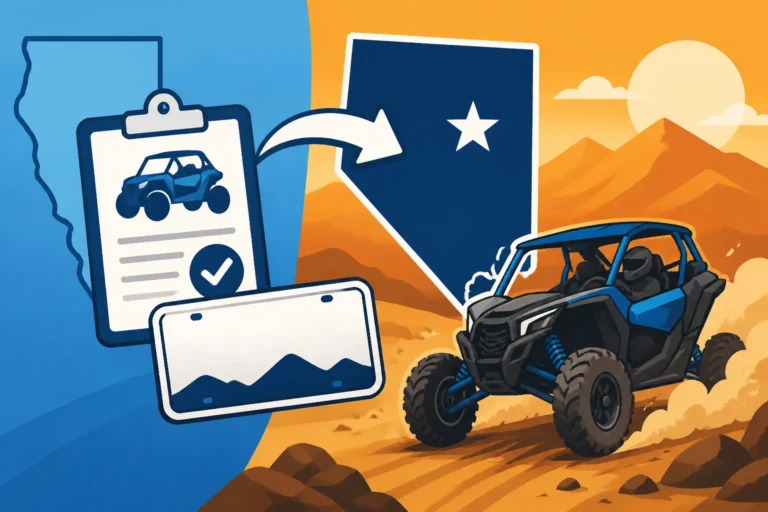
However, the moment your OHV is legally allowed to operate on a public road, even for limited distances, it's considered a "motor vehicle" for that specific application. This is especially true if you've applied for and received a [Nevada Large ATV Decal], which specifically permits travel on certain county roads. That decal is your signal that you're now playing by slightly different rules, and those rules include mandatory liability insurance. This insurance is not about protecting your machine; it's about protecting others from harm or damage caused by your machine while on the road. It’s a legal requirement that shifts the moment you transition from dirt to asphalt, ensuring a baseline level of financial responsibility for all road users.
Understanding Nevada's Specific Insurance Mandates for Road Use
It's not enough to simply have insurance; you need the right kind of insurance, with the right minimum coverages, to comply with Nevada law when riding your OHV on public roads. This isn't just about avoiding a ticket; it's about true financial protection for everyone involved in an unexpected incident.
The Specifics of Liability Coverage for OHVs
Nevada has specific minimum liability limits for any vehicle operating on public roads. Currently, these typically include:
- Bodily Injury Liability: A certain amount per person for injuries in an accident you cause, and a higher amount per accident if multiple people are injured.
- Property Damage Liability: A set amount for damage to another person's property (like their vehicle or fence) in an accident you cause.
These figures are non-negotiable legal minimums. While I can't provide current specific amounts, it's vital to check the Nevada Department of Motor Vehicles (DMV) website or consult with an insurance agent for the exact figures required by law. This liability coverage is designed solely to cover the costs incurred by other parties if you are at fault in an accident on a county road. It won't pay for repairs to your own UTV, nor will it cover your medical bills. Its sole purpose is to fulfill your legal obligation to financially compensate others for damage or injury you inflict while operating your OHV on a public thoroughfare.
Imagine you're cruising your [Nevada Street Legal UTV Requirements]-compliant side-by-side down a gravel county road, perhaps one of those picturesque routes around Pioche, heading to a different section of trails. Suddenly, a deer jumps out, and you swerve, losing control and hitting a parked car. If you don't have the required liability insurance, you're looking at potentially thousands of dollars in repairs to that car, all coming out of your pocket. That's a burden no one wants to carry, and it's precisely what these insurance mandates aim to prevent.
How Your Regular Auto Policy Might (or Might Not) Apply
Here's another common misconception: "My car insurance will cover it, right?" In most cases, the answer is a resounding "no." Standard automobile insurance policies are almost universally written with exclusions for off-highway vehicles. They're designed for cars, trucks, and SUVs, not ATVs or UTVs, especially when they're operating off conventional roads or even in their limited "street legal" capacity.
Trying to rely on your standard auto policy could leave you in a very precarious position if an accident occurs on a public road with your OHV. The insurance company would likely deny the claim based on policy exclusions, leaving you personally responsible for all damages and injuries. This is why dedicated OHV insurance policies exist. These specialized policies are specifically crafted for the unique risks associated with ATVs, UTVs, dirt bikes, and other off-road machines. They understand that you might be riding through varying terrains, and they also account for the limited on-road privileges many states, including Nevada, offer. When considering what kind of coverage you need, remember to explore options specifically designed for your machine, which often includes options for riders seeking a [Nevada Large ATV Decal Cost] and the associated road privileges. It's often bundled with things like [Insurance and Nevada OHV Registration].
The Fine Print: What Your OHV Policy Needs to Cover for Paved Riding
When you're outfitting your OHV for road-legal use, whether it’s adding proper lighting, mirrors, or even a horn, you're often thinking about the physical components. You might even be looking at specialized parts from a company like SuperATV to make sure your rig is up to snuff. But the "fine print" of your insurance policy is just as crucial, if not more so, than the physical upgrades when it comes to riding on Nevada’s public roads. It's not just about meeting the minimum; it's about understanding what truly protects you.
What Your Policy Needs Beyond Minimum Liability
While Nevada mandates minimum liability coverage for OHVs on public roads, smart riders often consider expanding that coverage. Think about it: liability only covers the other guy. What about your machine? What if you're hit by an uninsured driver, or your UTV is stolen from your trailer at a rest stop on your way to Sand Mountain?
Here are some additional coverages typically available and highly recommended for OHV riders:
- Collision Coverage: This pays for damage to your own OHV if it collides with another vehicle, an object, or even rolls over. Given the dynamic nature of off-road riding (and the occasional mishap on a gravel road), this can be invaluable.
- Comprehensive Coverage: This protects your OHV from non-collision incidents like theft, vandalism, fire, or damage from natural disasters (think a flash flood in the desert). This is especially important if you have a high-value machine or leave it parked for extended periods.
- Uninsured/Underinsured Motorist Coverage: This is a lifesaver if you're involved in an accident with another driver who either has no insurance or not enough insurance to cover your damages and injuries. While you're required to carry liability for your actions, this protects you from someone else's irresponsibility.
- Accessory Coverage: If you’ve invested heavily in aftermarket parts – maybe a winch, custom wheels, or enhanced suspension from SuperATV – standard policies might only cover the machine as it came from the factory. You’ll want to ensure your valuable additions are also protected.
Always review policy documents carefully. Some policies might exclude specific types of OHV usage (e.g., racing) or certain modifications. It's crucial to be transparent with your insurance provider about how and where you intend to ride, especially if you plan to utilize those limited road access privileges.
Proving Your Coverage: What to Carry and Expect
Just like with your car, when you’re operating your OHV on a public road, you need to be able to prove you have valid insurance. Nevada law enforcement, whether it's a state trooper, a county deputy checking for compliance around Lincoln County, or even a ranger at a recreation area, can ask for proof of insurance. If you’re riding a county road around Fallon to get to the dunes, a deputy might ask for your [Nevada Driver's License Rules for UTV Road Use] and proof of insurance.
What do they typically accept as proof?
- An insurance card: Most insurance companies provide a physical card that lists your policy information, vehicle details, and effective dates. Keep this in a waterproof bag or container on your OHV.
- Digital proof: Many states now accept digital proof of insurance on your smartphone. While convenient, make sure your phone is charged and accessible.
- Declarations page: A copy of your policy's declarations page, showing coverages and effective dates, can also work.
It’s always a good idea to carry physical proof, especially when you're out in areas with spotty cell service. Getting a ticket for no insurance can be costly, leading to fines and potential impoundment of your machine. It's a hassle and an expense that's easily avoided by being prepared. Make sure you understand [Nevada Rules for Riding Where You Should Not] and how that impacts insurance implications.
Beyond the Pavement: Why Dedicated OHV Insurance is Always a Good Idea
Even if you primarily ride off-road and never intend to put a tire on a paved county road, a dedicated OHV insurance policy still offers significant benefits. While Nevada may not mandate liability insurance for purely off-road excursions, the risks associated with off-road riding—from accidents to theft—are very real.
Protecting Your Investment (Even Without Road Use)
Your ATV or UTV is a significant investment, often costing as much as a used car. Why would you leave it vulnerable to damage or loss without protection?
- Accidental Damage: Off-roading, by its very nature, involves bumps, jumps, and sometimes tumbles. Collision coverage can save you thousands in repair or replacement costs if you misjudge a turn, hit an unseen obstacle, or roll your machine. Imagine a weekend trip to Nellis Dunes; a moment of misjudgment on a dune could lead to costly damage.
- Theft and Vandalism: Unfortunately, ATVs and UTVs are attractive targets for thieves. Comprehensive coverage can replace your machine if it's stolen or cover the costs of repairing damage from vandalism. This is particularly relevant if you store your OHV outdoors, in a less secure location, or trailer it to popular riding areas where theft can be a concern.
- Fire: Engines can overheat, electrical systems can short, and brush fires can happen. Comprehensive coverage protects against fire damage, regardless of its cause.
Peace of Mind for All Riding Scenarios
Insurance isn't just about covering financial losses; it's about providing peace of mind. Knowing you're covered allows you to focus on the thrill of the ride, whether you're navigating technical trails or cruising a wide-open desert expanse.
Consider these scenarios:
- You're at a popular riding spot, and someone damages your parked OHV. Comprehensive coverage would kick in.
- You're riding with friends, and you accidentally run into someone's fence on private land. Even off-road, liability can cover that.
- A natural event, like a hailstorm or high winds, damages your UTV while it’s parked at your cabin. Comprehensive coverage has you covered.
- You’ve spent hundreds, maybe thousands, on aftermarket upgrades from a supplier like SuperATV, improving performance and durability. Without comprehensive coverage, those upgrades are just as vulnerable as the original machine.
While the primary focus of this guide is [Does Nevada Require ATV Insurance on Roads?], it’s clear that the utility of OHV insurance extends far beyond the pavement. It’s a comprehensive safety net for your investment and your peace of mind, no matter where your Nevada adventures take you. From understanding [Nevada Minimum Age to Ride Off-Road] to [Nevada OHV VIN Inspection Requirements], there are many facets to responsible OHV ownership, and insurance is undoubtedly one of the most critical.
| Feature / Scenario | Purely Off-Road Riding (Private Land/Designated Trails) | Limited On-Road Riding (with Large ATV Decal) |
|---|---|---|
| Liability Insurance | Generally Optional (but highly recommended) | MANDATORY (NRS 485.185 applies) |
| Collision Coverage | Optional (Covers damage to your OHV) | Optional (Covers damage to your OHV) |
| Comprehensive Coverage | Optional (Theft, fire, vandalism, natural events) | Optional (Theft, fire, vandalism, natural events) |
| Uninsured/Underinsured Motorist | Optional (Protects you from others' lack of insurance) | Highly Recommended (Protects you from others' lack of insurance on roads) |
| Medical Payments | Optional (Covers your injuries, regardless of fault) | Optional (Covers your injuries, regardless of fault) |
| Proof of Insurance | Not typically required by law enforcement | Required to carry and present upon request |
| Key Risk | Damage to your own machine, medical bills | Liability for damage/injury to others, fines for non-compliance |
Disclaimer
This article is for general informational purposes only and does not constitute professional advice. Laws, prices and regulations vary by location and change over time. Consult a qualified professional for guidance on your specific situation.