Nevada County Roads Open to UTVs
It's incredibly frustrating to want to connect those fantastic Nevada trails or just get to the local store for supplies, only to be met with a confusing maze of rules about riding your UTV on county roads. Many riders assume "county road" means "open game," but the reality is far more nuanced, with regulations that can change from one county line to the next. This guide is here to clear up that confusion, offering a realistic look at where and how you can legally ride your UTV on Nevada's county roads, along with the essential requirements to keep you out of trouble.
The "Large ATV" Designation: Nevada's Gateway to County Road Access
Before you even think about hitting a paved county road in your UTV, you need to understand Nevada's unique "Large ATV" designation. This isn't just about whether your machine has four wheels; it's a specific legal definition that determines whether your UTV can even be considered for road use. Without this designation, your UTV is strictly off-road.
What Qualifies as a Large ATV?
Nevada Revised Statute (NRS) 490.043 lays out the precise characteristics that an off-highway vehicle (OHV) must possess to be classified as a "Large ATV." This is where many riders get tripped up. It's not about engine size, horsepower, or even if it's a side-by-side versus a traditional quad. The law focuses on two primary physical attributes: the machine must have either four or more permanent, manufacturer-installed seats OR a truck-like bed designed to carry cargo.
Think about that for a moment. This immediately means that your two-seat sport UTV, no matter how powerful or expensive, likely won't qualify as a Large ATV because it lacks the minimum four seats or a cargo bed. It's a pragmatic approach by the state, aiming to classify vehicles that have some utility or capacity beyond pure recreation. A machine like a Polaris Ranger, Can-Am Defender, or a four-seat Polaris RZR XP 4 1000 would generally fit this definition due to their seating capacity or utility bed. On the other hand, a two-seat Polaris RZR XP 1000 or a high-performance sport quad like a Yamaha Raptor 700 would not. It's a critical distinction to grasp before you invest in any street-legal conversion parts. For a deep dive into the specifics, you'll want to read more about [What Nevada's NRS 490.043 Counts as a Large ATV].
Applying for the Large ATV Decal
Once you've confirmed your UTV meets the physical criteria for a Large ATV, the next step is to get the appropriate decal. This isn't just your standard OHV registration sticker; it's a distinct "Large ATV" decal issued by the Nevada Department of Motor Vehicles (DMV) that specifically authorizes your machine for limited use on designated county roads. Think of it as an extra layer of permission.
The application process requires careful attention to detail. You'll need proof of ownership, your standard OHV registration, and a completed application form. Just like with regular OHV registration, a VIN inspection is often required, usually performed by a licensed Nevada OHV dealer or a sworn law enforcement officer. This ensures the vehicle's identity and confirms it meets the state's safety and equipment standards before it's approved for road use. It's an additional bureaucratic step, but an absolutely necessary one if you want to legally explore those backroads. Don't skip it, because riding a "Large ATV" on a county road without the proper decal is a quick way to earn a ticket. Understanding the associated costs is also important, so be sure to check into the [Nevada Large ATV Decal Cost] when you plan your budget. The full process for securing this critical authorization can be found by looking into [Applying for a Nevada Large ATV Decal].
Navigating Nevada's Patchwork of County Road Rules
Even with a Large ATV decal, don't assume every dirt or paved county road is fair game. Nevada's regulations are famously fragmented, with counties and even individual cities holding the power to create their own ordinances that restrict or prohibit UTV use. This creates a complex, often frustrating, landscape for riders.
General County Road Access and Local Opt-Outs
Nevada state law generally permits Large ATVs to operate on "minor county roads." This sounds straightforward enough, right? The problem is that the definition of a "minor county road" can be subjective, and more importantly, Nevada Revised Statutes give counties the authority to opt out of this general permission. This means that while one county might embrace UTVs on its backroads, the county next door could have a strict ordinance prohibiting them entirely.
This local control is the biggest hurdle for riders. It's not as simple as pulling up a statewide map and seeing what's open; you truly have to do your homework for each specific area you plan to ride. Imagine planning a trip through a rural part of Nevada, only to discover halfway through your journey that the county you've entered has banned UTVs on all its roads. This kind of unexpected roadblock can ruin an otherwise perfect day of riding. It's why validating your route beforehand is paramount. To understand this local power better, research [What Nevada Counties May Decide for Themselves] and be aware of [Nevada Counties That Ban OHVs on County Roads].
Cities and Designated Routes: When Roads Become Off-Limits
Adding another layer of complexity, cities within counties often have their own specific regulations. Even if a county road leading into a town is open to Large ATVs, the moment you cross into city limits, you might find yourself in violation of a municipal ordinance. Major population centers like Las Vegas, Reno, and Henderson, for instance, have very strict rules, generally prohibiting OHVs from their streets except on specifically designated routes. These designated routes are rare and usually clearly marked, often to connect an OHV park to a specific staging area.
Conversely, some smaller towns and cities, particularly those that embrace outdoor recreation, have taken steps to allow UTVs on their streets. Mesquite is a prime example, known among riders for being more UTV-friendly, offering more opportunities for street-legal use within its boundaries. However, even in these UTV-friendly towns, there are usually specific rules and often speed limits to adhere to. Always check the local city ordinances before you venture onto any paved roads within a populated area. Staying informed on these local nuances can prevent a costly ticket, and reading about [Nevada Cities That Require Designated OHV Routes] can provide further clarity.
The Dreaded Two-Mile Rule and Interstate Ban
Even if you find a county road that's open to Large ATVs, there are still significant limitations on how you can use paved state highways. Nevada has a strict "two-mile rule" for crossing or riding along a state highway or secondary route. This means you can't just jump on US-50 and cruise for miles to the next trail; you are limited to a maximum of two miles of paved travel to connect two different off-road trails or to reach a specific destination. This brief allowance is purely for transit, not for extended road touring.
Furthermore, and this is non-negotiable, UTVs are absolutely, unequivocally banned from all interstate highways in Nevada. There is no exception for Large ATVs, no special decal, and no "two-mile rule" for interstates. Attempting to ride your UTV on Interstate 15 or Interstate 80 will result in a quick and severe citation. These rules are in place for safety, recognizing that OHVs are not designed for high-speed highway traffic. For more detail on these limitations, refer to [Nevada's 2-Mile Limit on Paved Highway] and the absolute prohibition found in [Nevada Interstate Highway ATV Ban].
Essential Equipment and Driver Requirements for Road Use
Getting the Large ATV decal is just the first step. To legally operate your UTV on approved Nevada county roads, your machine must meet a comprehensive list of equipment requirements, and you, as the driver, must also adhere to specific licensing and insurance mandates. These are not suggestions; they are legal necessities.
Mandatory Safety Equipment for Road-Legal UTVs
When you're sharing the road with other vehicles, your UTV needs to be equipped with certain safety features, many of which might not come standard from the factory. These items ensure your machine is visible, controllable, and able to communicate your intentions to other drivers. The list typically includes:
- Headlights and Taillights: These must be fully functional and visible from at least 500 feet, both front and rear. Your taillights must also incorporate a functional brake light.
- Stop Lamp: A dedicated brake light that illuminates when the brakes are applied.
- Turn Signals: While some UTVs may not come with these, they are crucial for road use. Aftermarket kits are widely available.
- Mirrors: You need at least two mirrors, one on the left and one on the right, or one central rearview mirror that provides a clear view of the rear.
- Horn: An audible warning device, functional and capable of being heard from at least 200 feet away.
- Windshield: While not explicitly required for all OHVs, a windshield provides protection and often reduces dust and debris, enhancing safety.
- Seat Belts: If your UTV came equipped with seat belts from the factory, they must be worn by all occupants while on the road.
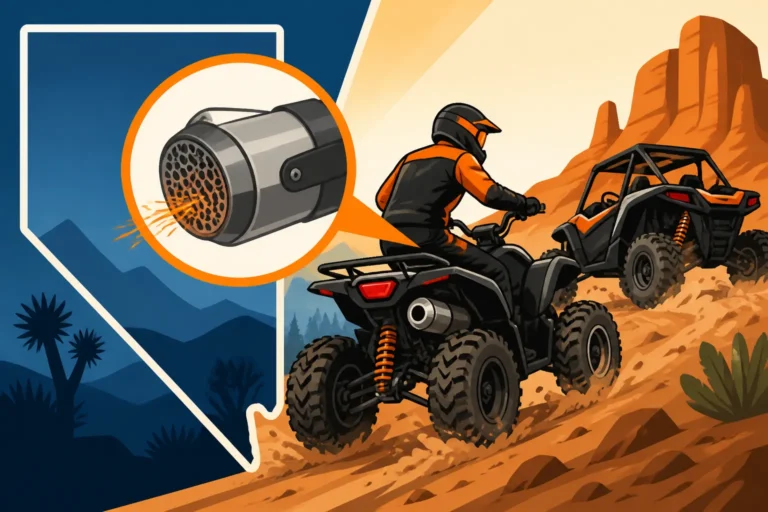
- Spark Arrester: A crucial piece of equipment for fire prevention, especially in the dry Nevada environment. This should be a U.S. Forest Service approved device.
- Muffler: Your exhaust system must be in good working order, preventing excessive or unusual noise. Noise ordinances often apply on public roads.
Many stock UTVs will require aftermarket upgrades to meet all these requirements. This is where companies like SuperATV become incredibly valuable. They offer a wide array of DOT-compliant accessories, including turn signal kits, rearview and side mirrors, horns, and even full windshields, making it easier for riders to bring their machines up to legal road standards. Always ensure any parts you add meet or exceed federal Department of Transportation (DOT) standards where applicable. For a complete checklist, consult [Nevada Equipment List for Road-Legal UTVs] and [Nevada Street Legal UTV Requirements].
Driver's License, Insurance, and Helmet Laws
Just like driving a car, operating a Large ATV on a Nevada county road comes with specific driver responsibilities. First and foremost, you must possess a valid driver's license. A standard Class C driver's license (the kind you use for your car) is sufficient. You cannot ride on a learner's permit alone, nor can you use your off-road safety certificate as a substitute.
Secondly, and this is a critical point that many OHV riders often overlook or simply don't realize: liability insurance is mandatory. Just as with any other motor vehicle on a public road, your Large ATV must be covered by a policy that meets Nevada's minimum liability requirements (NRS 485.185). Carrying proof of this insurance is essential, as law enforcement will ask for it during any stop. Without it, you could face significant fines and penalties.
Finally, let's talk about helmets. Nevada's helmet laws can be a bit nuanced, particularly when transitioning from off-road trails to county roads. While helmets are generally recommended for all OHV riding, on approved county roads, if your Large ATV is equipped with a roll cage and seat belts, adult occupants typically are not legally required to wear a helmet. However, safety should always be your priority, and wearing a helmet significantly reduces the risk of serious injury. For minors, the rules are often stricter, requiring helmets regardless of the vehicle type. Always confirm the latest regulations regarding [Nevada Helmet Rules for Road Riding] and passenger rules. More on driver qualifications can be found in [Nevada Driver's License Rules for UTV Road Use] and the crucial requirement for [Insurance Nevada Requires for Road Use].
Practical Considerations and Staying Out of Trouble
Navigating Nevada's UTV road laws requires more than just understanding the statutes; it demands proactive planning and responsible riding. Even with all the right decals and equipment, a lack of diligence or poor judgment can quickly lead to citations and a ruined day.
Due Diligence Before You Ride
The golden rule for riding UTVs on Nevada county roads is simple: always do your homework. Before you ever load your UTV onto a trailer or even head out of your driveway, confirm the specific regulations for the area you intend to ride. This means calling the local county sheriff's office, the city clerk's office, or the planning department to inquire about any specific ordinances that might restrict Large ATV use on county roads within their jurisdiction. Don't rely solely on online forums or word-of-mouth; official sources are your best and safest bet.
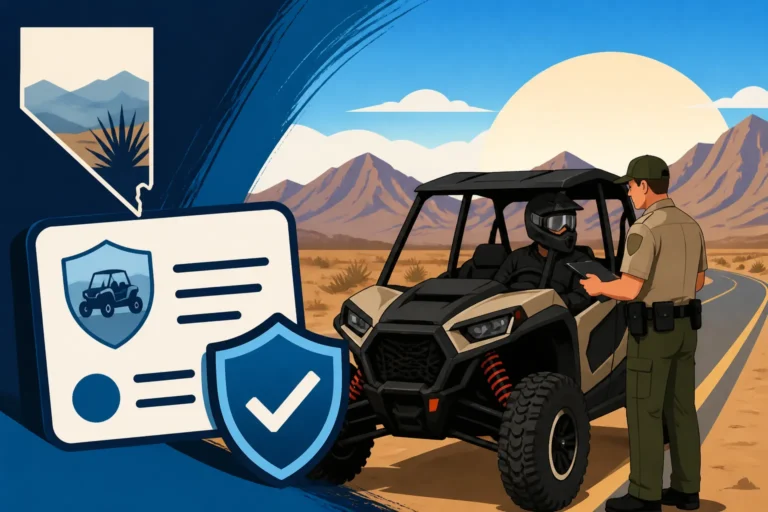
Websites and resources like those offered by SuperATV often provide helpful overviews of state-specific OHV laws, but it's crucial to cross-reference this information with official government sources for the most up-to-date and localized details. These laws can and do change, and what was legal last year might not be today. Always carry all your necessary paperwork – your regular OHV registration, your Large ATV decal, proof of insurance, and your driver's license – in a waterproof bag or container. When a Nevada trooper pulls you over, they'll want to see these documents, and having them readily accessible and in order will make the stop much smoother. Understanding [What a Nevada Trooper Looks For on a County Road] can give you an edge.
Riding Etiquette and Law Enforcement
When you're on a county road, even a minor, unpaved one, you are sharing that space with other vehicles and are expected to follow all standard traffic laws. This means obeying posted speed limits, signaling turns, yielding the right-of-way, and generally driving courteously and predictably. Remember, law enforcement officers will treat your UTV like any other vehicle on the road, and you are subject to the same traffic infractions and penalties.
Being a responsible rider also helps foster a positive image for the OHV community. Excessive noise, reckless driving, or disregard for other road users can lead to increased restrictions and negative public perception. The fines for non-compliance with Nevada's road-legal OHV regulations can be significant, ranging from hundreds of dollars for missing decals or insurance to even more severe penalties for reckless driving or operating in prohibited areas. It's simply not worth the risk. Knowing [Nevada Tickets for Riding Where You Should Not] can highlight the financial implications of ignoring the rules. Ride smart, ride safe, and respect the laws to ensure these county roads remain accessible for Large ATVs in the future.
Here’s a quick overview of the key requirements:
| Feature | Requirement | Notes |
|---|---|---|
| Machine Qualification | "Large ATV" designation | Must have 4+ permanent, manufacturer-installed seats OR a truck-like cargo bed (NRS 490.043). Most 2-seat sport UTVs do not qualify. |
| Road Decal | Nevada Large ATV Decal | Separate from standard OHV registration decal. Required for legal road use. |
| Driver's License | Valid Driver's License | Standard Class C (car) license is required. |
| Liability Insurance | Mandatory | Required by NRS 485.185, just like a car. Carry proof. |
| Headlights | Functional & Visible 500 ft | Must be operational, front. |
| Taillights & Stop Lamp | Functional & Visible 500 ft | Must be operational, rear, with a dedicated brake light. |
| Turn Signals | Required | Front and rear, indicating turns. (Often an aftermarket add-on). |
| Mirrors | At least two (left/right) or one (center) | Providing clear view to the rear. |
| Horn | Functional & Audible 200 ft | For warning other vehicles. |
| Spark Arrester | Required | U.S. Forest Service approved. |
| Muffler | Operational | Preventing excessive noise. |
| Seat Belts | Must be worn if equipped | For all occupants while on the road. |
| Helmet (Adults) | Not always mandatory on road with roll cage/belts | Always recommended for safety. Stricter rules for minors. |
| Permitted Roads | Minor County Roads | Subject to county/city ordinances. Local restrictions frequently apply. |
| Paved Highway Use | Limited to 2-mile crossings | For connecting trails or accessing destinations, no extended travel. |
| Interstate Highway Use | Strictly Prohibited | No exceptions. |
| Supervision of Minors | Age-specific rules apply | Minors operating a UTV on public roads must meet age requirements and may require adult supervision. |
| Paperwork | Carry all documents | Registration, Large ATV decal, proof of insurance, driver's license. |
Disclaimer
This article is for general informational purposes only and does not constitute professional advice. Laws, prices and regulations vary by location and change over time. Consult a qualified professional for guidance on your specific situation.