Nevada Helmet Rules Off-Road Versus On-Road
Navigating Nevada's ATV and UTV helmet rules can feel like riding through a sandstorm blindfolded. It's not always clear when a helmet is required, what type is best, and how the rules shift depending on whether you're tearing up a dune or cruising a county road. This guide will cut through the confusion, explaining the crucial differences between off-road and on-road helmet regulations so you can ride safely and legally across the Silver State, no matter where your adventure takes you.
The Foundation of Safety: Why Helmets Matter in the Nevada Desert
Even before we dive into the letter of the law, it's crucial to understand why helmets are such a big deal, especially in the rugged, unpredictable terrain of Nevada. Off-highway vehicle (OHV) riding, whether it's on a quad, a side-by-side, or a dirt bike, inherently carries risks. The ground is hard, obstacles are common, and rollovers can happen in a split second, even to experienced riders. A helmet is your first and best line of defense against serious head injuries, which can be life-altering or even fatal. It's not just about avoiding a ticket; it's about protecting your brain and ensuring you can keep enjoying the vast beauty of the Nevada landscape for years to come.
When you're out exploring trails like those at Logandale Trails or challenging yourself on the vast expanse of Sand Mountain, conditions can change rapidly. Dust can obscure vision, unexpected dips and rocks can send you flying, and other riders might not always see you. The sheer kinetic energy involved in an OHV crash is immense, and a helmet is specifically designed to absorb and dissipate that energy, significantly reducing the impact on your head. Think of it as essential gear, right alongside your goggles and sturdy boots.
Understanding the Risks of OHV Riding
Many riders, especially adults, might feel confident enough to skip a helmet when riding off-road because the law doesn't always mandate it for those over 18. However, confidence doesn't make you immune to gravity or the unforgiving desert floor. A simple fall at low speed can still result in a concussion or worse. The terrain is often uneven, with loose gravel, hard-packed dirt, and sudden drops that can catch you off guard. We've all seen videos of rollovers, and while modern UTVs are designed with roll cages, your head can still strike the cage, interior components, or even the ground if you're partially ejected.
Consider the potential for unexpected events: a tire blowout, hitting a hidden rock, swerving to avoid wildlife, or a mechanical failure. These aren't just possibilities; they're realities of off-road riding. Even when traveling at what feels like a leisurely pace, the forces involved in an accident are substantial. Investing in a quality helmet and wearing it every single time you ride off-road, regardless of your age or perceived skill level, is the smartest decision you can make for your safety. It's about proactive protection, not reactive regret.
Why Every Rider Should Wear a Helmet
Beyond the legal requirements, there's a strong case for universal helmet use, regardless of age or location. Modern helmets are more comfortable, lightweight, and well-ventilated than ever before. They offer features like enhanced visibility, sun visors, and even communication systems, making your ride safer and more enjoyable. Think of it as part of your standard riding kit, just like you wouldn't head out without adequate water for a desert ride.
For families riding together, setting the example is paramount. If adults wear helmets, children are far more likely to embrace it as a non-negotiable part of riding. This fosters a culture of safety that benefits everyone on the trail. While Nevada law draws a line for minors, the physics of an accident don't care about your birth certificate. Whether you're 8 or 80, your head needs protection. It's a simple piece of equipment that provides immense peace of mind and, more importantly, life-saving protection.
Off-Road Helmet Requirements: What Nevada Law Says for Dirt and Dunes
When you're out on the vast stretches of BLM land, tearing through the dunes, or exploring designated OHV trails like those near Valley of Fire, the helmet rules for ATVs and UTVs are a bit more specific, focusing primarily on age. It’s important to understand this distinction so you can ride legally and safely. Unlike on-road rules, which apply to all ages for certain machines, off-road mandates specifically target younger riders.
Nevada law, specifically NRS 490.130, clearly states that any person under 18 years of age operating or riding as a passenger on an all-terrain vehicle (ATV) or off-highway motorcycle must wear a safety helmet. This isn't just a suggestion; it's a legal requirement. This means if you have a teenager, a pre-teen, or a younger child riding with you on the trails, they absolutely must have a helmet on. This rule applies whether they are driving their own smaller machine, like a youth ATV, or riding as a passenger in a side-by-side with an adult at the wheel.
Who Must Wear a Helmet Off-Road in Nevada
The core of Nevada's off-road helmet law revolves around age. If you are under 18 years old, whether you're the operator or a passenger on an ATV or off-highway motorcycle, a helmet is legally required. This applies across all off-highway areas, from the challenging trails of Logandale to the wide-open spaces of Winnemucca Dunes. There are no exceptions for skill level, type of machine (as long as it's an ATV or off-highway motorcycle), or the presence of a roll cage in a UTV. The moment a minor is on an OHV off-road, a helmet must be on their head. You can find more details on general age requirements in [Nevada Minimum Age to Ride Off-Road].
For adults aged 18 and older, the law is different: a helmet is not legally mandated when riding off-road. However, this is a critical distinction that often causes confusion. While the law might not require it, common sense and safety experts (including us here at the blog!) overwhelmingly recommend that all riders, regardless of age, wear a helmet every time they ride an OHV. Accidents don't discriminate by age, and the risks of head injury are just as severe for an adult as for a minor. Riding without a helmet as an adult off-road is a choice, but it's a choice that comes with significant risk.
What Type of Helmet is Recommended Off-Road
For off-road riding, you'll want a helmet specifically designed for the demands of the dirt. These typically feature an extended chin bar for face protection, a sun visor to block glare and roost, and ample ventilation to keep you cool in the Nevada heat. Look for helmets that are "DOT-compliant," meaning they meet the safety standards set by the Department of Transportation. Beyond DOT, many riders seek out helmets that also meet Snell M2020 (or later) or ECE 22.05/22.06 standards, which are often more rigorous.
Full-face off-road helmets are generally the safest option, providing comprehensive protection for your entire head and face. Paired with goggles, they offer excellent defense against dust, debris, and impacts. Some riders, particularly those in UTVs, might opt for an open-face helmet combined with a good communication system for easier conversation, but this does sacrifice some facial protection. Many aftermarket accessory companies, like SuperATV, offer a wide range of helmet options and communication systems designed for the unique environment of OHV riding, ensuring compatibility and durability in dusty, rugged conditions. Whatever you choose, ensure it fits snugly and comfortably, without being too tight or too loose, and that the chin strap is always securely fastened.
On-Road Helmet Requirements: Riding Nevada's Street-Legal UTVs
The rules shift significantly when you transition from off-road trails to designated county roads. If you're fortunate enough to have a "large ATV" (which generally means a UTV with four or more wheels, a steering wheel, and features like seatbelts, often qualifying as street-legal on specific roads in Nevada), the helmet requirements become much stricter and apply to everyone, regardless of age. This is a common point of misunderstanding for riders who are used to the more relaxed off-road adult rules.
Nevada Revised Statute (NRS) 490.060 is the key here. It dictates that if you are operating or riding as a passenger in a "large ATV" on a highway or county road where such vehicles are permitted, you and all your passengers must wear a safety helmet. This means if you're taking your side-by-side from your cabin to a trailhead, or perhaps cruising a backroad near Caliente, everyone inside that UTV needs a DOT-compliant helmet securely on their head. This applies to the driver, the front passenger, and any rear passengers, whether they are adults or children. This specific law is critical for anyone looking to utilize the limited street-legal options for UTVs in the state. [Nevada Helmet Law for Road Riding] delves deeper into these specific requirements.
Nevada's Helmet Law for Road Riding: The "Large ATV" Distinction
The term "large ATV" is crucial for understanding Nevada's on-road helmet laws. While a traditional two-seat sport quad, for example, is an ATV, it typically doesn't meet Nevada's definition of a "large ATV" for road use. A "large ATV" is defined by factors like having four wheels, a steering wheel, side-by-side seating, and other vehicle-like characteristics. This definition primarily encompasses most modern UTVs and side-by-sides. If your machine fits this description and you're riding it on a public road where "large ATVs" are allowed, then helmets are mandatory for all occupants.
This means a family heading out of Logandale town to hit the nearby trails on their four-seat side-by-side must ensure every person, from the youngest child to the oldest adult, has a helmet on for that short stretch of pavement. The law doesn't care if you're only going a quarter-mile; if you're on a public road, the rule applies. This strict mandate reflects the inherent dangers of mixing OHVs with other traffic, even on less-traveled county roads, where speeds can be higher and the risk of collision with a traditional vehicle is present.
Helmet Rules for Passengers on Nevada Roads
Just as the operator of a street-legal UTV on a designated Nevada road must wear a helmet, so too must every passenger. This is often overlooked, especially by groups of friends or families. It's not uncommon to see a driver with a helmet and passengers without, assuming the rule only applies to the person at the controls. However, the law is clear: all occupants are covered.
This means if you have multiple passengers in your four-seat UTV, everyone needs a helmet. This includes children in booster seats or smaller passengers in the back. Proper helmet fit is especially important for children, as a poorly fitting helmet can be more dangerous than none at all in an accident. Always ensure children's helmets are the correct size for their head, not one they'll "grow into." Many reputable gear suppliers, including those you might find through brands like SuperATV, offer youth-specific helmet lines designed to provide proper protection and fit for younger riders. For more details on this, you can look into [Nevada Helmet Rules for Passengers].
How On-Road Rules Differ from Off-Road
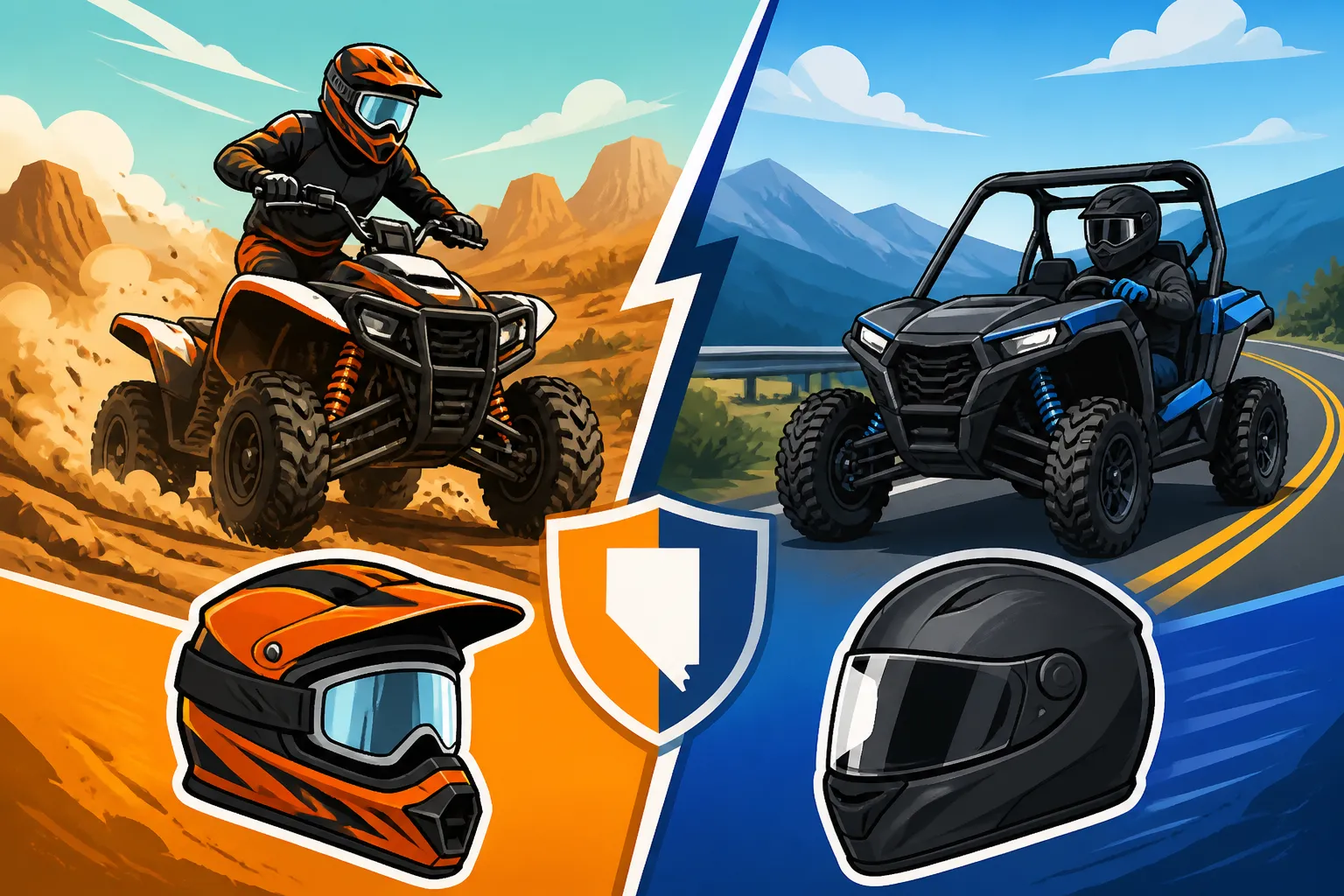
The key difference between Nevada's off-road and on-road helmet laws is the scope of who is required to wear one. Off-road, it's primarily about protecting minors (under 18). Adults riding off-road are not legally required to wear a helmet, though it's always highly recommended. On-road, however, if you're riding a "large ATV" (UTV) where permitted, the helmet mandate applies to everyone, regardless of age.
This distinction highlights different priorities: off-road rules focus on the vulnerability of younger riders in a recreational setting, while on-road rules emphasize universal protection when OHVs are interacting with public roadways and potential vehicle traffic. Understanding this crucial difference can save you from a citation and, more importantly, from serious injury.
Specific Scenarios and Exceptions to Nevada Helmet Laws
Nevada's OHV landscape is incredibly diverse, from vast open deserts to winding mountain trails and the occasional county road connecting them. This variety often leads to nuanced situations where riders might question the exact helmet requirements. While the general rules for minors off-road and all occupants of large ATVs on-road are clear, some specific scenarios deserve a closer look.
One common question arises when riders use a short stretch of pavement, perhaps to get from a staging area to a trailhead, or to cross a road to access another section of public land. Nevada's famous [Nevada's 2-Mile Limit on Paved Highway] can be a lifeline for riders, allowing them to legally connect trails. However, even for these brief paved excursions, if your machine qualifies as a "large ATV," the on-road helmet rule for all occupants applies. It's not about the distance; it's about the type of road and the type of vehicle. Even if you're just popping across US 50 for a few hundred feet to get to Sand Mountain, everyone in that UTV needs a helmet.
Supervising Minors: When You're Responsible
For adults supervising riders under 18, the helmet law isn't just about the minor; it also puts responsibility on the adult. If you're a parent or guardian allowing a minor to operate an ATV or off-highway motorcycle off-road without a helmet, you could face penalties. It's not just the child who gets cited; the supervising adult can also be held accountable. This emphasizes the state's commitment to protecting young riders.
When taking children out on machines, whether they're driving their own or riding as passengers, ensuring they have a properly fitted, DOT-compliant helmet is non-negotiable. This extends to proper supervision as well, as covered in [Supervising a Rider Under 16 on County Roads]. Always lead by example, wear your own helmet, and make sure every member of your group understands the importance of this vital safety gear.
Riding a Paved Shoulder or Ditch: Still On-Road
Sometimes riders might try to skirt the "on-road" rules by riding in the shoulder or ditch alongside a paved road, thinking it’s technically "off-road." However, for enforcement purposes, riding along the shoulder or within the right-of-way of a public road is generally still considered part of the "highway" or "roadway" for the purpose of safety equipment regulations.
This means if you're on a "large ATV" and riding the shoulder of a county road where OHVs are permitted, the helmet rule for all occupants will still apply. Don't assume that moving slightly off the paved surface exempts you from the on-road helmet requirements. When in doubt, wear the helmet. It's better to be safe and legal than to risk a fine and, more importantly, an injury.
When a Helmet Might Seem Optional (But Isn't)
There are a few situations where riders might mistakenly believe a helmet is optional. For instance, riding a side-by-side with a full windshield, a roof, and doors might give the illusion of being in a more "enclosed" vehicle, similar to a car. However, a UTV is not a car, and Nevada's "large ATV" designation specifically applies. The presence of a windshield or a full cage, even with aftermarket additions from companies like SuperATV that enhance comfort or protection, does not negate the helmet requirement on public roads.
Similarly, slow-speed driving around a campsite or a private property entrance that happens to be on a public easement can create confusion. Even short distances on public land, if it's a designated road, trigger the on-road helmet rules for "large ATVs." The best rule of thumb is: if you're on a public road and your machine is a UTV (or a "large ATV"), assume helmets are required for everyone. If you're off-road and anyone in your party is under 18, helmets are required.
Choosing the Right Helmet for Nevada Riding
Selecting the right helmet isn't just about meeting legal requirements; it's about maximizing your safety and comfort. With so many options on the market, understanding the key features and standards can help you make an informed decision. A good helmet is an investment in your well-being, designed to protect the most vital part of your body.
When shopping for an OHV helmet, you'll encounter various styles, from full-face off-road helmets to modular designs and even some open-face options. Each has its pros and cons in terms of protection, ventilation, and field of view. What's most important is that the helmet meets recognized safety standards and fits your head correctly.
DOT vs. Snell vs. ECE: Understanding Safety Standards
The most basic standard you'll see on any street-legal or off-road helmet in the US is "DOT-compliant." This means the helmet meets the minimum safety requirements set by the U.S. Department of Transportation. For any helmet worn on Nevada's public roads (where required), DOT compliance is a must.
Beyond DOT, you'll often find helmets certified by Snell (Snell Memorial Foundation) or ECE (Economic Commission for Europe).
- Snell: This is a non-profit organization that conducts more rigorous testing than DOT, often involving multiple impacts in the same spot, and different types of impacts. A Snell M2020 (or newer) certified helmet offers a higher level of impact protection. Many serious off-road riders and racers prefer Snell-certified helmets.
- ECE: European Economic Community standards are also widely recognized and often considered more comprehensive than DOT, testing for things like rotational forces and chin bar integrity. ECE 22.05 or 22.06 are common certifications.
While DOT is the legal minimum, opting for a helmet that also meets Snell or ECE standards provides an extra layer of protection, particularly beneficial for the high-energy impacts that can occur during aggressive off-road riding. You might pay a bit more, but the added safety is invaluable.
Importance of Proper Fit and Comfort
A helmet can only protect you if it fits correctly. A helmet that's too large can shift around during an impact, compromising its protective ability. One that's too small will be uncomfortably tight, leading to headaches and distraction.
Here’s how to check for a proper fit:
- Snugness: The helmet should feel snug all around your head, with no pressure points. It shouldn't move easily when you shake your head side-to-side or up-and-down.
- Cheek Pads: Your cheeks should be slightly compressed by the pads.
- Forehead: The helmet should sit low enough that the top edge of the eye port is just above your eyebrows, without obscuring your vision.
- Chin Strap: Once fastened, the chin strap should be tight enough that you can't pull the helmet off your head by rolling it forward or backward. You should be able to fit no more than one finger between the strap and your chin.
Comfort is also key, especially on long rides in the Nevada sun. Look for features like good ventilation, moisture-wicking liners (often removable and washable), and lightweight materials. Many riders also consider helmet-compatible communication systems, allowing them to talk to passengers or other riders without removing their helmets, enhancing safety and enjoyment. These often integrate seamlessly into modern helmets or can be added from third-party suppliers like SuperATV.
What Law Enforcement Looks For
When a Nevada Trooper or county deputy stops you, especially if you're on a public road, they'll check for several things regarding your helmet. First and foremost, they'll verify if one is being worn by all required occupants. Second, they'll look for the DOT certification sticker, usually on the back of the helmet. This sticker is proof that the helmet meets the minimum safety standards. An expired or missing DOT sticker might raise questions.
They'll also observe whether the helmet is worn correctly and securely. A helmet hanging off the back of your head or with a loose chin strap offers little protection and will likely be considered non-compliant. Deputies at popular riding areas like Sand Mountain or Logandale Trails are experienced in quickly assessing compliance. They understand the difference between off-road and on-road rules, and they're focused on ensuring the safety of all riders, especially the younger ones. You can learn more about what they look for in [What a Nevada Trooper Looks For on a County Road].
Enforcement and Penalties for Helmet Violations
Ignoring Nevada's helmet laws can lead to more than just a stern lecture from a deputy. There are real financial penalties and other consequences for non-compliance, which can quickly put a damper on your riding adventure. Law enforcement agencies, including the Nevada Highway Patrol, county sheriff's departments (like those in Washoe County or Lincoln County), and the Bureau of Land Management (BLM) rangers, actively patrol popular OHV areas and designated county roads. They are well-versed in OHV regulations and will enforce them.
The goal of enforcement isn't just to issue tickets; it's fundamentally about rider safety and ensuring that everyone operates responsibly within the rules established to prevent accidents and serious injuries. A citation for a helmet violation serves as a reminder that these laws are in place for a reason and that adherence is expected.
Fines and Citations for Non-Compliance
If you or a required passenger are caught riding without a helmet, you can expect to receive a citation. While specific fine amounts can vary by jurisdiction and can change over time, they typically involve a monetary penalty that can range from around $100 to $250 or more for a single violation. These fines can quickly add up if multiple occupants are found to be in violation.
For example, if you're riding a UTV on a designated county road with three passengers, and none of you are wearing helmets, that could potentially be four separate citations issued at the discretion of the officer. This means what started as a fun day of riding could end up costing you hundreds of dollars. Beyond the immediate fine, repeated violations could lead to more severe penalties, though this is less common for first-time helmet infractions. It's far cheaper and infinitely safer to simply wear the helmet.
Officer Discretion and Preventing Issues
While officers have the authority to issue citations, they also exercise discretion. Factors such as whether it's a first offense, the overall safety of the situation, and your cooperation with the officer can influence their decision to issue a warning versus a ticket. However, relying on discretion is never a good strategy. The best way to prevent any issues is to simply comply with the law.
Before you head out, especially if you're exploring a new area or plan to ride on any county roads, refresh your memory on Nevada's helmet rules. Ensure everyone in your party, particularly minors and anyone riding in a "large ATV" on a public road, has a DOT-compliant helmet that fits properly and is securely fastened. Make it a routine: check your fuel, check your tires, and check your helmets. This proactive approach ensures a safe, legal, and enjoyable ride across Nevada's magnificent OHV country.
Comparing Nevada's Off-Road vs. On-Road Helmet Requirements
To help clarify the distinctions, here's a quick comparison of Nevada's helmet rules for off-road and on-road riding:
| Aspect | Off-Road Riding (Trails, Dunes, BLM Land) | On-Road Riding (Designated County Roads) |
|---|---|---|
| Who Must Wear a Helmet | All riders under 18 years old (operator and passenger) | All riders, regardless of age, when operating a "large ATV" (most UTVs) on designated public roads where permitted. This includes all passengers. |
| Adults (18+) | Not legally required, but highly recommended | Legally required when riding a "large ATV" on designated roads. |
| Legal Requirement for Helmet | Yes, if operator/passenger is under 18 | Yes, for all ages on a "large ATV" (UTV) on designated county roads. |
| Helmet Standard | DOT-compliant recommended | DOT-compliant required |
| Typical Machines Affected | ATVs, Off-Highway Motorcycles, UTVs | Primarily UTVs and similar "large ATVs" |
| Why the Rule Exists | Protect vulnerable younger riders | Universal protection when OHVs interact with public traffic and roads |
This table clearly illustrates the different legal obligations based on where and who is riding. Always err on the side of caution and wear a helmet, even when not legally mandated.
Disclaimer
This article is for general informational purposes only and does not constitute professional advice. Laws, prices and regulations vary by location and change over time. Consult a qualified professional for guidance on your specific situation.