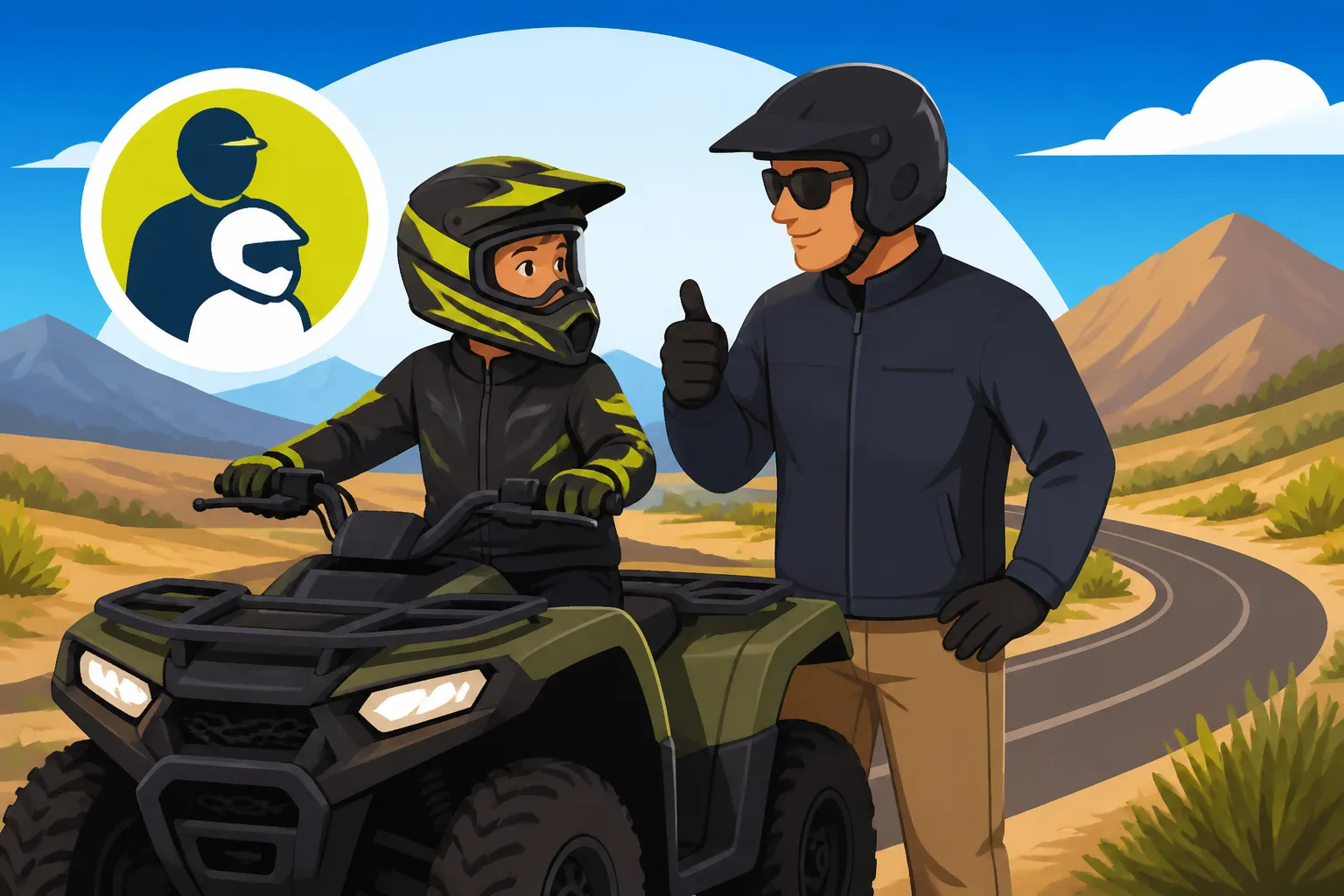
Supervising a Rider Under 16 on County Roads
It's tough when you're trying to introduce the next generation to the joy of off-roading, but you're constantly worried about doing everything by the book, especially when it comes to riding on those sometimes necessary county roads. The rules around supervising a rider under 16 can feel like a maze, full of specific age limits, machine requirements, and a whole lot of "what-ifs." This guide is here to untangle those complexities, helping you understand exactly what Nevada expects when you're supervising a young rider on its county roads.
Navigating Nevada's Rules for Young Riders on County Roads
Let's face it, bringing kids into the off-road world is one of the best parts of the lifestyle. The shared adventures, the dust, the wide-open spaces – it's magic. But when those adventures take you onto a county road, even for a short stretch, the magic can quickly turn to anxiety if you're not sure about the rules, especially with a rider under 16 behind the wheel or handlebars. Nevada has very specific regulations designed for safety, and understanding them is the first step to a worry-free ride. It's not just about what your machine can do; it's about what the law permits for young operators.
One of the biggest frustrations parents and guardians encounter is the sheer difference in rules between off-road trails and public roads. You might feel confident about your child's skills on the dirt, but that confidence can waver when they have to navigate a paved or graded county road with other traffic. Nevada’s laws aim to create a safer environment for everyone, and that often means stricter requirements for road use compared to wide-open trails. We're going to break down these distinctions so you can ride with peace of mind.
Defining "County Road" and "Large ATV" in Nevada
Before we dive into supervision specifics, it’s crucial to understand what Nevada means by "county road" and "Large ATV." This isn't just bureaucratic jargon; it directly impacts where and how a minor can ride. You might assume any unpaved public route is fair game, but the state has its own definitions that can surprise you. Understanding these terms will help you avoid accidental violations and keep your young rider safe and legal.
Nevada's legal framework for Off-Highway Vehicles (OHVs) differentiates between riding off-road and riding on a public highway. A "county road" generally falls under the umbrella of a public highway, albeit often less traveled and sometimes unpaved. However, even these roads are subject to different rules than, say, a designated trail on BLM land. [Which Nevada County Roads Qualify for ORVs] outlines some of these distinctions. For a machine to legally operate on many county roads, it often needs to qualify as a "Large All-Terrain Vehicle" as defined by Nevada law, which means having a certain width, weight, and potentially seating capacity. This classification is key, because it dictates the equipment, registration, and driver requirements.
Most standard two-seat sport quads, for instance, generally don't qualify as "Large ATVs" under Nevada law because they typically don't meet the minimum width or the specific utility features like a truck bed. Side-by-sides (UTVs), on the other hand, frequently do, thanks to their wider stance and often a bed for cargo. This distinction means that while your UTV might be eligible for a [Nevada Large ATV Decal], your child's smaller quad might not be, making road travel a non-starter for that particular machine. This isn't about skill; it's about the machine's legal classification and the safety features it was designed with for road-sharing.
Age Restrictions for Road Use vs. Off-Road Riding
It's common for parents to be a bit confused about age restrictions. Can a 12-year-old ride a 90cc quad off-road? Often, yes, with proper supervision and machine size. Can that same 12-year-old drive a UTV on a county road? That's where things get much trickier, and generally, the answer is a resounding "no" without very specific conditions. Nevada draws a clear line between the wilderness and the roadway, and age is a primary factor in that distinction.
Off-road, Nevada has no minimum age requirement to operate an OHV, though it strongly encourages safety courses and adult supervision for younger riders. [Nevada Minimum Age to Ride Off-Road] delves into this. However, when it comes to county roads, the rules tighten considerably. To operate a "Large ATV" on a county road, the driver generally needs to possess a valid driver's license, which means they must be at least 16 years old. This is a critical point that many overlook. The law isn't just about whether they can drive it; it's about whether they are legally allowed to.
This means that if your child is under 16, even if they're a fantastic rider, they typically cannot operate a "Large ATV" on a Nevada county road. The supervision rules primarily apply to the licensed driver who is operating the machine, ensuring they are driving responsibly. For a minor to even be a passenger on a road-legal UTV, there are rules about seating and safety equipment. This often means that while off-road adventures are open to younger enthusiasts, those brief stretches on county roads might be off-limits for them as operators, reinforcing the need for careful planning and adherence to the law.
The Role and Responsibilities of a Supervisor on Nevada County Roads
So, if a rider under 16 generally can't operate an OHV on a county road, what exactly does "supervising a rider under 16 on county roads" mean in Nevada? It means ensuring their safety as a passenger, or guiding them if they are riding a separate, legal machine where permitted, but more often, it revolves around the legal driver (who must be 16 or older and licensed) meeting all requirements. The supervisor's role isn't just a suggestion; it's a legal obligation with significant responsibilities attached, aimed at protecting everyone on the road.
This can be a point of frustration for families who enjoy riding together, expecting to have their children operate their own machines from trail to trail via a quick road hop. The reality is that Nevada's road laws are much more stringent than its off-road regulations, particularly concerning minors. The supervisor isn't just an adult present; they are the responsible party for ensuring all legal requirements are met, both for the machine and for the rider, even if the minor is only a passenger.
Who Qualifies as a Supervisor in Nevada?
When we talk about supervising a rider, especially on county roads, Nevada has specific expectations for who can fulfill this role. It's not just any adult; it's an individual who meets certain criteria, primarily relating to their ability to legally operate a motor vehicle on public roads themselves. This ensures that the person in charge understands traffic laws, has the experience to react to road conditions, and can be held accountable for the safe operation of the OHV.
For general off-road riding, a supervisor is typically any adult over 18 who is present and actively monitoring the minor. However, for a minor to be a passenger in a "Large ATV" on a county road, the operator of that "Large ATV" must hold a valid driver's license. That operator, whether they are the parent or another responsible adult, effectively becomes the supervisor for the minor in the machine. [Nevada Driver's License Rules for UTV Road Use] clarifies who can legally drive these machines on county roads. If a situation arose where a minor was somehow allowed to operate an OHV on a county road, the supervisor would need to be a licensed adult, ideally in a separate, accompanying vehicle, to offer immediate assistance and guidance. This highlights why such scenarios are generally avoided by the law.
Therefore, the most common scenario for "supervising a rider under 16 on county roads" in Nevada means the licensed adult (16+) is operating the road-legal "Large ATV" and the minor is a passenger, adhering to all passenger safety rules. The licensed adult is the "supervisor" in this context, responsible for the entire operation. They must be prepared to handle any situation, from mechanical issues to interacting with law enforcement.
Legal Responsibilities of a Supervisor
The legal responsibilities of a supervisor are substantial, especially when any part of your ride touches a public road. Nevada takes vehicle operation on its public ways seriously, and the presence of a minor, even as a passenger, only heightens these responsibilities. These aren't just suggestions; they are enforceable laws designed to prevent accidents and ensure public safety. Ignoring them can lead to citations, fines, and even more serious legal consequences.
First and foremost, the supervisor (the licensed operator of the "Large ATV") is responsible for ensuring the OHV itself meets all the requirements for road legality. This includes having a current [Nevada Large ATV Decal], proper liability insurance as required by [Insurance Nevada Requires for Road Use], and all the necessary safety equipment like headlights, taillights, stop lamps, mirrors, and a horn. Many riders don't realize the extent of these requirements until they're pulled over by a deputy checking for compliance.
Beyond the machine, the supervisor is responsible for the conduct and safety of the minor passenger. This means ensuring the minor is properly restrained with a seatbelt (if applicable to the machine, like in a UTV), wearing an approved helmet if required for their age or the machine type, and not engaging in any unsafe behavior. The supervisor must also be aware of and adhere to all traffic laws, speed limits, and designated routes. If an incident occurs, the licensed operator, as the supervisor, will bear the primary legal responsibility. It's a heavy burden, but one that comes with the privilege of riding on public roads.
Preparing the Machine for Road Use with Young Passengers
Getting your off-road machine ready for county road travel, especially with young passengers, is more than just kicking the tires. Nevada has a specific checklist of equipment that turns an off-road beast into a road-legal vehicle (at least for specific county roads). Failing to meet these requirements isn't just risking a ticket; it's risking the safety of everyone on board, particularly impressionable young riders.
Many of us love adding aftermarket accessories to our machines for trail performance, but road legality means a different kind of upgrade. You might have the latest suspension or a powerful engine, but if you don't have functional headlights, a horn, and appropriate mirrors, you're not ready for pavement. This is where brands like SuperATV come into play, offering a wide range of DOT-compliant accessories like mirrors, turn signal kits, and even windshields that can help transition your UTV from trail-only to county road-ready. Making these upgrades ensures not only legal compliance but also enhances visibility and safety, which is paramount when you have kids with you.
Essential Equipment for a Nevada Road-Legal OHV
When you're taking your "Large ATV" onto Nevada county roads, especially with minors, it's absolutely critical that your machine is equipped correctly. This isn't just about avoiding a fine; it's about making sure your machine is visible, controllable, and predictable to other drivers. The list of required equipment is surprisingly detailed, and missing even one item can put you at odds with law enforcement and, more importantly, put your family at risk.
Nevada's NRS 490.060 spells out the requirements for an OHV to be operated on a highway, which includes county roads. Here’s a rundown of the essentials:
- Headlights: Your OHV must have at least one headlight (and often two are preferred for better visibility) that emits a white light visible from 500 feet to the front. These aren't just for seeing the trail; they're for being seen by oncoming traffic.
- Taillights and Stop Lamps: At least one red taillight visible from 500 feet to the rear is mandatory. Even more crucial is a red stop lamp, activated by your brakes, visible from 500 feet to the rear. This warns drivers behind you when you're slowing down or stopping.
- Reflectors: Red reflectors must be visible from 200 feet to the rear. Often, taillight assemblies integrate reflectors, but it's important to confirm.
- Muffler and Spark Arrester: All OHVs operating on public land or roads must have a muffler that keeps noise within legal limits and a spark arrester to prevent wildfires. These are typically standard on most modern machines but should always be checked.
- Mirrors: You need at least one mirror, securely attached, to give you a clear view of the highway to the rear for at least 200 feet. Many aftermarket options exist, and a good set of side mirrors, perhaps from SuperATV, can drastically improve your situational awareness.
- Horn: A horn capable of emitting sound audible from 200 feet is required. This is a critical safety device for warning other drivers or pedestrians.
- Seatbelts and ROPS: For UTVs, a Roll-Over Protective Structure (ROPS) is standard, and seatbelts for all occupants are mandatory. Ensure these are in good working order and that everyone, especially children, uses them properly.
- Tires: While not always explicitly listed for "Large ATVs" as they are for street-legal cars, it's crucial to have tires appropriate for road use. Mud tires can be loud and less stable on pavement. DOT-approved tires offer better traction and durability for highway speeds.
- Brakes: A properly functioning brake system is paramount. Test your brakes before every ride, especially before hitting the pavement.
Equipping your machine properly is not a suggestion; it's a non-negotiable part of riding on county roads. Skimping on these items can lead to serious consequences, and it's simply not worth the risk when you're responsible for young passengers.
Ensuring Proper Registration and Insurance
Beyond the physical equipment, your machine needs to be legally recognized and insured for county road travel. This is an administrative hurdle that often catches riders off guard. You might have your OHV registered for off-road use, but that doesn't automatically mean it's good to go on paved surfaces. Nevada has distinct requirements that must be met to ensure you're covered both legally and financially.
For a "Large ATV" to be legally operated on Nevada county roads, it must display the specific [Nevada Large ATV Decal]. This decal signifies that your machine has been inspected (often by a licensed OHV dealer or law enforcement) to ensure it meets the dimensional requirements and has the basic road-legal equipment. This is different from the standard OHV registration decal for off-road use. You can't just slap your green off-road sticker on and expect to be compliant.
Furthermore, liability insurance is an absolute must. [Insurance Nevada Requires for Road Use] explains that Nevada law requires specific minimum liability coverage for any motor vehicle operating on public highways. This isn't optional; it's a legal safeguard that protects you and others in the event of an accident. While off-road riding typically doesn't have a state-mandated insurance requirement, any time your wheels touch a public road, insurance becomes compulsory. Don't assume your off-road policy covers road use; verify with your insurance provider to ensure you have the correct coverage for "Large ATV" road operation. Carrying proof of this insurance is also essential, as deputies will certainly ask for it during a roadside stop.
Safety Gear and Best Practices for Supervising Young Riders
When you're out on the trails, safety gear is always a priority. But when you add county roads to the mix, and particularly when you're supervising young riders, that priority ratchets up even higher. The risks associated with road travel – higher speeds, other vehicles, and hard surfaces – demand an uncompromising approach to safety equipment and riding practices. It’s not just about protecting your kids; it’s about setting a lifelong example of responsible riding.
It’s easy to get complacent on a quiet county road, especially if you’re used to the slower pace of technical trails. However, these roads can still present unexpected hazards, from blind corners to drivers not expecting an OHV. Your vigilance and adherence to safety protocols are your best defense. This is especially true when a child is sharing the experience, whether as a passenger or potentially observing from a separate, legally operated vehicle.
Mandatory Safety Gear for Young Passengers
Ensuring young passengers are wearing the correct safety gear is non-negotiable. Their smaller bodies are more vulnerable, and proper protection can make the difference between a minor bump and a serious injury. Nevada's laws, and common sense, demand that specific items are used, and as the supervisor, it's your responsibility to enforce this.
Here’s what’s typically mandatory or highly recommended for young passengers in a "Large ATV" on a county road:
- Helmets: While Nevada's helmet law can be complex for adults off-road, it's clearer for minors on public roads. [Nevada Helmet Law for Road Riding] states that all occupants under 18 years of age in a "Large ATV" must wear a safety helmet that meets federal standards (DOT approved) while operating or riding as a passenger on a public highway. Even if your state doesn't require it for adults in a UTV with a ROPS, for minors on county roads in Nevada, a helmet is typically mandatory. Ensure the helmet fits snugly, is fastened correctly, and is not expired or damaged.
- Eye Protection: Goggles or a full-face shield on a helmet are essential to protect eyes from dust, debris, and insects, which are magnified at road speeds.
- Seatbelts: In a UTV, all passengers must wear their seatbelts at all times. Ensure the seatbelt fits properly across the child’s chest and lap. Aftermarket harnesses, like those from SuperATV, can offer enhanced security and comfort for younger riders, ensuring they stay put even on bumpy roads or in sudden stops.
- Appropriate Clothing: Long pants, long-sleeved shirts, and sturdy, over-the-ankle boots are crucial. This offers protection against scrapes, brush, and exhaust heat, even in warmer weather. Gloves can protect hands and improve grip.
- Rider Position: Children should always ride in a designated passenger seat, never on laps or in areas not intended for passengers. The machine should not be overloaded, and passengers should keep all limbs inside the vehicle.
A pre-ride check should always include a gear inspection for every passenger. Make it a routine, so young riders understand the importance of being fully protected.
Best Practices for Responsible Supervision
Supervision isn’t just about making sure the kids are buckled in; it’s about actively managing the entire riding experience to prioritize safety. On county roads, this means being an exemplary driver, anticipating hazards, and always keeping the minor's well-being at the forefront of every decision. These practices build good habits for life and ensure everyone enjoys the ride.
- Lead by Example: As the licensed operator and supervisor, your driving habits will directly influence your young passengers. Drive defensively, obey all traffic laws, maintain appropriate speed limits, and signal turns clearly. If you cut corners, they'll learn to cut corners.
- Constant Vigilance: County roads can have unpredictable conditions: loose gravel, unexpected potholes, or livestock. Other drivers might not expect to encounter an OHV. Maintain a safe following distance, scan for hazards, and be prepared to react. Regularly check on your young passengers to ensure they are comfortable and secure.
- Communicate Safety: Talk to your kids about road safety. Explain why helmets are important, why seatbelts must be worn, and why you slow down for blind corners. This educates them and reinforces the seriousness of road riding.
- Route Planning: Plan your route to minimize county road travel. Stick to designated OHV routes or use roads with low traffic volume whenever possible. Avoid major highways or roads with high-speed limits. [Crossing a Highway on an ATV in Nevada] details specific rules for brief highway crossings.
- Emergency Preparedness: Carry a first-aid kit, a communication device (like a satellite messenger if cell service is spotty), water, and basic tools. Know what to do in case of a breakdown or accident. Having a reliable spare tire and a patch kit can also save the day, especially if you're out on a less-traveled county road.
Being a responsible supervisor means more than just being present; it means being proactive, prepared, and a consistent advocate for safety.
What to Expect on Nevada County Roads with a UTV
Taking your UTV onto Nevada's county roads can be an incredibly efficient way to link trails or access remote areas, but it also comes with a unique set of challenges and expectations. You're no longer just navigating natural terrain; you're sharing the road with cars, trucks, and potentially other hazards. Knowing what to expect, and how to operate your machine responsibly in this environment, is key to a smooth and safe journey, especially when you have young passengers.
This transition from dirt to gravel or pavement can be jarring for both the machine and its occupants. The noise, the increased speed, the need for heightened awareness of other traffic – it’s a different world. Deputies and local law enforcement are also acutely aware of OHV activity on county roads, and they're often on the lookout for compliance, especially regarding minors. Being prepared for these interactions is just as important as preparing your machine.
Interaction with Law Enforcement and Other Vehicles
It’s an almost certainty that if you spend enough time on Nevada county roads in your UTV, you will eventually encounter law enforcement or other vehicles. These interactions can be stressful if you’re not prepared, but they’re usually routine if you’re compliant and courteous. Knowing how to handle these situations, and what other road users expect, will make your experience much better.
When you see a law enforcement vehicle, whether it’s a sheriff’s deputy in Lincoln County or a state trooper, be prepared to pull over safely and calmly. Have your [Nevada OHV Registration Paperwork Checklist] ready, including your driver’s license, proof of insurance, and the machine's registration. The deputy will likely check your Large ATV decal, the condition of your machine’s safety equipment, and verify your paperwork. They will also be very interested in the presence of any minor passengers, ensuring they are wearing helmets (if under 18) and properly restrained. Answer their questions respectfully and cooperate fully. It's much easier to have a positive interaction when you've done your homework and are fully compliant.
Sharing the road with other vehicles also requires a different mindset. OHVs, even UTVs, are often slower, wider, and louder than standard vehicles. Expect to be passed, and be prepared to yield to faster traffic. Be mindful of dust you might kick up, especially on unpaved county roads, as it can impair visibility for drivers behind you. Avoid swerving, signal your turns well in advance, and maintain predictable movements. Remember, not all drivers are familiar with OHVs on public roads, so err on the side of caution and anticipate their actions.
Limited Road Access and Designated Routes
One of the biggest misconceptions about road-legal OHVs in Nevada is that you can just ride them anywhere. That’s simply not true. While a "Large ATV" decal allows for some county road use, it doesn't open up every paved surface. Nevada has strict rules about where OHVs can and cannot go, particularly within city limits or on state and interstate highways. [How Far You Can Ride Pavement in Nevada] is a crucial read on this topic.
Most Nevada cities and towns have ordinances that restrict OHV use on city streets to designated routes, if at all. For example, while [Mesquite and Its Reputation for Open Streets] might allow more flexibility, many other cities like Las Vegas, Reno, or Sparks have very strict limitations, often banning OHVs from city streets entirely unless crossing at a designated intersection. The idea is to ride your machine to the trailhead, not to the grocery store. This means you need to research your specific route and be aware of local ordinances before you ride.
Many county roads are open, but you are typically limited to "minor county roads" or designated routes. State routes and US highways are generally off-limits, except for very brief crossings. The intent of the "Large ATV" decal is to facilitate connecting trails or accessing remote areas where county roads are the only viable path, not to create a second mode of highway travel. Planning your route carefully using resources like the [Nevada Trail Finder] can help you identify legal access points and avoid areas where OHV road use is prohibited, keeping your family safe and compliant.
Table: Nevada OHV Road Rules for Supervisors & Minors (Summary)
To help keep everything straight, here’s a quick overview of the key points for supervising riders under 16 on Nevada county roads. Remember, this is a general guide, and specific local ordinances or road classifications can always add nuances. Always check the latest Nevada Revised Statutes (NRS) and local regulations for the area you plan to ride.
| Requirement / Item | For the Supervisor (Licensed Operator) | For the Minor (Under 16 Passenger) |
|---|---|---|
| Driver's License | Required: Must possess a valid driver's license (16+). | Not applicable as operator: Minors under 16 generally cannot operate OHVs on county roads. |
| OHV Decal | Required: [Nevada Large ATV Decal] (not standard OHV decal). | Not applicable directly to minor: Machine must have decal for road use. |
| Liability Insurance | Required: Specific minimum coverage for road use. | Not applicable directly to minor: Machine must be insured for road use. |
| Helmet | Required: If under 18, or if the machine is a motorcycle/ATV. | Required: Must wear a DOT-approved helmet if under 18, even as a passenger in a UTV on a county road. |
| Seatbelts / Restraints | Required: Must be worn by all occupants if available. | Required: Must be worn properly. Consider aftermarket harnesses (e.g., from SuperATV) for enhanced fit and security. |
| Road Equipment | Required: Headlights, taillights, stop lamp, reflectors, horn, mirrors, muffler, spark arrester. | Not applicable directly to minor: Supervisor ensures machine is equipped. |
| Road Access | Limited to minor county roads and designated routes. Avoid state/interstate highways and many city streets. | Limited to minor county roads and designated routes as a passenger. |
| Supervision Role | Direct responsibility for machine compliance, all occupants' safety, and adherence to traffic laws. | Follows supervisor's instructions; focuses on safe riding practices as a passenger. |
Conclusion: Riding Safely and Legally with Young Riders in Nevada
Bringing young riders into the world of off-road adventures is an incredible experience, creating memories that last a lifetime. Nevada offers some truly spectacular places to explore, from the red rocks of Logandale Trails to the expansive Sand Mountain dunes. But when those adventures intersect with county roads, even for a moment, the rules of the game change significantly, especially when supervising a rider under 16.
The key takeaway is that Nevada's laws prioritize safety above all else, and that means stricter requirements for road use compared to wide-open off-road areas. While off-road riding offers more flexibility for young operators, county roads typically require a licensed adult to be at the controls of a properly equipped and registered "Large ATV," with minors riding as passengers. This often means carefully planning your route to minimize road exposure and ensuring every single safety detail, from helmets to mirrors (perhaps even high-quality mirrors from SuperATV for better visibility), is rigorously checked.
It might feel like a lot of hoops to jump through, but these regulations are in place to keep everyone safe – your family, other road users, and even your own off-road investment. By understanding the distinction between off-road and county road rules, ensuring your machine is road-legal, and fulfilling your responsibilities as a supervisor, you can confidently navigate Nevada's diverse terrain and instill a lifelong love of responsible riding in the next generation. Ride smart, stay safe, and enjoy the incredible landscapes Nevada has to offer!
Disclaimer
This article is for general informational purposes only and does not constitute professional advice. Laws, prices and regulations vary by location and change over time. Consult a qualified professional for guidance on your specific situation.