How a Nevada County Opts Out by Ordinance
It can be incredibly frustrating to think you've got your off-highway vehicle (OHV) all squared away for a ride, only to find out that a perfectly good-looking county road is suddenly off-limits. You've got your decals, you understand the state laws, and then bam—a local ordinance throws a wrench into your plans. This guide is here to walk you through exactly how a Nevada county can choose to restrict OHV access on its roads, what that means for you as a rider, and how to stay on the right side of the rules.
Understanding Nevada's Baseline OHV Road Laws
Before we dive into how counties can create their own rules, it's really important to understand the foundation: what Nevada state law generally says about riding your ATV or UTV on public roads. This isn't just dry legal text; it's the framework that determines where you can and can't go, and it's what local authorities build upon—or deviate from—with their own ordinances. It's easy to get confused, especially when you're used to open desert riding, so let's break down the basic expectations.
The General Rule: Limited Paved Road Access
Nevada, like many states, primarily views off-highway vehicles as, well, off-highway. The default assumption is that these machines belong on trails, dunes, and open public lands, not on paved public roads where cars and trucks are the norm. This isn't just about speed; it's about safety, the wear and tear on roads, and the different dynamics of an OHV compared to a passenger car. State law generally restricts OHV travel on paved highways and roads. There are very few exceptions to this, and they usually involve crossing a paved road to get from one trail section to another, or riding a very short distance to access fuel or services. Even then, there are strict rules about helmet use, lights, and how far you can travel. Think of it as a brief transit, not a joyride down Main Street. For more details on these restrictions, check out [Nevada's 2-Mile Limit on Paved Highway].
This core principle means that any permission to ride on public roads is typically a specific carve-out, not a given right. Riders often feel a pinch when they learn they can't simply ride their UTV from their house down a paved road to the local convenience store, even if it's just a mile away. It feels limiting, especially if you've invested in a machine that feels perfectly capable. But the state's focus is on differentiating between highway-legal vehicles and machines designed for dirt. That's why it's crucial to know these baseline rules; they are the starting point for any discussion about county-level restrictions or allowances.
"Minor County Roads" and the Large ATV Decal
Now, here's where it gets a little more nuanced. While major paved highways are generally off-limits, Nevada law does make some provisions for "minor county roads." These are typically unpaved, less traveled roads, often found connecting rural communities or providing access to remote areas and trailheads. For specific types of OHVs—namely, "Large ATVs" (which typically means UTVs and larger side-by-sides that meet certain width, weight, and seating criteria)—Nevada law allows for limited access on these minor county roads, provided the vehicle has the specific [Nevada's Large All-Terrain Vehicle Decal]. This isn't the standard OHV registration decal you put on the left rear of your quad; it's a separate decal indicating that your machine has met additional requirements for road-legal operation on these specific types of roads.
To qualify for this large ATV decal, your machine must meet a whole checklist of equipment requirements, from headlights and taillights to mirrors, a horn, and even a windshield if applicable. This is where companies like SuperATV come in, offering a wide array of aftermarket accessories to help riders bring their UTVs up to snuff for these specific road-legal requirements. Installing a proper horn or DOT-approved mirrors can make all the difference. Even with this decal, there are still rules: a licensed driver is required, passengers must be seated properly, and you're still not allowed on state highways or within the limits of certain cities unless specifically designated. The challenge here is that what constitutes a "minor county road" can sometimes be ambiguous, and this is exactly where local ordinances step in to clarify or, indeed, restrict access further. Riders often invest time and money into making their machines compliant, only to discover that the very roads they planned to use are closed by local decree.
The Power of Local Control: County Ordinances
While state law sets the general framework, individual counties in Nevada have significant authority to tailor these rules to their specific local needs and circumstances. This is where the concept of a county "opting out" comes into play. It's not a blanket refusal of all OHV activity, but rather a targeted decision about where and how OHVs can operate on roads within their jurisdiction. Understanding this local power is key to avoiding an unexpected citation or an unwelcome encounter with law enforcement.
What State Law Allows Localities to Do
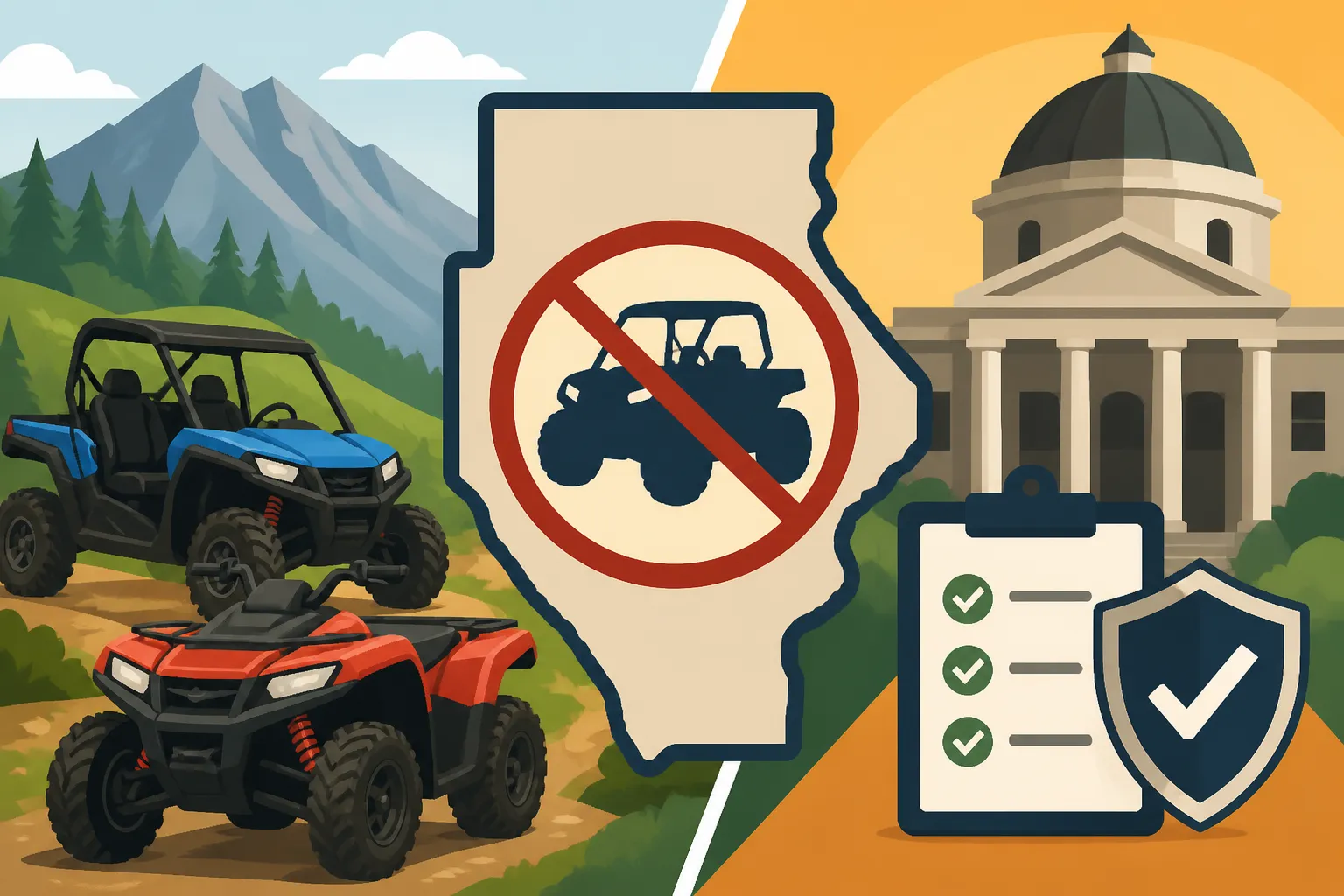
Nevada Revised Statutes (NRS) specifically grant counties the power to regulate or even prohibit OHV operation on roads under their jurisdiction. Essentially, state law provides a default setting that allows OHVs on certain minor county roads with the proper decal, but then gives counties the option to override that default. This means a county can pass an ordinance that declares some or all of its minor county roads off-limits to OHVs, even if those machines have the large ATV decal and would otherwise be legal under state guidelines. This flexibility is given to local governments because they are considered to be in the best position to understand the unique traffic patterns, safety concerns, and community impacts within their own borders. A rural county with vast open spaces might have a very different approach than a densely populated county with more residential roads.
For riders, this can feel like navigating a legal minefield. You might be perfectly compliant in one county, cross an invisible line into another, and suddenly be breaking the law. It's a source of real frustration, especially for those who travel across county lines to access popular riding areas. The intent of state law is to give local communities a voice, but the practical effect for riders is a patchwork of regulations that requires careful planning and research before heading out. Always check the local ordinances of the specific county you plan to ride in.
The Rationale Behind County Decisions
So, why would a county choose to opt out or restrict OHV access on its roads? The reasons are varied and often stem from a desire to address local concerns that the broader state law might not adequately cover. One primary driver is public safety. Residential areas, roads with heavy pedestrian or bicycle traffic, or those with blind curves and limited visibility can become hazardous when OHVs are present. While OHVs are fun, they handle differently than cars and their noise levels can be a concern for residents. Noise complaints, dust, and general disruption to quiet neighborhoods are common reasons for restrictions. Some counties also worry about the impact on road surfaces, especially unpaved roads, and the cost of maintenance.
Another factor can be the sheer volume of riders. Popular destinations might see an influx of OHVs, leading to congestion and increased risk. For instance, a county might want to manage access to a particular trail system by directing traffic through designated routes, rather than allowing free-for-all access on all county roads. Economic impact can also play a role, as can environmental concerns in sensitive areas. For example, a county might prohibit OHV use on roads leading through critical habitat zones to protect local wildlife. Ultimately, these ordinances are usually the result of community feedback, local law enforcement input, and the county commissioners balancing the interests of OHV enthusiasts with those of residents, other road users, and environmental preservation. It's a complex balancing act, and sometimes the result is a restriction that feels arbitrary to a rider.
How a County Actually Opts Out: The Ordinance Process
It's not as simple as a county commissioner waking up one morning and deciding to ban OHVs from a road. There's a formal, legal process involved, designed to ensure public input and legal validity. Knowing this process can help you understand the timeframe for changes, and even provide avenues for you to voice your opinions. It's about transparency, even if the outcome isn't always what every rider hopes for.
From Public Hearing to Formal Enactment
The process for a Nevada county to enact an ordinance restricting OHV access typically begins with a proposal, often initiated by county commissioners, local law enforcement, or concerned citizens. This proposal is then drafted into a formal ordinance, which outlines the specific roads or areas where OHV use will be prohibited or restricted, and details the reasoning behind the changes. Before it can be passed, the proposed ordinance usually goes through a series of public hearings. These hearings are crucial: they provide an opportunity for residents, businesses, and OHV riders to express their support or opposition, raise questions, and offer alternative solutions. You might hear people passionately argue for access, while others plead for quiet and safety in their neighborhoods.
After the public hearings, the county commissioners review all the input. They may choose to modify the proposed ordinance based on feedback, postpone a decision, or move to a vote. If approved, the ordinance is officially enacted and published, becoming legally binding. The effective date is typically specified within the ordinance, sometimes immediately, sometimes after a grace period. This whole process can take several weeks or even months, depending on the complexity of the issue and the amount of public engagement. It's during these public hearing phases that your voice as a rider can actually make a difference, so staying informed about local government meetings and proposals is key. For example, [Washoe County Ordinance 1507] is a prime example of a county's formal decision-making process regarding OHV access.
Communicating Changes to Riders
Once an ordinance is formally enacted, the county has a responsibility to communicate these changes to the public. However, this is often where the biggest challenges and frustrations for riders arise. There isn't always a standardized or foolproof method for widespread notification, especially to transient riders who might not be local residents. Common methods of communication include publishing the ordinance on the county's official website, posting notices in local newspapers, and sometimes erecting physical signage along affected roads. However, if you're traveling from out of state or just visiting a new area, relying solely on these methods can be hit-or-miss. You might drive past a small sign that's easily missed, or arrive in an area without having checked the county website in advance.
Riders frequently lament that they discover these restrictions only after the fact, perhaps from a law enforcement officer, or by seeing a "no OHV" sign suddenly appearing on a familiar route. This lack of proactive, easily accessible information is a common pain point. Many OHV groups and organizations try to help by sharing information about county restrictions on their forums or social media, but it's still largely up to the individual rider to seek out the current rules. This makes planning a ride an essential step, not just checking trail conditions, but also verifying local road access rules. Without a clear, consistent notification system, riders can inadvertently find themselves in violation, leading to fines or other penalties.
Real-World Impacts and Rider Responsibilities
The existence of county ordinances directly impacts how and where you can enjoy your OHV. It adds a layer of complexity to what many hope would be a simple recreational activity. Understanding these real-world implications and your responsibilities as a rider is crucial for a smooth, enjoyable, and lawful experience. It's about respecting both the law and the local communities you ride through.
Enforcement and Consequences for Violations
When a county opts out of allowing OHVs on certain roads, enforcement becomes the responsibility of local law enforcement agencies, such as sheriff's deputies, city police, or even park rangers if the road falls within a protected area. These officers are typically well-versed in both state OHV laws and local ordinances. Violating a county ordinance regarding OHV road access can lead to significant consequences. Often, the first step is a verbal warning, especially if the officer perceives an honest mistake, but don't count on it. More commonly, you'll receive a citation, which comes with a monetary fine. The amount of the fine can vary significantly depending on the specific ordinance and the county, but it can quickly add up. For example, [Nevada Fines for No Large ATV Decal] gives a sense of the financial penalties for not having the right paperwork, and operating where prohibited can be similar or worse.
Beyond fines, repeat offenses or egregious violations (like riding recklessly in a restricted area) could potentially lead to your OHV being impounded, which means additional fees for towing and storage to get it back. In some cases, particularly if there's damage to property or a public safety incident, you could even face more severe legal repercussions. It's not just about the financial hit; it's about the time lost, the stress, and the potential negative perception it creates for the entire OHV community. Law enforcement agencies are there to ensure public safety and order, and they will enforce these local rules just as diligently as state laws. A simple "I didn't know" usually won't be enough to get you out of a ticket if a sign was posted or the ordinance was publicly available.
How to Identify Restricted Roads
One of the biggest headaches for OHV riders is simply knowing which roads are off-limits. Unlike major highways with clear signage, minor county roads often lack explicit "no OHV" markers, or the signs might be small, faded, or easily obscured. This is where proactive research becomes your best friend. Start by consulting the county's official website. Many counties will have a section dedicated to ordinances, where you can search for those related to OHV use. Look for maps or lists of restricted roads. However, not all counties are equally diligent about making this information easily digestible for recreational users.
Another valuable resource is local OHV clubs and riding groups. Members of these communities often share updated information about road closures and restrictions, having encountered them firsthand. Checking local Bureau of Land Management (BLM) or Forest Service field offices can also be helpful, especially if the county roads in question lead to federal lands. They often have maps or advisories about access points. Finally, using a GPS mapping app on your phone or a dedicated GPS unit that shows different types of roads and public land boundaries can be invaluable. Some apps even allow you to download maps offline, which is critical in areas with no cell service. While it's not foolproof, having a good map and doing your homework can prevent you from inadvertently straying onto a restricted road and ending up with a ticket. This is where a reliable mapping solution, perhaps supported by a durable device case from SuperATV, becomes an indispensable part of your ride kit.
Navigating Restricted Areas and Finding Alternatives
So, a county has opted out, and your preferred route is now closed. What do you do? The key is adaptation and proactive planning. Nevada offers an incredible wealth of riding opportunities, even with local restrictions. It's about understanding the "why" behind the rules and finding ways to enjoy the sport responsibly, without trespassing or breaking local laws.
Planning Your Ride in a Jigsaw Puzzle of Rules
Riding OHVs in Nevada, especially when navigating county road access, can sometimes feel like assembling a jigsaw puzzle with pieces from different boxes. Each county, and sometimes even individual cities, might have unique rules. Your best bet is to approach every ride with a clear plan that accounts for these variables. Before you even load up your machine, identify the specific county or counties you'll be riding in and do your research. Call the county sheriff's office, check county websites, or consult local OHV enthusiast forums. Look for information on [Nevada Cities That Require Designated OHV Routes] as well, since city limits often have even tighter restrictions.
If a specific county road is closed to OHVs, you'll need to figure out an alternative way to reach your desired trail system or riding area. This might mean trailering your machine further down the road to a legal access point, or taking an entirely different route on open BLM land or designated OHV routes. The goal is to avoid the temptation to just "blast through" a restricted area, as this not only puts you at risk of a citation but also contributes to negative perceptions of OHV riders. Being a responsible rider means respecting these local rules, even if you don't fully agree with them. Consider downloading [Nevada Trail Maps Worth Downloading] and overlaying county road information to get a clear picture of what's open and what's not. This diligent planning will save you headaches and ensure your adventure stays on track.
The Importance of Designated Trail Systems
When county roads become restricted, the value of designated OHV trail systems and established riding areas becomes even more apparent. These are the places explicitly set aside for off-highway vehicle use, where the rules are generally clearer, and the infrastructure (like staging areas, restrooms, and signage) is often more robust. Nevada boasts incredible riding opportunities at places like Sand Mountain, Logandale Trails, and Nellis Dunes, which offer extensive networks of trails and open areas where OHV use is welcomed. Focusing your rides on these established areas minimizes the chances of running afoul of local road ordinances.
Furthermore, many of these designated areas are managed by federal agencies like the BLM, or in partnership with the state, which often means consistent rules across larger expanses of land. While you still need to be aware of any specific rules for that area (like flag requirements at Sand Mountain), you're less likely to encounter the county-by-county patchwork of road restrictions. Supporting and utilizing these designated areas also sends a message that OHV recreation is a valued activity, potentially encouraging continued investment in trail maintenance and expansion. If you're passionate about riding, supporting these official channels helps ensure future access. Sometimes, [Riding to the Trailhead, Not to the Store] means trailering your machine a bit further, but it guarantees a legal and enjoyable ride on purpose-built trails.
Nevada OHV Road Access Summary: State vs. County Control
| Feature/Rule | Nevada State Law (Default) | County Ordinance (Opt-Out) | Impact on Rider |
|---|---|---|---|
| Paved State Highways | Generally Prohibited (except 2-mile crossings) | Always Prohibited (counties cannot override state highways) | Strict limitation; focus on crossing, not riding along. |
| Minor County Roads | Allowed for "Large ATVs" with proper decal and equipment. | Can be Prohibited or Further Restricted by county ordinance. | Requires research; county rule takes precedence over state default. |
| Equipment | Headlights, taillights, horn, mirrors (for Large ATV decal) | County cannot reduce state requirements but may add specific rules. | Ensure your machine meets state minimums; check for local additions. |
| Rider Age/License | Licensed driver for road use. | County cannot change state licensing requirements. | Must have valid driver's license for road use. |
| Notification | General statutes available. | Varies widely: website, local newspaper, sparse signage. | High responsibility on rider to research local rules. |
| Enforcement | State patrol, county deputies. | County deputies, local police, rangers. | Citations/fines for violations of either state or local rules. |
Always remember that safety is paramount. Equipping your machine with high-quality components, like those offered by SuperATV, ensures you're ready for any terrain, from rugged trails to the limited road sections you are allowed to travel. But no amount of high-performance gear can substitute for knowing and following the local rules. Before you head out, a quick call to a [Calling a BLM Field Office Before a Ride] or the local sheriff's department can save you a lot of trouble and ensure your OHV adventure is nothing but fun.
Disclaimer
This article is for general informational purposes only and does not constitute professional advice. Laws, prices and regulations vary by location and change over time. Consult a qualified professional for guidance on your specific situation.