Nevada’s Large All-Terrain Vehicle Decal
It can be incredibly frustrating trying to figure out Nevada's rules for riding your ATV or UTV on paved roads. Many of us dream of taking our machines from the garage right to the trailhead, or even just popping into town for a quick bite after a long ride. But the reality is often a confusing maze of regulations that can leave you wondering if it's even worth the hassle. This guide is here to cut through that confusion and give you a clear, comprehensive understanding of Nevada's Large All-Terrain Vehicle Decal, what it means for you, and how to stay on the right side of the law while still enjoying your machine.
Understanding Nevada's "Street Legal" Conundrum
When you first buy an ATV or UTV, especially a side-by-side, the idea of driving it on the road might seem like a natural extension of its utility. After all, many of these machines are built to be robust, handle various terrains, and some even come with features that mimic street vehicles. However, the legal landscape for off-highway vehicles (OHVs) on public roads is rarely straightforward, and Nevada is no exception. It’s a common source of frustration for riders who just want to understand the rules without needing a law degree.
Why Most ATVs and UTVs Aren't Road-Legal by Default
The primary reason your typical ATV or UTV isn't street-legal right off the showroom floor boils down to how they're classified. Most are designed and manufactured strictly for off-highway use. This means they often lack specific safety and equipment features mandated for vehicles operating on paved public roads. Think about it: a dirt bike isn't built with turn signals, side mirrors, or DOT-approved tires because it's not meant for the freeway. The same principle applies to many of our beloved quads and side-by-sides. They excel in the dirt, mud, and sand, but those same characteristics can make them unsuitable, and unsafe, for highway speeds and traffic.
This creates a common misconception that all OHVs are simply "off-limits" to paved roads, leading to many riders trailering their machines even for short hops. It’s a pain, especially if the trailhead is just a mile or two down a county road. The frustration is real when you see others seemingly riding on roads and you're left wondering what magic they're performing.
The Specificity of Nevada Law NRS 490.043
Nevada, like many states, recognizes the utility of these machines, especially in rural areas, but it doesn't just throw open the gates to all OHVs on all roads. Instead, the state has a very specific allowance for what it calls "large all-terrain vehicles," outlined in Nevada Revised Statutes (NRS) 490.043. This is absolutely crucial to understand because it's not a blanket "street legal" designation that applies to every ATV or UTV out there. It's a carefully crafted category designed to permit certain types of larger, more utility-focused machines limited access to specific types of public roads.
The law differentiates between typical, smaller ATVs and UTVs and these "large" versions. This distinction often surprises riders who assume their two-seat sport side-by-side should qualify. It's not about horsepower or speed; it's about the vehicle's inherent design and capacity. This specific legal definition is what allows the DMV to issue a unique decal, rather than a full license plate, for these qualified machines, signaling their limited road privileges.
What Qualifies as a "Large All-Terrain Vehicle" in Nevada?
This is where the rubber meets the road, quite literally. Understanding Nevada's definition of a "large all-terrain vehicle" is paramount, as it's the gateway to getting that coveted decal and limited road access. It's not about the size of your engine or how many wheels you have; it comes down to very specific criteria outlined in the law, which can often be a point of confusion and disappointment for riders.
The Seating and Cargo Bed Criteria
According to NRS 490.043, to be considered a "large all-terrain vehicle" in Nevada, your machine must meet one of two key criteria related to its design. First, it must be designed by the manufacturer to carry at least four passengers. This immediately limits the field, ruling out all two-seat machines, no matter how powerful or large they might be otherwise. Think of a four-seat Polaris RZR XP 4 or a Can-Am Maverick X3 MAX – these are designed for four occupants and would meet this part of the definition.
The second criterion, and often the one that applies to more utility-oriented machines, is that the vehicle must be "designed by the manufacturer for utility purposes" and have a "utility bed." This is where machines like the Can-Am Defender, Polaris Ranger, or Kawasaki Mule often fit in. These side-by-sides are built for work, hauling, and often have a legitimate bed in the back that's distinct from a small storage compartment. This "utility bed" is a critical feature that the state uses to distinguish these machines from purely recreational ones. It's a clear signal from the manufacturer that the machine has a practical, working purpose beyond just tearing up trails.
Why Smaller Quads and Sport UTVs Don't Qualify
This is a tough pill to swallow for many riders, especially those with high-performance sport quads or two-seat sport UTVs. The short answer is: they simply don't fit the criteria. A typical ATV, even a large-displacement utility quad like a Polaris Sportsman or a Can-Am Outlander, is designed for one or two riders (with an approved passenger seat) and has no utility bed that meets the legal definition. While they're incredibly capable off-road, they don't have the four seats or the specific utility bed required.
Similarly, a two-seat sport side-by-side, such as a Polaris RZR XP 1000 or a Can-Am Maverick X3 (two-seater), while large and powerful, is designed for two passengers and typically has only a small storage area, not a dedicated "utility bed" in the eyes of the law. This is where the frustration often boils over – you have a massive, expensive machine, and you can't get the decal simply because it's geared towards sport rather than utility or four passengers. It's not about street tires or turn signals at this stage; it's purely about the manufacturer's design. This is precisely [Why a Two-Seat Sport Quad Fails Nevada's Test] for this decal.
The "Truck Bed" vs. "Trunk" Distinction
Let's clarify what Nevada means by a "utility bed" versus a simple storage area, as this is a common point of contention. When the law refers to a "utility bed," it's generally thinking of something akin to a pickup truck bed – an open cargo area, often with a tailgate, designed to carry a significant load. Machines like the Can-Am Defender HD or the Polaris Ranger XP line clearly feature these types of beds, often capable of holding hundreds of pounds of gear, tools, or even game. They are distinct, separate, and robust cargo areas.
In contrast, many sport UTVs have integrated storage compartments behind the seats or in the rear. These might be enclosed boxes, small open trays, or areas suitable for a cooler and a few backpacks. While useful for carrying supplies on the trail, they typically do not qualify as a "utility bed" under NRS 490.043. They are not designed with the same load-bearing capacity or physical separation from the passenger compartment as a true utility bed. So, if your machine only has a small cubby or a trunk-like space, it's highly unlikely to meet this criterion for the large ATV decal. When considering [What Nevada's NRS 490.043 Counts as a Large ATV], this distinction is paramount.
The Benefits and Limitations of the Large ATV Decal
Once you've determined that your large all-terrain vehicle actually meets Nevada's specific definition, the next step is understanding what that decal actually gets you. It's crucial to manage expectations here; this decal doesn't turn your UTV into a street-legal car. Instead, it provides very specific, limited privileges that are incredibly useful when understood correctly, but can lead to tickets if misused. It's about bridging the gap between trail and town, not cruising the strip.
Where You Can (and Cannot) Ride with the Decal
The primary benefit of the large ATV decal is the ability to operate your qualifying machine on certain designated public roads. Specifically, Nevada law allows these vehicles on "minor county roads" and "general county roads." These are typically rural roads, often unpaved or lightly paved, that connect remote areas or provide access to trail systems. The intent is to allow riders to legally access trailheads, reach remote cabins, or travel short distances between off-road areas without having to trailer their machine. This can be a huge convenience for those who live in or frequent rural Nevada.
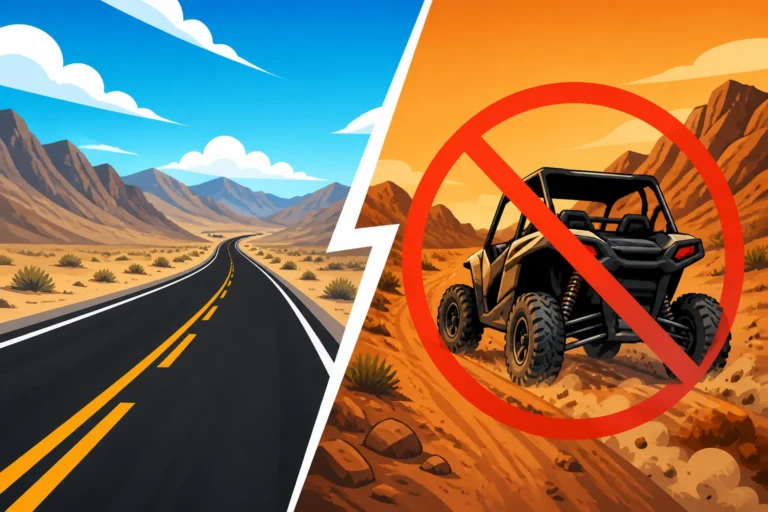
However, it's vital to understand the "cannot" part of this equation. You absolutely cannot ride on state highways, interstates, or any other paved road not designated as a minor or general county road. This means no blasting down US-95 or I-80, and generally, no riding in larger city limits unless those cities have explicitly designated specific routes. The law is very clear on these distinctions, and mistaking a state route for a county road can quickly land you a hefty ticket. Always check local ordinances and road signage.
Crossing State Highways and City Restrictions
While riding along a state highway is strictly prohibited, Nevada law does make an allowance for crossing them. If you need to get from one side of a state highway to the other to continue your journey on an approved county road or trail, you can do so at an intersection. However, this crossing must be done perpendicular to the highway and for the shortest distance possible. Crucially, the law also states that you cannot travel more than two miles along any paved highway, even a county highway, to get to another approved road or trail. This [Nevada's 2-Mile Limit on Paved Highway] is a hard and fast rule, meant to prevent riders from using paved roads as extended travel routes.
Furthermore, cities and counties in Nevada have the authority to restrict or prohibit the use of large all-terrain vehicles on their local streets, even if those streets would otherwise qualify as minor county roads. Larger cities, especially those with populations over 100,000 like Las Vegas, Reno, Henderson, and North Las Vegas, are generally much more restrictive. They often require specific, designated routes for OHVs, or ban them altogether from most city streets. This means just because you have the decal, you can't assume you can ride through downtown. Always research local ordinances for your specific destination. You'll find that [Nevada Cities Over 100,000 and Designated Routes] will often have very strict rules.
No Interstate Travel, Ever
Let's make this crystal clear: under no circumstances is a large all-terrain vehicle, or any OHV for that matter, permitted on an interstate highway in Nevada. The large ATV decal does not, and never will, grant you access to I-15, I-80, or any other interstate route. These are high-speed, controlled-access roads designed for conventional motor vehicles, and OHVs simply do not belong there. Attempting to ride on an interstate would not only be illegal, resulting in severe penalties, but also incredibly dangerous for both you and other motorists. The risks far outweigh any perceived convenience. This is one rule that has absolutely no gray area or exceptions.
Equipment Requirements for a Nevada Road-Legal Large ATV
Getting the large ATV decal isn't just about meeting the four-seat or utility bed criteria; it also requires your machine to be properly equipped for limited road use. While it's not the full suite of equipment required for a passenger car, Nevada has specific safety standards that must be met to ensure the vehicle is reasonably safe when sharing the road with other traffic. These requirements are in place to protect you and others, and neglecting them can lead to citations, even if you have the decal.
Essential Safety Gear: Lights, Horn, Mirrors
When operating on designated public roads, your large all-terrain vehicle must be visible and able to signal its intentions. This means:
- Headlights and Taillights: You need at least one headlight (though most UTVs have two) capable of projecting a beam for at least 500 feet, and at least one red taillight visible from 500 feet to the rear. If you're riding at night or in low visibility, these are non-negotiable. It's worth noting that [Nevada Headlight Requirements for Road Use] also specify they must be properly aimed.
- Brake Lights: A red stop lamp that illuminates when the brakes are applied, visible from 500 feet to the rear, is also mandatory.
- Reflectors: Your machine needs at least one red reflector on the rear, or a taillight designed to serve as a reflector.
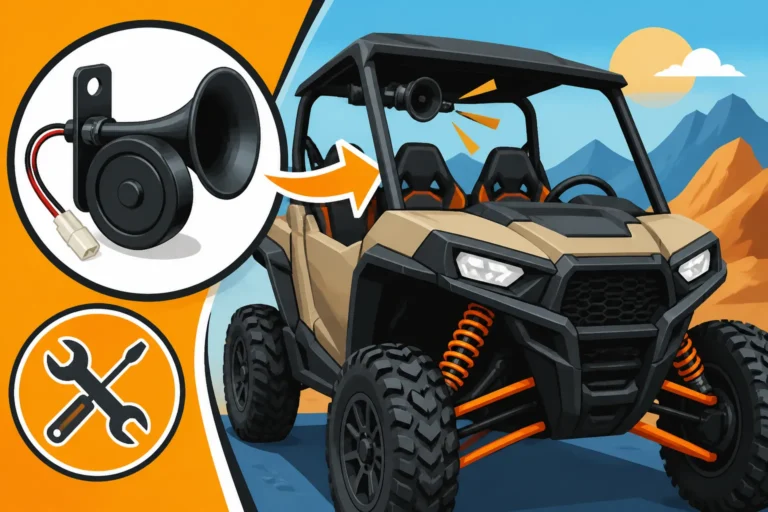
- Horn: A working horn, audible from at least 200 feet, is essential for signaling other drivers or pedestrians.
- Mirrors: You must have at least one mirror that allows you to see 200 feet to the rear. While one is the minimum, having two side mirrors significantly enhances your safety and awareness on the road. Many riders choose aftermarket mirror kits from companies like SuperATV to improve visibility and meet this requirement effectively. This aligns with [Nevada Mirror Requirements for a Road UTV].
Tires, Mufflers, and Spark Arresters
Beyond the basic lighting and signaling equipment, there are other functional requirements that your large ATV needs to meet for road-legal operation:
- Tires: While Nevada law doesn't explicitly mandate "DOT-approved" tires specifically for the large ATV decal (as it would for a fully street-legal vehicle), it's highly recommended, and often practically necessary, for any significant road use. Off-road tires can wear out quickly on pavement and offer less traction, especially in wet conditions. If you're serious about utilizing your decal for road travel, investing in a set of more road-friendly, possibly DOT-compliant, tires is a wise move for safety and longevity.
- Mufflers: Your machine must be equipped with an adequate muffler that prevents excessive or unusual noise. Loud exhausts, while appealing to some off-road enthusiasts, are a nuisance and can draw unwanted attention from law enforcement when on public roads.
- Spark Arrester: A spark arrester, approved by the U.S. Forest Service, is required. This is primarily an off-road safety feature to prevent wildfires, but it remains a requirement for any OHV operating on public lands or roads in Nevada.
Seat Belts, Helmets, and Passenger Rules
When you're out on the road, safety for yourself and your passengers is paramount, and Nevada has rules to reinforce this:
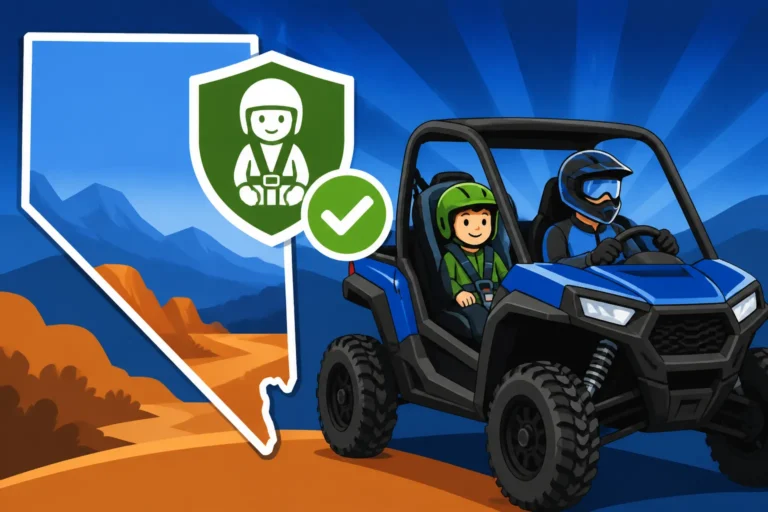
- Seat Belts: If your large all-terrain vehicle is equipped with seat belts from the manufacturer, they must be used by the driver and all passengers while the vehicle is in operation. Side-by-sides almost universally come with seat belts, so make sure everyone buckles up.
- Helmets: For operators and passengers, if your machine is not equipped with a roll bar or an enclosed cab, helmets are required when riding on roads. However, even if you have a roll bar or cab, helmets are still generally recommended for all riders for maximum protection, especially given the inherent risks of OHV use. For specific situations, [Nevada Helmet Law for Road Riding] offers more detail.
- Passenger Rules: All passengers must be able to reach and grasp the handholds and place their feet on the footrests. Children must be old enough and large enough to safely ride, and supervision rules apply for younger riders. For example, [Nevada Rules for a Child Passenger on a Road] indicate specific requirements for minors. Never carry more passengers than your vehicle was designed for.
The Application Process for the Large ATV Decal
So, you've confirmed your machine fits the "large all-terrain vehicle" definition and you understand the equipment needed. Now it's time to actually get that decal. The application process, while not overly complicated, requires attention to detail and the right paperwork. Skipping steps or missing documents will only lead to delays and frustration at the DMV or dealership.
Required Documentation and Fees
To apply for the large ATV decal, you'll generally need to present several key documents and pay the associated fees. The exact requirements can vary slightly, but a typical checklist includes:
- Proof of Ownership: This is usually your vehicle's title. If you don't have a title for an older machine, you might need to explore options for proving ownership, which can be a more involved process.
- VIN Inspection: Your vehicle's Vehicle Identification Number (VIN) must be inspected and verified. This isn't something the regular DMV counter staff typically does; it needs to be performed by an authorized person, such as an approved Nevada dealer or a sworn law enforcement officer. [Which Dealers Can Inspect a VIN in Nevada] is a good place to start looking.
- Application Forms: You'll need to fill out the specific application forms for OHV registration and for the large ATV decal. These are often available on the Nevada DMV website.
- Payment for Fees: There will be fees for the decal itself, which typically covers a multi-year period, as well as any associated title fees or processing charges. You'll want to be aware of [Nevada's Large All-Terrain Vehicle Decal Cost] before you head in. Remember, these fees contribute to the state's OHV program, including trail maintenance and safety initiatives.
Where to Apply and Who Can Help
You have a couple of options for submitting your application. The most common route is through the Nevada Department of Motor Vehicles (DMV), specifically the OHV Section. While many DMV services are online, for initial OHV registration and decals, an in-person visit is often required, or at least highly recommended, especially if there are any complexities with your paperwork. You can find information on contacting [The Nevada DMV OHV Section] through their official channels.
Alternatively, many authorized Nevada OHV dealers can process registrations and decal applications as part of their services. This can often be a more streamlined process, as dealers are familiar with the paperwork and can often perform the necessary VIN inspection on-site. If you bought your machine from a Nevada dealer, they are an excellent resource for getting this done correctly and efficiently.
What to Expect After Application
Once your application is submitted and approved, and all fees are paid, you'll typically receive your large ATV decal and a registration card. The decal needs to be prominently displayed on your machine in the location specified by the DMV, which is usually on the left-hand side or the rear of the machine, where it's easily visible. The registration card should always be carried with you when operating the vehicle, either on your person or securely stored on the machine in a waterproof compartment.
It's also worth noting that processing times can vary, especially during peak seasons. Don't expect to walk out with your decal instantly if you're applying at the DMV during a busy period. Plan ahead, especially if you have a trip coming up where you intend to use your machine on qualifying roads.
Driving Rules and Enforcement for Large ATVs on Roads
Possessing the large ATV decal is a privilege, not a right, and it comes with responsibilities. When you take your qualifying machine onto Nevada's designated county roads, you are effectively sharing that space with other motor vehicles, pedestrians, and cyclists. This means you must adhere to standard traffic laws and demonstrate common road etiquette. Enforcement is real, and deputies and rangers are well aware of the rules.
Driver's License and Insurance Requirements
One of the most critical requirements for operating any motor vehicle on public roads, including a large all-terrain vehicle with the special decal, is a valid driver's license. The operator must hold a current, valid driver's license that permits them to operate a motor vehicle. This means no riding on public roads with just an instruction permit or if your license is suspended. [Nevada Driver's License Rules for UTV Road Use] are quite clear on this point.
Equally important is liability insurance. Nevada Revised Statutes require liability insurance for any motor vehicle operating on public roads. Your large ATV, when using its decal to access roads, falls under this requirement. This insurance protects you and others in the event of an accident. It's not optional, and proof of insurance, usually an insurance card, must be carried with you at all times. Failing to have proper insurance can result in significant fines and penalties. You can find more specific details under [Insurance and Nevada OHV Registration].
Speed Limits, Right-of-Way, and Road Etiquette
When riding on a minor or general county road, your large ATV is treated like any other motor vehicle regarding traffic laws. This means:
- Adhere to Posted Speed Limits: You must obey all posted speed limits. Just because your UTV can go fast doesn't mean you should. These roads are often narrow, unpaved, and may have blind corners or other hazards.
- Obey Traffic Signs and Signals: Stop signs, yield signs, and any other traffic control devices apply to you. Treat them exactly as you would in a car.
- Yield Right-of-Way: Always yield to other vehicles, pedestrians, and bicycles as required by law. Larger vehicles generally have the right-of-way, and you're the smaller, less protected vehicle.
- Stay to the Right: Keep to the right side of the road, especially on unpaved or narrow sections.
- Signal Intentions: While turn signals may not be mandatory equipment on all large ATVs, it's good practice to use hand signals to indicate turns or lane changes if your machine isn't equipped with them.
- Avoid Reckless Behavior: No stunts, racing, or aggressive driving. This is a public road, not an off-road park.
Remember, you're an ambassador for the OHV community when you're on these roads. Driving responsibly helps maintain the privilege for all riders.
Potential Fines and Consequences
Non-compliance with the rules for large ATVs on public roads can lead to various fines and penalties. Deputies and rangers are increasingly vigilant, especially in popular OHV areas. Common violations include:
- Riding in Prohibited Areas: Operating on state highways, interstates, or city streets where OHVs are banned can lead to significant fines.
- No Decal: Riding a qualifying machine on a road without the proper large ATV decal will result in a citation for unregistered operation.
- Missing Equipment: Lack of required headlights, taillights, brake lights, horn, or mirrors can lead to equipment violation tickets.
- No Driver's License or Insurance: These are serious offenses that can result in substantial fines, vehicle impoundment, and even points on your driving record.
- Reckless Driving: Any behavior deemed unsafe or reckless can lead to severe fines, and potentially even criminal charges in extreme cases.
It's far better to understand and follow the rules than to face the financial and legal consequences. [Nevada Tickets for Riding Where You Should Not] are not cheap and can quickly ruin a good day of riding.
Practical Considerations and Common Scenarios
Beyond the legalities, there are practical considerations that come into play when operating your large ATV on public roads with the decal. It's about blending the utility of your machine with the realities of shared road space, and understanding what the decal is truly designed for – convenience for specific purposes, not open-ended road use.
Planning Your Route: Riding to the Trailhead
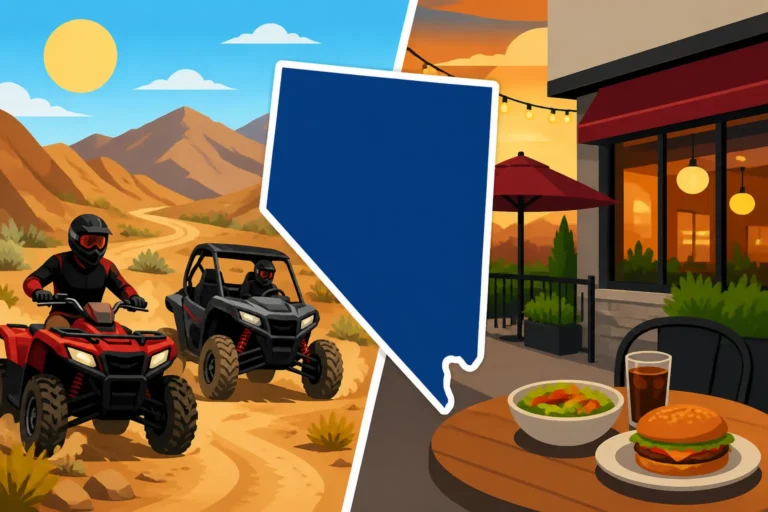
The most common and valuable use for the large ATV decal is undoubtedly getting to and from trailheads. Imagine you're staying at a campground or a friend's house, and the entry to your favorite riding spot is just a few miles down a dirt county road. With the decal, you can legally drive your UTV directly there, saving you the hassle of loading it onto a trailer, driving the truck, unloading, and then repeating the process in reverse. This is precisely [Riding to the Trailhead, Not to the Store], and it's a huge benefit for many riders.
However, you still need to plan your route carefully. Consult maps to identify minor or general county roads that lead to your destination. Avoid any roads marked as state routes or within city limits unless you've verified specific OHV-designated routes. Always have a backup plan in case a road is unexpectedly closed or designated as off-limits. Using GPS with detailed mapping can be invaluable here.
Fueling Up, Grabbing Supplies, and Local Considerations
The ability to ride on county roads also opens up opportunities for incidental stops. Need to refuel your machine? If there's a gas station located on an approved county road, or within the two-mile limit for crossing a paved highway, you can legally ride your UTV there. The same applies to grabbing last-minute snacks or supplies at a small country store. This adds a layer of convenience that can greatly enhance your off-road adventures, especially in remote areas where amenities are scarce. This specific use is covered by [Nevada Rules on Riding Into Town for Fuel].
But remember, this isn't an excuse for general errands or extended travel on roads. The decal's intent is to facilitate off-highway recreation, not to turn your UTV into your daily driver. Also, always be mindful of local ordinances. Even if a road is a county road, a small town might have specific restrictions on OHV use within its corporate limits. Respect these local rules to avoid issues and maintain good relationships with the communities you ride through.
Enhancing Your Machine for Road Use with SuperATV
While the core requirements for the large ATV decal are legal, there are many aftermarket upgrades that can make your qualifying machine safer and more practical for limited road use. Companies like SuperATV offer a wide range of accessories specifically designed for UTVs, many of which can help you meet or exceed Nevada's equipment requirements and improve your on-road experience.
For example, SuperATV offers robust side mirrors that provide excellent rear visibility, which is crucial when sharing the road with faster-moving traffic. Their turn signal kits are another popular upgrade, providing clear signaling for turns and lane changes, making your intentions much more obvious to other drivers than hand signals alone. Investing in a good horn, like those available from SuperATV, ensures you can alert others effectively. While the law might only require one mirror, adding a set of two high-quality mirrors can drastically improve safety and compliance. Furthermore, if you're frequently riding on pavement, considering their line of more durable, road-friendly tires (if applicable and DOT compliant) can improve handling and wear compared to aggressive off-road treads. These kinds of enhancements not only help you meet the letter of the law but also significantly boost your confidence and safety when the trail turns to tarmac, allowing you to ride smarter and more securely.
Conclusion
Navigating the nuances of Nevada's Large All-Terrain Vehicle Decal can feel like a ride through a rocky wash – challenging but manageable with the right knowledge. It's clear that Nevada isn't throwing open the doors to full street-legality for all OHVs. Instead, it offers a carefully defined pathway for specific, larger machines to gain limited access to certain county roads. This system is designed to provide convenience for accessing trailheads, fueling up, and moving between off-road areas, without compromising the safety and integrity of the state's main thoroughfares.
Understanding the specific criteria for what constitutes a "large all-terrain vehicle" – particularly the four-seat or utility bed requirement – is your first hurdle. Beyond that, equipping your machine with the mandatory safety gear, obtaining the decal through the proper channels, and strictly adhering to all traffic laws and local ordinances are non-negotiable. While the idea of a completely street-legal UTV remains a distant dream for many, the large ATV decal offers a practical, legal solution for specific needs. By respecting the rules and using your decal responsibly, you can enjoy more seamless adventures across the vast and beautiful Nevada landscape.
Disclaimer
This article is for general informational purposes only and does not constitute professional advice. Laws, prices and regulations vary by location and change over time. Consult a qualified professional for guidance on your specific situation.