What Happens If You Lose the Registration Card
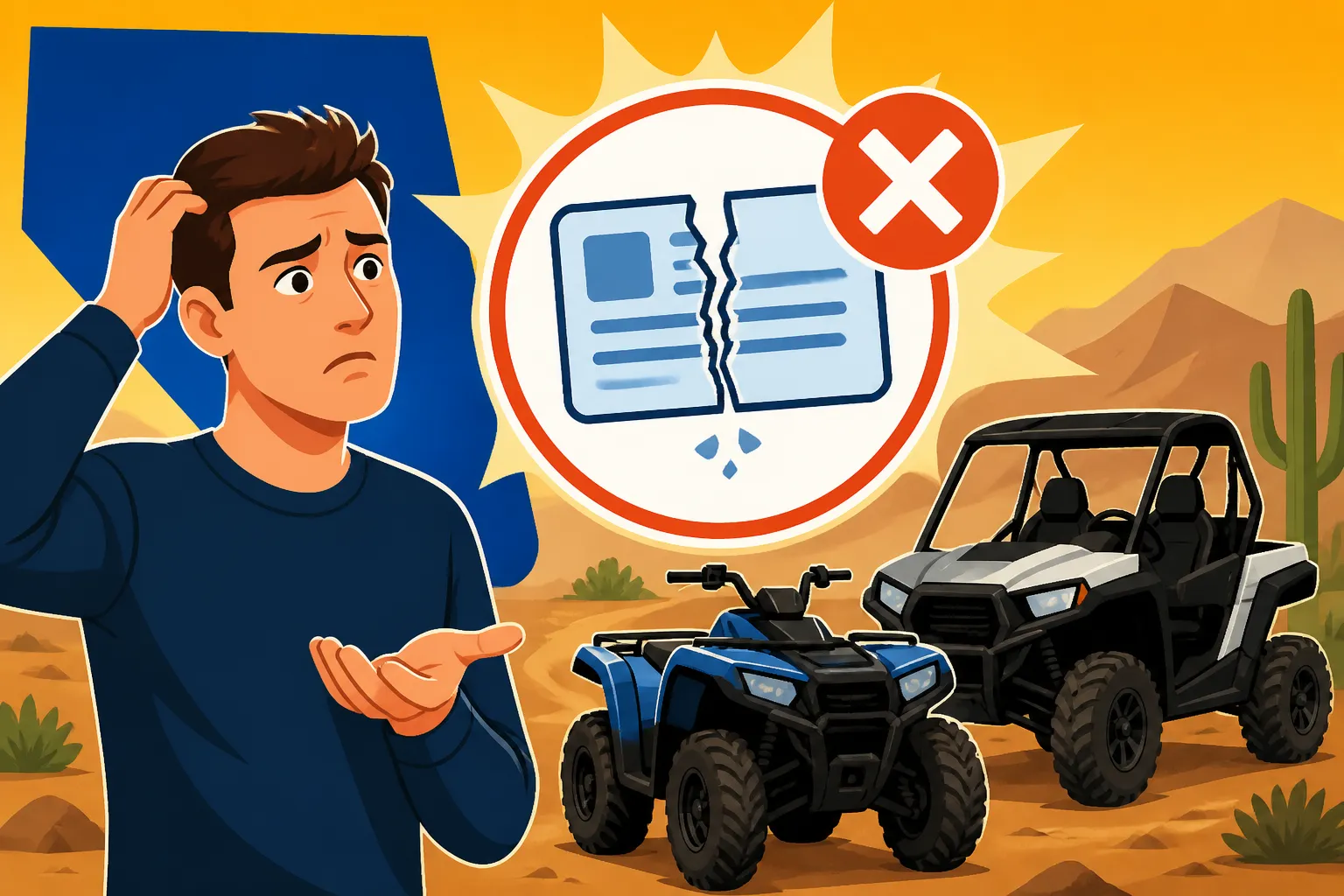
Losing your Nevada ATV or UTV registration card can leave you unsure whether you can ride, what proves the machine is registered, and how to get a replacement. A missing card does not by itself mean an active registration has expired, but the decal and card are not interchangeable. Here’s what to check, who to contact, and how to avoid relying on the wrong paperwork.
First, check what is missing and whether registration is active
Nevada OHV registration paperwork can include both a registration card and a decal attached to the machine. The card contains registration details; the decal is displayed on the vehicle. Losing one does not automatically mean the other has disappeared or that the registration has expired. Still, do not assume the decal alone will answer every question during a check.
Start by looking over the machine and its paperwork. Confirm whether the decal is still attached, readable, and within its validity period. Check any saved photographs, purchase documents, renewal records, or copies you may have stored at home. A clear photo of the card can help you find its identifying details, but ask the relevant Nevada OHV office whether a phone image is accepted as proof in the situation you face.
The registration card is also not the same as a title. A title is an ownership document; registration relates to the machine’s registration status. A bill of sale, title, or proof of purchase may help establish who owns the machine, but none should be treated as an automatic replacement for a missing registration card. For the differences between these documents, see Nevada OHV Registration and Proof of Ownership and What the Registration Card Must Show.
| What you still have | What it can help you check | What it does not necessarily replace |
|---|---|---|
| A readable, unexpired decal | The machine’s displayed registration information | The registration card, if an officer or official asks for it |
| A photo of the card | The decal number, vehicle details, or owner information | An original or replacement card where one is required |
| The title | Ownership and title information | Current registration proof |
| A bill of sale | Purchase details and seller information | Registration or title documents |
| A renewal receipt or application record | That you submitted or paid for a transaction | Confirmation that a replacement card has been issued |
If the decal is missing too, or you cannot tell whether it is still valid, treat that as a separate issue. A replacement card will not replace a decal that has been lost, damaged, or expired. See Ordering a Replacement Decal From Carson City for the decal-specific question, and check the registration status before riding.
The meaning and role of the decal are explained in What a Nevada OHV Decal Actually Proves. The key practical point is to confirm your machine’s current status rather than infer it from the card’s absence—or from a decal that is hard to read.
How to request a replacement card
The safest first contact is the Nevada OHV office or the dealer that handled the registration. Explain that the registration card is missing and ask how to request a duplicate for your specific machine. The correct route can depend on how the original registration was processed, so confirm whether the office or dealer can issue the replacement, what documentation it needs, and whether you can submit the request by mail or through another method.
Before contacting them, gather as much identifying information as you can. This can make it easier to locate the record and reduce back-and-forth.
- Write down the VIN. Check the machine itself and compare the number with any title or purchase documents. If you cannot find or read the VIN, explain that when you call rather than guessing.
- Record the decal number. If the decal is still attached and legible, note its number and take a clear photo.
- Gather owner and vehicle details. Have the registered owner’s name and address, the make and model, and any paperwork from the original purchase or registration available.
- Explain what is missing. Say whether only the card is gone or whether the decal is also missing, damaged, or expired.
- Ask about the exact replacement process. Confirm the correct form, submission method, supporting documents, any applicable fee, and expected processing time with the office or dealer handling your request.
- Keep a record of your request. Save a copy of what you submit and any confirmation or correspondence until the replacement arrives.
Do not send original ownership documents unless the office specifically requires them. If it asks for supporting paperwork, follow its instructions about copies, signatures, and delivery. Requirements can differ depending on the record and transaction, so avoid relying on a form you found for a different type of registration request. Nevada OHV Registration Processing Times can help set expectations, but the office handling your case is the best place to confirm the current timeline.
If someone other than the registered owner is making the request, ask whether that person needs authorization or additional identification. Similarly, if the address or ownership has changed since registration, mention it before submitting anything. A replacement request is not necessarily the right process for updating owner details. For changes after a move, see Changing Your Address on a Nevada OHV Registration. If the machine has been sold or transferred, check the applicable transfer procedure instead of requesting a card in the former owner’s name.
What to carry and do while you wait
First, ask the Nevada OHV office or dealer what you should carry until the replacement is issued. Do not assume that a screenshot, title, bill of sale, or visible decal will always be accepted in place of a registration card. Those items can be useful when you contact the office or explain the situation, but they do not necessarily fulfill every requirement for proof during a ride or roadside check.
If the decal is still present and appears current, losing the card alone does not necessarily make the registration expired. But that does not settle whether you must have a card available while operating the machine. Until you confirm what applies, the cautious option is to avoid a ride where you may be unable to produce the requested paperwork. This matters especially for a trip far from home, a group ride, or a location where you cannot easily pause to contact the registration office.
If you decide to travel before the duplicate arrives, carry the information you do have and keep it accessible. A saved card photo, the decal number, your title or bill of sale, and any replacement-request confirmation may help answer questions or help an official identify the record. Treat these as supporting information, not guaranteed substitutes. For more on the distinction, read Proving Registration Without the Card and What Rangers Accept as Proof.
Keep copies in a place that will not be ruined by dust or moisture. Once you receive the replacement, store it securely on the machine or with your riding paperwork, following any instructions that come with it. A waterproof document pouch from Amazon can be one way to protect paper copies, but it does not change what documents you are required to carry.
When the replacement arrives, compare the card details with the machine and decal. Check the owner information, VIN, and registration details for errors. If something does not match, contact the issuer promptly and ask how to correct the record. Keep the old card if it turns up later, but do not carry both as though the older one were necessarily current. Follow the instructions from the issuing office about whether to discard or return it.
A lost card is usually a paperwork problem to resolve, not a reason to assume the machine has lost its registration. The dependable approach is to verify the registration status, request a duplicate through the appropriate Nevada OHV contact, and confirm what counts as acceptable proof while you wait.
Disclaimer
This article is for general informational purposes only and does not constitute professional advice. Laws, prices and regulations vary by location and change over time. Consult a qualified professional for guidance on your specific situation.