Winnemucca Dunes Along Nevada’s US 95
Winnemucca’s dunes can look like an easy detour from US 95, but soft sand, changing access conditions, and limited services can turn a casual ride into a long recovery. This guide explains how to plan a safer visit, choose suitable equipment, find your way around, and respect the area’s shared-use landscape before unloading near Winnemucca.
Getting to the Winnemucca Dunes
Planning your approach from US 95
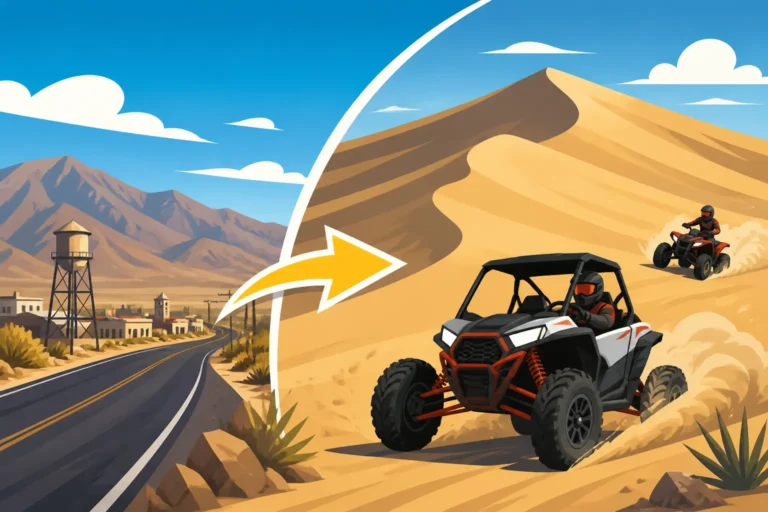
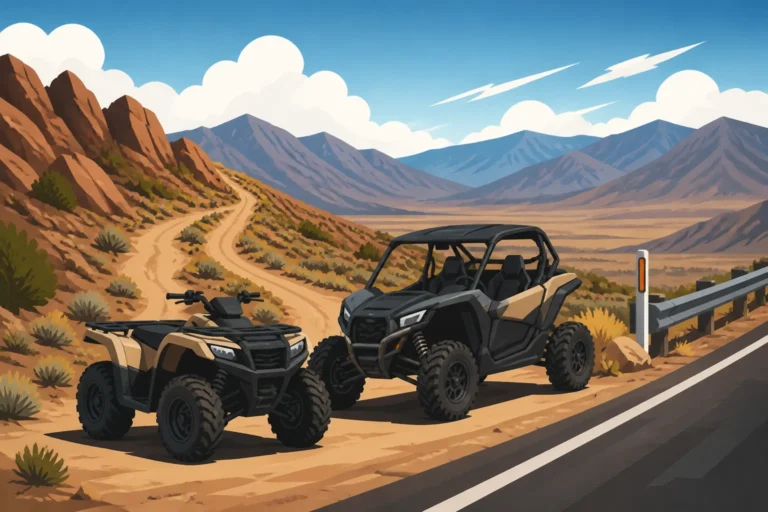
The Winnemucca Dunes are in northwestern Nevada, near the city of Winnemucca in Humboldt County. US 95 is a useful regional route, but arriving in the area is not the same as having a confirmed final approach to a riding or staging spot. Conditions on connecting roads can vary, and a route that looks simple on a screen may include rough or sandy stretches. Check current access information and travel maps before leaving pavement, and follow posted signs rather than assuming every visible track is open to vehicles.
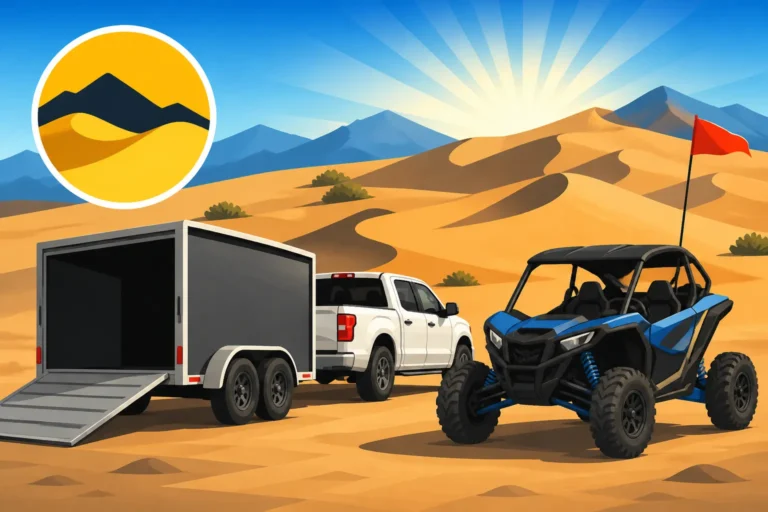
Treat your drive in as part of the ride plan. Before setting out, make sure your vehicle and trailer have enough fuel for the round trip, and identify a place to turn around if a road becomes too rough. If you are towing, look for a firm, level place to unload rather than pulling the trailer onto soft sand. Avoid blocking established routes or access points, and do not drive beyond your comfort level just to get closer to the dunes.
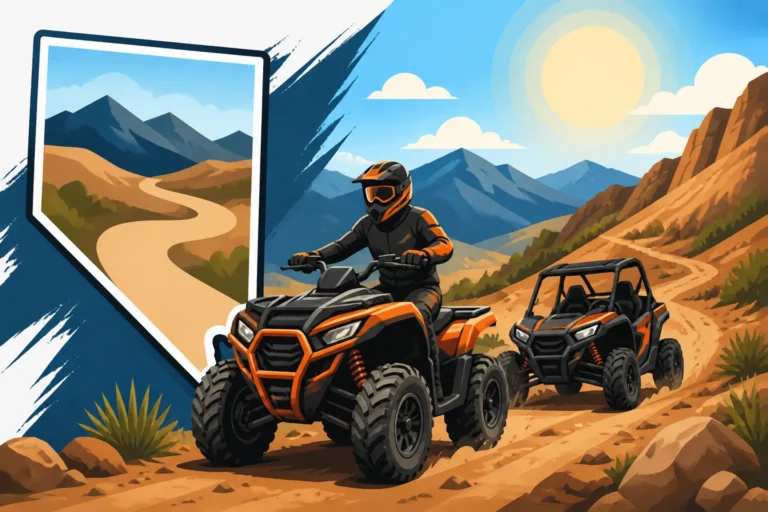
A map app can help you understand the broad layout, but it should not be your only navigation tool. Download map information for offline use, bring a backup navigation option, and share your intended route with someone who is not riding with you. Apps such as onX Offroad can be useful for reviewing public-land boundaries and route options, but compare any digital route with local signs and land-management information. For more planning ideas, see [Nevada Trail Maps Worth Downloading] and [Nevada Trail Closures to Check Before You Go].
What to know about the dune area
Winnemucca is a practical base for supplies, fuel, and last-minute checks, but the riding area itself is not a town park with services at every turn. Plan as though you will need to be self-sufficient once you leave town. Do not count on finding drinking water, fuel, reliable phone service, shade, or help immediately beside the dunes. A full tank, charged phone, offline maps, and basic recovery gear matter even if you expect a short outing.
The dunes are a broad landscape rather than one neatly contained loop. Riders may encounter open sand, tracks, uneven transitions, and stretches where the terrain looks similar in every direction. That can make it surprisingly easy to lose sight of your parking area or companions. Agree on a meetup point, note a landmark or GPS location at the trailer, and keep your group within a distance that allows you to reconnect without guesswork.
The region is often described as having roughly 40 miles of sand, but that should not be treated as a promise of one continuous, marked riding route. The shape and condition of dunes change, and usable lines depend on access, terrain, and conditions on the day. Read [The 40 Miles of Winnemucca Sand] alongside [Winnemucca Dunes for an Overnight] if you are considering a longer outing or camping nearby.
Choosing a Route and Riding the Sand
Expect terrain to change across the dunes
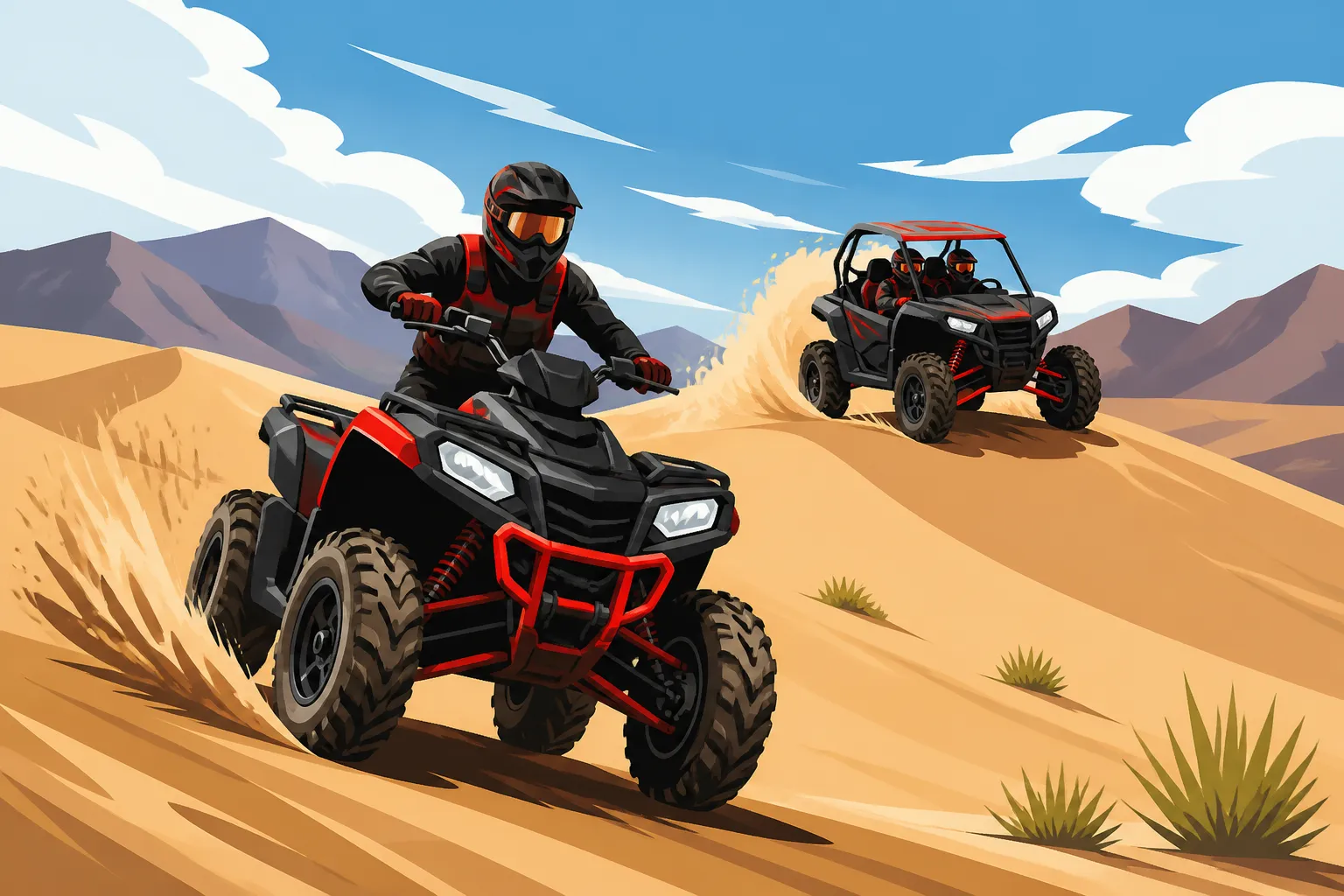
Sand can ride very differently from one section to another. A firm-looking surface may give way to loose sand, while a low slope can still bog down a machine if the approach is slow or the tires lose momentum. Dune faces, bowls, and transitions also affect visibility: the crest can hide riders or obstacles on the other side. Take time to read the terrain instead of following tracks simply because they are already there.
For a first visit, start with conservative lines in open terrain where you have room to turn around. Avoid charging up a face before checking what lies beyond the crest. If you cannot see the landing or the route down the other side, choose another line or scout it on foot where safe. Keep enough space between machines to avoid following directly into another rider’s dust or getting caught in a sudden stop.
Different machines and tires behave differently in soft sand. A heavy side-by-side may need more momentum than a lighter quad, but momentum is not a substitute for visibility or control. Make small adjustments, avoid abrupt steering inputs, and do not assume a familiar trail technique will work the same way in deep sand. The practical differences are explored in [Low Dunes and Why They Ride Differently].
Match the ride to your group’s experience
A mixed-experience group should choose routes around the least experienced rider, not the most confident one. A beginner may be comfortable on a gentle, open section but overwhelmed by steep faces, deep bowls, or crowded intersections. Start together, establish a simple signal for stopping, and agree that anyone can ask to turn back without being teased or pressured to continue.
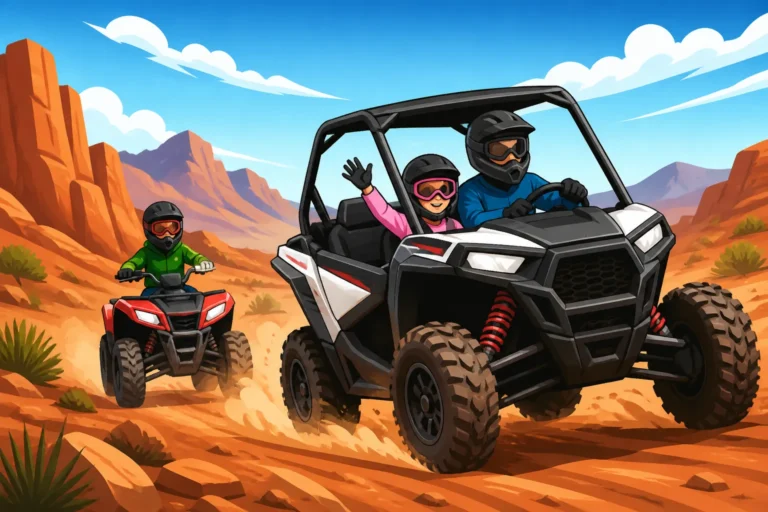
For families, keep children within direct supervision and select terrain where adults can see them. Explain that a dune crest is not a safe place to stop blindly, and teach young riders to pause in a visible, stable location rather than at the top of a rise. If your group includes different machine types, discuss how you will handle a stalled or stuck vehicle before anyone heads into the sand.
Ride with a buddy and set a return time before you leave the staging area. If a machine becomes stuck, the group should stop in a safe place, keep other riders clear, and use recovery equipment only if everyone understands how to do so safely. A quick spin around the dunes can take longer than expected when a vehicle needs help. Leave enough daylight and energy for the return to your trailer.
Preparing Machines, People, and Supplies
Check the machine before unloading
A basic pre-ride check can prevent small problems from becoming a difficult recovery. Look over tires, wheels, brakes, steering, throttle response, fluid levels, battery connections, and any loose cargo. Secure tools and equipment so they cannot shift on uneven ground. If you are hauling a side-by-side, check that the trailer load is balanced and tied down before heading out from Winnemucca.
Carry equipment suited to your machine and your route, such as a tire-repair kit, tool roll, tow strap, and recovery points that are designed for pulling. A winch can help in some situations, but it is not a guarantee that you can recover a machine without risk. Avoid attaching a strap to a part not intended for recovery, and keep people away from tensioned lines. If you are uncertain how to recover a stuck machine safely, turn to someone experienced rather than improvising under pressure.
Paperwork is part of preparation too. Make sure the machine is registered as required and that the registration information is available during the ride. Nevada’s OHV decal is part of the state’s off-highway vehicle system; do not assume a public-land location means registration requirements disappear. Side-by-side owners can review [Nevada OHV Registration for a Side-by-Side] and the broader guide to [Riding BLM Land in Nevada].
Pack for heat, dust, and a long day
Carry more drinking water than you think the ride will require, especially when temperatures are high or the route is exposed. Bring food, sun protection, eye protection, and clothing that can handle both wind and dust. A helmet and appropriate riding gear are essential; goggles help protect eyes from blowing sand, while a neck covering or dust mask can make a dusty ride more comfortable.
Phone service may be inconsistent away from town, so do not make a phone call your only emergency plan. Keep a charged phone, a vehicle charger or power bank, and offline maps. If you ride with a group, agree on what to do if someone is separated or a machine breaks down. Note the location of your parked vehicle and share your plan with someone outside the group.
Fuel planning deserves particular attention. Account for the drive to the riding area, time spent riding, detours, and the possibility of helping another machine. Do not rely on a fuel stop being available at the dunes. A practical preparation list is available in [Water and Fuel Planning in Nevada].
| Planning item | Why it matters | Practical approach |
|---|---|---|
| Fuel | Riding in sand can use more fuel than expected | Start with a full tank and plan a reserve |
| Water | Heat and exertion can add up quickly | Carry enough for the full group and the return |
| Navigation | Tracks and landmarks can look alike | Download maps and mark the trailer location |
| Recovery gear | A stuck machine can delay the whole group | Carry compatible gear and know how to use it |
| Dust protection | Wind and other riders can reduce visibility | Bring goggles and keep distance between machines |
| Registration documents | Requirements still apply off pavement | Keep the relevant paperwork accessible |
Riding Responsibly Around Other People and Land
Share the dunes and respect access
A dune area can bring together families, experienced riders, campers, and people traveling through the region. Slow down near staging areas and other vehicles, give people room, and avoid passing close to someone on foot. Dust can conceal a stopped machine or a rider crossing a track, so leave generous space and be ready to stop when visibility drops.
Stay on routes and areas where riding is permitted. Do not treat an old tire track as proof that a route is open, and avoid creating new tracks into places that appear closed or sensitive. Gates, signs, barriers, and land-management notices matter even when the route beyond them looks inviting. Public land is not automatically open to unrestricted cross-country travel. For a broader look at shared-area etiquette, read [Nevada Trail Etiquette on Shared Dunes].
Keep noise and litter in mind. Secure trash so it cannot blow out of a vehicle, pack out what you bring in, and leave the area in good condition for the next group. If you camp, use an appropriate established area and avoid spreading equipment across access routes. Good habits are especially important in open desert spaces where a small amount of litter or an avoidable shortcut can affect a wide area.
Check conditions and adjust the plan
Weather can change the experience quickly. Wind can blow dust across open ground, while rain can alter access roads and make a route difficult to drive with a trailer. Heat affects riders and machines alike; take breaks, watch for signs of overheating, and be willing to shorten the ride. If the forecast or road conditions make the approach questionable, postpone rather than trying to force the plan.
Before heading out, review available land-management updates and check for closures or restrictions. OnX Offroad can help you prepare a route and understand the general area, but it should complement—not replace—posted restrictions and official information. If an app’s route conflicts with a sign or a clearly marked closure, follow the sign and choose another route.
A flexible plan is safer than a fixed mileage target. Decide in advance what conditions will make your group turn around: worsening wind, a machine problem, a rider feeling unwell, or a route that is rougher than expected. Tell everyone that stopping early is a good decision, not a failed trip. Desert riding is more enjoyable when the group can adapt without pressure.
Planning an Overnight or First Visit
Decide whether to ride for a few hours or stay nearby
A short visit may suit riders who are passing through Winnemucca or want to learn the area before committing to a longer trip. It still calls for the same basics: a confirmed approach, adequate fuel and water, a marked parking location, and a clear return plan. Keep the first outing modest so you can learn how the sand and access roads feel before planning a full day.
An overnight trip requires more thought about shelter, food, sanitation, lighting, and temperature changes. Do not assume that an informal camping spot has facilities or that every nearby road is suitable for a large vehicle or trailer. Check current rules for the area, choose a responsible place to camp, and keep camp setup clear of routes other visitors may need to use. Pack out all waste and avoid leaving gear unattended in a way that blocks access.
If it is your first time at Winnemucca Dunes, consider riding with someone who knows the area or keeping the group small and route conservative. Make the first outing about learning access, terrain, and timing rather than trying to cover as much ground as possible. For more overnight considerations, see [Winnemucca Dunes for an Overnight].
Use a simple pre-departure checklist
Before leaving town, confirm that the tow vehicle and trailer are ready, the machines are secured, and everyone knows the intended meeting point. Check that each rider has a helmet, eye protection, water, and a way to contact the group. Put essential tools and recovery equipment where they can be reached without unloading the entire trailer.
When you arrive, pause before riding. Look at wind, visibility, traffic, and the condition of the access area. Mark your parking spot, talk through the route, and confirm who is riding with whom. If the group has more than one machine, decide how long you will wait at a designated regroup point before changing plans. These small agreements prevent confusion when dust or terrain separates riders.
Finally, leave with enough daylight and fuel to get back to your vehicle and return to town. Share your plan with someone who knows when you expect to be back, and contact them when the trip is complete. Winnemucca’s dunes reward a thoughtful approach: prepare for limited services, ride within the group’s abilities, and be willing to change plans when conditions call for it.
Disclaimer
This article is for general informational purposes only and does not constitute professional advice. Laws, prices and regulations vary by location and change over time. Consult a qualified professional for guidance on your specific situation.