Nevada Rules for Carrying Fuel Cans
Running short of fuel far from a Nevada trailhead can turn a ride into a long recovery problem, but carrying gasoline adds fire, spill and passenger-safety risks. The right approach is to use a fuel container made for gasoline, secure it according to the machine’s instructions and check restrictions for the land you’ll ride. A can that fits the rack is not automatically safe or permitted everywhere.
What rules apply to fuel cans on Nevada rides
There is no single fuel-can rule that answers every Nevada riding situation. Requirements can depend on where you are, whether you are riding off-road or traveling on a public road, the vehicle and container, and current fire restrictions. A rule for one trail system or land manager may not apply to another.
For an off-road ride, check the current requirements for the specific area before you leave. Public lands can have temporary fire restrictions, closures or limits on activities that create ignition risks. Those restrictions may affect whether an area is open to riding or what you can do there, even if your machine and fuel container are otherwise suitable. Review Nevada Rules for Riding During Fire Season and Nevada Fire Restrictions That Close Trails before a trip in dry or windy conditions.
Land rules also matter beyond fire season. A route may cross federal, state, county or private land, each with its own access conditions. Carrying a fuel can does not give you permission to ride or refuel wherever you choose. For broader guidance, see Nevada Rules for Riding Federal Land and confirm the rules for the trail, road or recreation area you plan to use.
A public-road connection adds another layer. An OHV registration decal does not by itself make a machine legal for road travel, and a fuel can does not change that. If you plan to ride a road-legal machine on a county road, make sure the route and vehicle meet the applicable requirements. Riding County Roads Legally in Nevada explains the separate road-use rules. When transporting fuel in a truck or trailer to the riding area, follow the vehicle, container and transport requirements that apply to that trip.
The practical takeaway is to treat these as separate questions:
| Question | What to check |
|---|---|
| Is the riding area open? | Current closures, fire restrictions and land-manager notices |
| Can you carry gasoline on your machine? | Machine and rack instructions, container guidance and site-specific rules |
| Can you refuel at your planned stop? | Access rules, fire restrictions and safe distance from ignition sources |
| Can you travel on a public road? | Road-use requirements for the machine, rider and route |
| Do you need extra fuel? | Route distance, terrain, machine range, weather and a realistic reserve |
If an official restriction is unclear, contact the land manager before riding. Do not rely on an old social post, a map app or a rule from a nearby riding area as proof that fuel handling is allowed.
Choose a gasoline can that suits the machine
Use a portable container specifically designed for gasoline. A bottle, water jug or improvised container can leak, soften, crack or fail to seal when exposed to fuel and heat. The can should be clearly identified for its contents, in good condition and fitted with a cap and closure that work properly.
Follow the container maker’s instructions for filling, storage and use. Check for cracks, worn seals, a damaged cap, loose fittings or signs of leakage before each trip. If the can is brittle, dented in a way that affects its closure, or has a persistent fuel smell around the seams, replace it rather than hoping it will hold through rough terrain.
When comparing products on Amazon, focus on the details that affect safe use: whether the container is intended for gasoline, how it closes, how it attaches to your machine, and whether the rack or vehicle maker permits that kind of load. A product description or review is not a substitute for checking the container and machine instructions. Also confirm that the size and shape can be secured without blocking lights, controls, visibility or access to an emergency shutoff.
Do not assume a larger can is automatically better. More fuel means more weight, and gasoline adds weight that can affect handling, braking and the load on a rack or mounting point. A container that shifts on a rough trail can damage the can, loosen its cap or interfere with the rider. Choose only the amount you reasonably need, and stay within the machine’s load limits.
Check whether the machine has a suitable mounting point
Use a purpose-designed mount or an approved storage location that holds the container firmly. Do not rely on a loose bungee cord, a passenger’s lap or a spot where the can can slide into the exhaust, suspension, tires or moving parts. Straps and brackets should remain tight over bumps, and the can should not be able to swing or rub against a sharp edge.
The right arrangement varies by machine:
- ATV: Keep the can away from the exhaust, hot engine parts, steering and the rider’s legs. Check that it does not interfere with normal movement or make the machine feel unstable.
- UTV: Use an exterior, secure mounting point when the manufacturer allows it. Avoid placing gasoline inside the passenger area or loose in a cab where fumes could build up or a spill could reach occupants.
- Trailer or support vehicle: Secure the container so it cannot tip, roll or be struck by other cargo. Keep it away from heat sources and items that could puncture it.
A rack may look sturdy but still have a load limit, and a rack designed for gear may not be intended for a fuel container. Check the machine’s owner information and any rack or mount instructions. If there is no safe way to secure the container, carry the fuel in a support vehicle instead of improvising a mount.
Keep fuel away from passengers and their belongings. If your ride includes children or other passengers, consider how a leak, fumes or an emergency stop could affect them. Nevada Rules for Riding With a Passenger Off-Road covers passenger considerations, but the machine’s instructions and the container maker’s guidance should also shape where you carry fuel.
Secure, inspect and use the can carefully
Before departure, fill and close the container according to its instructions, then check that it is not leaking. Do not overfill it or leave the cap loose. Leave the expansion space the container requires; fuel can expand as temperatures rise, especially when a machine is parked in direct sun.
Use this quick loading process:
- Inspect the can. Check the body, cap, seal and spout for damage or leakage. Do not take a questionable container into remote terrain.
- Check the mount. Confirm that the rack or bracket is designed for the load and that all fasteners and straps are secure.
- Position it away from heat and movement. Keep it clear of the exhaust, engine, wheels, suspension and any area where a fall or impact could puncture it.
- Check the load. Make sure the container does not block a light, control, view, passenger position or emergency equipment.
- Recheck after rough sections. Stop in a safe place and look for a loose mount, a shifted can or any fuel smell or wetness.
- Refuel outdoors and away from ignition sources. Stop the machine, shut off the engine and allow hot components to cool before opening the can. Keep smoking, flames and other ignition sources away.
Never refuel while the engine is running, and do not pour gasoline near a hot exhaust or other hot parts. Avoid refueling in tall dry grass, close to campfires, or where a spill could run into a drain, wash or waterway. If the ground is hot, windy or covered in dry vegetation, take extra care and follow any posted fire restrictions.
Refuel slowly and avoid splashing. Keep the can stable while pouring, and close it securely as soon as you are finished. Do not leave a fuel container open beside the machine. If the can has a spout or vent, use it as directed rather than forcing fuel out or modifying the container.
If gasoline spills, stop the flow if you can do so safely, move people away from ignition sources and avoid starting the machine until the spill has been addressed. Do not wash fuel into soil, a wash or a water source. For a significant spill, fire or injury, contact emergency services or the appropriate land manager. Carrying absorbent material can help with a small, contained drip, but it does not make a major spill safe to handle without help.
After the ride, remove the can from the machine if the manufacturer or container instructions call for it. Store it in a suitable, ventilated location away from heat, living areas and ignition sources. Do not leave a fuel can baking on a parked machine or in a closed passenger cabin.
Plan fuel around Nevada’s terrain and fire conditions
Extra fuel is a backup, not a reason to stretch a ride beyond the machine’s range or the group’s ability. Nevada routes can involve soft sand, elevation changes, slow technical sections, heat and long gaps between services. All of these can affect fuel use. Plan a conservative route and leave enough fuel to return, handle a detour or get back to a safe stopping point.
Before riding, compare the planned distance with your machine’s normal range under similar conditions. Sand, steep climbs, heavy loads and repeated acceleration can increase consumption. Do not base the plan only on a range estimate from an easier ride. Build in a reserve, and make sure everyone in the group understands where the turnaround point is. Water and Fuel Planning in Nevada offers more preparation advice for remote routes.
Check for fuel along the way, but do not assume a nearby town, campground or recreation site has gasoline available. A destination may have limited services or no fuel at all. Plan where you will fill up before entering remote country, and avoid relying on an unverified map listing.
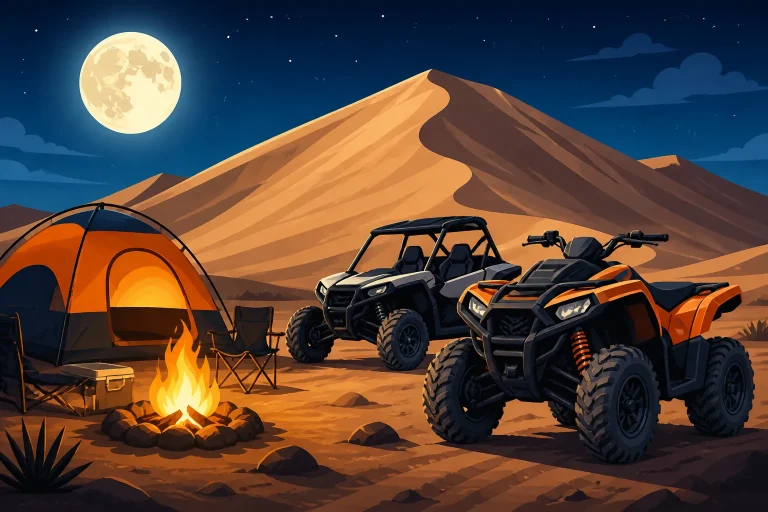
Fire conditions can change quickly. Strong wind, dry vegetation and heat can make a minor leak or spark more dangerous. Review current notices before you go, and be ready to postpone the ride if an area is closed or conditions make safe travel unrealistic. Nevada Rules for Camping Beside Your Machine is useful if your ride includes an overnight stay, where fuel storage and camp setup need to be considered together.
Pack the can only if it solves a real range problem and you can carry it securely. If the mount is questionable, passengers would be exposed to fumes, or the destination has restrictions you cannot confirm, change the plan: shorten the route, use a support vehicle or choose a different riding area. Safe fuel planning is less about carrying the biggest can and more about matching the amount, equipment and route to the conditions.
Disclaimer
This article is for general informational purposes only and does not constitute professional advice. Laws, prices and regulations vary by location and change over time. Consult a qualified professional for guidance on your specific situation.