Nevada OHV Registration for a Youth Machine
It's incredibly frustrating when you're trying to do everything right for your kid's off-highway vehicle, especially when the rules seem to change or get complicated with age limits and engine sizes. You want them to be safe and legal out on the trails or dunes, but figuring out the exact requirements for registering a youth machine in Nevada can feel like navigating a maze. This guide is here to untangle those knots, explaining precisely what Nevada requires for OHV registration when it comes to machines meant for younger riders.
Understanding Nevada's Definition of a Youth Machine
The first hurdle many parents face is simply understanding what Nevada considers a "youth machine" for registration purposes. It's not always about the rider's age directly, but more often about the machine's engine size. This can be a bit counter-intuitive because, as parents, our first thought is usually about the child behind the handlebars. However, the state looks at the equipment itself.
The 70cc Engine Size Cutoff
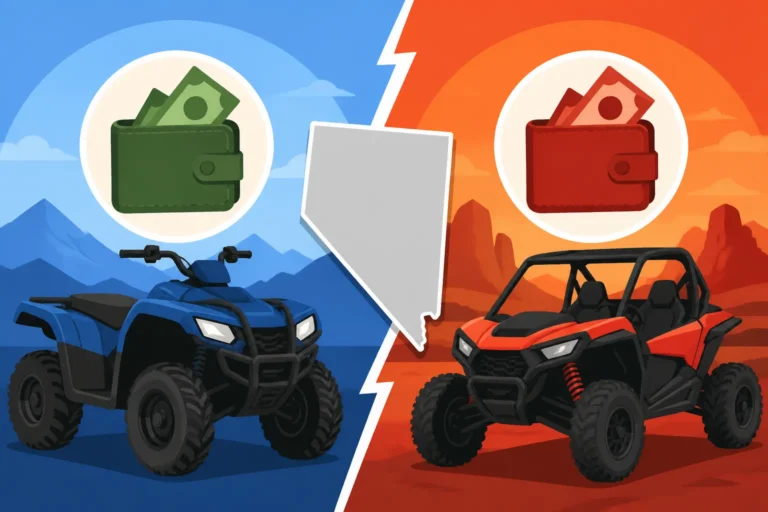
Nevada law has a specific engine displacement cutoff that determines whether an off-highway vehicle needs to be registered. For machines with engines less than 70cc, they are generally exempt from the standard OHV registration requirements. This is a huge relief for many parents whose children are just starting out on smaller, less powerful quads or dirt bikes. Imagine the scenario: you've just bought your little one a brand new 50cc mini-quad, and you're already picturing the trips to Logandale or Sand Mountain. The good news is, for that specific machine, you won't need to go through the full registration process with the Nevada DMV. This exemption is designed to reduce the bureaucratic burden for very small machines that are typically ridden by very young children in supervised environments.
However, this doesn't mean it's a free-for-all. Even though these smaller machines don't need a decal, riders still need to follow all other safety rules and local ordinances. For example, helmet laws still apply, and you can't just ride it anywhere you please. This exemption is solely about the registration decal itself, not about overriding fundamental safety or property access rules. It's important to differentiate between registration and responsible operation.
Machines 70cc and Larger Require Registration
As soon as a machine's engine displacement hits 70cc or goes above it, Nevada's standard OHV registration rules kick in. This is where many youth machines, particularly those designed for older children or growing teenagers, will fall. Think of the popular 90cc ATVs or 125cc dirt bikes that are often marketed as "youth" or "mid-size" models. Even though a 12-year-old might be the primary rider, the machine itself is no longer considered exempt. This means you'll be navigating the same registration process as an adult registering a full-sized ATV or UTV. Nevada OHV Registration for a Youth Machine
This often comes as a surprise to parents who might assume that if a machine is labeled "youth," it automatically bypasses some of the adult requirements. Unfortunately, that's not the case here. The state's focus on engine size provides a clear, objective line in the sand, rather than trying to define "youth" based on age, which can be much more subjective and harder to enforce. So, if your child's machine has an engine equal to or greater than 70cc, plan on obtaining that Nevada OHV decal before hitting the trails.
The Registration Process for Youth Machines (70cc and Up)
Once you've determined that your child's off-highway vehicle needs to be registered, the process is largely the same as for any other OHV in Nevada. It can seem a bit daunting with all the paperwork, but breaking it down step-by-step makes it much more manageable. Remember, the goal is to get that coveted OHV decal so your young rider can enjoy Nevada's incredible landscapes legally and safely.
Required Documents and Information
Gathering all the necessary paperwork before you head to the DMV or submit your application is crucial. Missing even one item can lead to frustrating delays. You'll typically need proof of ownership, which usually means the manufacturer's certificate of origin (MCO) if it's brand new, or a properly signed-over title if you bought it used. If you're buying a used machine privately, make sure you get a bill of sale that includes all the machine's details, the purchase price, and contact information for both buyer and seller. Sometimes, people use a template from a service like LawDepot to ensure all the necessary legal details are covered for their bill of sale. [Nevada OHV Registration Paperwork Checklist]
Beyond ownership proof, you'll need a completed application form, usually Form OHV-001, which is Nevada's Off-Highway Vehicle Application for Registration and Title. This form asks for details about the machine, the owner's information (which would be you, the parent or guardian, as the legal owner), and how the machine was acquired. You'll also need to provide your Nevada driver's license number. For any machine coming into Nevada from out of state, or if the title is missing, there might be additional forms or requirements, like a VIN inspection. Keep everything organized in a folder to prevent any last-minute panic.
The Importance of a VIN Inspection
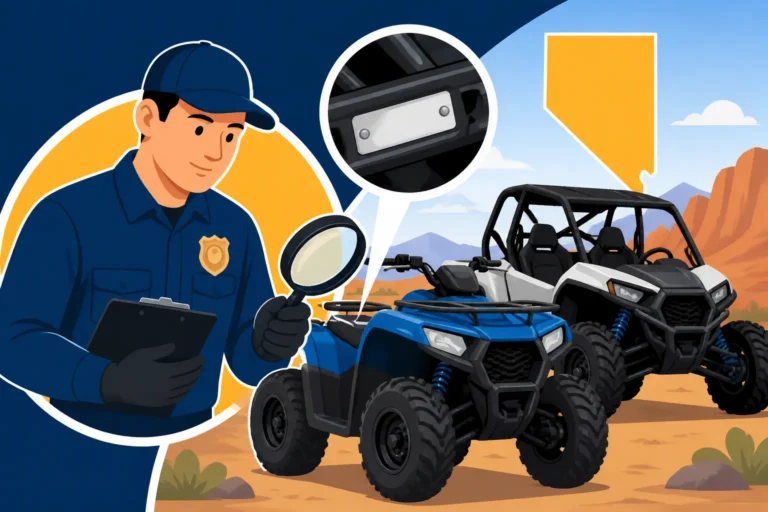
For many youth machines, especially if they are purchased used or brought in from out of state, a Vehicle Identification Number (VIN) inspection is a mandatory step. This inspection verifies that the VIN on the machine matches the documentation you're presenting, and that the machine itself isn't stolen or has any other issues. The frustrating part? The Nevada DMV itself doesn't perform these inspections for OHVs. [Why the DMV Will Not Inspect Your VIN]
So, where do you go? You'll need to find a licensed Nevada off-highway vehicle dealer or a sworn law enforcement officer (like a Sheriff's Deputy or Highway Patrol Trooper) to complete the inspection. Calling ahead to a local dealer or your county Sheriff's office is always a good idea to confirm their availability and any associated fees. Imagine driving all the way to a dealer, only to find out their inspector is out for the day! A quick phone call can save you a lot of time and frustration. Once the inspection is complete, the officer or dealer will sign off on the appropriate section of your application, validating that your youth machine is ready for the next step in the registration process.
Submitting Your Application
Once you have all your documents in order, including the completed application, proof of ownership, and any necessary VIN inspection, you're ready to submit. You can typically do this in person at a Nevada DMV office or, in some cases, through the mail. While mailing might seem convenient, submitting in person allows you to address any minor issues on the spot and get immediate feedback, which can be invaluable when dealing with official paperwork. [Registering an ATV in Nevada]
When you submit, you'll pay the applicable registration fees. Nevada offers options for one-year or three-year registration, so you can choose what works best for your family. There are also title fees involved if you're titling the machine for the first time. Keep in mind that dealers often handle this entire process for you if you're buying a new machine from them, saving you a trip to the DMV. They might charge a small fee for this service, but for many busy parents, it's a worthwhile convenience. Always get a receipt for your payment and a confirmation that your application has been accepted.
| Document/Requirement | Purpose | Applies To | Notes |
|---|---|---|---|
| Proof of Ownership | Shows you legally own the machine | All machines 70cc and up | MCO for new, signed title for used. Bill of sale highly recommended for private sales. Services like LawDepot offer templates. |
| OHV-001 Application | Official form for registration and title | All machines 70cc and up | Must be completed by the legal owner (parent/guardian). |
| VIN Inspection | Verifies VIN and checks for theft | Used machines, out-of-state machines | Must be done by a licensed NV OHV dealer or sworn law enforcement officer. DMV will not do it. |
| Nevada ID | Verifies applicant's identity | All applicants | Must be a valid Nevada driver's license or ID card. |
| Registration Fees | Cost for the decal and state services | All machines 70cc and up | Choose 1-year or 3-year option. Check current fees on the DMV website. |
| Title Fees | Cost for issuing a new title | All machines 70cc and up | Applies when initially titling the machine in Nevada. |
Exemptions, Special Circumstances, and Safety Considerations
While the 70cc cutoff is the primary rule for youth machines, there are a few other situations and considerations worth noting. Knowing these can save you a headache and ensure you're fully compliant with Nevada law, all while keeping your young rider safe.
When a Title Is Not Required for an OHV
You might be surprised to learn that for many older off-highway vehicles, a title might not be required at all. Nevada began issuing OHV titles relatively recently, so if you happen to acquire a youth machine that was manufactured and sold before the state's titling requirements came into effect, you might be exempt from needing a title. This is particularly relevant if you're buying a vintage or very old "starter" quad for your child. [Titles for Machines Acquired Before the Cutoff]
The key here is proving the machine's age. This usually involves presenting a dated bill of sale or other historical documentation. If you can clearly show that the machine predates Nevada's title law, you can register it for the decal without going through the titling process. This can simplify things, especially if the previous owner has lost track of any original title document. Services like LawDepot can assist in creating comprehensive bills of sale that cover all necessary details, even for older machines, which can be crucial for proving ownership. Always double-check with the DMV or a reputable OHV dealer if you're unsure about a specific machine's titling history.
What Happens If a Youth Machine Is Modified?
Sometimes, as kids grow or gain experience, parents might consider modifying a youth machine. This could involve engine upgrades that push it past the 70cc mark, even if it started out as a smaller displacement. It's vital to understand that if a machine that was originally under 70cc is modified to exceed that engine size, it then becomes subject to the standard registration requirements. The state will view it based on its current configuration, not its original factory specifications. [What Nevada's NRS 490.043 Counts as a Large ATV]
This is a critical point that can catch parents off guard. You might have bought a 65cc machine that was initially exempt, but after a few upgrades, it's now performing like an 80cc. If you're stopped by a ranger or deputy, they'll assess the machine as it is, not as it was. Therefore, if you undertake significant engine modifications, be prepared to go through the full registration process, including a potential VIN inspection to confirm the updated details if necessary. It's always better to be proactive and ensure your machine is legally compliant with its current power output.
Supervision and Safety for Young Riders
Beyond registration, ensuring the safety of young riders is paramount. Nevada has specific rules regarding the supervision of minors on off-highway vehicles. For instance, children under a certain age are typically required to be supervised by an adult when riding on public lands. While these rules aren't directly part of the registration process, they are inextricably linked to legal and responsible riding. [Nevada Minimum Age to Ride Off-Road]
Always make sure your child is wearing appropriate safety gear, including a DOT-approved helmet, goggles, gloves, long sleeves, long pants, and sturdy boots. Enroll them in an ATV safety course if available; many organizations offer hands-on training that goes beyond basic riding skills. No matter how meticulously you handle the paperwork, safety should always be the top priority. After all, the decal is just a piece of plastic; ensuring your child has the skills and protection to enjoy their machine safely is what truly matters.
Disclaimer
This article is for general informational purposes only and does not constitute professional advice. Laws, prices and regulations vary by location and change over time. Consult a qualified professional for guidance on your specific situation.