Logandale Trails for a Day Trip
A day at Logandale Trails can turn frustrating if you arrive without a route, enough water, or a clear idea of where the riding area ends. This guide helps you plan a realistic ride near Logandale and Overton, choose an outing that suits your group, and prepare for desert conditions without trying to squeeze the whole area into one day.
Plan a Logandale Trails day trip
Know what kind of riding day you want
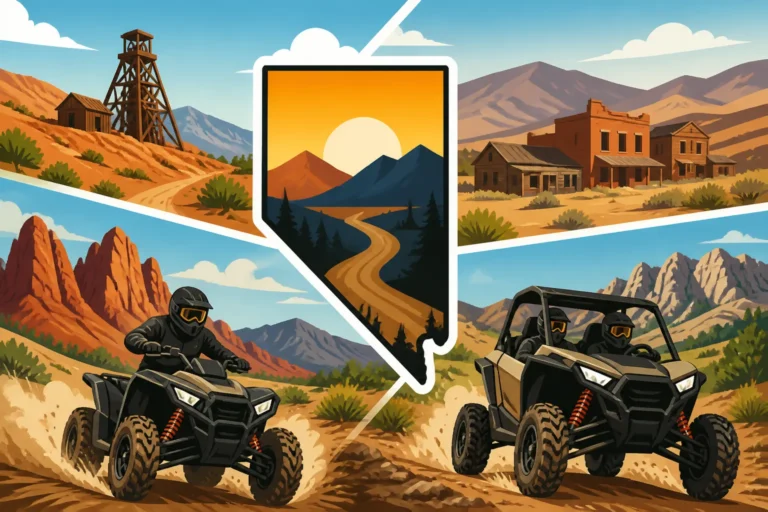
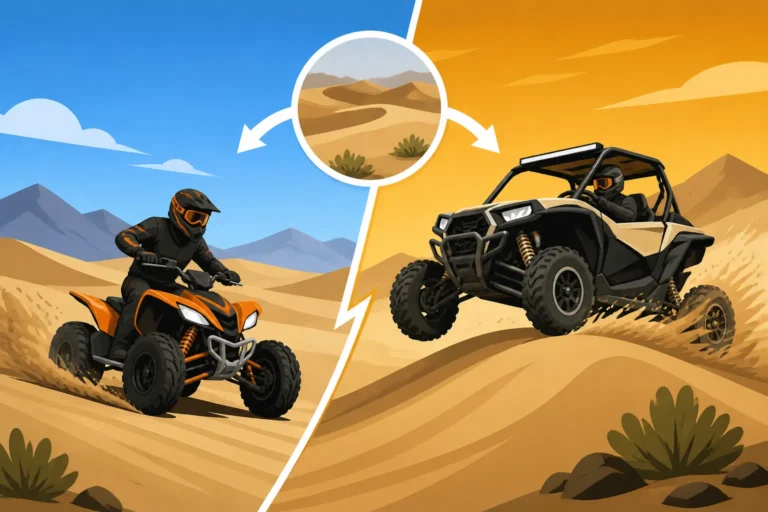
Logandale Trails is a large desert riding area near the communities of Logandale and Overton, northeast of Las Vegas. It is known for a mix of sandy tracks, rocky terrain, open riding areas, and striking red rock scenery. That variety is part of the appeal, but it also makes “let’s just explore” a less reliable plan than it sounds. A route that looks simple on a screen can take longer than expected once you factor in uneven ground, stops, and the pace of the least experienced rider.
Before leaving home, agree on what the day is meant to be. A family outing with a new rider may call for a shorter loop, frequent breaks, and an easy turnaround point. A group of experienced riders may want a longer route with varied terrain, but should still decide how they will regroup if someone falls behind. If you are comparing the area with other nearby options, [Logandale Trails Outside Las Vegas] offers useful context on where it sits and what makes it distinct.
It helps to think in terms of a ride window, not just a distance. Two groups can cover the same route in very different amounts of time: one may stop for photos and checks, while another rides steadily. Pick a modest first objective, then leave room to extend the outing only if everyone feels comfortable and conditions allow. A day trip should not depend on racing back to the trailer before dark.
Build your route around the group
Choose terrain with the least experienced rider in mind, not the most confident one. A capable driver may be comfortable with rocks, steep-looking approaches, or loose sand, while a new rider may find those same features stressful. Everyone benefits when the route includes clear places to pause, turn around, and check that the group is together.
A map app such as onX Offroad can help you review routes and orient yourself before setting out. Treat any digital map as a planning aid rather than a guarantee that a route is open, passable, or appropriate for your machine. Download the information you need before you leave reliable service, and compare your planned route with current land-management information. If you use onX Offroad, mark a meeting point and a conservative turnaround point in advance so the group is not negotiating those decisions in the middle of a dusty trail.
For a first visit, resist the temptation to follow every interesting track. Side routes can make it difficult to keep a group together, and a short detour may leave you farther from your intended return route than you expected. Pick a main route, note obvious landmarks, and agree that nobody rides ahead out of sight without checking in. For a closer look at how routes vary, see [Logandale Trails Difficulty Ratings].
Prepare for the desert and the drive
Pack for heat, dust, and a longer-than-planned ride
The desert can be demanding even when the ride itself feels relaxed. Heat, sun, dust, and wind all add up, and the area’s open terrain may offer little shade. Carry more drinking water than you expect to use, and make it easy for every rider to reach their own supply. Snacks, sunscreen, eye protection, and a light layer for changing conditions are useful additions. Do not assume that a short ride means you can leave basic supplies in the truck.
Dust is a practical issue, not just an inconvenience. Bring goggles or glasses that fit securely, and consider a face covering if dust bothers you. Keep a small first-aid kit, basic tools, and a way to contact someone if your group is delayed. Cell service can be inconsistent in remote terrain, so tell a person who is not riding where you plan to go and when you expect to check in. A charged phone and an offline map are helpful, but they should not be your only plan.
Check the machine before unloading: tires, brakes, lights, fuel, and any equipment needed for your route. Make sure everyone understands the group’s signals and stopping plan. If you are riding with children or beginners, build in more breaks than you think you need. Fatigue can creep up quietly, and a tired rider is more likely to make a poor decision on rough or loose ground. For practical family planning, [Logandale Trails With Kids] is a useful companion topic.
Check access, conditions, and paperwork
Before you travel, check for closures, restrictions, and current access information from the appropriate land manager. Conditions can change after storms, during fire restrictions, or when sensitive areas need protection. Keep to routes open to motorized use, and do not assume that a visible track is legal to ride. The landscape around Logandale includes land with different rules and boundaries; a route that approaches Valley of Fire does not mean you can ride into the state park.
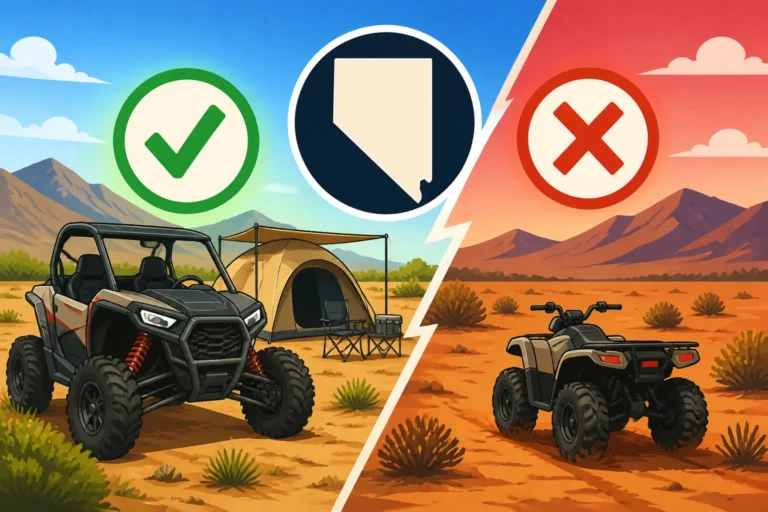
Nevada OHV registration and decal requirements matter for machines used on public riding areas. Confirm that your machine has the required paperwork and that its decal is properly displayed before the trip. If you are bringing a machine from another state, check how Nevada treats your existing registration rather than guessing at the trailhead. [Nevada OHV Permits Explained] provides a starting point for understanding the state’s registration and permit framework.
Weather deserves a last-minute check, especially after rain. Washes can change quickly, and wet or recently disturbed ground may make routes difficult or inappropriate to ride. If rain is in the forecast or has recently passed through, reassess the plan instead of assuming the route will be unchanged. [Logandale Trails After Rain] covers why post-storm conditions deserve extra care. When checking a map app such as onX Offroad, remember that a mapped line does not replace current closure notices or local guidance.
| Day-trip decision | A practical approach | Why it helps |
|---|---|---|
| Route length | Start with a conservative loop and a clear turnaround point | Leaves time for breaks, delays, and regrouping |
| Rider ability | Choose terrain for the least experienced person | Keeps the outing comfortable and reduces pressure |
| Navigation | Save maps offline and mark meeting points | Helps when service is weak or the group gets separated |
| Weather | Recheck conditions before driving and before unloading | Rain, heat, or wind can change the plan |
| Supplies | Carry water, eye protection, basic tools, and first aid | Covers common desert-day needs and minor delays |
| Access | Confirm open routes and riding boundaries | A visible trail is not proof that motorized use is allowed |
Make the day work for your group
Choose a comfortable pace and a clear meeting plan
A day trip is easier when everyone knows the basic routine before the machines start moving. Agree on who leads, who sweeps behind, how often the group stops, and what to do if someone loses sight of the others. For a mixed-ability group, the lead rider should avoid stretching the distance between machines. The person at the back should not be left to guess whether the group has turned off at a junction.
Use planned stops to check water, fatigue, and how the machines are behaving. If someone is tense or struggling, shorten the route rather than treating it as a challenge to overcome. There is no prize for completing a loop that has stopped being fun. A conservative ride can still be memorable, especially when the scenery and company are the reason you came.
Families and groups with young riders may want a simple rule: stop at every major junction and wait until the whole group is together before continuing. For older children, explain the rule before the ride rather than during a stressful moment. Adults should also agree not to split off for a quick detour without telling the group. On a large riding area, “I’ll meet you over there” is not much of a plan unless everyone knows exactly where “there” is.
Keep the trip focused on riding, not rushing
Logandale’s landscape invites stops for views and photos, but the schedule should allow for them. Set aside time to unload, check gear, ride, take breaks, and pack up without rushing. If you are driving from the Las Vegas area, travel time is only one part of the day; loading machines, securing trailers, and getting everyone ready can make the outing much longer than the ride itself. [How Far Logandale Trails Sit From Las Vegas] can help you think through the drive as part of the plan.
The access drive also deserves attention. Review your route to the riding area and make sure your truck and trailer are suitable for the roads you intend to use. [Driving to Logandale on Nevada SR 169] is a helpful reference when planning the approach. Before setting out, confirm that your trailer is properly secured, the machines are tied down, and you have the essentials you will need once you park.
If your group hopes to camp, treat that as a separate planning decision rather than assuming a day-use plan can simply stretch into an overnight. Check current camping rules, available facilities, and whether the chosen spot is appropriate. [Logandale Trails Camping Spots] can help you explore that side of the trip. Even if you are only visiting for the day, knowing where facilities are—and what is not available—helps set expectations. [Where Nevada Registration Dollars Built Restrooms] offers context on facilities supported by Nevada OHV funding.
A simple day-trip checklist
Before leaving home
Use a checklist the evening before, when there is still time to find a missing strap or charge a device. Confirm the route, riding conditions, and access rules. Tell someone outside the group where you are going and when you expect to be back. Pack water, food, first aid, sun protection, eye protection, tools, and any personal medication. Check fuel plans and make sure every rider has appropriate protective gear.
Make sure the trailer, tow vehicle, and machines are ready for the drive. Secure loose items so they cannot shift, and bring a way to manage minor problems such as a loose fastener or low tire. If anyone in the group is new to the machine, give them time to understand the controls in a safe area before the main ride begins. A few minutes of orientation can prevent confusion later.
At the trailhead and on the ride
Before unloading, check that you are at the intended access point and that riding is allowed under current conditions. Review the route with the group, confirm the turnaround plan, and make sure everyone knows the meeting point. Keep the map accessible, but do not let navigation distract the driver. Stop in a safe place if you need to consult it.
On the trail, ride within your ability and leave room between machines for visibility and control. Avoid unfamiliar shortcuts, stay on open routes, and turn around if the terrain or conditions do not feel right. At each stop, count riders, check water and fatigue, and make sure nobody has a developing mechanical problem. A smooth day is often the result of small, sensible decisions rather than a perfect route.
Before packing up
Do a final count of people, helmets, tools, and personal items before leaving. Check the machines for damage or anything that needs attention before the next ride. Pack out trash and leave the area as you found it. If a route was closed, damaged, or unexpectedly difficult, note that for your next visit and consult current information before relying on it again.
Logandale Trails can be a rewarding day trip when the plan matches the group, the conditions, and the time you actually have. Start conservatively, carry what the desert demands, and leave room to change plans. That approach gives you a much better chance of finishing the day tired in the good way, with everyone safe and eager to come back.
Disclaimer
This article is for general informational purposes only and does not constitute professional advice. Laws, prices and regulations vary by location and change over time. Consult a qualified professional for guidance on your specific situation.