Where to Fuel Before Sand Mountain
Before you point the truck east on US 50, decide where the fuel for both your vehicle and your ATV or UTV is coming from. Sand Mountain sits outside Fallon, and arriving with a nearly empty tank can turn a fun dune day into a stressful search for services. This guide explains how to plan a practical fuel stop and carry enough reserve.
Make Fallon your main fuel-planning stop
Fill up before leaving town
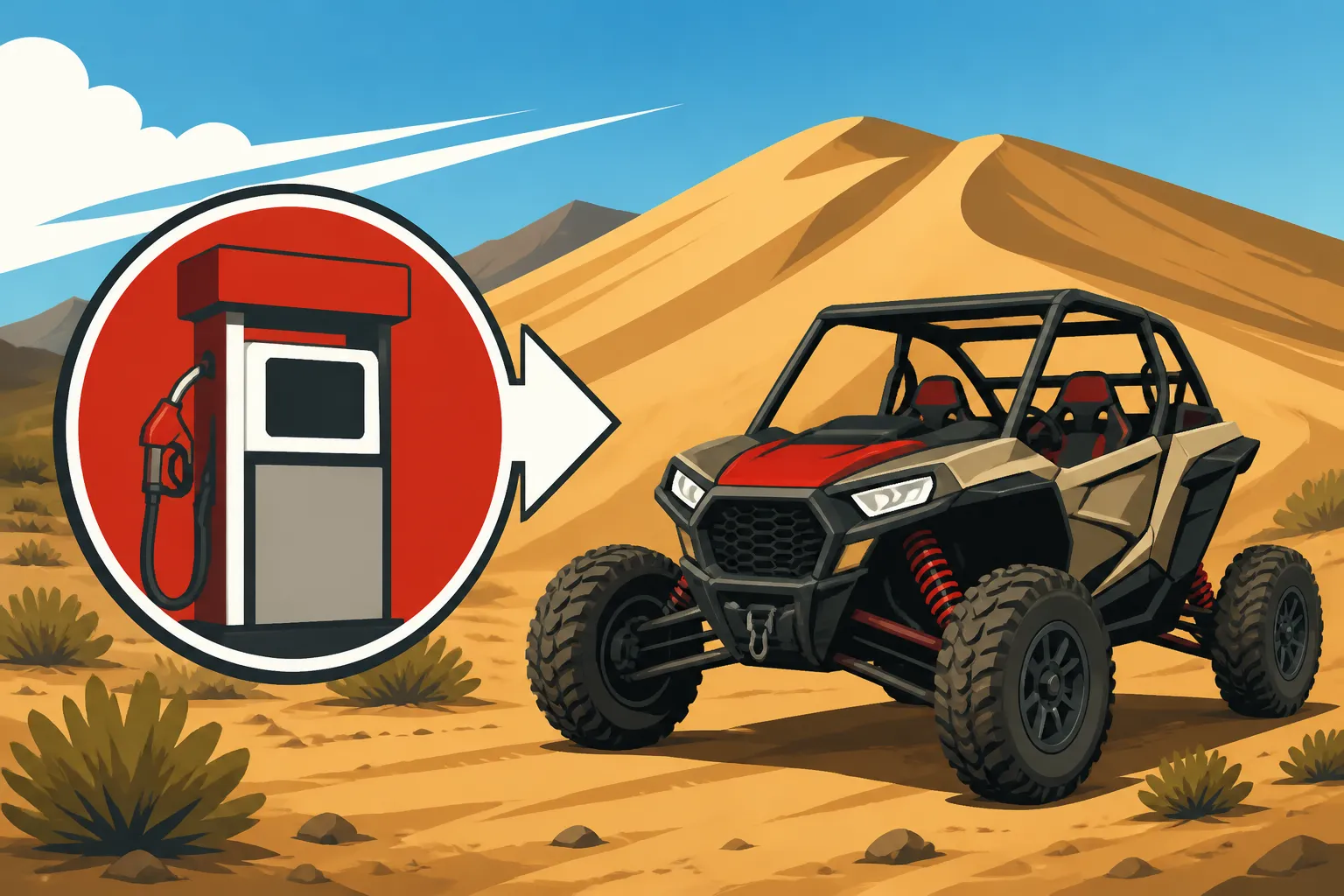
For most riders heading to Sand Mountain Recreation Area, Fallon is the practical place to fuel the tow vehicle and top off the machine’s tank. The recreation area is east of Fallon along US 50, beyond the concentration of services you’ll find in town. Think of Fallon as the point to get organized, not a place to pass through on fumes and hope for a convenient option closer to the dunes.
If you’re towing, fuel needs can be easy to underestimate. A loaded truck or SUV may use more fuel than it does on an ordinary drive, especially if you’re hauling a trailer and climbing or driving into a headwind. Fuel up in Fallon before making the final drive, and avoid counting on being able to buy gasoline at Sand Mountain itself.
It’s also smart to check what is open along your planned route before you leave. Station hours, available fuel, and services can change. If you’re traveling from Reno, Fernley, or another town, a stop before Fallon may make sense too, but Fallon is the key place to make sure you have enough fuel for the drive out and back. For the route context, see [Getting to Sand Mountain on Nevada's US 50] and [Driving From Fallon to Sand Mountain Recreation Area].
Don’t treat nearby landmarks as guaranteed fuel stops
A name on a map can look like a promising place to stop, but a landmark or historic site is not necessarily a fuel station. Sand Springs Station, for example, is a well-known historic stop in the area; don’t assume that seeing it on your route means you can buy fuel there. Check a current map or contact a business directly if you plan to rely on any stop outside Fallon.
This is especially important if you’re coming from the east. Don’t build your plan around an unconfirmed service stop between Sand Mountain and your starting point. If a station is closed, out of fuel, or not open when you arrive, your backup options may be farther away than you’d like. A quick check before departure can spare you the unpleasant choice between cutting a ride short and stretching a low tank.
For a general overview of the area and its setting, [Sand Mountain: Nevada's Great Basin Dune] is useful background. The main takeaway for fuel planning is simple: treat the dunes as your riding destination, not as a place to stock up on supplies.
Plan fuel for both the drive and the ride
Calculate the full trip instead of one-way mileage
A common planning mistake is to estimate only the drive from Fallon to Sand Mountain. Your actual fuel use includes getting to the area, driving around or repositioning the trailer, making the return trip, and any extra miles caused by a detour or an unplanned stop. If you’re towing, the truck’s range may be noticeably different from its usual range when unloaded.
The ATV or UTV needs its own plan. A machine that has plenty of fuel for a gentle trail ride may use it much faster in soft sand. Dune climbs, repeated acceleration, carrying passengers or gear, and a full day of riding can all affect consumption. Don’t rely on a best-case estimate from a short ride at home to predict how much you’ll use at Sand Mountain.
A useful approach is to decide on a conservative turnaround point before riding. For example, if your machine’s fuel gauge is unreliable, set an approximate riding time or distance at which you’ll head back toward the trailer. Keep a reserve for getting out of a busy area, helping another rider, or finding your way back after a route change. The details in [Water and Fuel Planning in Nevada] can help you think through the broader desert-travel side of the trip.
Expect soft sand to change your machine’s range
Sand riding can be more demanding than cruising on a firm dirt road. The machine may work harder when you climb, dig in, or repeatedly accelerate out of soft spots. Riders often make more short bursts of effort on dunes than they expect, particularly when the group stops to watch someone climb or takes another run down a slope.
That’s why it helps to build your fuel plan around the riding you actually intend to do. A relaxed loop on marked routes is different from a long day of climbing and exploring. If you’re riding with a group, talk through the route and fuel expectations before setting off. The rider with the smallest tank or highest fuel use can determine how far everyone can safely go.
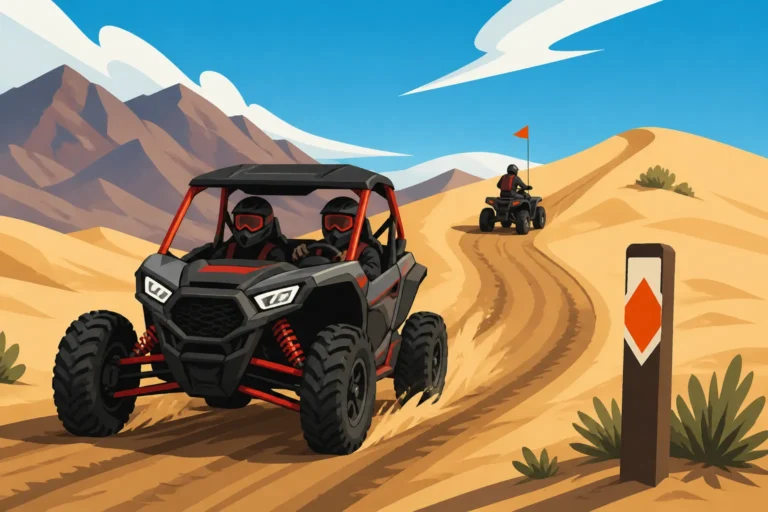
Sand Mountain’s riding terrain is extensive, so don’t confuse having a large area available with having enough fuel to explore all of it. Check [Sand Mountain's 23 Miles of Marked Trail] as part of your route planning, and leave room for changes. An app such as onX Offroad can be one tool for reviewing routes and keeping your planned ride in view, but it doesn’t replace a fuel reserve or sound judgment on the ground.
Choose a safe way to carry extra fuel
Use approved containers and secure them properly
If your machine’s range is limited, carrying extra fuel may be part of your plan. Use a container designed and approved for fuel, and secure it so it cannot slide, tip, or get struck by loose gear. A container rattling around in a truck bed or trailer can become a hazard, especially on rough roads.
Keep fuel away from heat, sparks, and open flames. Don’t store fuel in the passenger compartment, and follow the container manufacturer’s instructions for transport and storage. Avoid overfilling containers, and make sure caps are closed securely. If you’re unsure whether your setup is appropriate for your vehicle or trailer, choose a safer arrangement rather than improvising at the trailhead.
Refueling a hot machine also deserves patience. Let the engine cool as needed, keep the area clear of ignition sources, and avoid spilling fuel onto a hot exhaust or the ground. A small spill in dry, dusty conditions can create more trouble than it seems, and fuel should never be poured out or left behind.
Match the reserve to the machine and the group
There isn’t one extra-fuel amount that works for every ride. A small youth ATV, a sport quad, and a larger side-by-side can have very different tank sizes and consumption. Your route, riding style, passenger load, and access to the trailer all matter. Rather than choosing a container size based on someone else’s setup, estimate your machine’s use and add a sensible margin.
If you ride with several machines, don’t assume one person’s spare fuel solves the group’s problem. A container may not fit every machine, and transferring fuel on the trail can be awkward or unsafe. Have each rider understand their own range, and agree on what the group will do if someone’s fuel runs low.
You can also reduce fuel uncertainty by keeping the ride closer to your staging area, particularly if you’re new to the dunes or riding an unfamiliar machine. Learn how your vehicle behaves before attempting longer outings. For more on the area’s terrain, see [The 600-Foot Dune Near Fallon, Nevada] and [Sand Mountain for a First Dune Trip]. If you’re using onX Offroad to review your route, mark a conservative plan rather than treating the farthest visible route as a target.
Use a simple pre-departure fuel checklist
Check the machine, the truck, and the return plan
Before leaving Fallon, make sure the truck or SUV has enough fuel for the drive to the recreation area and back, with a reserve for detours or extra driving. Check the machine’s fuel level rather than relying only on a gauge that may be inaccurate. If you’re bringing spare fuel, confirm that the container is closed, secured, and kept away from passengers and ignition sources.
It’s worth doing a quick group check too. Confirm who is carrying extra fuel, which machines have smaller tanks, and where everyone plans to ride. Set a turnaround point so nobody feels pressured to keep going after their fuel situation becomes uncertain. If you’re separated, have a simple plan for regrouping near the trailer or another agreed meeting point.
A map can help you orient yourself, but don’t assume your phone will have reliable service everywhere. Save useful information before you leave town and carry any navigation backup you normally use. onX Offroad may help you review a planned route in advance, while a paper map or downloaded map can be useful if you lose data or battery power. You can also read [Sand Mountain Day Use Hours] and [Sand Mountain's 4,795 Acres] when planning how long you expect to be at the recreation area.
Keep the day flexible
A good fuel plan should make it easy to adjust. If the group is using more fuel than expected, the wind picks up, a machine is running poorly, or the terrain is busier than anticipated, shorten the ride. There’s no prize for reaching the far edge of the area if it leaves you worrying about getting back.
For a straightforward day, the safest routine is to fuel in Fallon, confirm any additional stop rather than assuming it exists, and carry only properly stored reserve fuel that matches your needs. Keep the drive and the ride as separate fuel calculations, and don’t let an optimistic estimate take the place of a margin. A little planning before the drive east makes it much easier to focus on the reason you came: enjoying Sand Mountain.
Disclaimer
This article is for general informational purposes only and does not constitute professional advice. Laws, prices and regulations vary by location and change over time. Consult a qualified professional for guidance on your specific situation.