Climbing the 600-Foot Face
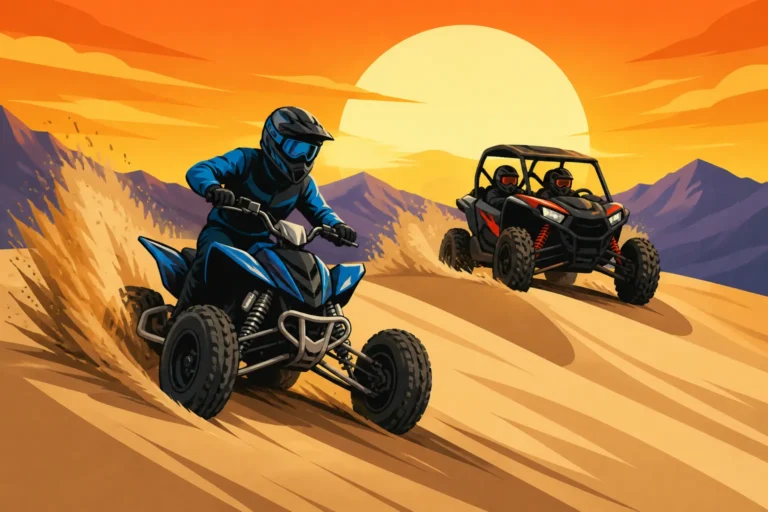
Sand Mountain’s main dune rises roughly 600 feet, and from the base it can look like one long, inviting climb. But soft sand, changing wind, blind crests, and cross-traffic can turn a straightforward ride into a risky one. This guide explains how to assess the face, prepare your ATV or UTV, choose a safer line, and know when to turn around.
Understand the 600-foot face before you climb
A tall dune is not one continuous, predictable slope
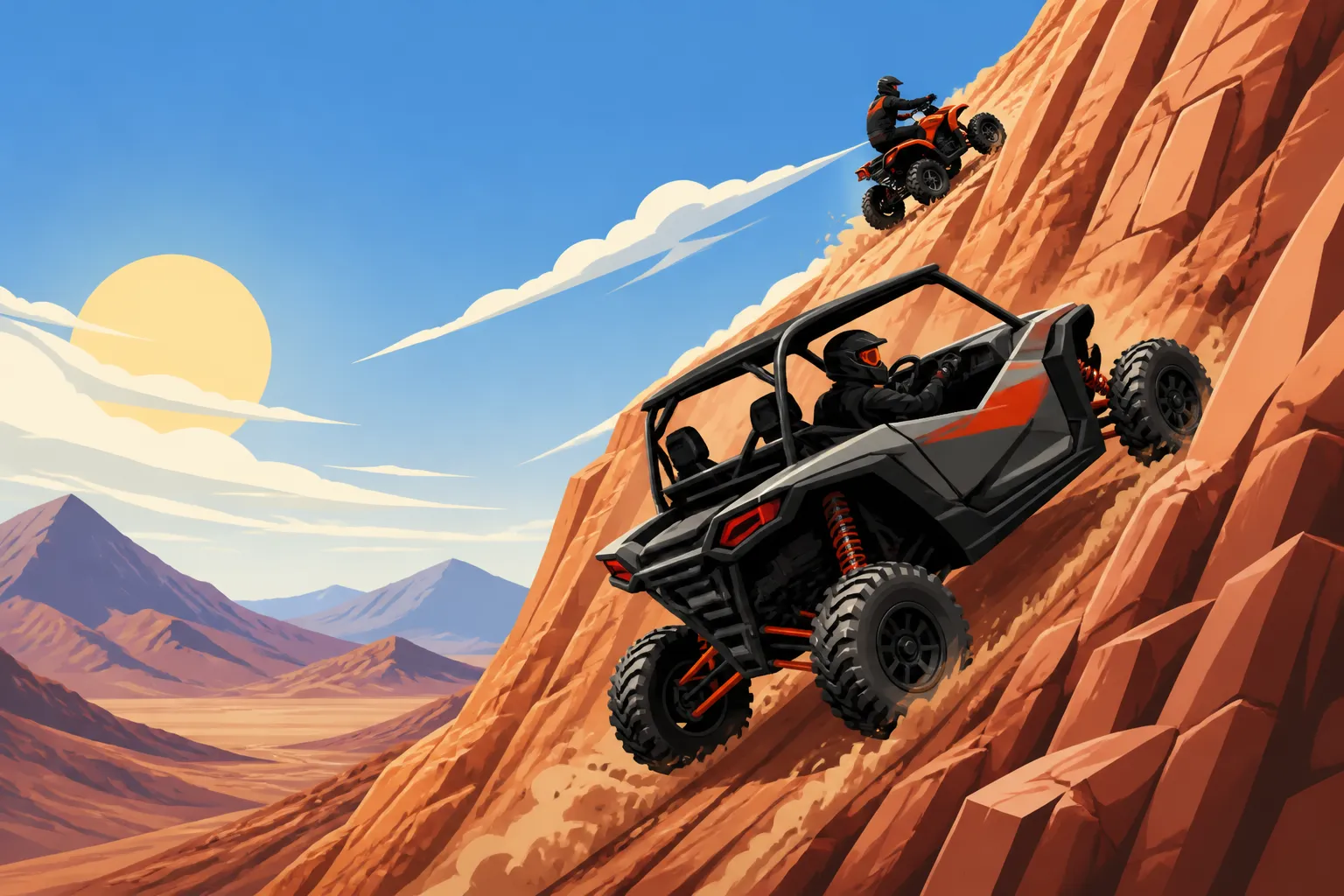
Sand Mountain sits near Fallon in western Nevada, and its prominent dune is often described as a 600-foot face. That figure gives you a sense of its scale, not a promise that every part of the slope is equally steep or rideable. Sand shifts, wind reshapes the surface, and yesterday’s tracks can disappear or become misleading.
From the bottom, it’s easy to focus on the summit and underestimate the pitch between you and it. A slope that looks manageable from the parking area can feel much steeper once you’re climbing, especially when the tires start to dig in or the machine loses momentum. Treat the dune as changing terrain, not a fixed ramp.
The face is also shared riding space. Other machines may be climbing, descending, traversing, or appearing over a crest you can’t see. Before heading up, watch the traffic for a while and look for open, established lines. If you’re new to the area, [Sand Mountain for a First Dune Trip] can help you think through the wider experience before committing to the big climb.
Check closures and conditions before choosing your route
Sand Mountain is not simply a wide-open expanse of sand. Protected habitat and seasonal closures can affect where riding is allowed. Check current official land-management information and posted signs before you ride, and follow marked routes and closure boundaries. A line that looks like an easy shortcut may cross an area you’re supposed to avoid.
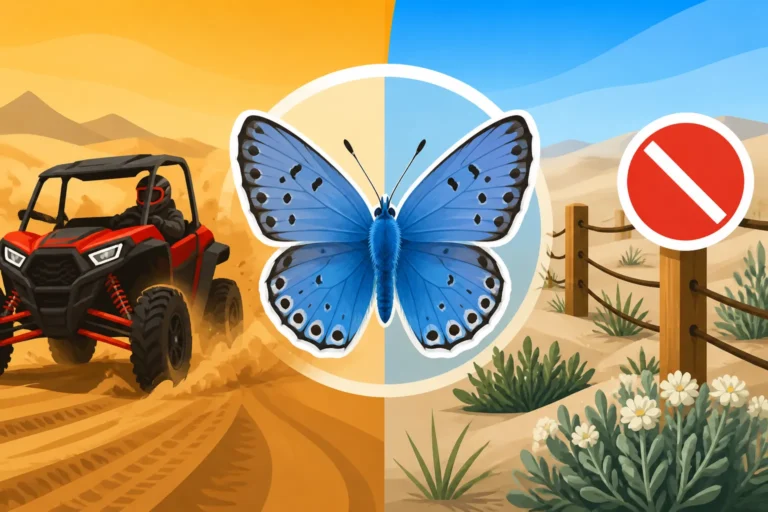
The area’s ecological sensitivities are worth taking seriously. The Sand Mountain blue butterfly and its habitat are part of why some dune areas may be restricted. Keep your machine in permitted riding areas, and don’t assume that tracks already crossing a patch of ground mean it is open. For background on the issue, see [How the Sand Mountain Blue Butterfly Closes Dune Areas] and [Riding Around Protected Dune Habitat].
A map can help with general orientation, but it does not replace signs or official closure information. Riders sometimes use onX Offroad to review an area and plan around routes before leaving home; check that any digital map is current and compare it with land-manager information. Sand conditions and access rules can change, so make a fresh check before each trip.
Prepare your machine and your group
Match your tires, power, and experience to the sand
Deep sand asks a lot of a machine. Tires need to float and grip rather than cut deeply into the surface, and the rider needs enough control to keep a steady line. Paddle tires may suit some dune setups, but they aren’t a guarantee of traction or a substitute for skill. Machine weight, tire pressure, power delivery, and the rider’s experience all affect how a climb feels.
A powerful vehicle is not automatically the safer choice. More throttle can make a machine dig, fishtail, or accelerate faster than the rider can manage. Before approaching the main face, get comfortable on lower, open dunes and practice smooth starts, controlled turns, and stopping on suitable terrain. If you’re unsure about your setup, [Paddle Tires at Sand Mountain] offers a useful starting point for considering tire choice.
Do a basic pre-ride check before unloading: inspect tires and wheels, brakes, steering, throttle return, fuel level, and any safety equipment you rely on. Secure loose gear so it can’t shift during a climb. For a UTV, make sure occupants are seated and belted as appropriate for the vehicle, and that everyone understands how to communicate if the group needs to stop.
Agree on signals, spacing, and a turnaround plan
A dune climb is a poor time to negotiate the plan. Before anyone rides, agree on who will lead, who will follow, and how the group will communicate. Set a clear rule that a rider can stop or turn around without being pressured to continue. If someone in the group is uncomfortable, treat that as useful information—not a challenge to overcome.
Leave room between machines. Following too closely can leave the rider behind in another vehicle’s dust, while a stalled machine may force people to brake or change direction suddenly. Don’t stop directly beneath a rider who is climbing, and avoid positioning yourself where another machine could slide or roll into your path. If visibility is poor, wait for a clearer gap rather than trying to squeeze into traffic.
Carry enough water and fuel for the outing, and tell someone where you plan to ride. Cell coverage may be limited in remote riding areas, so don’t make a phone your only backup. Route-planning tools such as onX Offroad can help you orient yourself, but download or save what you need before you lose signal and bring a practical way to navigate back. More preparation tips are covered in [Water and Fuel Planning in Nevada].
Choose a line and climb with control
Watch the slope and traffic before you move
Take time to observe the face from a safe location. Look for the general slope, the condition of the sand, signs of cross-traffic, and places where a crest blocks your view. A line that appears smooth may contain soft pockets, ridges, or tracks that steer a vehicle unexpectedly. If wind is moving sand across the surface, visibility and traction may change while you’re watching.
Choose a route that gives you room and a clear view of the terrain ahead. Avoid blindly following tracks just because they look established: they may lead toward a steep section, a crowded line, or a restricted area. If you can’t see enough of the route to make a reasonable decision, wait, choose another place to ride, or skip the climb.
On the approach, keep your movements smooth and deliberate. Sudden steering inputs or abrupt throttle changes can unsettle a machine in soft sand. Don’t ride alongside another climber or cut across someone’s path. A line should give you space to make a controlled decision, not force you to improvise around traffic at the last moment.
| What you notice | A safer response |
|---|---|
| You can’t see over the crest or into the route ahead | Don’t commit to a blind climb; wait or choose a visible line |
| Other machines are moving through your intended path | Stay clear and wait for a safe gap |
| Your vehicle is bogging down or losing control | Avoid forcing the climb; turn back or stop only when you can do so safely |
| Wind or dust is reducing visibility | Pause until you can see the route and other riders clearly |
| You’re unsure whether the route is open | Check official information and posted signs before proceeding |
| You feel pressured to keep going | Stop and reassess; turning around is a valid choice |
Know how to respond when the climb feels wrong
If a machine loses momentum, starts to drift, or feels unstable, don’t keep applying more throttle simply because the summit is close. A strained climb can quickly become difficult to control. The right response depends on the machine, the slope, and the immediate traffic around you, so stay within your training and the manufacturer’s guidance.
Avoid stopping in a place where another rider is likely to come over the crest into you. If you need to pause, make sure you are visible and out of the active line when it is safe to do so. Don’t attempt a sudden turn on a steep face if you’re not confident the machine can make it without sliding or tipping. If you can’t safely continue or retreat, focus on avoiding additional movement and get help from your group.
The most important skill on a big dune is deciding not to climb. A rider who turns around early has kept control of the day; a rider who pushes on despite poor visibility, fatigue, or a bad line may create a recovery problem for everyone. You don’t owe the dune a summit attempt.
Make the Sand Mountain ride safer from start to finish
Plan for wind, heat, and changing sand
Sand Mountain’s conditions can feel very different from one visit to the next. Wind can soften the definition of tracks, blow dust into your eyes, and make it harder to spot approaching machines. Strong sun and desert temperatures can also make riders tired before they realize their attention is slipping. If conditions are uncomfortable or visibility is worsening, take a break or call the ride.
Bring water for the whole group and keep it accessible, rather than buried under gear. Take breaks before anyone becomes overheated or starts making rushed decisions. Fuel planning matters too: repeated climbs and soft terrain can use more fuel than a casual ride on firm ground. For practical context on wind and dune conditions, see [Sand Mountain When the Wind Picks Up] and [Where to Fuel Before Sand Mountain].
Use onX Offroad or another mapping tool as a planning aid, not as permission to ride every visible track. Confirm the route against current official information and observe on-site signs. The same tool can help your group discuss a meeting point and general orientation, but it won’t show you the condition of a dune face or warn you that traffic is approaching over a crest.
Respect marked routes and finish with enough energy to get back
A good ride isn’t measured by how many times you reach the top. Leave enough fuel, water, and attention for the return to the staging area. When the group is tired, it’s tempting to take a shortcut or make one last climb, but fatigue makes it harder to judge speed, distance, and changing terrain.
Stay on routes open to riding and respect signs, barriers, and habitat boundaries. Sand can conceal plants, tracks, and uneven ground, so cutting across areas to avoid a busy route can cause damage and create new hazards. [Staying on Sand Mountain's Marked Trails] explains why route discipline matters, while [Sand Mountain Day Use Hours] is a useful reminder to plan the day around access information rather than arriving without checking.
Before loading up, do a quick head count and look over the machines for damage or sand packed into places it shouldn’t be. Make sure everyone has returned safely and that you have the gear needed for the drive home. A cautious decision at the dune—whether that means waiting, taking an easier route, or skipping the climb—is part of riding well, not a failure to have fun.
Disclaimer
This article is for general informational purposes only and does not constitute professional advice. Laws, prices and regulations vary by location and change over time. Consult a qualified professional for guidance on your specific situation.