Nellis Dunes, Nevada’s Free Dune Ride
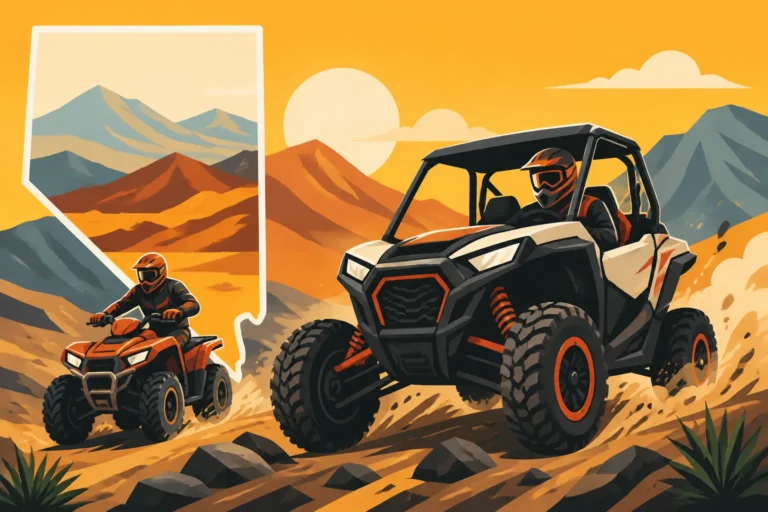
Nellis Dunes offers a close-to-Las Vegas place to ride sand without paying an area entrance fee, but “free” does not mean carefree or rule-free. Riders still need to plan for changing dunes, dust, traffic, desert heat, and public-land boundaries. This guide covers how to prepare, what to expect on the ground, and how to make a safer day of it.
What to know before riding Nellis Dunes
Where the riding area is and what “free” means
Nellis Dunes is a popular off-highway vehicle area north of Las Vegas, near Nellis Air Force Base. Its easy reach from the city makes it appealing for a quick outing, especially if you do not want to build a full weekend around a remote trail system. Even so, proximity to town should not fool you into treating it like a neighborhood park. Once you are on the sand, the terrain and conditions can change quickly.
The area is known as a free place to ride, meaning visitors generally do not pay an entry fee to access the riding area. That does not mean every nearby parcel is open to OHVs, that services are provided, or that rules do not apply. Public-land boundaries, temporary restrictions, and designated routes still matter. If you are wondering whether an additional permit is needed for ordinary riding, [Why Nellis Dunes Costs Nothing] and [Nevada OHV Decal as Your Permit] are useful related reads.
There is also a difference between a free riding area and a place with no costs at all. You may still have expenses for fuel, transportation, food, recovery gear, or repairs. Plan as if you will be self-supported, and confirm access conditions before leaving home. A free area can be a poor choice for an unprepared ride if you arrive without enough water, a way to navigate, or a plan for getting a disabled machine back to the staging area.
What to expect from the landscape
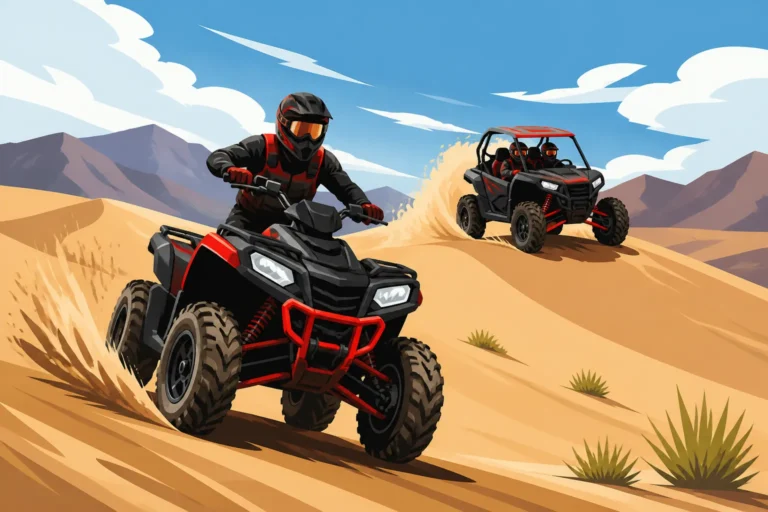
The name suggests a broad field of uninterrupted sand, but Nellis Dunes is not simply one open slope after another. Riders encounter varied desert terrain, including sandy sections, changing grades, and ground that may feel firmer or rougher than expected. The route you choose can make the outing feel very different: a beginner looking for gentle terrain has different needs from an experienced rider seeking steeper climbs.
Sand is especially deceptive because its condition changes. Wind can reshape a face, traffic can carve new lines, and a slope that looked manageable from the bottom may be loose or uneven when you reach it. Do not assume yesterday’s tracks mark a safe route today. If a climb looks uncertain, pause and choose a more conservative line rather than committing because other riders are watching.
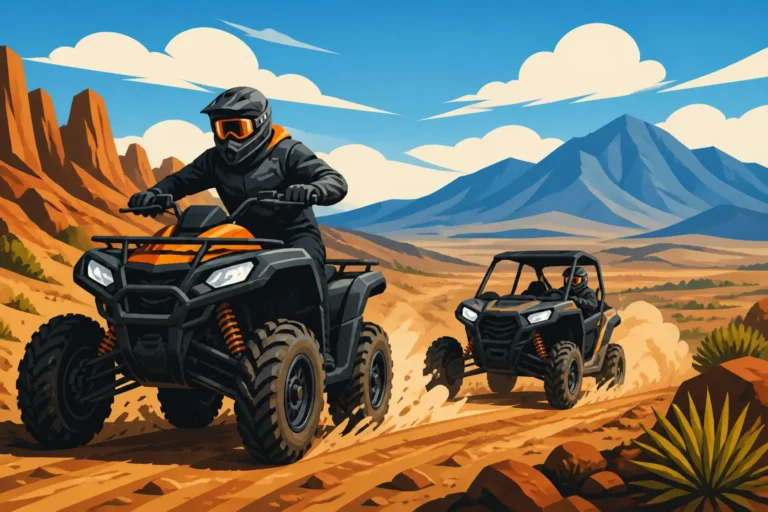
Expect to share the area with other vehicles and groups. That can mean dust hanging in the air, machines approaching from unexpected directions, and limited visibility over rises. Keep speed under control when you cannot see what is beyond a crest, and do not stop in the middle of a route to check a map or take a photo. Pull off only where you can be clearly seen and are not blocking another rider’s path.
Planning a Nellis Dunes ride
Choose a ride that fits your group
A good day at Nellis Dunes starts with an honest conversation about experience. A first-time rider may be comfortable on firm ground but unfamiliar with how sand affects steering, braking, and momentum. An experienced driver may be tempted to head straight for a challenging dune, while a passenger or younger rider may need a calmer pace and frequent breaks. Agree on a conservative starting area and decide how the group will stay together.
For a family or mixed-skill group, establish simple rules before unloading: nobody rides out of sight, riders wait at agreed safe pullouts, and nobody follows another machine over a crest without knowing what is on the other side. These rules may feel overly cautious when everyone is excited, but they prevent the common problem of one rider taking a different line and disappearing into dust. If a rider wants to explore farther, set a clear turnaround point and a check-in plan.
The machine matters, too. A sport quad, a utility ATV, and a side-by-side do not handle sand in exactly the same way. A passenger changes the balance and available room, while cargo can affect how a machine responds on a slope. Before the trip, review [Nevada Rules for Riding a Passenger Off-Road] and [Nevada Rules for a Youth Machine on Public Land] if either situation applies. Do not assume that a vehicle’s capability makes every route suitable for its occupants.
Check access, boundaries, and route information
Before you go, check for current access notices, closures, restrictions, and land-management information through the relevant public-land office or official recreation channels. Conditions and rules can change, and an old social-media post or a route someone remembers from a past trip is not a reliable substitute. If you are uncertain which office manages the area or how to ask about current conditions, [Calling a BLM Field Office Before a Ride] explains why a quick check can prevent a wasted trip.
Navigation tools are helpful, but no app should be treated as permission to ride anywhere the screen appears blank. onX Offroad can help riders review mapped routes and orient themselves, especially when planning around a known staging point. As with any mapping tool, compare what you see with official land-management information and on-the-ground signs. If a route is marked closed, signed as restricted, or appears to cross a boundary you cannot verify, do not ride it just because it is visible on a map.
If you use onX Offroad or another digital map, prepare before you lose cell service or the phone battery runs down. Download the information you need, make sure your device is charged, and carry a backup way to navigate. A screenshot of the route or a paper map can be useful if a device overheats, gets dusty, or breaks. For more on interpreting public-land boundaries and route maps, see [Reading a BLM Travel Management Map] and [Nevada Rules for Riding Federal Land].
Pack for a self-supported outing
A short drive from Las Vegas does not remove the need to carry water. Desert heat, sun exposure, physical effort, and a delayed return can add up faster than expected. Bring more water than you think the group will need, and keep it accessible rather than buried under equipment. Pack food, sun protection, and a first-aid kit as well; a small problem becomes more stressful when you are thirsty, tired, and far from your vehicle.
Before setting out, check your machine for basic problems that are easy to miss in the excitement of unloading. Look over tires, wheels, controls, fuel, and visible leaks. Make sure everyone has suitable protective equipment and that helmets fit correctly. Goggles help with blowing sand and dust, while gloves and sturdy clothing reduce discomfort from sun, debris, and brush. If you are riding with children, check fit and supervision needs rather than assuming adult equipment or pace will work for them.
Carry a basic recovery plan, too. That may include tools appropriate to your machine, a tire-repair option, tow or recovery equipment, and a way to contact someone if the group becomes separated or stranded. Tell a person who is not riding where you plan to go and when you expect to return. For a more detailed desert checklist, [Water and Fuel Planning in Nevada] and [Carrying Water for a Desert Ride] offer practical topics to review before a trip.
Riding the dunes with more control
Adjust your technique for sand
Sand often rewards smooth, deliberate inputs. Abrupt steering or braking can make a machine feel less settled, while sudden throttle changes may cause the tires to dig in or lose traction. Start on terrain that gives you room to learn how your machine behaves. Make small adjustments and avoid copying a faster rider’s line until you understand the slope and surface for yourself.
Momentum can help on a sandy incline, but it is not a reason to charge at every hill. A steep or crowded climb can become dangerous if you lose traction, meet another rider near the crest, or discover a drop-off on the far side. Look at the route from a safe position before attempting it. If you cannot see the top or do not know whether another machine is descending, wait, choose another line, or skip the climb.
On a descent, keep your speed controlled and avoid turning a steep slope into a race. Give yourself space from the machine ahead, particularly in dust, and do not follow close enough that you cannot react if it slows or stops. If the terrain starts to feel beyond your ability, turn around only when you can do so safely. The aim is not to prove that you can cross every dune; it is to finish the ride with the group and machines intact.
Manage traffic, dust, and visibility
Nellis Dunes can feel busy, especially when multiple groups are riding at once. Treat every blind crest, dip, and turn as a place where another machine might appear. Slow down when visibility is poor, and do not assume that another rider has seen you. Staying to a predictable line, avoiding sudden swerves, and leaving generous room can make it easier for everyone to read what is happening.
Dust is more than an annoyance. It can hide a stopped vehicle, a person on foot, or a change in the ground. If dust makes it hard to see, ease off and wait for it to clear instead of riding by memory. Keep a safe gap from other machines, and regroup in a location that is visible and well away from active travel lines. A designated meeting point is more useful than trying to follow faint tracks through a cloud.
Groups should also agree on signals before starting. A hand signal or a planned stopping procedure can help when engines and wind make conversation impossible. If someone falls behind, the lead rider should not keep pushing farther ahead. A sweep rider at the back can help ensure nobody is left alone, but the whole group should still stop at agreed points and confirm that everyone is present.
Respect other visitors and the desert
The dunes are shared public space, not a private riding course. Other visitors may be walking, watching, loading machines, or trying to cross an area on foot. Give people room, keep noise and speed under control near staging areas, and avoid throwing sand toward parked vehicles or other groups. Courteous behavior matters particularly where many riders use the same approach routes and access points.
Stay on routes and in areas where riding is allowed. Public land can include closed areas, sensitive habitat, and boundaries that are difficult to see from the seat of a machine. A visible track is not proof that it is legal to ride. If you are unsure, stop and verify rather than extending a route because it looks convenient. This is one place where a map, posted signs, and official information should be considered together, not separately.
Pack out everything you bring in, including food scraps, broken parts, and tie-downs or packaging left behind during unloading. Do not leave a disabled machine, spill fuel, or abandon gear without a plan to return and remove it. Leave the staging area cleaner than you found it, and discourage others in your group from treating the desert as a dumping ground. Responsible riding helps protect continued access for everyone.
Practical choices for a safer day
Compare your options before you head out
Not every rider needs the same plan. A family making a first visit may be better served by a short, easy outing than by trying to cover the whole area. A confident local rider may prefer a longer session but still needs to account for weather, traffic, and machine condition. Use the table below as a planning aid, not as a substitute for checking current access information or making decisions based on what you see on site.
| Riding situation | A sensible approach | Common mistake to avoid |
|---|---|---|
| First visit | Start near a familiar staging point and keep the first ride short | Riding straight toward the steepest visible dune |
| Mixed experience group | Agree on a pace, regroup points, and a sweep rider | Letting faster riders disappear into dust |
| Family outing | Choose conservative terrain and take regular breaks | Assuming a child can safely match an adult’s pace |
| Side-by-side ride | Account for passengers, cargo, and vehicle width | Treating every visible line as wide or stable enough |
| Hot or windy conditions | Shorten the outing and carry extra water | Continuing because the group has already driven there |
| Poor visibility | Slow down or stop in a safe, visible place | Following another machine too closely |
A short ride is not a failed ride. If the group is tired, the sand is behaving differently than expected, or visibility has deteriorated, turning back is a reasonable decision. A planned outing should leave room for changing conditions rather than forcing everyone to continue until a preset time or destination.
Decide when a different riding area makes more sense
Nellis Dunes works well for riders who want a nearby sand outing, but it may not suit every group or every day. Someone looking for marked routes, facilities, a quieter experience, or a longer scenic ride might prefer another location. Compare the kind of terrain you want, the distance you are willing to travel, and whether the destination offers the services your group needs. [Nevada OHV Areas Near Las Vegas] can help you think through other nearby options.
If the main appeal is a quick outing, remember that short travel time does not guarantee a simple day. Traffic at the access point, crowded riding conditions, wind, or a mechanical issue can change the plan. Conversely, a farther destination may be a better choice if it has a more suitable trail layout for beginners or a more predictable place to regroup. Choose based on the needs of the actual riders, not only the name or popularity of an area.
You can also decide that the day is not right for riding. High heat, poor visibility, a machine that is not running properly, or a group member who feels unwell are all valid reasons to postpone. The desert will still be there for another trip. Making a conservative call before anyone is exhausted is much easier than making it after a breakdown or a preventable fall.
Common questions about Nellis Dunes
Is Nellis Dunes suitable for beginners?
It can be, if a beginner stays within their ability, starts on manageable terrain, and rides with someone who is patient and attentive. “Beginner-friendly” is not a guarantee that every part of the area is easy. Sand can be unfamiliar even to someone with plenty of experience on paved roads or hard-packed trails. A first-time rider should practice basic control in an open, low-pressure area before tackling steep or busy sections.
Beginners should avoid following a group that is moving faster than they are comfortable with. Ask the group to choose a meeting point and agree that nobody will leave a less experienced rider behind. If a hill, route, or traffic situation feels confusing, stop somewhere safe and reassess. Good coaching means giving a new rider space to make careful choices, not pressuring them into a challenge for the sake of keeping up.
Can you camp or target shoot at Nellis Dunes?
Do not assume that because riding is allowed, camping or target shooting is allowed in the same place. Those are separate activities with separate rules, and local restrictions or land-management decisions may apply. Nellis Dunes is commonly treated as a riding destination rather than a campsite, so plan to sleep elsewhere unless official information clearly confirms that camping is permitted in the exact location you intend to use. For the camping restriction, see [Why You Cannot Camp at Nellis Dunes].
Likewise, do not bring a firearm for target practice based on the assumption that open desert means open shooting. Shooting can create serious risks for riders and other visitors, and specific restrictions may apply around recreation areas, roads, facilities, or nearby properties. Check the rules that apply to the precise location and activity before you go. If you are unsure, leave target shooting out of the plan.
What should you do if the route or conditions look wrong?
Stop in a safe place, get out of active traffic, and take a moment to assess. Check your location against signs and reliable mapping, confirm that everyone in the group is accounted for, and look for a safer route back toward the staging area. If dust or wind prevents you from seeing clearly, waiting may be safer than pushing onward. Do not cross a closed route or boundary simply because it appears to lead toward the parking area.
If a machine breaks down, avoid leaving it in a blind crest or narrow travel line. Move it only if that can be done without putting people at risk. Use the group’s recovery gear and communication plan, and contact help if the problem is beyond your ability. A phone may not have dependable service everywhere, so do not make cell coverage your only safety plan. [Satellite Messengers for Desert Riding] is a related topic for riders considering a backup communication device.
Disclaimer
This article is for general informational purposes only and does not constitute professional advice. Laws, prices and regulations vary by location and change over time. Consult a qualified professional for guidance on your specific situation.